
Māori health animal therapy NZ requires integrating clinical animal-assisted interventions with holistic models like Te Whare Tapa Whā. It prioritizes cultural safety, recognizing the spiritual connection (wairua) between people and animals, and adheres to Te Tiriti o Waitangi principles to ensure equitable, mana-enhancing healthcare outcomes for Māori whānau.
In the evolving landscape of New Zealand healthcare, Animal Assisted Therapy (AAT) is gaining recognition not just as a complementary treatment, but as a modality that naturally resonates with Indigenous worldviews. However, for AAT providers in Aotearoa, clinical efficacy is only half the equation. The other half is cultural safety—ensuring that therapy respects the mana of the patient and aligns with the principles of Te Ao Māori (the Māori world).
Integrating animals into therapeutic settings for Māori requires a nuanced understanding of health models, spiritual beliefs, and the historical context of healthcare in New Zealand. This guide explores how to align AAT with Māori health strategies to provide high-quality, culturally responsive care.
Aligning AAT with Māori Health Models
To practice Animal Assisted Therapy effectively in New Zealand, practitioners must move beyond the Western biomedical model, which often separates physical health from mental and spiritual well-being. Māori health models are holistic, viewing the individual as part of a wider ecosystem that includes whānau (family) and the natural environment.
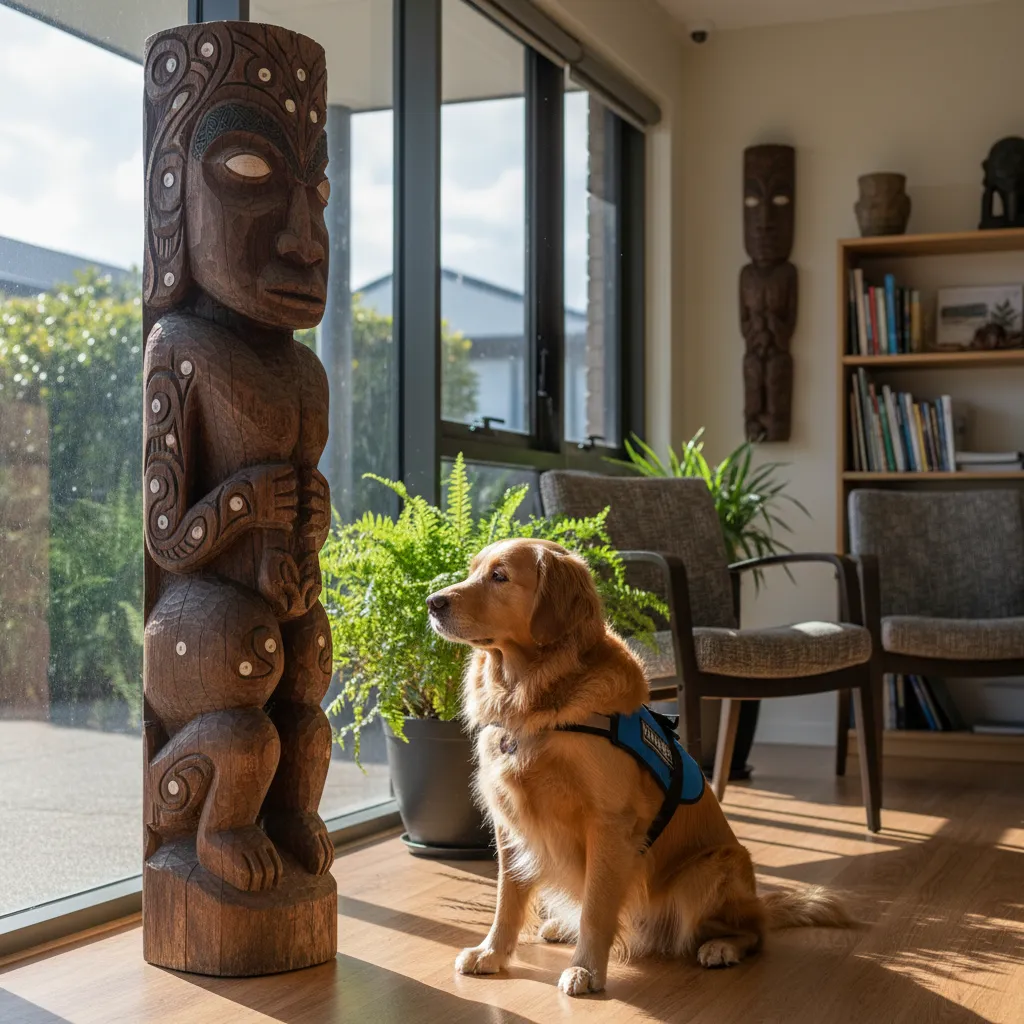
Animals, or kararehe, hold a significant place in this ecosystem. In many narratives, animals are seen as guardians (kaitiaki) or manifestations of the natural world that can facilitate healing. Therefore, AAT is not merely “using a tool” but engaging in a reciprocal relationship with a living being to restore balance.
Te Whare Tapa Whā in Practice
The most widely recognized Māori health model, developed by Sir Mason Durie, is Te Whare Tapa Whā. It compares health to the four walls of a house; if one wall is weak, the house is unstable. AAT can be mapped directly onto these four pillars:
1. Taha Tinana (Physical Health)
This dimension relates to physical well-being. In AAT, this involves the tactile component—grooming, walking, or physically interacting with a therapy animal. For rehabilitation patients, the animal motivates movement (e.g., throwing a ball or reaching out to pet), which directly supports Taha Tinana. However, practitioners must ensure that the physical presence of the animal is hygienic and safe, respecting the physical boundaries of the client.
2. Taha Wairua (Spiritual Health)
Perhaps the most potent connection in AAT is Taha Wairua. Animals are often perceived as having their own mauri (life force). The non-judgmental presence of an animal can connect with a client’s wairua in a way that human therapists sometimes cannot. For Māori, the wairua is essential for identity. A therapy animal that offers unconditional regard can help settle a turbulent wairua, providing a sense of peace and connection to the natural world.
3. Taha Whānau (Family Health)
Māori health is communal, not individual. AAT sessions that invite whānau participation can be incredibly effective. The animal often acts as a social lubricant, reducing tension and allowing family members to interact with the patient in a positive, neutral context. The therapy animal becomes, temporarily, a part of the extended whānau dynamic.
4. Taha Hinengaro (Mental Health)
This refers to psychological and emotional health. The physiological reduction of cortisol and the release of oxytocin during animal interactions are well-documented. From a Māori perspective, Taha Hinengaro is inextricably linked to the other walls. A calm mind (Hinengaro) allows for a stronger connection to spirit (Wairua) and family (Whānau).
Cultural Safety Protocols for Handlers
Cultural safety extends beyond cultural awareness. It requires the provider to reflect on their own cultural identity and how it impacts the service they provide. In the context of maori health animal therapy nz, this means recognizing power imbalances and ensuring the therapy environment does not demean or disempower the client.
Whakawhanaungatanga (Building Relationships):
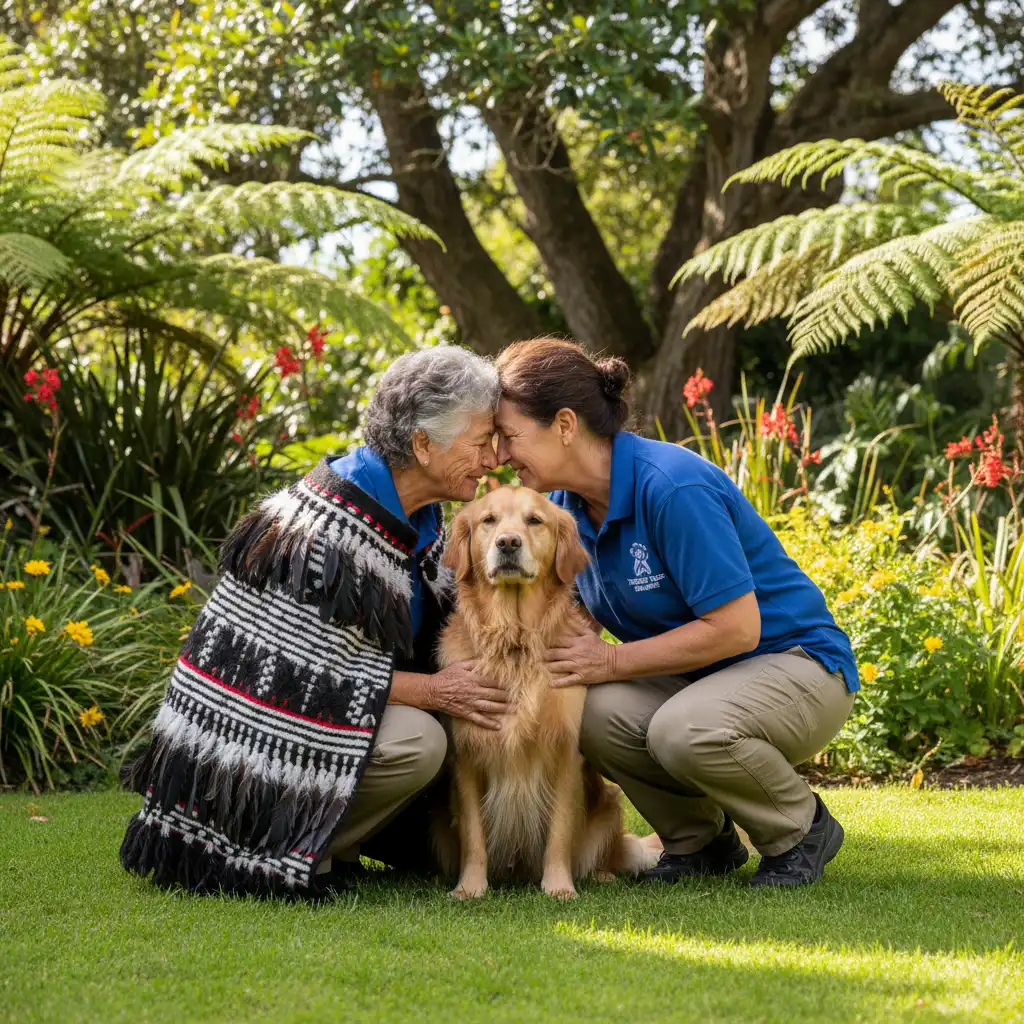
Before any clinical work begins, time must be made for whakawhanaungatanga. This is the process of establishing relationships and connections. In a Western model, a therapist might jump straight to assessment. In a culturally safe AAT model, the handler should take time to introduce themselves, their lineage (if appropriate), and the animal’s story. Allowing the client to connect with the animal’s whakapapa (background/lineage) builds trust.
Navigating Tapu and Noa with Animals
Central to Māori culture are the concepts of Tapu (sacred/restricted) and Noa (common/unrestricted). Misunderstanding these concepts can cause significant cultural offense.
- Head vs. Body: The head is considered the most tapu part of the body. Handlers should be cautious about allowing animals to lick a client’s face or head unless the client initiates or explicitly permits it. Generally, keeping the animal near the hands or legs (noa) is safer until the relationship is established.
- Food and Animals: In Te Ao Māori, food (kai) is noa and is used to lift tapu. However, mixing animals (often associated with hygiene concerns) with areas where food is prepared or consumed can be problematic. Therapy sessions should ideally take place away from dining areas (wharekai) to respect these boundaries.
- Furniture and Bedding: Tables and pillows (used for heads) are tapu. Allowing a therapy dog to sit on a table or rest its rear end on a pillow used for a patient’s head is culturally inappropriate. Handlers must bring their own mats or blankets for the animal to define a clear, respectful space.
Bicultural Practice and Te Tiriti o Waitangi
Aotearoa New Zealand is founded on Te Tiriti o Waitangi. AAT providers operating in the health and disability sectors have an obligation to uphold the Treaty principles. This is not just a legal requirement but an ethical one.
Partnership: Working together with Māori clients to determine how the animal is incorporated into their care. It is not “doing therapy to” the client, but working in partnership.
Protection: Ensuring that Māori knowledge and values are respected. For example, if a client believes an animal signifies a bad omen (which can occur in some iwi beliefs regarding specific animals or birds), the therapist must protect the client’s spiritual safety by not forcing the interaction.
Participation: Ensuring Māori have equal access to AAT services. This often means taking the therapy to the community (marae-based clinics or home visits) rather than expecting clients to come to a sterile clinical environment.
Meeting Ministry of Health Funding Requirements
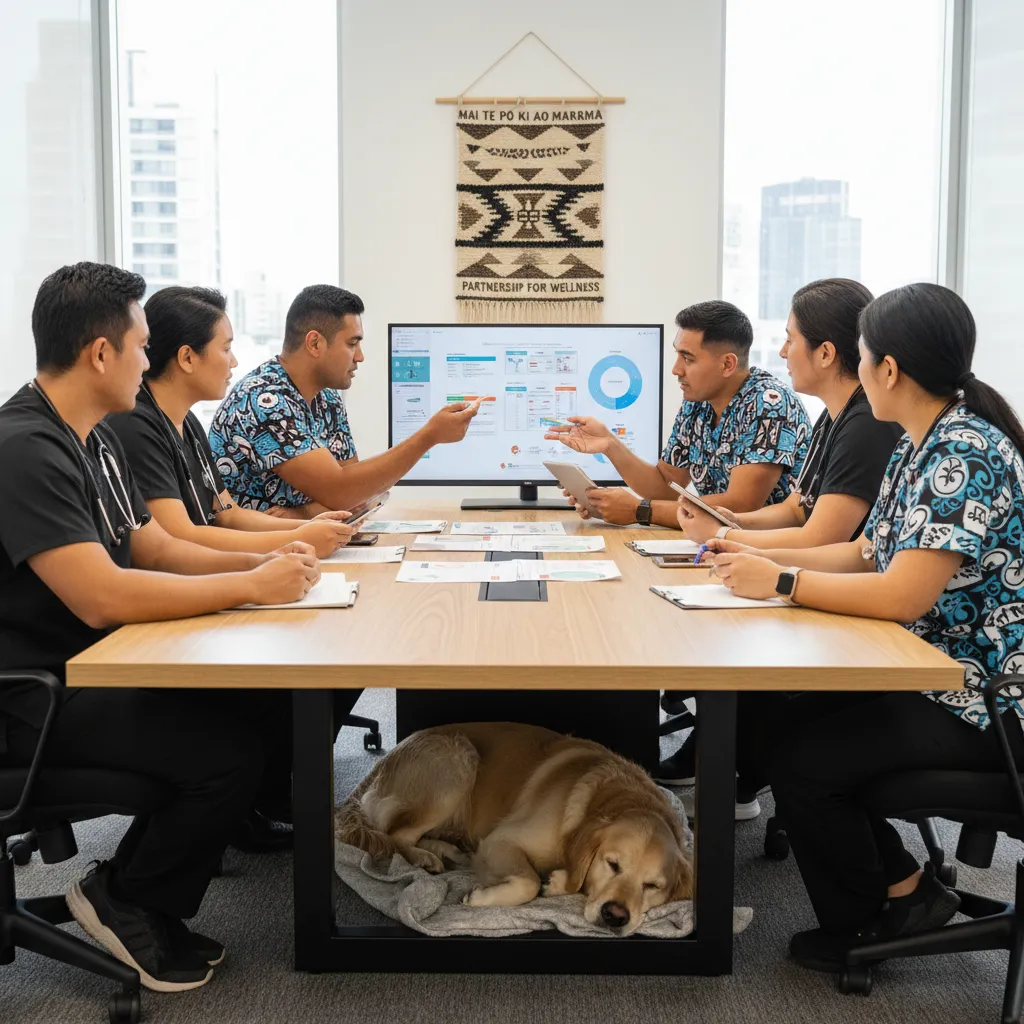
Securing funding from the Ministry of Health (MoH) or ACC for Animal Assisted Therapy often hinges on the provider’s ability to demonstrate cultural responsiveness. The creation of Te Whatu Ora (Health New Zealand) and Te Aka Whai Ora (Māori Health Authority) has solidified the requirement for equity-led healthcare.
Documentation and Outcome Measurement
To meet funding criteria, AAT providers should consider using Māori outcome measurement tools alongside standard clinical measures. One such tool is Hua Oranga.
Hua Oranga measures outcomes across the four dimensions of Te Whare Tapa Whā. When writing funding applications or reports:
- Define the Goal: Instead of solely listing “reduced anxiety,” list “restoration of Taha Wairua through connection with the therapy animal.”
- Evidence of Cultural Safety: Explicitly state the protocols used (e.g., “Sessions conducted in accordance with tikanga Māori, respecting tapu/noa boundaries”).
- Whānau Engagement: Document how the therapy involved or benefited the wider family unit, as this aligns with MoH’s Whānau Ora strategies.
Furthermore, providers must show that they are actively reducing barriers to access. This might involve offering sessions in community settings or utilizing Te Reo Māori commands with the animals, which can be incredibly empowering for fluent speakers or those reconnecting with their language.
Conclusion: The Future of AAT in Aotearoa
The future of Animal Assisted Therapy in New Zealand lies in a genuine bicultural approach. By weaving the clinical benefits of animal interaction with the wisdom of Māori health models, providers can offer a service that is not only effective but deeply respectful of the land and people.
Cultural safety is a journey, not a destination. It requires ongoing self-reflection, education, and a willingness to listen to tangata whenua. When done correctly, the bond between human and animal becomes a powerful conduit for holistic healing, honoring the spirit of Te Whare Tapa Whā.
People Also Ask (PAA)
What is Te Whare Tapa Whā in animal therapy?
Te Whare Tapa Whā is a Māori health model representing four pillars of wellbeing: physical, spiritual, family, and mental. In animal therapy, this model is used to ensure interventions address the whole person, such as using animals to uplift spirit (wairua) and encourage social connection (whānau), rather than just treating physical symptoms.
How does culture affect animal assisted therapy in NZ?
Culture dictates how animals are viewed and treated. In NZ, Māori concepts of Tapu (sacred) and Noa (common) influence where animals can go and how they interact with patients. Cultural safety ensures that therapy respects these beliefs, such as keeping animals away from food areas or respecting the sanctity of the head.
Is animal therapy funded by the Ministry of Health NZ?
Animal therapy is not usually funded as a standalone service but can be funded as part of a broader therapeutic plan (e.g., Occupational Therapy or Psychology) under ACC or Ministry of Health contracts, provided the practitioner is registered and can demonstrate clinical necessity and cultural responsiveness.
What are the cultural protocols for dogs in Māori culture?
While views vary among iwi, general protocols include keeping dogs away from food preparation areas (wharekai) and sleeping areas used for heads. Dogs are often viewed as part of the natural world, but they must be managed so they do not infringe on the tapu of a person, particularly the head.
How to incorporate Te Tiriti o Waitangi into therapy practice?
Therapists incorporate Te Tiriti by practicing partnership (decision-making with the client), protection (safeguarding cultural values), and participation (ensuring equitable access). This includes using Te Reo Māori where possible and validating Māori health models within the treatment plan.
What is the difference between cultural safety and cultural competence?
Cultural competence focuses on the knowledge and skills of the practitioner regarding other cultures. Cultural safety, however, focuses on the experience of the patient. A service is only culturally safe if the patient feels their identity is respected and they are not powerless. It shifts the focus from “learning about” to “reflecting on self.”