
The primary difference between Māori models of care and Western Animal Assisted Therapy (AAT) lies in the foundational worldview: Western AAT typically focuses on clinical, individualized, and linear symptom reduction using animals as therapeutic tools, whereas Māori models emphasize a holistic, cyclic approach (Hauora) where healing is collective, spiritual, and deeply rooted in kinship (Whanaungatanga) with the natural world.
What are the Core Differences Between Māori Models of Care and Western AAT?
In the evolving landscape of mental health and rehabilitation in Aotearoa New Zealand, professionals are increasingly tasked with bridging the gap between distinct therapeutic paradigms. Understanding the nuance of Maori models of care vs Western AAT is not merely an academic exercise; it is a clinical necessity for providing culturally safe and effective practice.
Western Animal Assisted Therapy is deeply rooted in the biomedical and biopsychosocial models. It views health primarily as the absence of disease or the management of symptoms. In this context, the animal is often conceptualized as a “co-therapist” or a modality—a mechanism to lower cortisol levels, increase oxytocin, facilitate social lubrication, or improve gross motor skills. The focus is linear: diagnosis → intervention (with animal) → measurable outcome.
Conversely, Māori models of care are predicated on an indigenous worldview that sees health (Hauora) as holistic and indivisible. It is not enough to treat the mind or body in isolation. Health is a state of balance between the physical, spiritual, mental, and social dimensions. In this worldview, the inclusion of animals is not a novel clinical intervention but a restoration of ancestral connection to the natural world. The animal is not a tool but a manifestation of Mauri (life force) and a connection to Papatūānuku (Earth Mother).
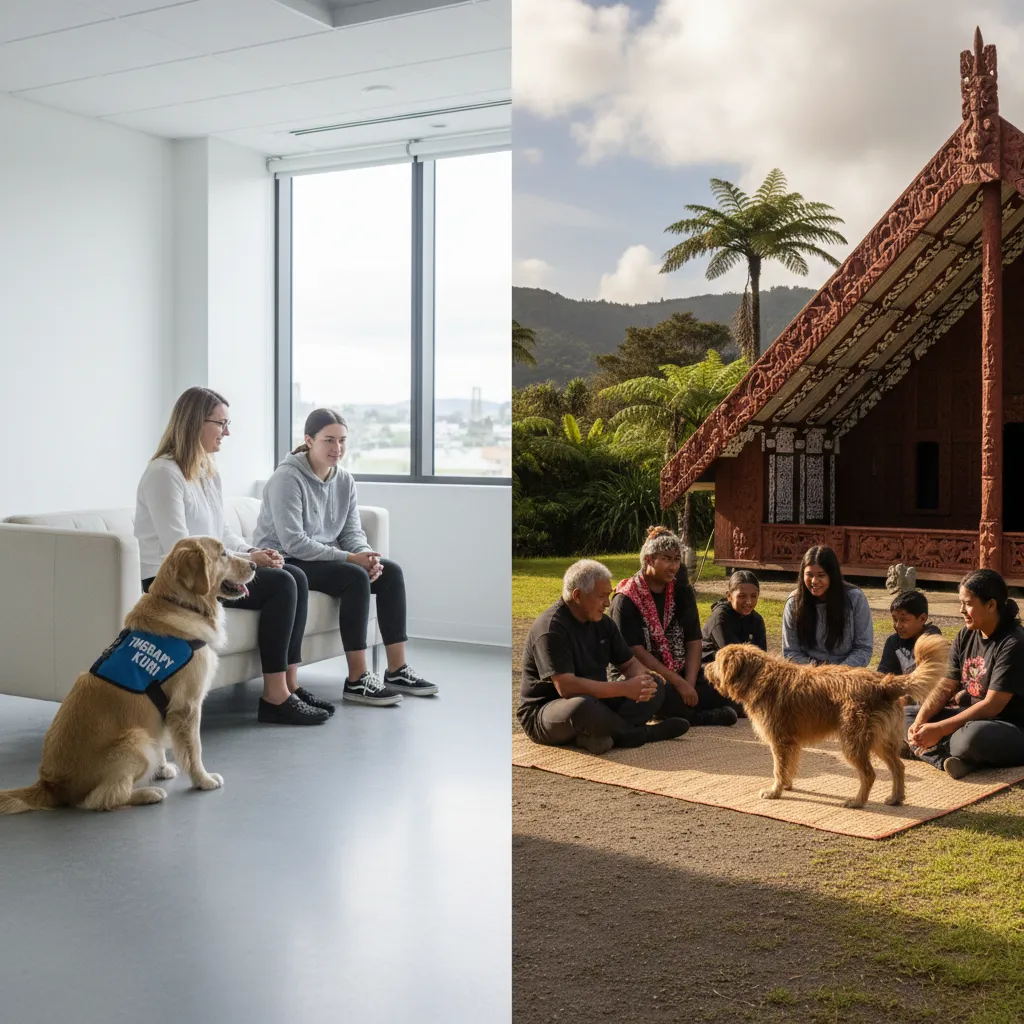
The Linear vs. Cyclic View of Health
Western psychology often operates on a linear timeline—intake, treatment plan, discharge. Success is defined by the individual’s ability to function independently in society. Māori health models often view well-being as cyclic and intergenerational. A return to health is a return to balance, not necessarily a “cure” in the Western sense. When integrating animals, a Western practitioner might ask, “Did the dog reduce the client’s anxiety score?” while a practitioner utilizing Māori models might ask, “Did the interaction with the animal restore the client’s spirit (Wairua) and connection to their surroundings?”
How Does Te Whare Tapa Whā Apply to AAT?
To truly grasp the conflict and potential synergy between these systems, one must examine Sir Mason Durie’s Te Whare Tapa Whā model. This model compares health to the four walls of a house. If one wall is weak, the structure falls. Western AAT often focuses heavily on two of these walls, while Māori models demand equal attention to all four.
- Taha Tinana (Physical Health): Western AAT excels here (e.g., walking a dog for cardiovascular health or brushing a horse for motor skills).
- Taha Hinengaro (Mental/Emotional Health): Also a strong suit of Western psychology (e.g., using animals to process trauma or reduce anxiety).
- Taha Whānau (Family/Social Health): Western therapy is often private and individual. Māori models view the individual as part of a whānau system. An animal in this context serves the collective, facilitating relationships not just between client and therapist, but between the client and their community.
- Taha Wairua (Spiritual Health): This is the most significant divergence. In Western clinical settings, spirituality is often secondary or ignored. In Māori health, it is foundational. Animals are spiritual conduits. They possess Mana and Mauri. Engaging with an animal is a spiritual practice of acknowledging the interconnectedness of all living things.
When a therapist ignores Taha Wairua or Taha Whānau while practicing AAT in New Zealand, they are failing to provide a Māori model of care, regardless of how well-trained the therapy animal is.

The Role of the Collective vs. The Individual
A critical distinction in Maori models of care vs Western AAT is the unit of treatment. Western therapy is historically individualistic. The “patient” is the autonomous unit of analysis. Privacy laws and clinical structures reinforce the dyad of Therapist-Client (with the animal as a third party).
In Te Ao Māori (the Māori world), the individual does not exist in isolation. Identity is defined through Whakapapa (genealogy) and connection to others. Therefore, a therapeutic intervention that isolates the individual from their support system may be culturally counter-productive.
Whanaungatanga in Therapy
Whanaungatanga refers to the process of establishing relationships and relating to others. In a Western AAT session, the relationship building (rapport) is usually focused on the professional alliance. In a Māori context, Whanaungatanga is about establishing shared connections, history, and trust before any “work” begins. The animal can be a powerful catalyst for this. Instead of the animal being a tool for the individual’s rehabilitation, the animal becomes a medium for building the relationship between the therapist, the client, and the whānau.
For example, in a Western setting, a child might work alone with a dog to improve reading skills. In a Māori-centric model, the whānau might be present, sharing stories (pūrākau) while the dog sits among them, facilitating a collective healing environment where the child feels supported by their lineage, not just a clinician.
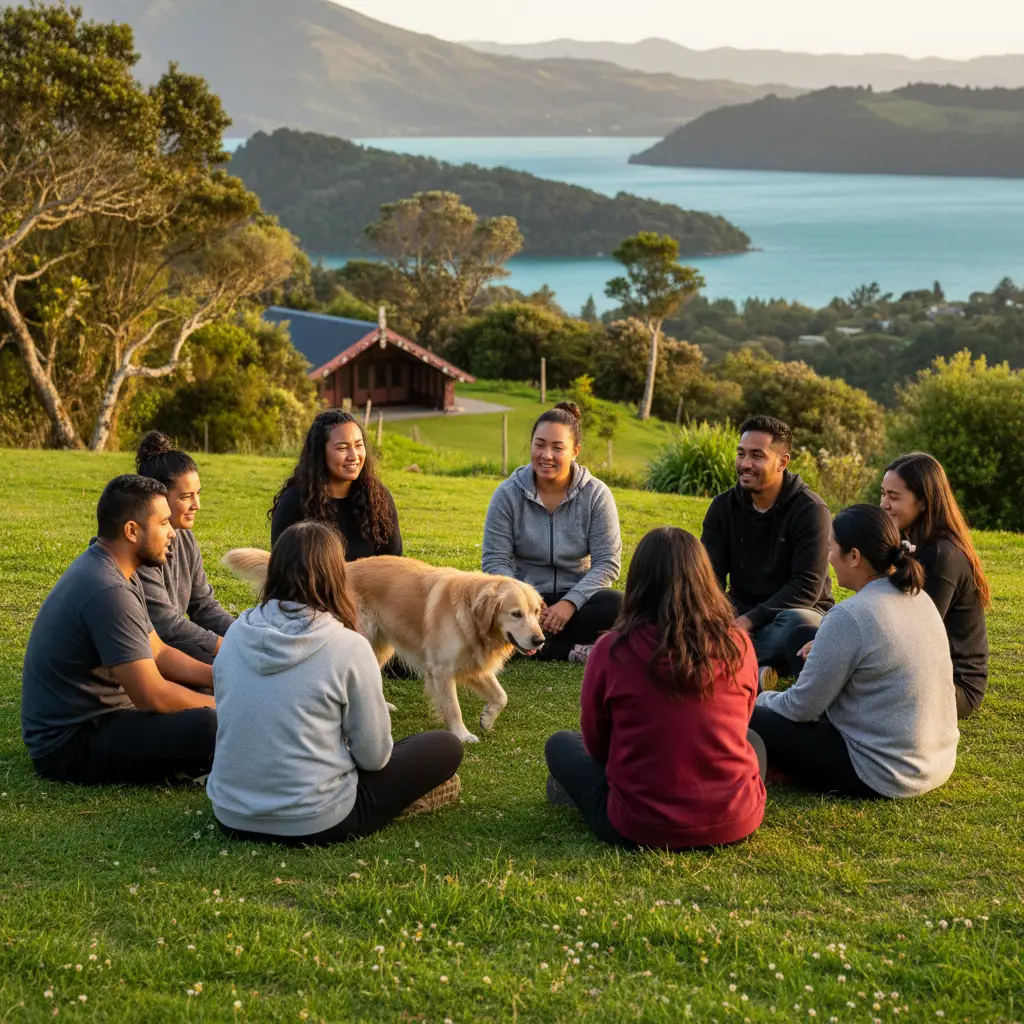
The Role of the Animal: Tool vs. Kinship
The ontology of the animal differs significantly between the two paradigms. This philosophical difference impacts how therapy is delivered and how the animal is treated.
Western View: The Animal as an Agent of Change
In Western AAT, the animal is often selected and trained for specific temperament traits to serve human needs. We speak of “using” AAT. The animal is an adjunct to the clinician. While animal welfare is paramount in modern ethics, the dynamic remains anthropocentric—the animal is there to help the human.
Māori View: Kaitiakitanga and Whanaungatanga
In Māori thought, humans and animals share a common ancestry through Tāne Mahuta (Guardian of the Forest). We are kin. This shifts the dynamic from utilization to Kaitiakitanga (guardianship/stewardship). The relationship is reciprocal. The therapy is not just about what the animal does for the human, but the mutual exchange of Mauri between them.
This perspective aligns with the concept of “One Health,” but goes deeper spiritually. Healing occurs because the client reconnects with the natural order. Respecting the animal’s Mana is part of the therapy itself. If a client learns to respect the tapu (sacredness) of the animal, they learn to respect their own tapu.
Creating a Hybrid Model for AAT in New Zealand
For AAT practitioners in New Zealand, the goal should not be to choose one over the other, but to weave them together—a process often called He Awa Whiria (Braided Rivers). This approach acknowledges that both streams of knowledge have value and can converge to create a more powerful current.
To implement a hybrid model effectively, practitioners should consider the following strategies:
1. Incorporate Tikanga (Customs)
Start sessions with a Karakia (prayer/incantation) to settle the space and acknowledge the spiritual dimension. This honors Taha Wairua. Allow the animal to be part of this opening ritual.
2. Broaden the Scope to Whānau
Where appropriate and with consent, invite family members to participate in the AAT sessions. Move away from the strict isolation of the clinical hour. Let the animal interact with the support system, not just the identified patient.
3. Shift Language from “Use” to “Partnership”
Change the narrative. Instead of saying “we are using the dog to reduce anxiety,” frame it as “we are spending time with [Dog’s Name] to help ground us and reconnect with our environment.” This subtle shift respects the Mana of the animal.
4. Environment Matters
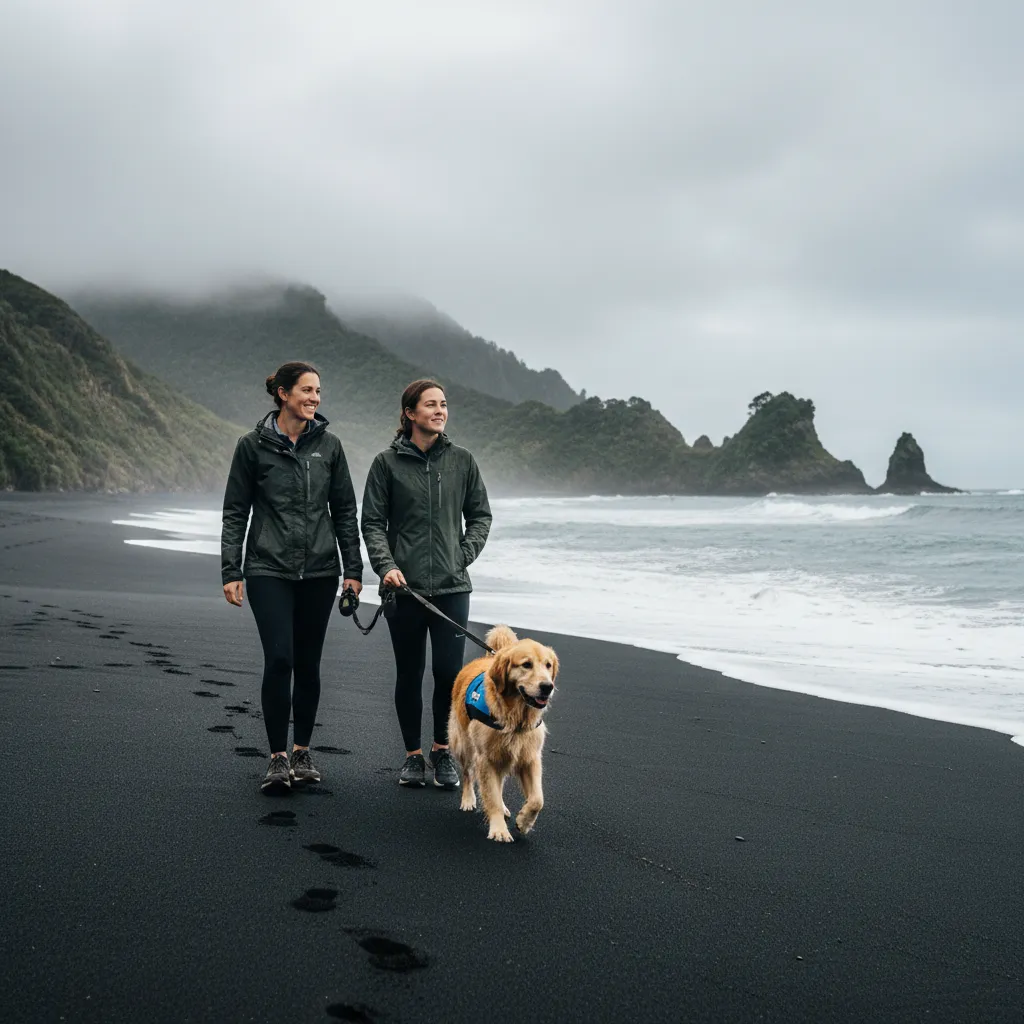
Western AAT often happens in offices. Māori health is connected to the land (Whenua). Whenever possible, take the AAT session outdoors. Let the interaction happen in nature, facilitating a connection to Taha Tinana and Taha Wairua simultaneously.
Challenges and Ethical Considerations
Merging Maori models of care vs Western AAT is not without challenges. There is a risk of cultural appropriation if Western practitioners adopt Māori concepts superficially without understanding their depth.
Cultural Safety: It is imperative that AAT practitioners undergo cultural competency training. Understanding the concept of Tapu (sacred/restricted) and Noa (common/free from tapu) is vital. For example, in Māori culture, heads are tapu. Allowing a therapy dog to lick a client’s face might be culturally offensive to some, whereas in Western AAT it might be seen as affectionate.
Evidence vs. Tradition: Western funding models (like ACC) often require “evidence-based practice” rooted in quantitative data. Māori models rely on qualitative, ancestral, and narrative evidence. Practitioners must become adept at translating the holistic benefits of the hybrid model into language that satisfies funding bodies without compromising the integrity of the indigenous approach.
Ultimately, the integration of these models offers a richer, more compassionate, and effective pathway for healing in Aotearoa. By respecting the wisdom of the past and the clinical advancements of the present, we create a future where therapy is accessible, inclusive, and deeply resonant.
People Also Ask
What is the main difference between Hauora and Western health models?
Hauora (Māori health) is holistic, viewing physical, mental, social, and spiritual well-being as interconnected and inseparable. Western health models often compartmentalize these aspects, focusing primarily on treating physical or mental symptoms in isolation using clinical interventions.
How does Te Whare Tapa Whā relate to animal therapy?
Te Whare Tapa Whā’s four pillars (Physical, Mental, Family, Spiritual) provide a framework for AAT. Animals can support physical health (Tinana), emotional regulation (Hinengaro), facilitate social connection (Whānau), and provide spiritual grounding (Wairua), ensuring a balanced approach to therapy.
Is Animal Assisted Therapy funded in New Zealand?
Funding is variable. While ACC does not typically fund AAT as a standalone treatment, it can sometimes be included as part of a wider rehabilitation plan under psychology, occupational therapy, or counseling services if the practitioner is registered and the intervention is deemed clinically necessary.
What is the concept of Mauri in relation to animals?
Mauri is the life force or essential essence that exists in all living things. In a Māori worldview, animals possess their own Mauri. Acknowledging and respecting this life force is central to the relationship, shifting the dynamic from using an animal as a tool to respecting them as a living being with their own mana.
Can non-Māori practitioners use Māori models of care?
Yes, but it requires cultural humility, proper training, and respect. It is known as bicultural practice. Non-Māori practitioners should avoid appropriating the culture and instead aim to practice in a way that is culturally safe and responsive to the needs of Māori clients, often by collaborating with Māori advisors.
Why is the collective approach important in NZ therapy?
For many Māori, identity is tied to the whānau (family) and community. Individual-focused therapy can feel alienating. A collective approach acknowledges that healing the individual requires healing relationships and involving the support network, making the therapy more sustainable and culturally relevant.