
To request a quote for exam stress dogs in New Zealand, university administrators must identify their preferred dates during the October/November assessment window, estimate student foot traffic, and determine the duration of the campus activation. Professional providers deliver tailored proposals covering certified therapy teams, insurance, and risk management strategies designed to lower student cortisol levels effectively.
Why Invest in Animal-Assisted Therapy for Exams?
In the high-pressure environment of tertiary education, student wellbeing is paramount. As New Zealand universities approach the critical end-of-year assessment period, the demand for effective, immediate stress relief solutions skyrockets. Requesting a quote for exam stress dogs is not merely a purchase of a service; it is an investment in student retention, mental health support, and campus culture.
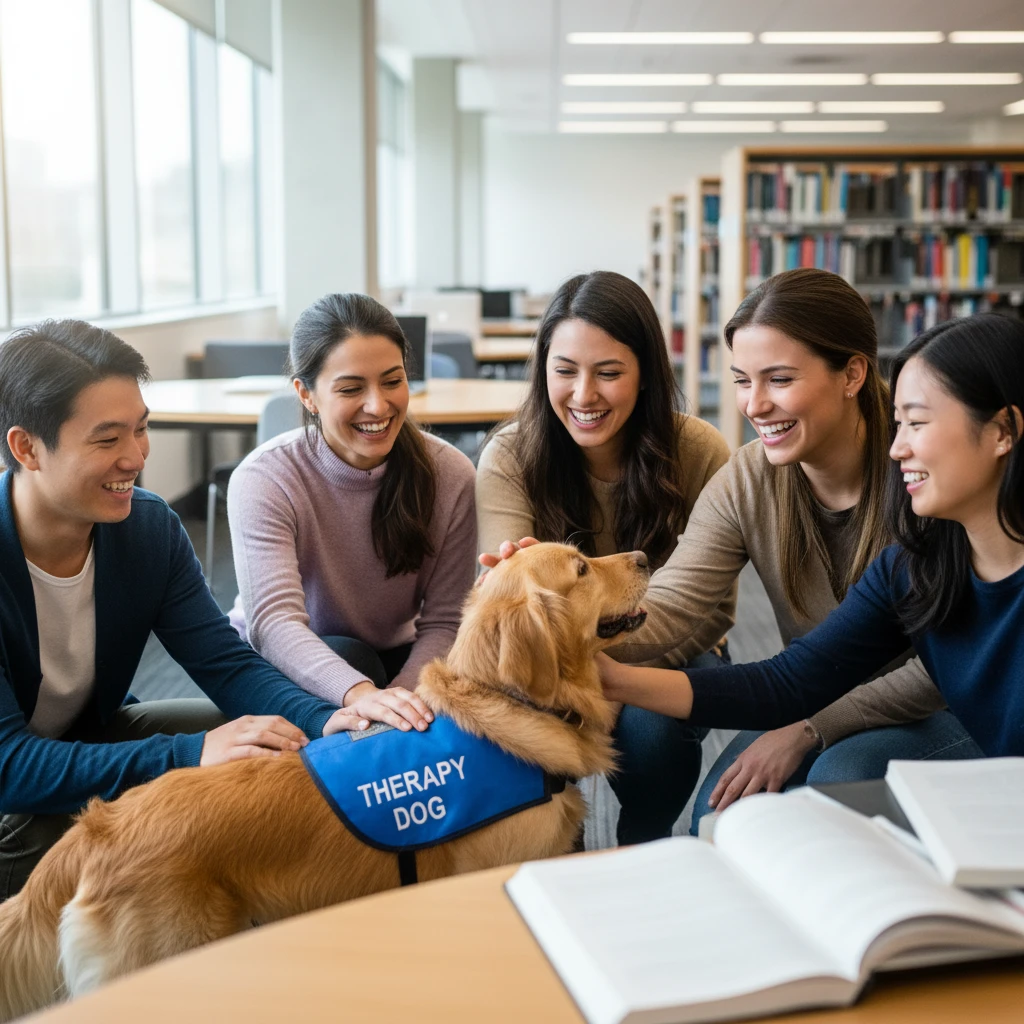
Animal-Assisted Therapy (AAT) has transitioned from a novelty to a necessity in modern student services. When you request a quote for exam stress dogs, you are initiating a protocol that brings certified canine teams onto campus to provide a physiological and psychological break for students overwhelmed by revision and performance anxiety. These interactions are structured, safe, and professionally managed to ensure maximum benefit for the student body.
The Science: Evidence for Stress Reduction Before Exams
Before submitting a request for a quote, it is essential for stakeholders and budget approvers to understand the empirical evidence supporting canine therapy. This is not a placebo; it is a biological intervention.
Cortisol Regulation
Research consistently demonstrates that interaction with friendly dogs leads to a significant reduction in cortisol, the body’s primary stress hormone. A study often cited in AAT literature indicates that just 10 minutes of petting a dog can lower cortisol levels significantly. For a student about to enter an exam hall, this biological reset can mean the difference between panic and focus.
The Oxytocin Effect
Simultaneously, these interactions trigger the release of oxytocin, often referred to as the “bonding hormone.” This neurochemical shift promotes feelings of calm, trust, and safety. In a university setting, where isolation can be a side effect of intense study, this chemical boost combats loneliness and anxiety.
Cardiovascular Benefits
Physical contact with therapy dogs has been linked to lowered blood pressure and reduced heart rates. For students experiencing the physical symptoms of anxiety—racing hearts and shallow breathing—the rhythmic act of stroking a dog provides a tangible anchor, regulating their physiological state.
Critical Timing: October and November in NZ
The academic calendar in New Zealand dictates a specific window of high intensity. The period spanning late October through November represents the culmination of the academic year (Semester 2). This is the “Red Zone” for student stress.
When you prepare to request a quote for exam stress dogs, timing is the most critical variable. Top-tier AAT providers in New Zealand experience peak demand during these six weeks. To secure the most experienced handlers and the most suitable dogs, early engagement is vital.
The Pre-Exam Window
The ideal activation time is during “Study Week” or the reading period immediately preceding the first exams. This allows students to decompress before the adrenaline of the actual testing begins. Allocating budget for this specific window maximizes the preventative impact of the therapy.

University Campus Activation Packages
When you request a quote for exam stress dogs, you are generally presented with several “Activation Packages.” Understanding these tiers helps in securing the right level of service for your specific campus population.
The “Library Pop-Up” Package
This is a high-impact, localized solution. It typically involves:
- Duration: 2–4 hours.
- Team: 2 Certified Handlers and 2 Therapy Dogs.
- Location: Foyer of the main library or student union building.
- Capacity: Suitable for interacting with 100–200 students in a flowing rotation.
This package is ideal for smaller campuses or specific faculty buildings looking to provide a quick “stress-buster” station.
The “Campus Takeover” Package
Designed for large universities (e.g., Auckland, Otago, Victoria), this package ensures widespread coverage.
- Duration: Full day (or multiple days).
- Team: 4–6 Certified Handlers and rotating teams of dogs to ensure animal welfare.
- Location: Roving teams or multiple static stations across campus.
- Capacity: Can service 500+ student interactions per day.
Custom Wellbeing Workshops
Some providers offer a more structured approach, combining the presence of dogs with mental health professionals who can guide breathing exercises or mindfulness techniques while the students interact with the animals.

Managing High-Volume Student Interactions
A major concern for university administrators when they request a quote for exam stress dogs is the logistics of managing large crowds. Professional AAT providers in New Zealand include crowd management strategies in their operational planning.
The Rotation System
To prevent overcrowding and ensure the safety of both the animals and the students, a strict rotation system is often employed. Students may be given time slots or managed in a queue system where they get 5–10 minutes of interaction time. This ensures equitable access and prevents the dogs from becoming overwhelmed.
Hygiene and Allergies
Professional quotes will always include details on hygiene protocols. Hand sanitizer stations are mandatory at entry and exit points of the interaction zone. regarding allergies, the activation zones are clearly marked, allowing students with cynophobia (fear of dogs) or allergies to easily avoid the area without disruption to their route.
Animal Welfare Breaks
Ethical AAT providers strictly adhere to animal welfare guidelines. Dogs cannot work indefinitely. Your quote should reflect a schedule that includes mandatory rest breaks for the animals. If a provider promises continuous interaction for 8 hours with a single dog, this is a red flag. High-quality providers rotate dogs every 45–60 minutes to ensure they remain happy, willing, and stress-free participants.
How to Request Your Quote
To expedite the process and receive an accurate proposal for your university, include the following details when you contact an Animal-Assisted Therapy provider:
- Dates: Be specific. e.g., “October 24th to November 10th.”
- Venue Details: Indoor vs. Outdoor. (Note: NZ spring weather can be unpredictable; indoor backups are essential).
- Estimated Volume: How many students do you aim to support?
- Budget Constraints: Providing a ballpark figure helps providers tailor the package (e.g., number of dogs) to your reality.
- Parking and Access: Logistics for the handlers to bring dogs on site.
By providing this data upfront, you move quickly from inquiry to a confirmed booking, securing the mental health support your students need during their most challenging weeks.
Frequently Asked Questions
How much does it cost to hire therapy dogs for a university?
Costs vary based on the number of dogs, duration, and location. Generally, packages in New Zealand can range from $500 for a short single-team session to several thousand dollars for multi-day, multi-team campus activations. Requesting a specific quote is necessary for accurate pricing.
Are the therapy dogs certified and insured?
Yes. Reputable providers only use dogs that have passed rigorous temperament testing and hold current therapy dog certification. They also carry public liability insurance specifically covering animal-assisted therapy activities on third-party premises.
What happens if a student is allergic to dogs?
Events are held in designated, well-ventilated areas (or outdoors) that are clearly signposted. This allows students with allergies to avoid the specific zone. Hand sanitizers are provided to remove dander from students’ hands after interaction.
Can we request specific breeds of dogs?
While providers try to accommodate preferences, the priority is the temperament and availability of the dog. Common therapy breeds include Golden Retrievers, Labradors, and Poodles, but the focus is always on the dog’s ability to handle high-volume social environments.
How far in advance should we book for exam season?
For the October/November exam period in New Zealand, it is recommended to request a quote and book at least 2–3 months in advance (August/September) as this is the peak season for all AAT providers.
Do the dogs need special parking or access?
Yes. Handlers require close parking to transport the dogs and equipment safely. Easy access to water and a designated toileting area for the dogs (green space) near the event site is also required.