
Animal Assisted Therapy (AAT) in New Zealand is a professional, goal-directed intervention where a qualified health or human service provider incorporates a specifically selected and trained animal into their practice. Unlike casual visitation, AAT in NZ is integrated into clinical treatment plans to improve physical, cognitive, behavioral, and socio-emotional functioning within a culturally safe framework.
The Evolving Landscape of Animal Assisted Therapy in NZ
The perception of animals in therapeutic settings across Aotearoa has shifted dramatically over the last decade. Moving beyond the traditional model of “pet therapy”—which often involved well-meaning volunteers visiting rest homes—Animal Assisted Therapy (AAT) has established itself as a credible, clinical modality. In New Zealand, this practice is now utilized by registered psychologists, occupational therapists, social workers, and counselors to achieve specific clinical outcomes.
This evolution is driven by a growing body of research supporting the efficacy of the human-animal bond. In the Kiwi context, this is further bolstered by a lifestyle that heavily values animal companionship. However, as the industry grows, so does the need for distinction between Animal Assisted Activities (AAA), which are casual and recreational, and Animal Assisted Therapy (AAT), which is formal and documented.

Current Market Trends in Aotearoa
We are witnessing a surge in demand for AAT across three main sectors: mental health services, special education, and aged care. The New Zealand market is unique due to its regulatory environment. Unlike some jurisdictions where therapy animals have legal public access rights similar to service dogs, NZ law differentiates strictly between Disability Assist Dogs and Therapy Animals. This requires practitioners to navigate specific access permissions and liability insurance landscapes.
Transitioning from Volunteer Visitation to Professional Practice
One of the most critical distinctions in the New Zealand sector is the gap between volunteer visitation and professional clinical practice. Understanding this difference is vital for institutions looking to implement these programs and for individuals seeking a career in the field.
Defining the Scope of Practice
Volunteer Visitation (AAA): Organizations such as Canine Friends Pet Therapy do incredible work in New Zealand. Their model typically involves volunteers taking their own pets to visit hospitals or rest homes to provide comfort. The goal is general well-being, and the interaction is spontaneous.
Professional AAT: This involves a clinician. For example, a registered NZ psychologist might use a therapy dog to assist a child with trauma in regulating their nervous system during a counseling session. The animal is a tool in the therapeutic toolbox. The professional must document the interaction, set specific goals (e.g., “Client will groom the dog for 10 minutes to improve fine motor skills”), and evaluate progress.
Ethical Considerations and Animal Welfare
Professionalizing the industry requires a rigorous focus on animal welfare. In New Zealand, the Animal Welfare Act 1999 applies, but ethical AAT goes further. Practitioners must adhere to the Five Domains Model of animal welfare, ensuring the animal is not just free from cruelty, but has positive experiences.
- Consent: The animal must have the choice to participate or withdraw.
- Suitability: Not every dog is a therapy dog. Temperament testing is non-negotiable.
- Workload Management: Professional handlers limit their animal’s working hours to prevent burnout, a common issue in poorly managed programs.
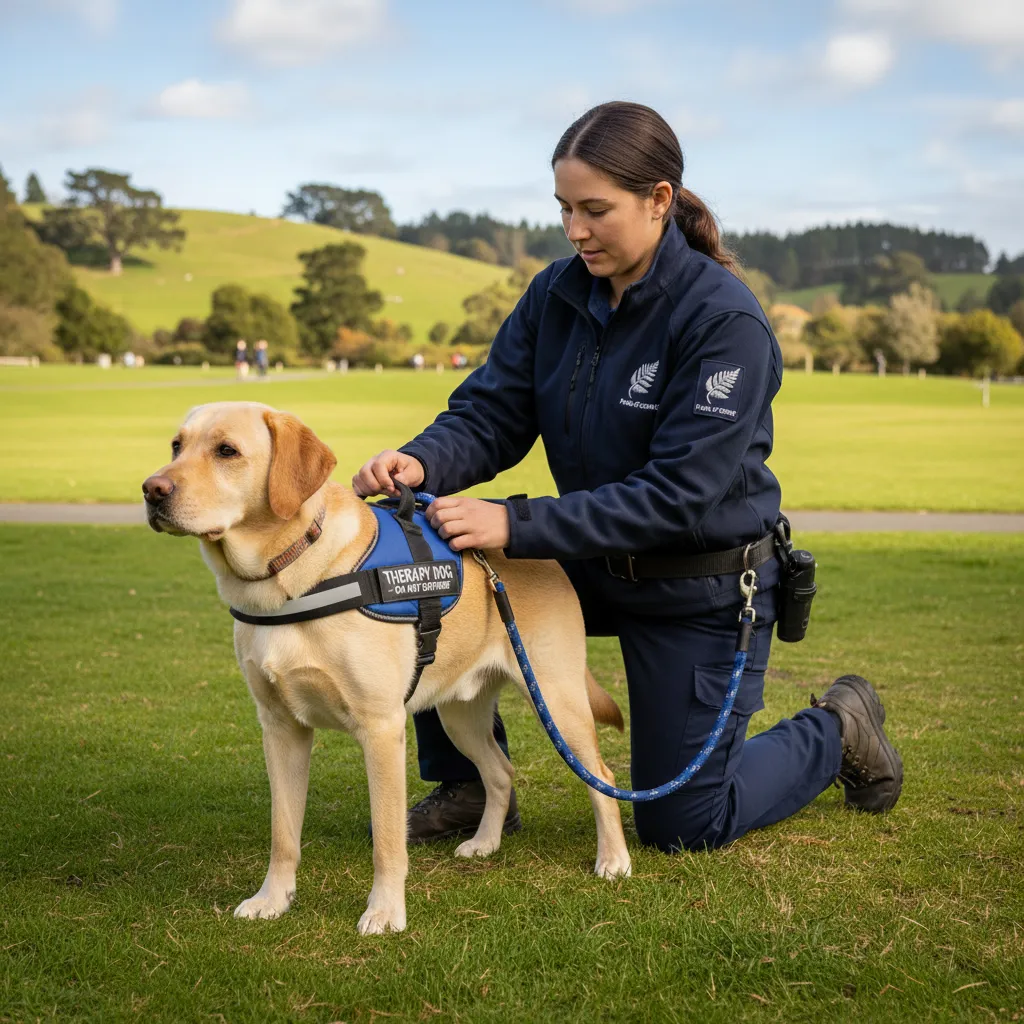
Te Whare Tapa Whā: Cultural Safety in Therapy
In Aotearoa New Zealand, no therapeutic modality can be truly effective or professional without addressing cultural safety and the principles of Te Tiriti o Waitangi. Animal Assisted Therapy aligns remarkably well with the Māori holistic model of health, Te Whare Tapa Whā, developed by Sir Mason Durie.
Integrating Animals into the Four Pillars
AAT offers a unique bridge to connect with tāngata whai ora (people seeking wellness) by supporting the four cornerstones of health:
- Taha Wairua (Spiritual Health): The connection between human and animal often transcends language. For many, animals represent a spiritual connection to the natural world. In therapy, an animal can provide a sense of purpose and unconditional acceptance that nourishes the spirit.
- Taha Hinengaro (Mental and Emotional Health): Animals facilitate emotional regulation. Their presence can lower cortisol levels and stimulate oxytocin, creating a physiological state conducive to processing complex emotions or trauma.
- Taha Tinana (Physical Health): Walking a therapy dog, brushing them, or engaging in play directly contributes to physical well-being and mobility, which is often a goal in occupational therapy settings.
- Taha Whānau (Family and Social Health): Animals act as social lubricants. They build Whanaungatanga (relationships/connection). In a group therapy setting, the presence of a dog can dissolve social barriers, allowing participants to connect with the therapist and each other more readily.
Culturally safe AAT practitioners in NZ must also be aware of differing cultural views on animals. For example, while dogs are generally beloved, specific protocols regarding hygiene and space must be respected to ensure the mana of all participants is upheld.

Services for Schools, Corporates, and Healthcare
The versatility of Animal Assisted Therapy allows it to be deployed across various sectors in New Zealand, each with tailored approaches.
AAT in New Zealand Schools
Educational institutions are increasingly adopting “school dogs.” However, best practice dictates these should be part of a structured program rather than just a staff member’s pet in the classroom. Services include:
- Reading Programs: Children read to dogs who offer a non-judgmental audience, improving literacy rates and confidence.
- Behavioral Support: Animals are used in de-escalation strategies for students with behavioral challenges or neurodiversity (ASD/ADHD).
- Exam Stress Relief: Universities like Otago and Auckland often host therapy animal sessions during exam weeks to lower student anxiety.
Corporate Wellness Solutions
New Zealand businesses are recognizing the ROI of employee well-being. Corporate AAT services are becoming a staple in wellness programs. These are not merely “bring your dog to work” days but facilitated sessions where employees engage with trained animals to reduce workplace stress, improve team cohesion, and boost morale.
Healthcare and Rehabilitation
In hospitals and rehabilitation centers, AAT is used for:
- Physical Rehab: Encouraging stroke victims to use their affected limbs to throw a ball or brush a dog.
- Mental Health Units: Reducing isolation and providing a grounding mechanism for patients experiencing acute distress.
- Aged Care: Beyond visitation, therapists use animals to trigger memory recall in dementia patients and combat the loneliness epidemic in facilities.

Training Standards and Regional Hubs
For those seeking to enter the industry or hire a professional, understanding training standards is paramount. New Zealand does not currently have a single government regulatory body for AAT, which places the onus on the practitioner to seek reputable certification.
What to Look for in a Provider
A legitimate AAT professional in NZ should possess:
- Clinical Qualification: A degree in a human service field (Psychology, Nursing, Social Work, Education, OT).
- Specialized AAT Training: Certification from bodies that align with international standards (such as AAII or IAHAIO).
- Animal Assessment: Proof that the specific animal has passed a rigorous temperament and health check.
- Insurance: Specific liability insurance that covers animal-related incidents.
Regional Availability
Auckland: The hub of AAT training and practice. Several private psychology practices now specialize in canine-assisted interventions. Training courses are often run here by visiting international experts or local organizations.
Wellington: Strong focus on government and policy-related AAT advocacy. The capital sees a high number of therapy animals in educational settings.
Christchurch & South Island: Following the earthquakes and subsequent trauma events, Christchurch developed a robust network of trauma-informed AAT providers. The St John Therapy Pet program (though largely volunteer) is very active here, alongside private clinicians.
People Also Ask (PAA)
What qualifications do you need for animal assisted therapy in NZ?
To practice professional Animal Assisted Therapy in NZ, you typically need a primary qualification in health, education, or social services (e.g., Psychology, Occupational Therapy). Additionally, you should complete a specialized certificate in Animal Assisted Interventions to understand the ethics, animal behavior, and risk management involved.
How much does animal assisted therapy cost in New Zealand?
The cost varies depending on the provider. Private psychology sessions incorporating AAT typically range from $150 to $220 NZD per hour. Some non-profit organizations may offer subsidized group sessions, and funding may be available through ACC if the therapy is part of a covered rehabilitation plan.
Can my dog become a therapy dog in NZ?
Yes, but it requires rigorous assessment. Your dog must be calm, confident, and resilient. They need to pass temperament testing that assesses their reaction to loud noises, rough handling, and strange equipment. Organizations like Canine Friends Pet Therapy assess for visitation, while clinical work requires professional assessment by an AAT trainer.
Is animal assisted therapy covered by ACC?
ACC (Accident Compensation Corporation) does not have a specific billing code for “Animal Assisted Therapy.” However, if the practitioner is a registered provider (e.g., a Psychologist or Occupational Therapist) and the AAT is a tool used within an approved treatment plan, the session itself is often covered.
What is the difference between a service dog and a therapy dog in NZ?
A Service Dog (Disability Assist Dog) is trained to perform specific tasks for one person with a disability and has legal public access rights under the Dog Control Act 1996. A Therapy Dog is trained to provide comfort and affection to many people in clinical or educational settings and does not have automatic public access rights to shops or cafes.
Where can I study animal assisted therapy in New Zealand?
There are limited university-level courses dedicated solely to AAT in NZ. Most professionals undertake short courses or diploma programs offered by private training organizations, or study online through international institutions while completing their practical hours in New Zealand under supervision.