
In New Zealand, the cost of a corporate wellness dog visit typically ranges from $250 to $450 NZD per hour for a single certified therapy team. Comprehensive half-day packages generally cost between $800 and $1,200 NZD, while full-day events can range from $1,500 to $2,500 NZD. Final pricing depends on location, team size, and visit frequency.
Investing in corporate wellness programs has shifted from a luxury to a necessity for New Zealand businesses aiming to retain top talent and combat workplace burnout. Among the most popular and effective interventions is Animal-Assisted Therapy (AAT). However, for HR Directors and Office Managers, understanding the financial investment required is the first step toward implementation. This guide breaks down the pricing structures, hidden variables, and return on investment associated with bringing professional therapy dogs into your workplace.
Standard Pricing Breakdown: Hourly vs. Packages
When evaluating the cost of corporate wellness dog visit services, it is essential to distinguish between casual visits and structured therapeutic programs. Professional providers in New Zealand generally offer tiered pricing models designed to scale with the size of the organization and the duration of the event.
Hourly Rates
For smaller businesses or one-off events (such as Mental Health Awareness Week), hourly rates are the most common billing structure. This model allows for flexibility but often comes at a higher per-hour cost compared to bulk packages.
- Single Team (1 Dog + 1 Handler): $250 – $450 NZD per hour.
- Dual Team (2 Dogs + 2 Handlers): $450 – $750 NZD per hour.
Note that most providers enforce a minimum booking duration, typically one hour, to cover travel and setup logistics.
Half-Day and Full-Day Packages
For larger enterprises or offices with over 50 employees, a single hour is often insufficient to ensure everyone gets interaction time. Packages offer a more economical rate per hour and often include additional educational components.
- Half-Day (3–4 Hours): $800 – $1,200 NZD. This usually includes scheduled breaks for the animals, which are mandatory under animal welfare guidelines.
- Full-Day (6–7 Hours): $1,500 – $2,500 NZD. These packages often involve rotating teams of dogs to prevent animal fatigue while ensuring continuous coverage for staff.
Recurring Wellness Subscriptions
Many providers offer discounted rates for recurring contracts. Establishing a monthly or quarterly visit creates a predictable routine for staff and can reduce costs by 10-20% compared to one-off bookings.
Key Factors Influencing the Price
The base rate is rarely the final invoice amount. Several logistical and operational variables can influence the final quote for a corporate dog visit. Understanding these helps in negotiating and planning your budget effectively.
1. Geographic Location and Travel
Most premier Animal-Assisted Therapy providers are based in major hubs like Auckland, Wellington, and Christchurch. If your office is located in the CBD, travel costs are usually negligible or included. However, for satellite offices or rural branches, you must account for:
- Mileage Fees: Typically charged at IRD standard rates (approx. 80-90 cents per km) for travel outside a 20km radius.
- Parking Costs: In cities like Auckland or Wellington, secure parking for a vehicle transporting animals is required and will be added to the bill.
2. Team Size and Ratios
Safety and quality of interaction are paramount. A single therapy dog team can effectively manage interactions with 10-15 people per hour in a meaningful way. If you have a staff of 100 expecting to see the dog during a lunch hour, you will need multiple teams. Increasing the number of handlers and dogs linearly increases the cost.

3. Customization and Branding
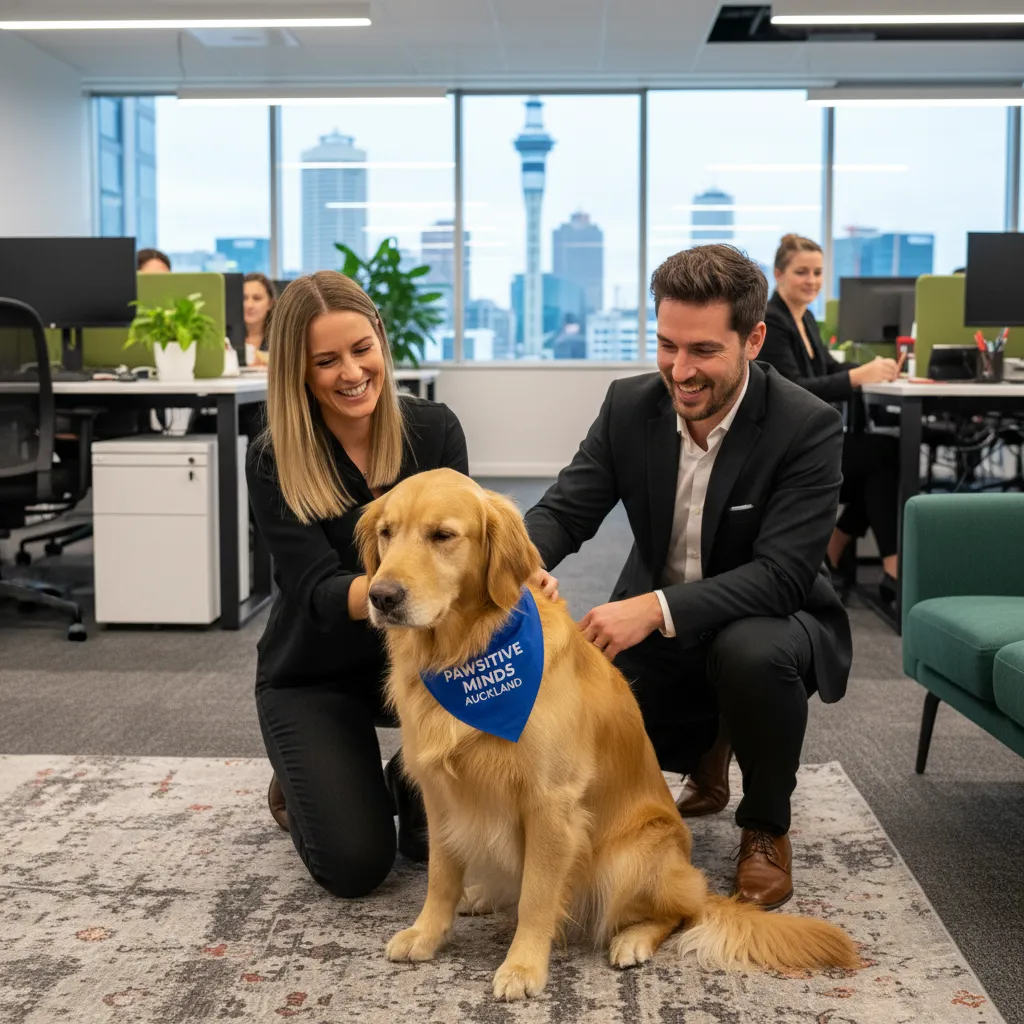
Some organizations request branded bandanas for the dogs, specific photo opportunities, or integration into a wider company presentation. Customized content or specific breed requests (e.g., hypoallergenic dogs only) may incur premium sourcing fees.
4. Weekend vs. Weekday Timing
While most corporate visits occur Monday through Friday, events scheduled for weekends or public holidays (for example, family days or special launches) often attract a surcharge of 25% to 50% on labor costs.
The Hidden Value: What Your Fee Covers
It is a common misconception that the fee is simply for “renting a dog.” In reality, you are paying for a professional service designed to mitigate risk and maximize psychological benefits. Here is where the money goes:
Insurance and Liability
In the litigious environment of corporate liability, bringing an animal onto the premises carries risk. Professional providers carry comprehensive Public Liability Insurance (usually up to $10 million NZD). This protects your company against incidents involving bites, trips, or property damage. A “free” visit from an employee’s pet does not offer this protection.
Handler Expertise
The human half of the therapy team is a trained professional. They manage the dog’s stress levels, facilitate interactions to ensure even the most nervous employees feel safe, and steer conversations toward mental health awareness. They are often trained in Mental Health First Aid.
Animal Welfare and Certification
Legitimate therapy dogs undergo rigorous testing (such as the Canine Good Citizen test and specific therapy assessments). The fees support the ongoing training, veterinary checks, and grooming required to keep these animals at a professional standard suitable for corporate environments.

Budgeting for Wellness: ROI and Implementation
To secure budget approval for the cost of a corporate wellness dog visit, it is crucial to frame the expense as an investment in human capital rather than a discretionary perk.
Comparative Cost Analysis
When compared to other wellness initiatives, therapy dog visits offer high engagement at a relatively low cost per head.
- Massage Chair Rental: $2000+ per week (Low engagement interaction).
- Team Lunch: $50+ per person (High cost for large teams).
- Therapy Dog Visit: Approx $5–$10 per person (based on a 50-person team and a $400 hourly rate).
Measuring ROI
While measuring the direct financial return is difficult, the qualitative metrics are compelling. Post-visit surveys often reveal:
- Reduction in self-reported stress levels.
- Increase in team cohesion and communication across departments.
- Improved perception of employer brand and company culture.
Under the New Zealand Health and Safety at Work Act 2015, employers have a duty of care to manage workplace stress. AAT programs serve as tangible evidence of an employer taking proactive steps to manage psychosocial hazards.
How to Request an Accurate Custom Quote
To avoid back-and-forth emails and get a precise figure for your budget approval, provide the following details when contacting AAT providers in New Zealand:
- Date and Duration: Be specific. “September 15th, 12:00 PM to 2:00 PM.”
- Staff Count: “Approximately 75 staff members.” (This determines how many dogs are needed).
- Venue Specifics: “Level 4, lift access available, open plan office.”
- Parking Availability: “Visitor parking available onsite” or “Street parking only.”
- Objective: “Stress relief during audit week” or “General team bonding.”
Frequently Asked Questions
Are corporate therapy dog visits tax-deductible in New Zealand?
Generally, yes. If the visit is part of a genuine staff welfare or health and safety initiative, it is typically deductible as a business expense. However, it may be subject to Fringe Benefit Tax (FBT) depending on how it is structured. Always consult with your accountant regarding specific tax deductibility for staff welfare costs.
What happens if an employee is allergic to dogs?
Professional providers will work with you to manage this. Visits are usually held in designated “dog zones” or meeting rooms rather than roaming the entire floor. This allows allergic staff to avoid the area easily while others enjoy the visit. Hypoallergenic breeds (like Poodles) can sometimes be requested, though availability varies.
Does the cost include insurance?
Yes, reputable corporate wellness dog providers include Public Liability Insurance in their fees. This covers incidents related to the animal’s behavior. If a provider cannot produce a certificate of currency for their insurance, do not hire them, regardless of the cost savings.
Can we just bring our own dogs to save money?
While “Bring Your Dog to Work Day” is free, it carries significant risk. Employee pets are rarely trained to therapy standards, may react aggressively to stress, or cause property damage. Professional visits pay for the assurance of temperament-tested animals and trained handlers who manage risk, ensuring a relaxing rather than chaotic experience.
How far in advance should we book a visit?
For specific dates like Mental Health Awareness Week (September/October in NZ) or International Dog Day, you should book 3-4 months in advance. For standard recurring visits or random dates, 3-4 weeks is usually sufficient notice.
Is there a cancellation fee?
Most contracts include a cancellation policy. Typically, cancelling within 48 to 72 hours of the event will incur a fee ranging from 50% to 100% of the quoted cost to cover the lost booking time for the handlers.