
To book a therapy dog visit for schools in New Zealand, administrators should first identify their specific educational goals—such as literacy support or emotional regulation—and select a certified Animal Assisted Therapy provider. The process typically involves submitting a detailed inquiry regarding class size and student needs, confirming handler police vetting, and scheduling an initial site assessment to ensure a safe environment for both students and the therapy animal.
Why Book a Therapy Dog Visit for Your School?
Integrating Animal Assisted Therapy (AAT) into the New Zealand school environment is more than just a novelty; it is a strategic intervention designed to support student wellbeing and academic achievement. Before you book a therapy dog visit for schools, it is essential to understand the transformational impact these programs can have on the classroom dynamic.
Educators across Aotearoa are increasingly recognizing that emotional stability is a prerequisite for effective learning. Therapy dogs act as social catalysts and emotional regulators. When a certified therapy dog enters a classroom, the atmosphere shifts palpably. Cortisol levels drop, and the barriers to learning—often erected by anxiety or social disconnection—begin to dismantle. For a principal or SENCO (Special Educational Needs Coordinator), the decision to bring a dog on-site is a decision to prioritize holistic student health.

Choosing the Right Format: One-Off vs. Term-Long Programs
When you prepare to book a therapy dog visit, you will generally be presented with two primary engagement models. Understanding the difference is crucial for aligning the service with your budget and educational outcomes.
One-Off Wellbeing Visits
One-off visits are high-impact events often utilized during high-stress periods or as specific rewards. These sessions are typically less structured than long-term therapy but provide immediate relief and morale boosting.
- Exam Stress Busters: Scheduled during NCEA study leave or prior to intermediate school assessments, these visits allow students to take a mental break, pet the dog, and reset their nervous systems.
- Trauma or Grief Support: In unfortunate events where a school community is grieving, a one-off visit can provide non-verbal comfort that counselors sometimes cannot reach immediately.
- Reward Days: Used as a PB4L (Positive Behaviour for Learning) reward for a class or syndicate.
Term-Long Therapeutic Programs
For sustainable change, term-long engagements are recommended. These require a recurring booking—usually once a week for 8 to 10 weeks.
- Reading Programs (Bark for Books): Students with reading difficulties read aloud to the dog. The dog offers non-judgmental listening, which drastically improves confidence and fluency.
- Social Skills Groups: Small groups of students work with the handler and dog to learn empathy, turn-taking, and interpreting non-verbal cues.
- Anxiety Management: Regular contact helps students with school refusal or high anxiety to associate the school environment with safety and comfort.
How to Book a Therapy Dog Visit Schools: The Process
Successfully securing a visit involves a transactional workflow designed to ensure the safety of the animal and the students. Here is the standard pathway for New Zealand schools.
1. Provider Selection and Vetting
Not all dogs are therapy dogs. You must ensure you are booking through a reputable organization (such as Therapy Dogs New Zealand or local equivalents) that carries public liability insurance and requires rigorous temperament testing.
2. The Initial Consultation
Once you reach out, a program coordinator will conduct a brief interview. They need to understand the physical layout of the school (fencing, quiet areas) and the specific demographic of the students involved.
3. Site Assessment
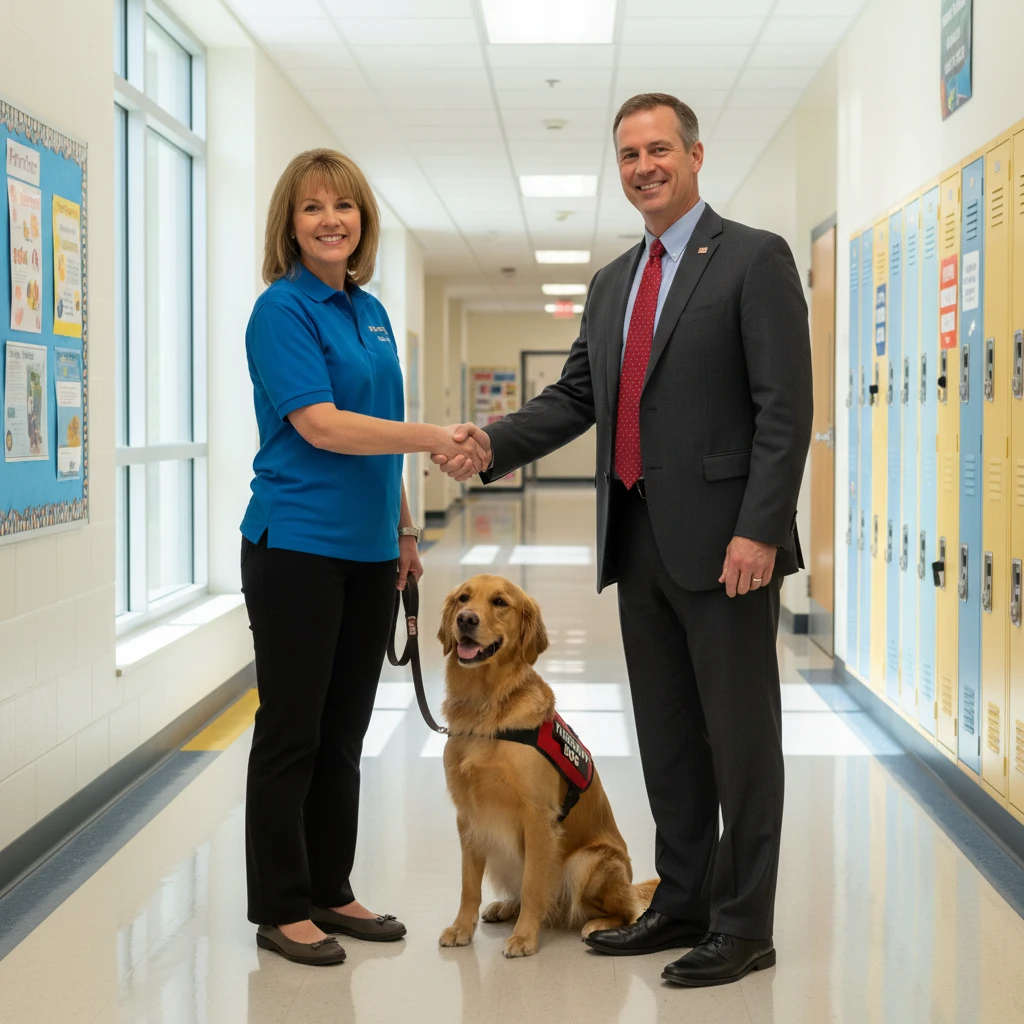
For ongoing programs, a handler may visit without the dog first, or with the dog on a lead during after-school hours, to identify hazards (e.g., dropped food, toxic plants, high-traffic corridors).
Inquiry Form for Schools: What We Need to Know
To expedite the process when you decide to book a therapy dog visit for schools, your initial inquiry form should be as detailed as possible. Most providers will require the following data points to provide an accurate quote and match the right dog to your environment.
Essential Inquiry Fields:
- School Name & Location: Crucial for determining travel costs and assigning local volunteer or professional teams.
- Contact Person: Usually the SENCO, Principal, or Guidance Counselor.
- Program Goal: (e.g., “General wellbeing,” “Literacy support,” “Autism support”).
- Target Audience: Year level (New Entrants vs. Year 13 require different dog energy levels) and group size.
- Frequency: One-off event vs. Weekly Term 2 booking.
- Allergy/Phobia Census: Have you surveyed the specific class for severe allergies or cynophobia (fear of dogs)?
- Parking/Access: The handler needs close proximity parking to safely transport the dog.
Cost Structure for Education
Budgeting is a significant factor for state and integrated schools. While some organizations operate on a charitable model using volunteers, professional Animal Assisted Therapy (where the handler is a clinician, social worker, or teacher) is a paid service.
Standard Pricing Models
- Volunteer/Charity Donation: Some non-profits ask for a donation to cover insurance and vest costs. This might range from $50 to $100 per visit.
- Professional AAT (Hourly): For a clinical approach (e.g., an Occupational Therapist working with a dog), rates can align with standard specialist contracting, ranging from $120 to $180+ GST per hour.
- Half-Day/Full-Day Rates: Useful for “Wellbeing Weeks.” A half-day (up to 3 hours of contact time with breaks) typically costs between $300 and $500.
Funding Options in NZ
Schools often utilize specific funding pools to cover these costs:
- Urgent Response Fund (URF): Historically used for wellbeing support.
- SEG Grant (Special Education Grant): Can be allocated for AAT if it supports inclusion.
- PTA/Whānau Support: Parent-Teacher Associations often fundraise specifically for “the school dog program.”

Availability Calendar and Lead Times
Demand for therapy dogs in New Zealand schools currently outstrips supply. High-quality teams are limited because of the rigorous training required.
Booking Lead Times
One-Off Events: It is advisable to book at least 4 to 6 weeks in advance. For Mental Health Awareness Week or Bullying-Free NZ Week, booking 3 months in advance is recommended as these are peak times.
Term Programs
If you wish to secure a spot for a reading program for Term 2, you should be making inquiries during the middle of Term 1. Most handlers operate on a strict roster to prevent canine burnout. A therapy dog typically works no more than 2-3 hours a day to maintain their welfare.
Safety, Hygiene, and Compliance
The safety of ākonga (students) is paramount. When you book a visit, you are inviting an animal into a controlled workspace. A professional provider will supply a “School Visit Pack” containing:
- Police Vetting: The human handler must be police vetted, complying with the Vulnerable Children Act requirements for working in schools.
- Vaccination Records: Proof that the dog is fully vaccinated, wormed, and flea-treated.
- Public Liability Insurance: A certificate of currency (usually up to $10 million).
- Risk Management Plan (RAMS): A document outlining how risks (bites, scratches, allergies) are mitigated.
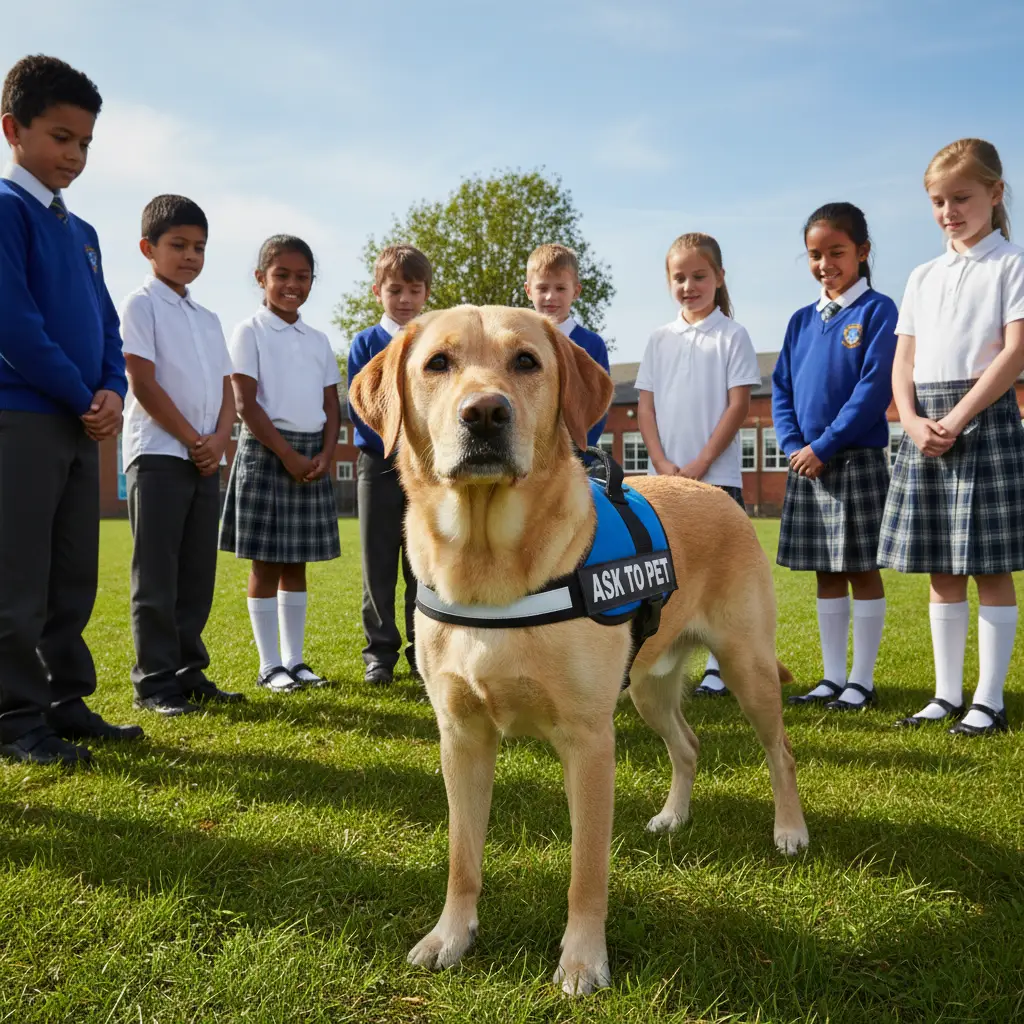
The “No-Interaction” Rule: Part of the safety protocol involves teaching students that they cannot rush the dog. The handler manages all interactions. If a student is fearful, the handler ensures the dog remains at a distance, turning a potential negative into a lesson on boundaries and respect.
Linking to the Curriculum: Te Whāriki and Key Competencies
To justify the expenditure and time to the Board of Trustees, it helps to link the visit to the NZ Curriculum.
- Managing Self: Students learn to regulate their volume and energy levels to make the dog comfortable.
- Relating to Others: AAT promotes empathy. Students often talk *to* the dog before they talk to peers, bridging social gaps.
- Participating and Contributing: Caring for the dog (e.g., grooming or filling a water bowl) gives students a sense of purpose and belonging within the school community.
People Also Ask
How much does a therapy dog visit cost for a school?
Costs vary significantly based on the provider. Volunteer organizations may only request a donation of $50-$100 to cover travel and insurance. Professional clinical therapy involving a dog (such as with an Occupational Therapist) can range from $120 to $180+ per hour. Always request a quote tailored to your school’s specific needs.
Are therapy dogs allowed in NZ classrooms?
Yes, therapy dogs are allowed in NZ classrooms, provided the school Board of Trustees approves the policy. There is no nationwide ban, but schools must adhere to Health and Safety at Work Act 2015 obligations, ensuring risks regarding allergies and behavior are managed via a RAMS form.
What is the difference between a service dog and a therapy dog?
A service dog is trained to perform specific tasks for one individual with a disability (e.g., a guide dog). A therapy dog is trained to provide comfort and affection to many people in clinical or educational settings. In a school, you are booking a therapy dog, not a service dog.
How do we handle students with dog allergies?
Before the visit, schools should identify students with allergies. The visit can be held in a specific room (like the library) rather than a general classroom to prevent dander spread. Students with allergies can be given the option to observe from a distance or not participate, ensuring their safety is prioritized.
Can we book a therapy dog for a specific student?
Yes, individual sessions can be booked, usually for students with high needs, autism, or behavioral challenges. However, this often falls under “Animal Assisted Therapy” rather than “Animal Assisted Activity” and may require a handler with clinical qualifications and a higher cost structure.
How long does a therapy dog session last?
A typical session lasts between 45 to 60 minutes. Dogs require frequent breaks to decompress. For a full school day visit, the dog will likely work on a schedule of 45 minutes on, 15-30 minutes off, to ensure the animal remains happy and engaged.