
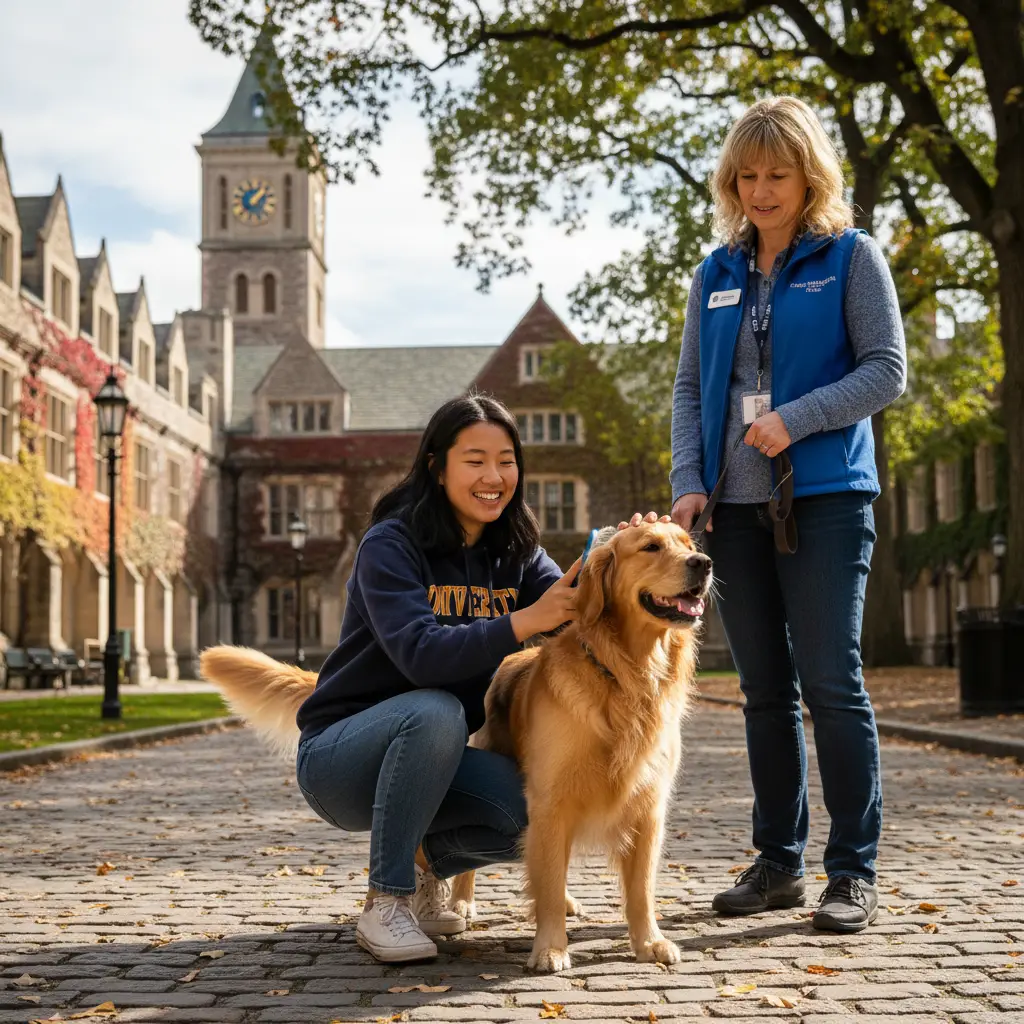
University student wellbeing dog programs are professionally structured animal-assisted interventions designed to alleviate stress, reduce anxiety, and foster social connection among tertiary students. Unlike casual pet visits, these accredited New Zealand programs utilize trained therapy dog teams to provide safe, year-round mental health support in lecture halls, libraries, and residential accommodation.
In the competitive landscape of New Zealand tertiary education, student retention and mental health outcomes have become critical key performance indicators. The traditional model of reactive counseling services is frequently overwhelmed, leading universities to seek proactive, scalable, and engaging solutions. Animal-assisted therapy, specifically structured canine programs, has emerged as a high-impact strategy to bridge the gap between clinical mental health services and general student wellbeing.
The Strategic Imperative for Canine Therapy in Higher Education
Implementing university student wellbeing dog programs is no longer merely a novelty; it is a strategic asset for campus culture. Research consistently demonstrates that interaction with therapy dogs elicits a physiological relaxation response, characterized by the lowering of cortisol (stress hormone) levels and the release of oxytocin. For university administrators, this translates into a tangible tool for de-escalating high-stress environments.
However, the commercial application of these programs requires a shift in perspective. It is not about bringing a pet to work; it is about deploying a biological intervention that enhances cognitive performance and emotional resilience. When students feel psychologically safe and supported, academic performance stabilizes and dropout rates associated with burnout decrease.

Beyond Exam Stress: A Year-Round Curriculum
Historically, many institutions have utilized “puppy rooms” solely during exam weeks. While effective for acute stress relief, this sporadic approach fails to address the chronic stressors inherent in university life. A comprehensive commercial strategy involves integrating therapy dogs into the campus ecosystem throughout the academic calendar.
Orientation Week (O-Week) Activation
The first week of university is often characterized by sensory overload and social anxiety. Therapy dogs act as “social lubricants,” breaking down barriers between new students. A dog provides a neutral subject of conversation, allowing students to interact with the animal first, and then naturally with their peers. Deploying teams during O-Week sets a tone of approachability and care for the incoming cohort.
Mid-Semester Motivation
Between the excitement of arrival and the adrenaline of finals lies the mid-semester slump. Attendance often drops, and motivation wanes. Scheduled wellbeing dog visits in high-traffic areas—such as student unions or outside lecture theaters—can serve as morale boosters that encourage students to remain on campus and engaged with their studies.
Residential Hall Visits: Creating Home Away from Home
For many students, particularly first-years, moving into a Hall of Residence marks their first time living away from family support networks and family pets. The absence of a beloved animal can exacerbate feelings of homesickness and isolation. Integrating university student wellbeing dog programs into residential life is a powerful retention tool.
Regularly scheduled evening visits in common rooms provide a non-threatening environment for students to gather. Unlike a structured counseling session, a dog visit requires no appointment and carries no stigma. It allows Residential Assistants (RAs) to monitor student wellbeing informally; students who might be withdrawing from social events often come out for a dog.

Building Community in Accommodation
In the context of New Zealand universities, where pastoral care in student accommodation is a regulated requirement, therapy dogs contribute to a supportive community atmosphere. They offer tactile comfort that is otherwise absent in a dormitory setting, helping to ground students who may be struggling with the transition to independence.
International Student Support and Inclusion
New Zealand attracts a significant number of international students who face unique challenges: language barriers, cultural shock, and intense academic pressure. Traditional talk therapy may not be culturally congruent for all international demographics, leading to underutilization of support services.
Dogs speak a universal language. Interaction with a therapy animal does not require fluency in English or an understanding of Western mental health paradigms. For international students, the dog provides a bridge to the wider university community.
Reducing Cultural Isolation
Programs specifically targeted at international student centers can facilitate integration. When an international student interacts with a handler and dog, they practice language skills in a low-stakes environment. Furthermore, the shared activity of petting a dog creates a sense of belonging and shared humanity with domestic students, reducing the “us versus them” dynamic that can occur on diverse campuses.
Partnership Models and Commercial Implementation
For university administrators, the decision to implement these programs involves choosing the right operational model. Relying on staff to bring their own pets is a liability minefield. The commercial standard for university student wellbeing dog programs involves partnering with accredited Animal Assisted Therapy (AAT) providers.
The Retainer Model vs. Ad-Hoc Booking
Ad-Hoc Booking: Suitable for specific events like Mental Health Awareness Week. While flexible, this often comes at a higher per-hour cost and lacks continuity for students who build a bond with specific animals.
The Retainer Model: This is the preferred commercial route for maximum impact. Universities contract a provider for a set number of hours per week throughout the semester. This ensures:
- Consistent Presence: Students know when and where to find support.
- Dedicated Teams: Handlers become familiar with campus culture and specific student needs.
- Cost Efficiency: Bulk hours often secure a reduced rate compared to one-off event pricing.
Risk Management and Safety Protocols
Implementing live animal programs on campus requires rigorous risk mitigation strategies to satisfy health and safety boards. Professional wellbeing programs differentiate themselves from casual visits through strict protocols.
Accreditation and Temperament Testing
Any dog entering a university environment must pass advanced temperament testing. In New Zealand, reputable providers align with standards set by organizations like St John or Canine Friends Pet Therapy, or possess equivalent private accreditation. This ensures the dog remains calm amidst the chaotic noise, movement, and crowding typical of a university campus.
Hygiene and Zoonosis Control
Professional handlers adhere to strict hygiene standards to prevent zoonotic disease transfer. This includes:
- Mandatory grooming and parasite control prior to visits.
- Use of hand sanitizer before and after student interactions.
- “No-lick” policies to accommodate cultural sensitivities and hygiene concerns.
Managing Allergies and Phobias
Inclusive wellbeing means respecting those who cannot or do not wish to interact with dogs. Professional programs operate in designated zones—clearly signposted areas where students must actively choose to enter. This ensures that students with allergies or cynophobia (fear of dogs) can navigate the campus without fear of an unexpected encounter.

Measuring ROI and Student Outcomes
To justify the budget for university student wellbeing dog programs, administrators must measure the Return on Investment (ROI). While mental health is qualitative, commercial success can be tracked through specific metrics.
Key Performance Indicators (KPIs)
- Engagement Numbers: Tracking the number of unique student interactions per session.
- Survey Feedback: Post-interaction surveys measuring self-reported stress levels before and after the visit (often showing a 30-50% reduction in perceived stress).
- Social Media Reach: Dog programs are highly “Instagrammable.” User-generated content from students sharing their positive experiences provides organic marketing for the university’s brand as a compassionate institution.
- referral Rates: Tracking how many students are referred to clinical counseling services by dog handlers who notice signs of deeper distress.
In the New Zealand context, aligning these programs with the Te Whare Tapa Whā model of health is particularly effective. The presence of animals supports Taha Wairua (spiritual health) and Taha Whānau (family/social health), demonstrating a culturally responsive approach to student welfare.
People Also Ask
How much do university wellbeing dog programs cost in NZ?
Costs vary based on the provider and frequency. Ad-hoc visits generally range from $150 to $300 NZD per hour per team. Comprehensive semester retainers involving multiple teams and weekly visits are often negotiated as bespoke commercial packages, offering better value and consistent student support.
Are therapy dogs allowed in university libraries?
Yes, but usually only under strict supervision as part of a formal program. Professional programs designate specific “quiet zones” or break-out rooms within libraries to ensure the dogs do not disturb studying students while providing stress relief during exam periods.
What is the difference between a service dog and a wellbeing dog?
A service dog is trained to perform specific tasks for one individual with a disability (e.g., a guide dog). A wellbeing or therapy dog is trained to provide comfort and affection to many people in a public setting. University programs utilize the latter to support the general student population.
How do universities handle students with dog allergies?
Universities manage allergies by confining dog programs to specific, well-ventilated areas that are clearly advertised. This allows allergic students to avoid these zones completely. Additionally, handlers carry hand sanitizer to ensure students wash hands after petting, reducing allergen spread.
Can staff bring their own dogs to university for wellbeing?
Generally, no. Most universities prohibit staff pets due to liability, lack of temperament testing, and potential disruption. Formal wellbeing programs use insured, external providers with accredited dogs to ensure safety and compliance with Health and Safety at Work Act requirements.
What breeds are best for university wellbeing programs?
There is no specific breed required, but temperament is key. Retrievers (Golden and Labrador) are popular due to their gentle nature, but Greyhounds and Poodles are also common in NZ programs. The dog must be calm, confident, and eager to interact with strangers regardless of breed.