
Therapy dogs for special education in New Zealand are specially trained animals integrated into learning environments to support neurodiverse students through Animal-Assisted Therapy (AAT). These dogs facilitate emotional regulation, enhance social skills, and assist in meeting Individual Education Plan (IEP) goals by providing non-judgmental companionship and sensory grounding for children with high learning needs.
Integrating canine companions into the New Zealand curriculum has transitioned from a novelty to a scientifically backed intervention strategy. For students with Autism Spectrum Disorder (ASD), ADHD, and anxiety, a therapy dog acts as a bridge between isolation and engagement. Unlike service dogs, which are trained to perform specific tasks for one individual with a disability, therapy dogs in schools work to support the emotional and educational well-being of multiple students under the guidance of a handler.
What is the Role of Therapy Dogs in NZ Special Education?
In the context of Aotearoa’s education sector, therapy dogs are increasingly recognized as vital members of the learning support team. Their role extends beyond simple companionship; they are active agents of change in the classroom environment. Under the framework of the New Zealand Curriculum, particularly within the Key Competencies of Relating to Others and Managing Self, therapy dogs provide a unique modality for learning.
Educators and Learning Support Coordinators (LSCs) utilize these animals to break down barriers that traditional teaching methods cannot. For a child who is non-verbal or selectively mute, a dog offers a communication partner that demands no words, reducing performance anxiety. For students with severe behavioral challenges, the presence of a dog can alter the chemical atmosphere of the room, lowering cortisol levels and fostering a sense of safety that is a prerequisite for learning.
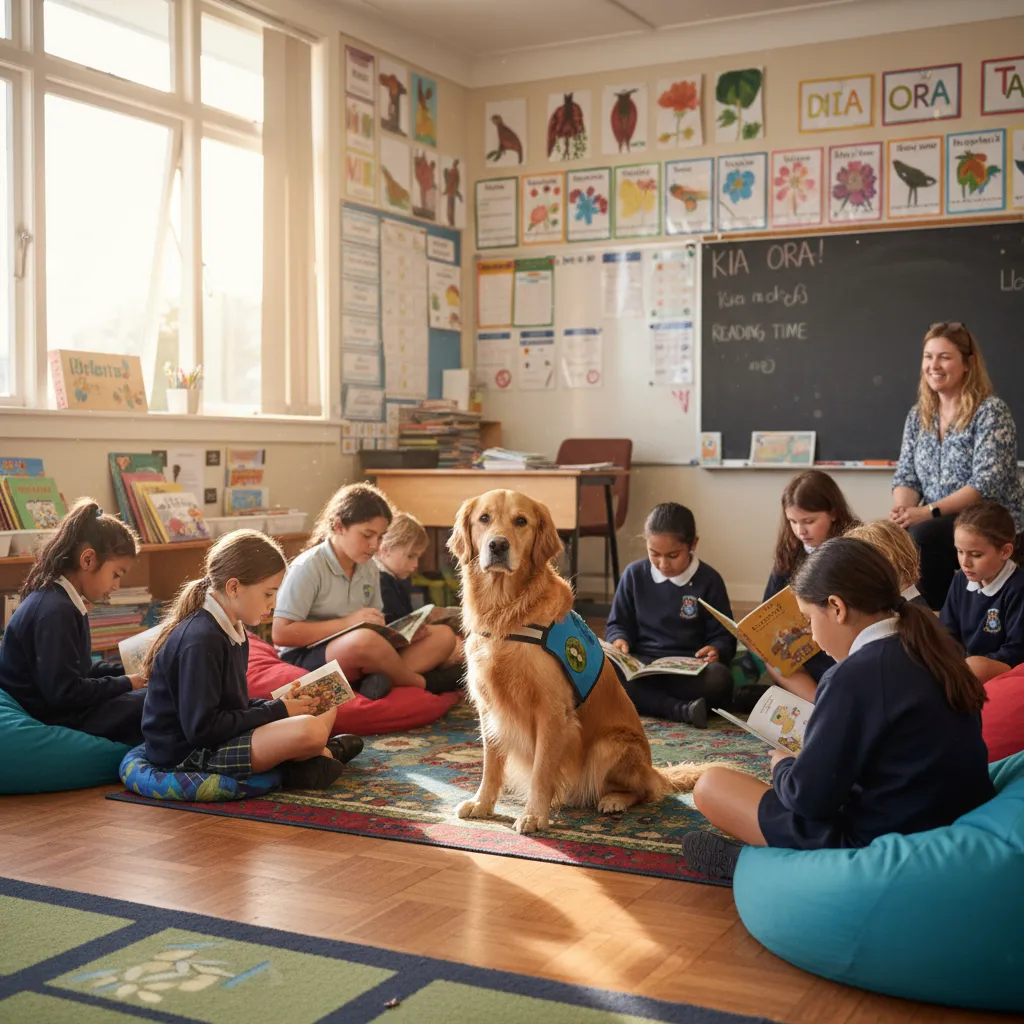
How Do Therapy Dogs Support Neurodiverse Students?
Neurodiverse students, including those with Autism, ADHD, and Sensory Processing Disorders, often experience the school environment as overwhelming. Therapy dogs serve as a biological anchor, helping these students navigate the social and sensory complexities of the school day.
Enhancing Social Interaction for Students with ASD
Children on the autism spectrum often struggle with social cues and eye contact. A therapy dog acts as a “social lubricant.” Research indicates that children with ASD are more likely to engage in social behaviors—such as smiling, talking, and making physical contact—when a dog is present. The dog becomes a shared point of interest, allowing the student to interact with peers or teachers indirectly through the animal. This triangulation of interaction reduces the intensity of direct human-to-human contact, which can be distressing for some students.
Improving Focus for Students with ADHD
For students with Attention Deficit Hyperactivity Disorder (ADHD), sitting still and focusing on academic tasks can be physically painful. Therapy dogs provide a focal point. The act of stroking a dog while reading or listening to a teacher can satisfy the student’s need for kinetic movement without disrupting the class. This “fidget” effect allows the brain to regulate arousal levels, leading to improved concentration and retention of information.
What Are Effective De-escalation Strategies Using Therapy Dogs?
One of the most critical applications of therapy dogs in special education is their ability to assist in de-escalation during behavioral meltdowns or crises. When a student enters a “fight, flight, or freeze” state, their prefrontal cortex goes offline, making rational verbal communication nearly impossible.
The Biology of Canine Co-regulation
Dogs have a resting heart rate and respiratory rate that can influence the humans around them. When a dysregulated student sits near a calm therapy dog, a process known as limbic resonance or co-regulation occurs. The student’s physiological systems begin to mirror the dog’s calm state. This bio-feedback mechanism is often faster and more effective than verbal commands to “calm down,” which can escalate a stressed student further.

Intervention Protocols
Schools must have clear protocols for using dogs in de-escalation. This typically involves:
- Early Detection: Introducing the dog at the first sign of anxiety (rumbling) rather than at the peak of a meltdown.
- Non-Verbal Comfort: allowing the student to groom or pet the dog in silence.
- Space Management: Using the dog to create a buffer zone that other students know not to cross, giving the upset student privacy and safety.
How Do Therapy Dogs Assist with Sensory Regulation?
Sensory processing issues are common in special education. Students may be hyposensitive (seeking sensation) or hypersensitive (avoiding sensation). Therapy dogs offer a versatile sensory toolkit that can be adapted to the student’s immediate needs.
Deep Pressure Therapy (DPT)
While formal DPT is a task for service dogs, therapy dogs can provide similar benefits informally. A medium-to-large dog resting its head on a student’s lap or leaning against their legs provides proprioceptive input. This heavy tactile pressure stimulates the release of serotonin and dopamine, neurotransmitters responsible for relaxation and well-being. It is the biological equivalent of a weighted blanket but with the added benefit of emotional connection.
Tactile Grounding
For students experiencing dissociation or panic attacks, the texture of a dog’s fur, the warmth of their body, and the rhythmic sound of their breathing serve as powerful grounding techniques. Educators can guide students to focus on these physical sensations to bring their awareness back to the present moment, effectively interrupting anxiety loops.

How to Integrate Therapy Dogs into IEP Goals?
To maximize the value of a therapy dog program, their use should be documented and tracked within a student’s Individual Education Plan (IEP). In New Zealand, this ensures that the intervention is purposeful, measurable, and aligned with the Ministry of Education’s learning support strategies.
Sample SMART Goals Involving Therapy Dogs
Goal 1: Communication (Speech and Language)
“By the end of Term 2, the student will issue three clear, two-word verbal commands (e.g., ‘Sit dog’, ‘Come here’) to the therapy dog in 4 out of 5 opportunities, to improve vocal projection and articulation.”
Goal 2: Emotional Regulation
“When feeling frustrated (zone of regulation: yellow), the student will independently request 5 minutes with the therapy dog to reset, reducing incidents of classroom disruption by 50% over the next 10 weeks.”
Goal 3: Fine Motor Skills
“The student will improve pincer grasp and hand strength by brushing the therapy dog and buckling/unbuckling the dog’s vest/collar for 10 minutes, twice weekly.”
Implementation and Safety Standards in NZ
Implementing a therapy dog program in a New Zealand school requires strict adherence to the Health and Safety at Work Act 2015. Schools are responsible for ensuring that the interaction between animals and students does not pose a risk to physical safety or hygiene.
Certification and Temperament Testing
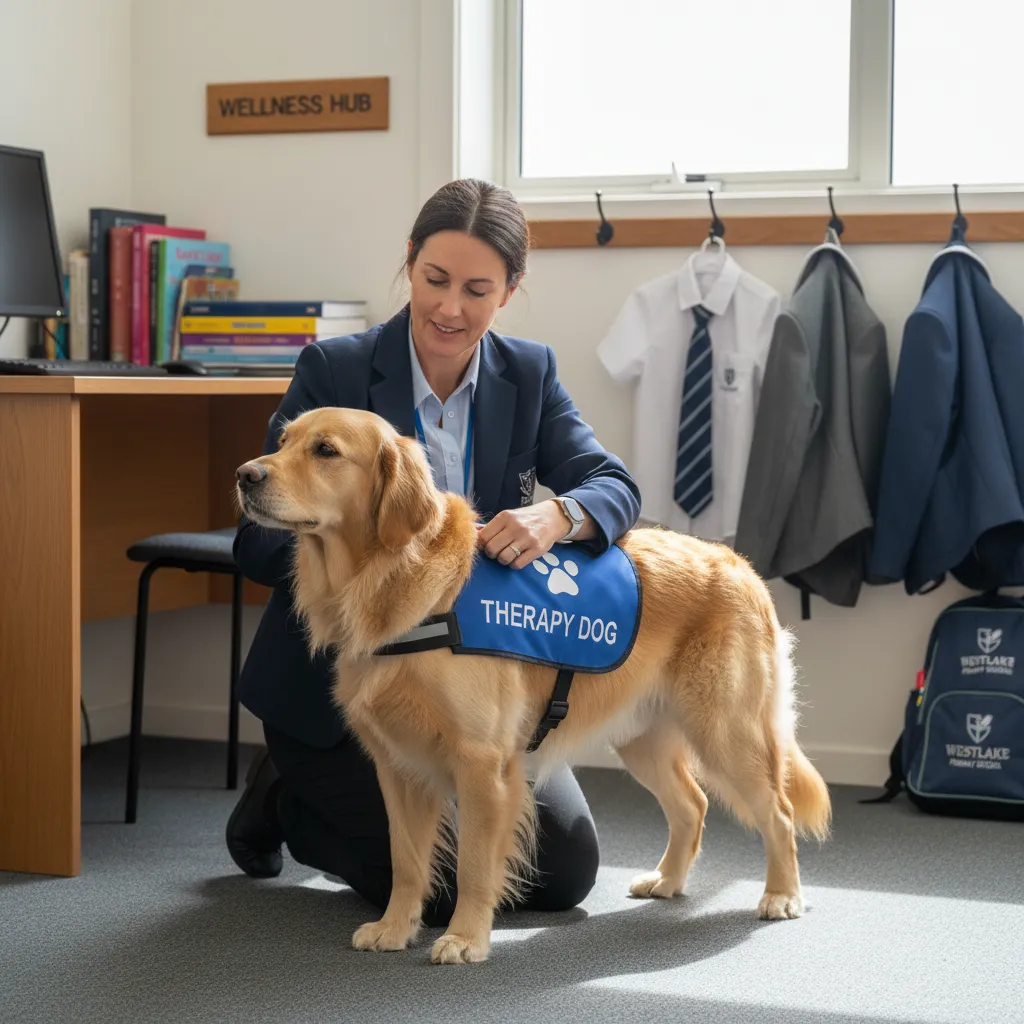
New Zealand does not have a single governing body for therapy dogs in schools, but best practice dictates that dogs should pass a Canine Good Citizen (CGC) test or be certified through organizations like Canine Friends Pet Therapy (though they primarily service hospitals) or specific private training providers. The dog must demonstrate:
- Zero aggression or resource guarding.
- High tolerance for sudden noises, clumsy handling, and erratic movement.
- Obedience to the handler amidst high-distraction environments.
Allergy and Phobia Management
Schools must survey the community for allergies and phobias before introducing a dog. Policies should include:
- Dog-Free Zones: Designating areas (like the cafeteria or specific classrooms) where the dog is not allowed.
- Hygiene Protocols: Mandatory hand washing before and after interacting with the dog.
- Opt-Out Policy: Ensuring that students with phobias are not forced to interact and have safe pathways to avoid the animal.
People Also Ask (PAA)
Do therapy dogs need to be certified in NZ schools?
While there is no mandatory government certification specifically for school therapy dogs in New Zealand, schools are liable under the Health and Safety at Work Act 2015. Therefore, it is strongly recommended that dogs pass a temperament assessment like the Canine Good Citizen test and carry public liability insurance to ensure they are safe for the school environment.
What is the best breed for a therapy dog in special education?
The best breed is determined by temperament rather than pedigree. However, Golden Retrievers, Labradors, and Poodles (often used for their hypoallergenic coats) are popular in NZ schools due to their intelligence, patience, and gentle nature. The individual dog’s ability to remain calm in chaotic environments is the most important factor.
How much does it cost to have a therapy dog in a school?
Costs vary significantly. If a staff member owns the dog, the cost may be limited to insurance, food, and vet bills (approx. $2,000 – $3,000 NZD annually). Professional external therapy dog visits can cost between $100 – $200 per session. Training a dedicated therapy dog from puppyhood can cost upwards of $10,000 NZD depending on the level of specialized training required.
Can a therapy dog help a child with anxiety learn to read?
Yes, programs like “Reading to Dogs” are highly effective. Children with anxiety often fear judgement from peers or teachers when reading aloud. A dog is a non-judgmental listener, which lowers the child’s anxiety, improves fluency, and builds confidence in their literacy skills.
What is the difference between a service dog and a therapy dog in NZ?
In New Zealand, a service dog (or assistance dog) is legally protected under the Human Rights Act to accompany a specific person with a disability everywhere. A therapy dog does not have these public access rights; they are invited into specific facilities (like schools) to provide comfort and support to many people, rather than performing tasks for just one individual.
How do I propose a therapy dog program to my school board?
To propose a program, prepare a comprehensive proposal covering: the educational benefits (linked to the NZ Curriculum), a risk management plan (allergies/safety), insurance details, potential costs, and a trial period plan. Citing successful case studies from other NZ schools can also be very persuasive.