
Reading Education Assistance Dogs in New Zealand are specially trained therapy animals paired with handlers to help children improve literacy skills. By acting as non-judgmental listeners in schools and libraries, these dogs reduce reading anxiety, boost self-confidence, and foster a positive association with books, creating a unique pathway for educational success.
What are Reading Education Assistance Dogs?
Reading Education Assistance Dogs (often associated with the R.E.A.D. program globally) represent a specialized sector of animal-assisted therapy designed to improve children’s reading and communication skills. In New Zealand, these programs are gaining significant traction in primary schools, public libraries, and community centers. Unlike standard pet therapy, which focuses primarily on comfort and visitation, reading assistance programs have a specific educational goal: increasing literacy rates and reading fluency.
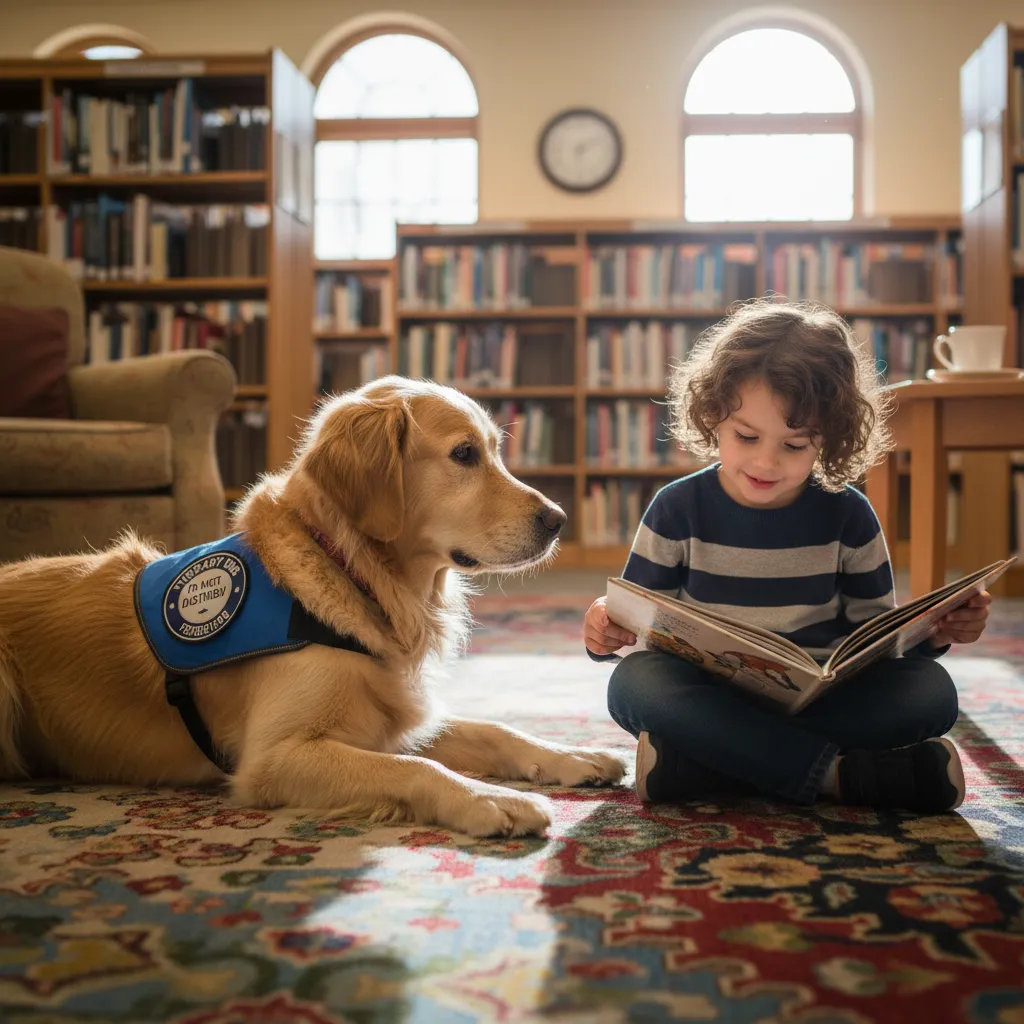
The core concept is simple yet profound. A child reads to a dog. However, the dynamics of this interaction are complex and highly beneficial. The dog is accompanied by a trained handler—often the owner—who facilitates the session but allows the dog to be the primary focus. The dog listens without correcting pronunciation, without judging speed, and without sighing at mistakes. This creates a safe atmosphere where the pressure to perform is removed, allowing the child to practice reading aloud with reduced anxiety.
How Do Dogs Improve Reading Confidence?
One of the most significant barriers to literacy development in children is the fear of failure. When a child struggles to read in front of peers or teachers, they often experience embarrassment, which can lead to a reluctance to read altogether. Reading education assistance dogs in NZ tackle this psychological barrier head-on.
Why is the “Non-Judgmental” Aspect So Critical?
Dogs offer unconditional acceptance. When a child reads to a dog, the animal does not care if the child stutters, mispronounces a word, or reads slowly. This lack of judgment is the cornerstone of the program’s success. It transforms reading from a test of ability into a shared social activity. Children often perceive the dog as a friend who needs to hear the story, shifting the dynamic from “I have to read” to “I am reading to my dog.”
Furthermore, the presence of a dog can shift the focus away from the child. In a traditional classroom setting, all eyes are on the student. In a reading dog session, the child feels that the attention is shared or directed toward the animal. This deflection of attention lowers performance anxiety, allowing the child’s cognitive resources to focus on decoding words and comprehension rather than worrying about social evaluation.
The Science Behind the Human-Animal Bond
The efficacy of reading education assistance dogs is supported by physiological and psychological science. Interactions with friendly animals have been proven to affect hormone levels in humans, creating a biological state conducive to learning.
- Cortisol Reduction: Cortisol is the stress hormone. High levels of cortisol can inhibit learning and memory. Petting a dog or simply being in its presence has been shown to lower cortisol levels, physically calming the child.
- Oxytocin Release: Often called the “love hormone,” oxytocin is released during positive interactions with animals. This promotes feelings of trust, relaxation, and happiness.
- Lowered Blood Pressure: The physical act of stroking a dog lowers heart rate and blood pressure, counteracting the physiological symptoms of anxiety that many struggling readers feel.
In the context of New Zealand education, where student well-being is a holistic priority (Te Whare Tapa Whā), integrating animals aligns perfectly with supporting taha hinengaro (mental and emotional well-being).
How to Set Up a Reading Corner for Therapy Dogs?
Implementing a reading dog program requires more than just bringing a dog into a room. The environment must be carefully curated to ensure safety, comfort, and focus. Whether in a school in Auckland or a rural library in the South Island, the setup remains consistent.
What are the Environmental Requirements?
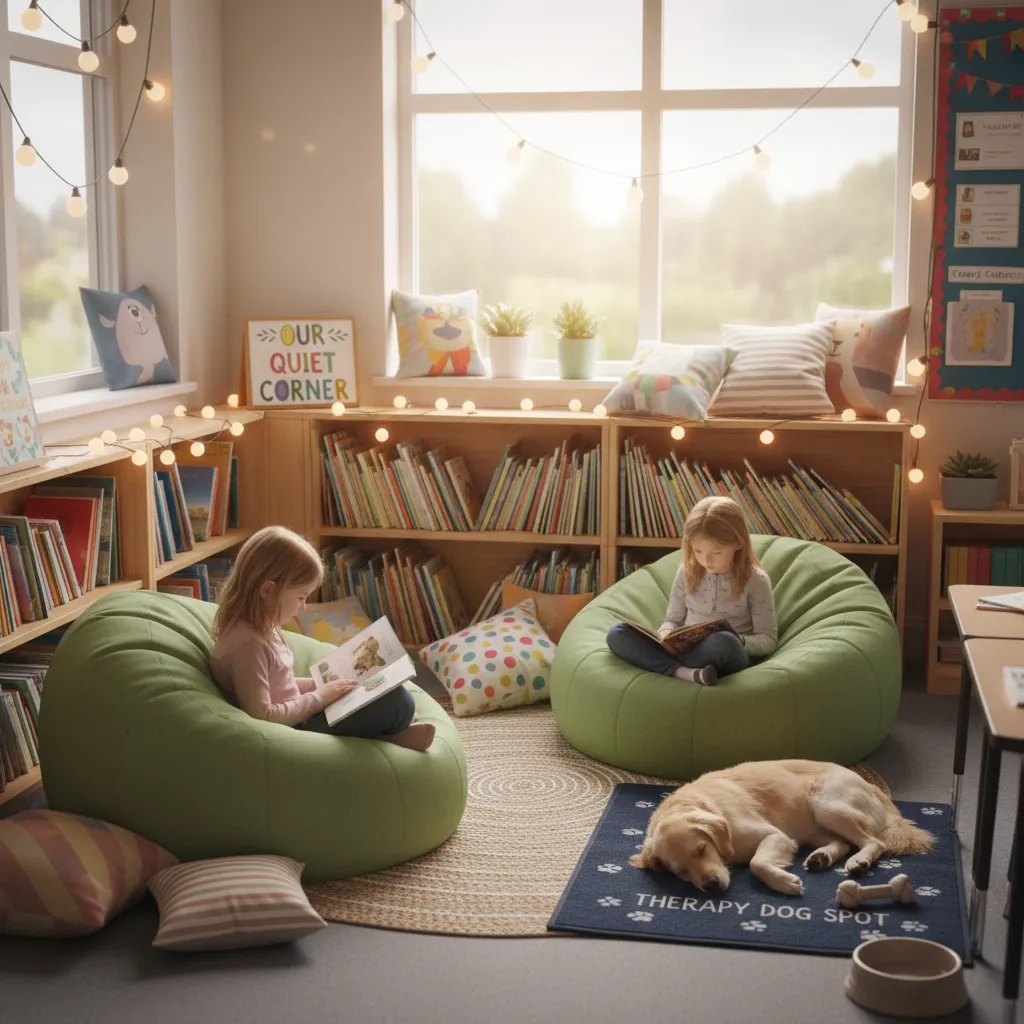
1. A Quiet, Low-Traffic Area: The reading corner should be away from the main hustle and bustle of the classroom or library entrance. Distractions should be minimized so the child and dog can connect. A semi-enclosed space using bookshelves or dividers works well.
2. Comfort for the Animal: The dog needs a designated spot, such as a soft rug or a specific dog bed. This establishes a boundary and gives the dog a comfortable place to settle for the duration of the session. Fresh water must always be available.
3. Seating Arrangement: The child should be seated on the floor or a low cushion/beanbag to be at the same level as the dog. This physical leveling is crucial for establishing a connection. It prevents the dog from looming over the child and allows for easy, natural physical contact like petting while reading.
4. Hygiene and Safety: Hand sanitizer should be available for use before and after the session. The area should be easily cleanable to address any dander or hair.
What Training is Required for Reading Buddies?
Not every family pet can become a Reading Education Assistance Dog. In New Zealand, strict standards ensure the safety and effectiveness of these programs. The dogs must be reliable, predictable, and genuinely enjoy human interaction.
How are Dogs Certified in New Zealand?
While there isn’t one single government body regulating therapy dogs in NZ, reputable programs operate under strict guidelines often aligned with international standards or organizations like St John (Outreach Therapy Pets) or Canine Friends Pet Therapy. For a dog to be suitable for reading assistance, they generally undergo a multi-step process:
- Temperament Assessment: This is the most critical step. Evaluators look for dogs that are calm, not easily startled by loud noises (like a dropped book), and comfortable with clumsy handling. They must show no signs of aggression or excessive shyness.
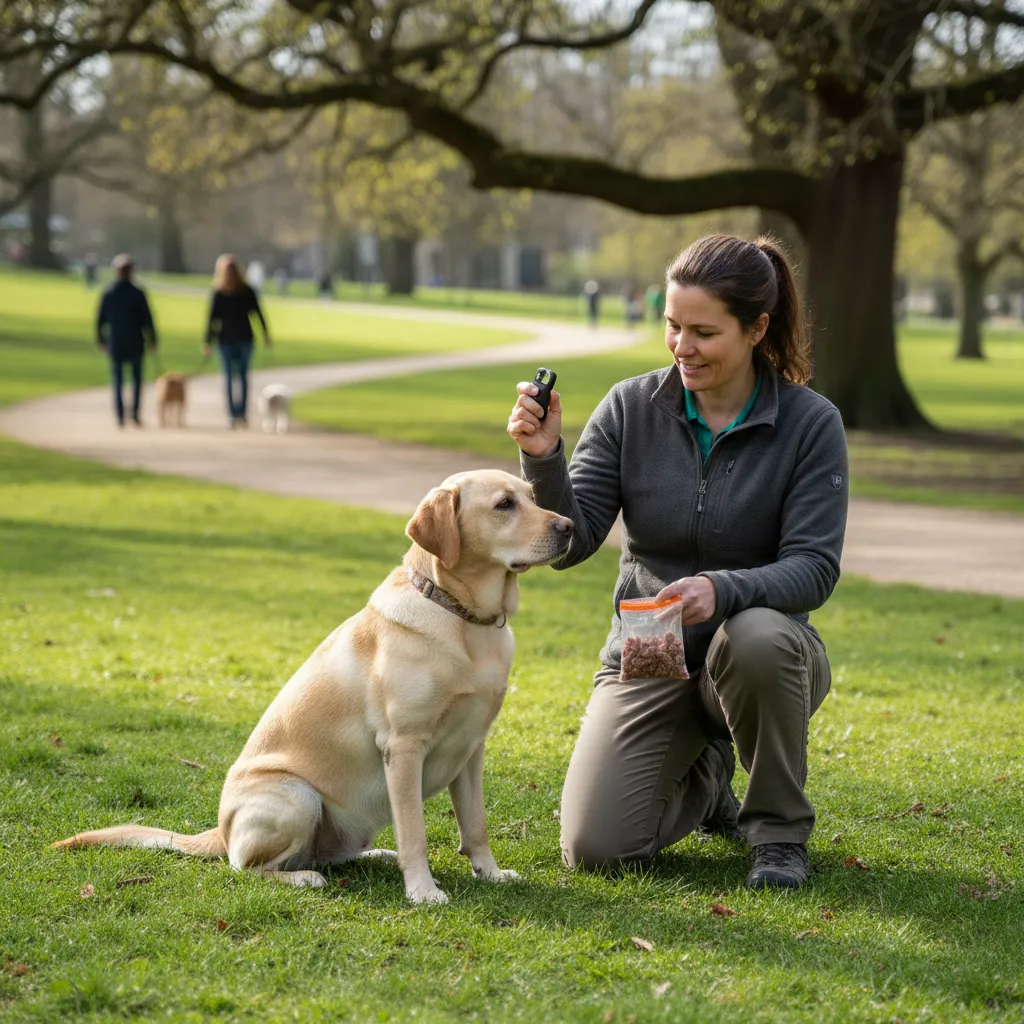
- Obedience Training: The dog must have mastered basic commands (sit, stay, down, leave it) and walk loosely on a lead. They must remain under the handler’s control at all times.
- Socialization: The dog must be comfortable in new environments and around different types of equipment (wheelchairs, crutches, school bags).
- Health Checks: Dogs must be fully vaccinated, wormed, and free of parasites. Regular vet checks are mandatory to ensure the dog is healthy enough to work.
What is the Role of the Handler?
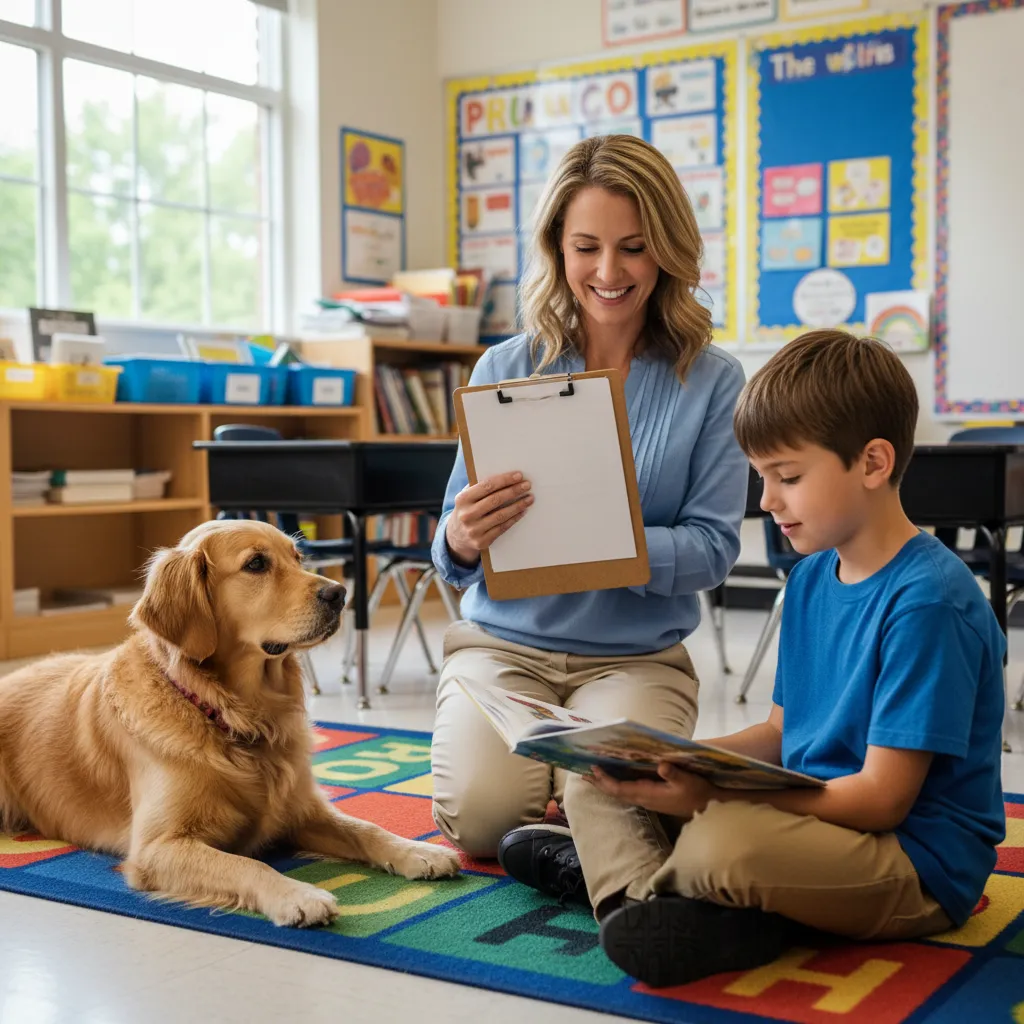
The handler is just as important as the dog. They are trained to facilitate the interaction without interfering. In a reading session, the handler might say, “Rover didn’t quite hear that part, could you read it to him again?” rather than correcting the child directly. This technique maintains the illusion that the child is teaching the dog, which is a powerful confidence booster.
How Can We Measure Literacy Improvements?
For schools investing time and resources into reading education assistance dogs, measuring the return on investment in terms of student outcomes is essential. While the joy on a child’s face is evident, quantitative and qualitative data validate the program’s success.
Which Metrics Matter Most?
1. Reading Fluency and Accuracy: Schools can use standard running records to track changes in reading levels over the duration of the program. Many educators report that children participating in dog-assisted reading programs advance reading levels faster than their peers who do not.
2. Attitude Surveys: Pre- and post-program surveys can measure a child’s attitude toward reading. Questions like “How do you feel when asked to read aloud?” or “Do you enjoy reading at home?” often show marked improvement in sentiment.
3. Attendance and Engagement: For some students, the days the dog visits are the days they are most eager to attend school. Tracking attendance rates on “dog days” versus other days can highlight the program’s role in school engagement.
4. Library Usage: In public library settings, success can be measured by the number of books checked out by participants and the retention rate of children returning for subsequent sessions.
The Growth of Animal Assisted Therapy in NZ
New Zealand has seen a surge in interest regarding animal-assisted therapy (AAT). Organizations such as Canine Friends Pet Therapy and St John have paved the way, initially focusing on hospitals and rest homes. However, the educational sector is the new frontier.
Kiwi schools are increasingly adopting holistic approaches to education, recognizing that emotional stability is a prerequisite for academic achievement. The “Reading Education Assistance Dogs” model fits perfectly into the New Zealand Curriculum’s key competencies, particularly “Relating to Others” and “Managing Self.”
Furthermore, local libraries in regions like Christchurch, Wellington, and Auckland often host “Read to a Dog” events during school holidays. These events are frequently fully booked, demonstrating the high demand from parents seeking innovative ways to support their children’s learning. As the evidence base grows, it is likely that funding and formal integration of these programs will become more standardized across the country.
People Also Ask
How much does a reading dog program cost for a school?
Costs vary significantly. Many programs in NZ run on a volunteer basis where the handler provides their time and the dog for free. However, schools may need to cover administrative costs, liability insurance verification, and setup of the reading area. Some professional organizations may charge a fee for coordination and certification management.
Can any breed of dog be a reading assistance dog?
Yes, any breed can theoretically be a reading assistance dog, provided they pass the temperament and health assessments. From Golden Retrievers to Greyhounds and mixed breeds, the personality of the dog (calm, friendly, patient) is far more important than the pedigree.
Are there allergy concerns with dogs in classrooms?
Allergies are a valid concern. Schools typically manage this by obtaining parental consent for all participants, ensuring the reading area is separate from the main classroom, and using strict hygiene protocols (hand washing, vacuuming). Some programs may use hypoallergenic breeds, though no dog is 100% allergen-free.
How long is a typical reading session?
A typical session lasts between 15 to 20 minutes per child. This timeframe is long enough to settle in and read a substantial passage but short enough to maintain the child’s attention and the dog’s focus. Dogs usually work for no more than 1-2 hours total before needing a long break.
How do I volunteer my dog for reading programs in NZ?
To volunteer, you should contact established organizations like Canine Friends Pet Therapy or St John Outreach Therapy Pets to inquire about their specific assessment processes. Once certified as a therapy team, you can approach local schools or libraries to offer your services under the organization’s umbrella.
What age group benefits most from reading dogs?
While children of all ages can benefit, the programs are most effective for primary school children (ages 6-10) who are in the critical stages of developing reading fluency. This is often the age where self-consciousness about reading ability begins to develop.