
To buy therapy dog insurance in NZ, handlers must secure a specialized policy that includes Public Liability coverage for business or voluntary activities, as standard pet insurance typically excludes working animals. This coverage protects against third-party claims for bodily injury or property damage while the dog is operating in clinical, educational, or care settings.
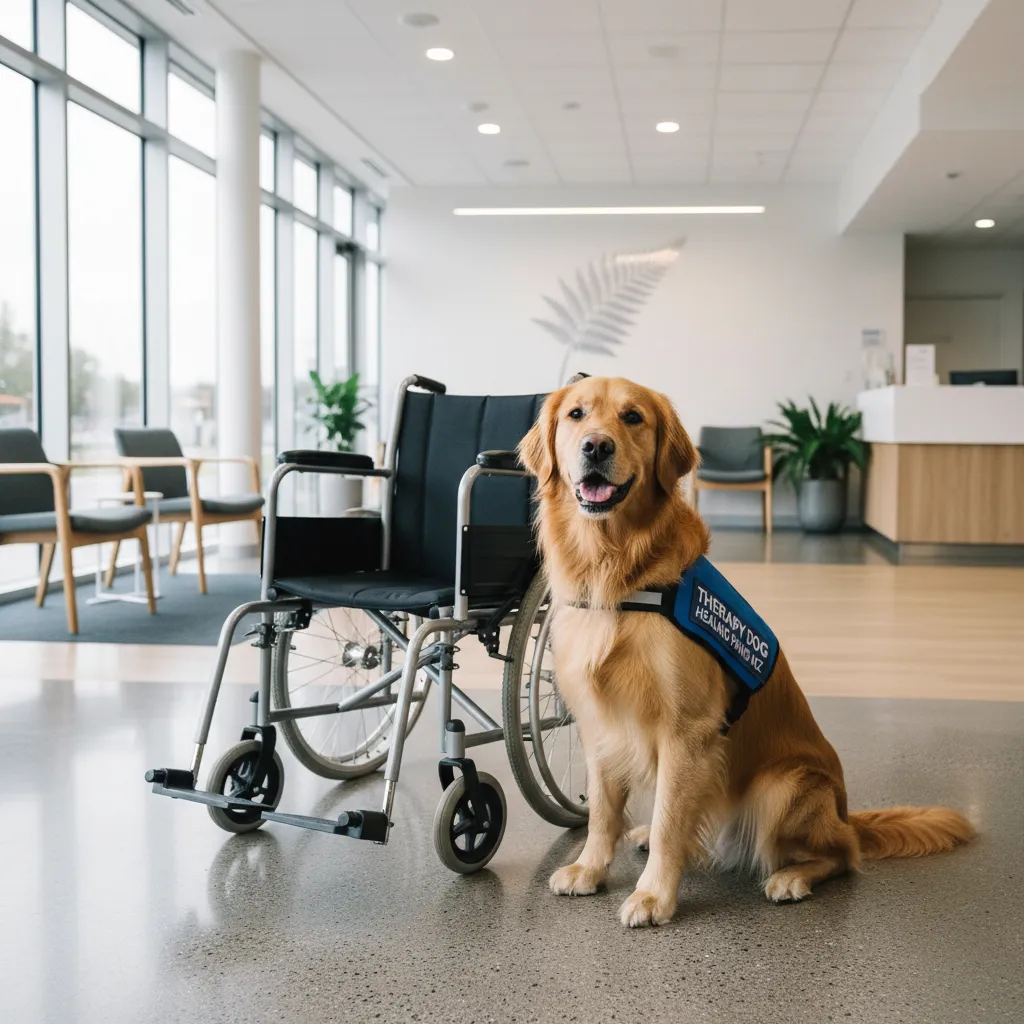
Why Standard Pet Insurance Isn’t Enough for Therapy Dogs?
When you look to buy therapy dog insurance NZ, the most common mistake is assuming a standard domestic pet policy (like those from Southern Cross, PD Insurance, or AA) will cover your animal while it is working. This assumption can leave handlers financially devastated.
Standard pet insurance policies in New Zealand almost universally contain a “Business Use” or “Professional Use” exclusion clause. Insurance underwriters classify risk based on the animal’s daily activities. A family pet sleeping on a rug carries a significantly different risk profile than a therapy dog interacting with vulnerable patients in a high-stress environment like a hospital, school, or aged-care facility.
The Definition of “Working Dog” in Insurance Terms
In the New Zealand insurance market, once a dog is used for Animal Assisted Therapy (AAT) or Animal Assisted Activities (AAA), its status changes from “companion animal” to “working dog” or “business asset.” Even if the dog lives in your home and sleeps on your bed at night, the moment it puts on a vest and enters a workspace, standard cover ceases.
If your therapy dog were to suffer an injury while working (e.g., swallowing a foreign object at a clinic or being injured by a patient), a standard insurer could legally decline the claim because the injury occurred during excluded professional activities. Therefore, specialized coverage is not a luxury; it is a compliance necessity.
Public Liability Coverage for Handlers
While veterinary cover protects the dog’s health, Public Liability (PL) insurance protects the handler’s financial future. This is the primary reason professionals seek to buy therapy dog insurance in NZ.
What Does Public Liability Cover?
In New Zealand, the Accident Compensation Corporation (ACC) covers most personal injuries resulting from accidents. However, ACC does not cover everything, and it certainly does not cover property damage or civil litigation costs related to negligence. Public Liability insurance for therapy dogs covers:
- Third-Party Property Damage: If your dog knocks over expensive medical equipment, ruins furniture in a rented clinic, or damages a client’s personal belongings.
- Non-ACC Personal Injury Costs: While ACC covers physical injury, there are instances where victims may seek exemplary damages or sue for mental trauma/nervous shock which falls outside ACC’s scope.
- Legal Defense Costs: If an incident occurs and you are investigated or sued, the legal fees to defend your practice can be astronomical. Liability insurance covers these defense costs.
The “Care, Custody, and Control” Clause
Handlers must be aware of the “Care, Custody, and Control” clause. If you are a psychologist or occupational therapist, your professional indemnity insurance covers your advice, but it often excludes damage caused by animals in your care. A specific extension or a standalone policy is required to bridge this gap.
Comparing NZ Providers for Therapy Dog Insurance
Finding a provider who explicitly covers therapy work requires navigating between pet insurers and commercial business insurers. Here is how the landscape looks in New Zealand.
1. Specialized Pet Insurers (e.g., Petcover)
Petcover is one of the few dedicated pet insurers in New Zealand that offers specific “Third Party Liability” options and acknowledges working dogs. They often have different tiers of cover that can be tailored to include liability up to $1 million, $2 million, or $5 million.
- Pros: They understand animal health and liability combined. You get vet cover and liability in one place.
- Cons: Premiums can be higher for working animals, and pre-existing conditions are excluded.
2. Business Liability Providers (e.g., BizCover, Crombie Lockwood)
For many professionals (counselors, physiotherapists), the best route is not “pet insurance” but “business insurance.” Brokers like Crombie Lockwood (now Gallagher) or platforms like BizCover allow you to add a “Public Liability” policy for your business.
When taking this route, you must explicitly declare the presence of a therapy dog. The policy will cover the liability of the dog biting or causing damage, but it will not cover the dog’s vet bills if the dog gets sick. This is purely asset protection for the business owner.
3. Association Memberships (e.g., Canine Friends Pet Therapy)
If you are a volunteer rather than a commercial business, joining an organization like Canine Friends Pet Therapy often comes with blanket public liability insurance coverage while you are performing approved visits. This is the most cost-effective method for volunteers but is generally not available for private practitioners charging for services.

Getting a Quote: The Step-by-Step Process
To buy therapy dog insurance in NZ efficiently, you need to have specific documentation ready. Insurers view therapy dogs as a higher risk than pets but a lower risk than security or hunting dogs. Presenting your case correctly is vital.
Step 1: Gather Certification Documents
Insurers will want proof that the dog is trained and predictable. You should have:
- Canine Good Citizen (CGC) Certificate: Issued by Dogs NZ, this is the gold standard baseline for behavior.
- Therapy Dog Training Logs: Proof of specialized training for clinical environments.
- Veterinary History: A full clinical history from your vet to rule out pre-existing aggression or health issues.
Step 2: Define the Scope of Work
When requesting a quote, be specific about the environment:
- Animal Assisted Therapy (AAT): Goal-directed intervention by a health professional.
- Animal Assisted Activities (AAA): Casual “meet and greet” activities.
- Facility Dogs: Dogs that live at a facility (like a rest home).
Being specific helps the underwriter categorize the risk accurately. A dog visiting a secure dementia unit has a different risk profile than a dog visiting a primary school.
Step 3: Requesting the Extensions
If you are buying a business policy, ask for the “Animal Liability Extension.” If you are buying a pet policy, ask for the “Working Dog Endorsement.” Do not rely on the online quote generators; call the provider directly. Online algorithms typically default to “household pet” and will void your coverage the moment you mention business use later on.
Factors Influencing Your Premium
The cost to buy therapy dog insurance in NZ varies wildly based on whether you are seeking full vet cover plus liability, or liability only.
Breed and Size
Large breeds (Golden Retrievers, Labradors) generally cost more to insure for veterinary expenses due to joint issues and medication dosages. For liability, powerful breeds may attract higher premiums or stricter underwriting criteria, although therapy dogs are usually low-aggression breeds.
Location and Frequency
A therapy dog working 40 hours a week in Auckland Central will have a higher premium than a dog working 4 hours a week in rural Otago. The frequency of interaction increases the statistical probability of a claim.
Excess (Deductible) Options
You can lower your premium by choosing a higher excess. For liability insurance, a standard excess might be $500. Raising this to $1,000 can significantly reduce your annual premium, which is a smart strategy if you are confident in your risk management protocols.

Risk Management Protocols
Insurance is the safety net, but risk management is the fence at the top of the cliff. To ensure your claim is paid if an incident occurs, you must adhere to strict protocols.
Incident Reporting
If a nip, scratch, or trip occurs, you must document it immediately. Most insurance policies have a notification period (often 48 to 72 hours). Failing to report a “near miss” or minor incident that later turns into a lawsuit can be grounds for the insurer to deny the claim.
Health Maintenance
Therapy dogs must be in peak health. If a dog snaps at a patient because it was in pain from an untreated ear infection, the insurer may argue negligence on the handler’s part. Regular vet checks are not just for the dog’s wellbeing; they are a compliance requirement for your liability insurance.
People Also Ask
Does St John cover insurance for therapy dogs?
If you are a registered volunteer with St John Therapy Pets, St John typically provides public liability coverage while you are performing approved visits on their behalf. However, this does not cover veterinary bills for your dog, nor does it cover you if you do private therapy work outside of the St John program.
Is an emotional support animal the same as a therapy dog for insurance?
No. In New Zealand insurance terms, an Emotional Support Animal (ESA) is generally considered a pet and does not require working dog liability. A Therapy Dog is a working animal trained to provide affection and comfort to people other than the handler. Commercial insurance is required for Therapy Dogs, but usually not for ESAs.
How much does public liability insurance for a therapy dog cost in NZ?
Public liability insurance specifically for a therapy dog business can range from $250 to $600 per year depending on the limit of indemnity ($1M to $10M) and whether it is bundled with other professional indemnity policies.
Does ACC cover dog bites in New Zealand?
ACC covers the physical injury treatment costs for the victim of a dog bite. However, ACC does not cover damage to the victim’s clothing, glasses, or property, nor does it cover exemplary damages if the victim sues for gross negligence. This is why Public Liability insurance is essential.
Can I claim therapy dog insurance as a business expense?
Yes. If your dog is an integral part of your business practice (e.g., you are a private psychologist using AAT), the premiums for both public liability and the working dog’s veterinary insurance are typically tax-deductible business expenses in New Zealand.
What happens if my therapy dog damages a clinic I am renting?
This falls under “Tenants Liability” or broad Public Liability. If your dog chews skirting boards or soils carpets requiring professional cleaning, your liability policy should cover the remediation costs, provided you have not been grossly negligent.