
Speech language therapy dog activities involve structured interactions between a client and a trained therapy animal designed to achieve specific communication goals. These interventions range from giving verbal commands to enhance projection and clarity, to utilizing the dog as a non-judgmental listener for reading fluency, ultimately increasing motivation and reducing anxiety in therapeutic settings.
Introduction to Canine-Assisted Speech Therapy
In the evolving landscape of allied health, Speech Language Therapists (SLTs) are increasingly turning to Animal Assisted Therapy (AAT) to break down barriers that traditional clinical settings cannot. The inclusion of a therapy dog in treatment sessions changes the dynamic of the room, shifting the focus from the pressure to perform to a desire to interact.
For practitioners in New Zealand and globally, integrating a dog is not merely about having a comforting presence in the room; it is about utilizing the animal as a complex, bio-feedback tool that encourages social engagement, joint attention, and verbal output. The dog acts as a bridge between the therapist and the client, often accelerating rapport building—a critical component of successful therapy.
Motivating Non-Verbal Children Through AAT
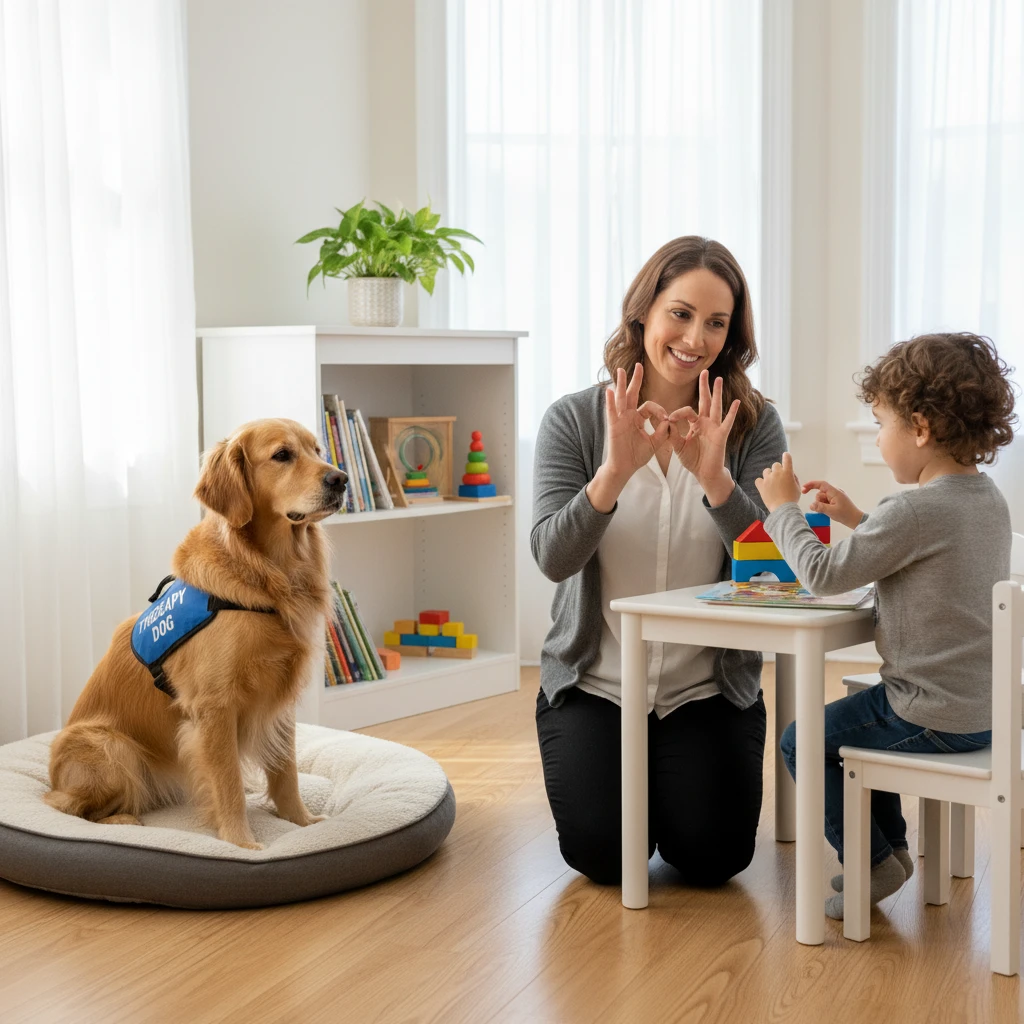
One of the most profound applications of speech language therapy dog activities is found in working with non-verbal children or those with severe communication delays, including Autism Spectrum Disorder (ASD). The dog provides a tangible reason to communicate that does not carry the social complexity of human interaction.
The Power of the Command
For a child who is non-verbal or minimally verbal, realizing that their voice or sign has power is a transformative moment. Dogs are immediate feedback loops. If a child successfully communicates “sit” (verbally, via AAC device, or sign language), the dog sits. This cause-and-effect relationship is concrete and rewarding.
Therapists can structure this by starting with single-syllable commands. The motivation to control the animal’s behavior often supersedes the child’s reluctance to speak. Unlike a human, who might guess what the child wants, a dog waits for the specific cue, encouraging precision in communication.
Sensory Integration and Descriptive Language
Many children requiring speech therapy also have sensory processing needs. A therapy dog offers a rich sensory experience that can be used to build receptive and expressive language. Grooming activities are particularly effective here.
During a brushing session, the SLT can introduce adjectives and verbs in a functional context. Concepts such as “soft,” “rough,” “long,” “short,” “brush,” and “pat” become meaningful. For children with apraxia of speech, the rhythmic motion of brushing the dog can sometimes help in pacing their vocalizations, acting as a metronome for speech production.
Canine-Assisted Reading and Vocalization
For clients struggling with stuttering, cluttering, or reading fluency, the anxiety of being judged is a massive inhibitor. This is where the concept of the “non-judgmental listener” becomes a clinical asset.
lowering the Affective Filter
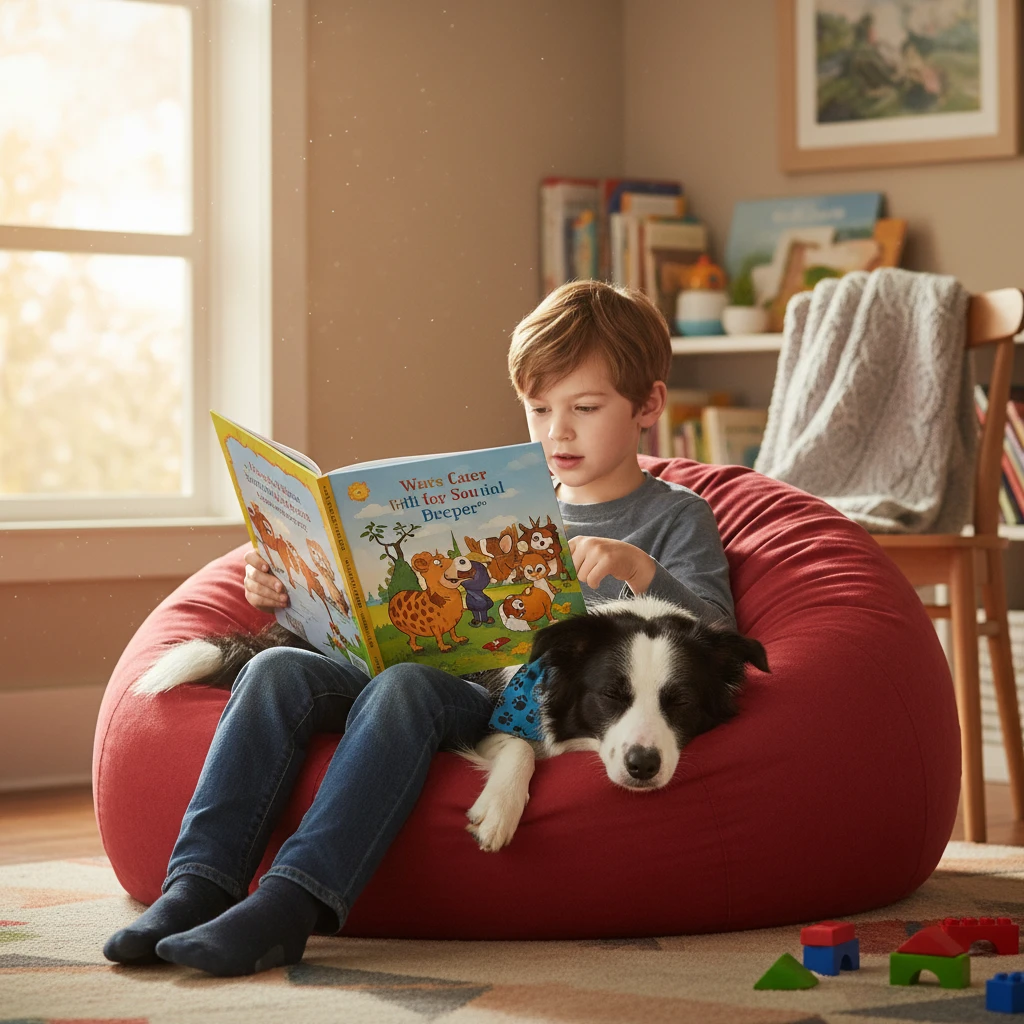
The “Affective Filter” hypothesis suggests that high anxiety blocks language acquisition and production. Dogs effectively lower this filter. When a child reads to a dog, the dog does not correct their pronunciation, does not sigh when they stumble, and does not look at the clock. This acceptance creates a safe space for vocal practice.
In New Zealand, programs similar to “Reading to Dogs” in libraries have been adapted for clinical SLT settings. The therapist observes from a distance, allowing the client to read a narrative to the dog. Later, the therapist can gently intervene to work on specific phonemes or pacing strategies, but the primary interaction remains between the client and the dog.
Volume and Projection Exercises
For clients with low vocal volume (hypophonia), often associated with Parkinson’s disease or certain developmental delays, dogs are excellent motivators for projection. A dog may not respond to a whisper. The therapist can position the dog across the room and instruct the client to call the dog.
Activity: “Call the Dog”
1. Place the dog in a “stay” position at the far end of the room.
2. The client must use a loud, clear voice to call the dog’s name and the command “Come.”
3. If the volume is insufficient, the handler (therapist) keeps the dog in place.
4. When the volume target is met, the dog is released to the client for a reward interaction.
Structured Speech Language Therapy Dog Activities
To maximize the efficacy of AAT, activities must be structured around specific clinical goals. Below is a detailed list of activities categorized by the language domain they target.
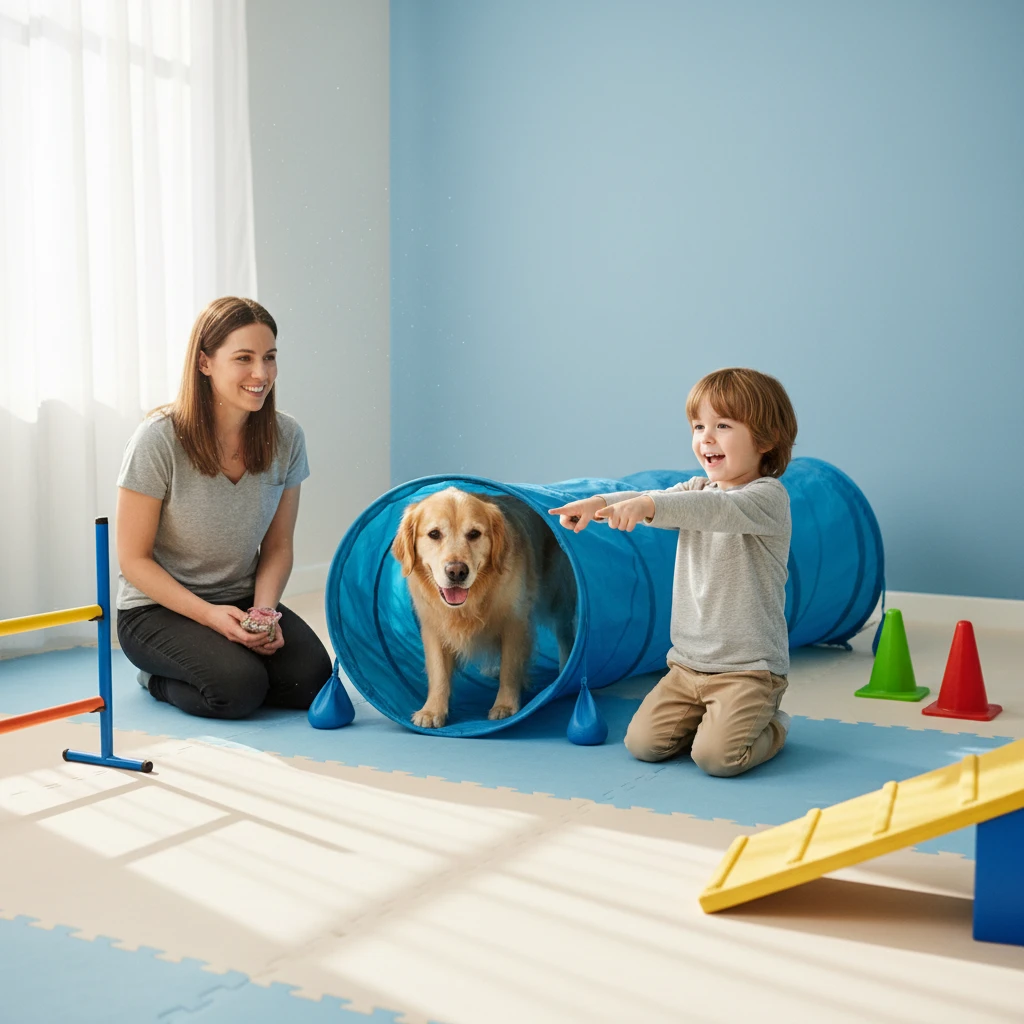
1. Preposition Practice: “Where is the Dog?”
Understanding spatial concepts is a common goal in early language development. Using a live animal makes this abstract concept concrete.
- The Activity: Use an agility tunnel, a hoop, or a table.
- The Goal: The client directs the dog or describes the dog’s position.
- Target Vocabulary: “Under the table,” “Through the tunnel,” “Over the jump,” “Next to the chair.”
- Progression: Ask the client to place a treat behind the dog or in front of the dog, requiring them to process the instruction relative to the animal’s orientation.
2. Sequencing and Executive Functioning: “The Grooming Routine”
Sequencing is vital for narrative skills and daily independence. Grooming or feeding the therapy dog provides a natural multi-step process.
- Step 1: Have the client create a visual schedule or list of the steps (e.g., Get brush, ask dog to sit, brush back, clean brush, give treat).
- Step 2: The client must execute the steps in order.
- Step 3: The client retells the event using temporal markers (First, Next, Then, Last).
3. Social Pragmatics: “Greetings and Goodbyes”
Therapy dogs are social magnets, providing a natural context to practice social scripts. This is particularly useful for clients who struggle with eye contact and body orientation.
- The Activity: The client must introduce themselves to the dog and the handler.
- Differentiation: Discuss the difference between greeting a human (shaking hands, saying hello) vs. greeting a dog (offering a sniff of the hand, gentle petting). This helps clients distinguish between social targets.
4. Articulation and Phonics: “The Kibble Game”
Repetitive drills are often boring for children. Gamifying them with a dog increases tolerance for repetition.
- The Activity: The client has a small cup of kibble.
- The Rule: For every 5 correct productions of a target sound (e.g., /s/ blends), the client gets to toss one piece of kibble to the dog.
- Variation: Hide kibble under cups labeled with target words. The client picks a cup, says the word, and reveals if the dog gets a treat.
Animal Assisted Therapy in the New Zealand Context
When implementing speech language therapy dog activities in New Zealand, practitioners must adhere to local regulations and cultural considerations. Organizations such as Therapy Dogs New Zealand and Canine Friends Pet Therapy set the benchmark for temperament testing and handler training.
Cultural Sensitivity and Tikanga Māori
In Aotearoa New Zealand, it is essential to consider Tikanga Māori regarding animals. In some contexts, dogs may be viewed differently, particularly regarding food preparation areas or heads (tapu). A culturally competent SLT will always consult with the whānau (family) regarding their comfort level with a dog present in the therapy space. Establishing clear boundaries that respect cultural values ensures that the therapy is inclusive and respectful.
Measuring Progress and Outcomes
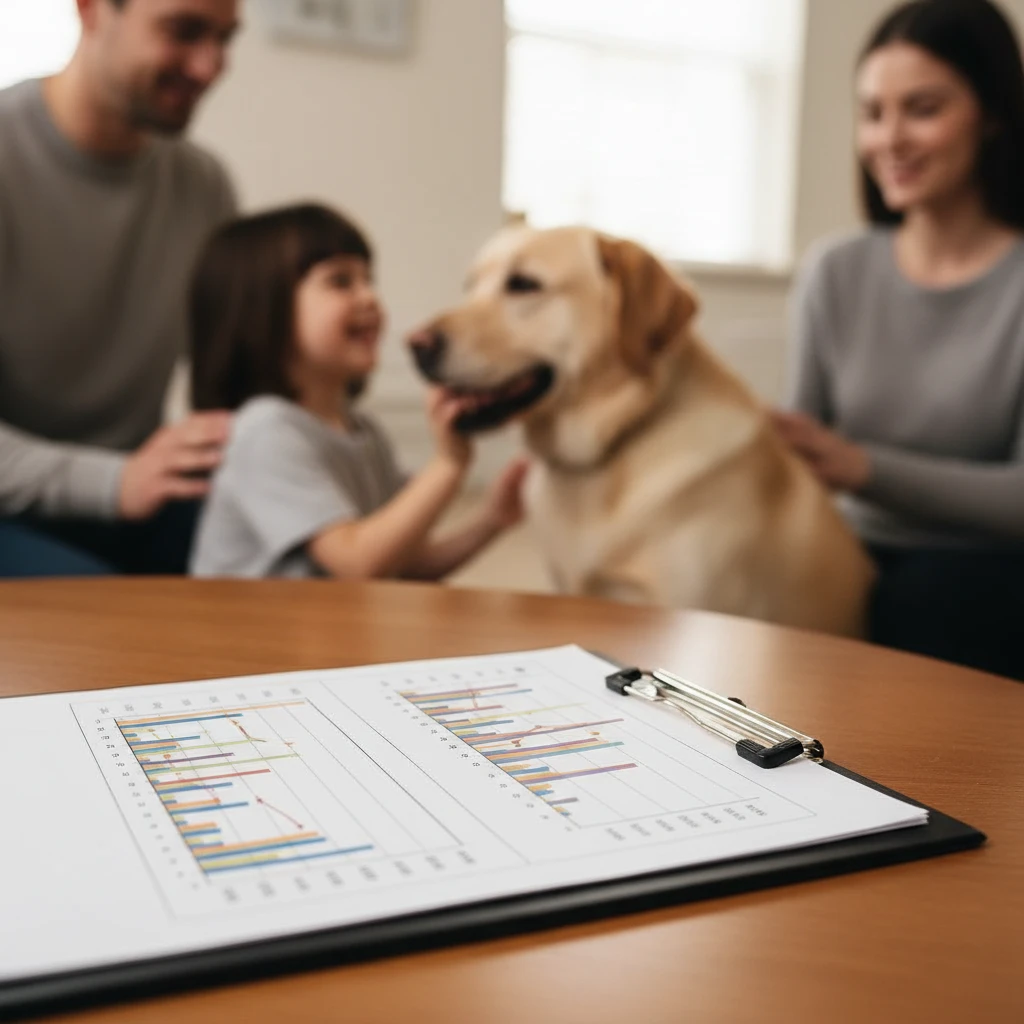
AAT should not be a novelty; it must be an evidence-based intervention. Measuring progress requires integrating the dog into SMART goals (Specific, Measurable, Achievable, Relevant, Time-bound).
Data Collection Methods
Therapists should track data points specifically related to the dog’s presence versus the dog’s absence to justify the intervention.
- Engagement Duration: Measure the time the client sustains attention on a task with the dog vs. without.
- Vocal Attempts: Count the number of spontaneous vocalizations directed at the animal.
- Mean Length of Utterance (MLU): Record language samples during dog interaction to compare sentence complexity against baseline.
Safety, Hygiene, and Ethical Considerations
The welfare of the therapy dog is paramount. A stressed dog is not a therapeutic dog and can pose safety risks. New Zealand animal welfare codes must be strictly followed.
Infection Control
Strict hygiene protocols are non-negotiable in clinical environments. This includes:
- Hand Hygiene: Mandatory hand washing or sanitizing before and after interacting with the dog.
- Grooming Standards: The dog must be bathed regularly, have trimmed nails, and be free of parasites (fleas/worms).
- Dedicated Mats: The dog should have a specific mat or blanket to settle on to contain dander and hair.
Recognizing Canine Stress Signals
SLTs acting as handlers must be experts in canine body language. Signals such as lip licking, yawning, whale eye (showing the whites of the eyes), or avoidance behavior indicate the dog needs a break. Ethical practice dictates that the dog has a “safe zone” (crate or mat) where they are never disturbed by clients.
People Also Ask
What qualifications does a dog need for speech therapy?
A dog typically needs to pass a rigorous temperament test and obedience evaluation through a recognized organization (like Therapy Dogs NZ or St John). They must remain calm in unpredictable environments, tolerate clumsy handling, and have zero history of aggression. The handler (SLT) usually also undergoes training in animal-assisted interventions.
Can a therapy dog help with stuttering?
Yes, therapy dogs can significantly help with stuttering. They act as non-judgmental listeners, which reduces the speaker’s anxiety. This reduction in anxiety often leads to increased fluency and confidence when reading aloud or speaking to the animal compared to human listeners.
What are the best dog breeds for speech therapy?
While Golden Retrievers and Labradors are popular due to their gentle nature, any breed with the right temperament can be a therapy dog. Poodles and Poodle-crosses (like Spoodles) are often favored in clinical settings in New Zealand due to their low-shedding coats, which are better for clients with mild allergies.
Is animal assisted therapy funded in New Zealand?
Funding for AAT in New Zealand varies. It is generally not funded as a standalone service by the Ministry of Health but can be included as part of a private Speech Language Therapy practice. Some ACC providers may incorporate it if it aligns with the rehabilitation goals, but it is best to check with individual providers.
How do you introduce a child to a therapy dog?
Introductions should be slow and controlled. Start with the dog in a “down-stay” position. Allow the child to approach at their own pace. Teach the child to ask the handler for permission, then offer a closed fist for the dog to sniff before gently petting the dog’s back or shoulder (avoiding the head initially).
What if the client is afraid of dogs?
If a client has a phobia (cynophobia), AAT may not be appropriate immediately. However, some therapists use the dog to systematically desensitize the fear. Initially, the dog may be in a crate or behind a gate. If the fear impedes therapy goals, the dog should be removed from the session entirely.