
Liability insurance for office dogs in NZ is a specialized commercial policy that protects businesses and therapy handlers against claims for property damage and legal costs associated with canine incidents. While ACC covers personal injury treatment, liability insurance is essential for covering reparations, legal defense under the Health and Safety at Work Act 2015, and third-party property damage.
Integrating animals into the workplace, particularly within the niche of Animal Assisted Therapy (AAT), creates a dynamic environment that offers significant mental health benefits. However, in New Zealand, the introduction of a dog into a professional setting transforms that animal from a pet into a potential workplace hazard that must be managed under strict regulatory frameworks. For business owners and therapy dog handlers, understanding the nuances of liability insurance for office dogs NZ is not merely a precaution; it is a critical component of operational compliance.
Health and Safety at Work Act Implications
In New Zealand, the Health and Safety at Work Act 2015 (HSWA) places the primary duty of care on the Person Conducting a Business or Undertaking (PCBU). When a therapy dog or an office dog enters a workplace, the PCBU must ensure, so far as is reasonably practicable, that the health and safety of workers and other persons are not put at risk.
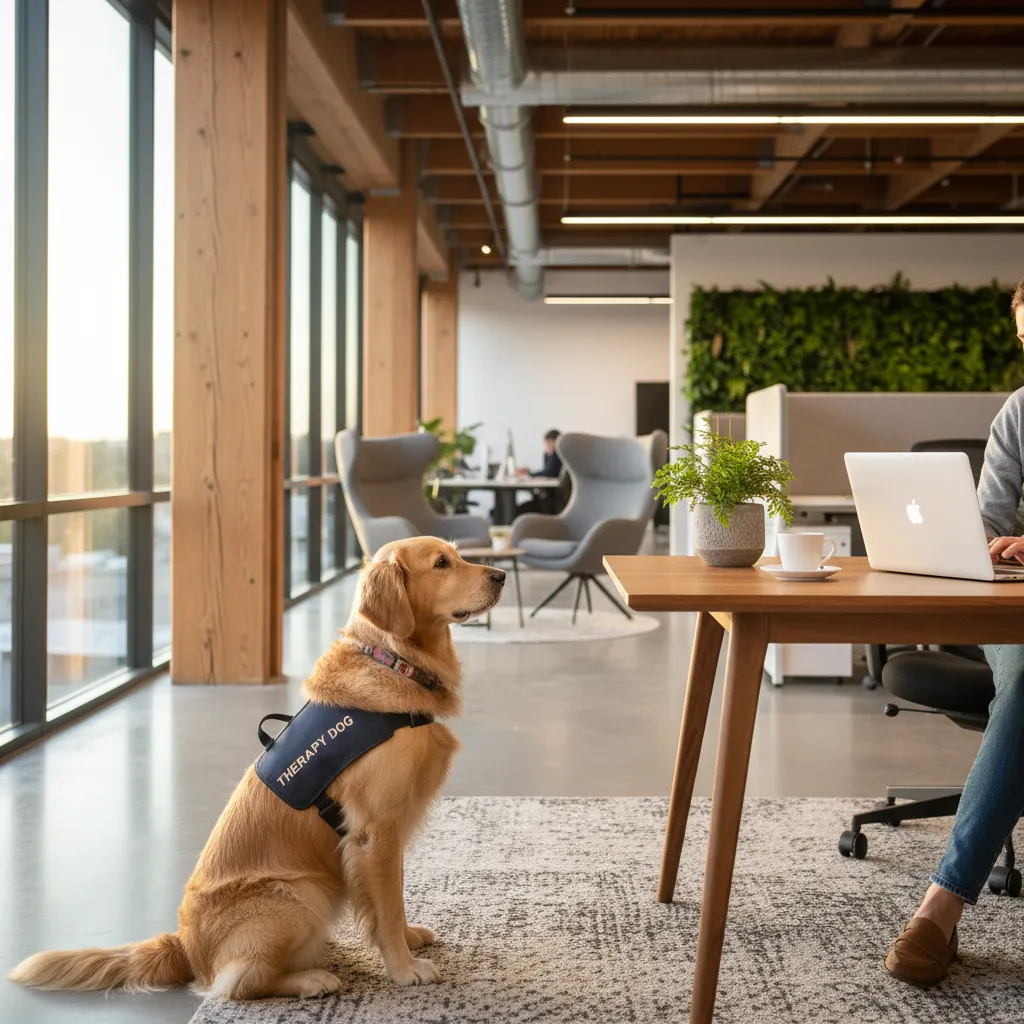
Defining the Dog as a ‘Hazard’
Under the HSWA, a hazard includes anything that can cause harm. A dog, regardless of its temperament or training, falls under this definition due to the potential for biting, tripping, creating allergic reactions, or transmitting zoonotic diseases. Therefore, the PCBU is legally required to:
- Identify the risks associated with the dog’s presence.
- Eliminate risks where possible (e.g., excluding dogs from food preparation areas).
- Minimize risks that cannot be eliminated (e.g., requiring leashes or designating specific zones).
Failure to manage these risks can result in significant penalties from WorkSafe NZ. If an incident occurs and it is determined that the PCBU failed to implement adequate control measures, the business could face prosecution. This is where the intersection of safety protocols and insurance becomes vital.
Insurance Requirements for Visiting Teams
For Animal Assisted Therapy providers visiting corporate offices, schools, or healthcare facilities, carrying the correct insurance is a prerequisite for entry. Standard business policies often contain exclusions for animals, making specialized extensions necessary.
Public Liability Insurance
Public Liability is the cornerstone of insurance for any dog entering a workplace. This policy covers the insured against legal liability to third parties for accidental damage to property. In the context of an office dog:
- Property Damage: If a dog chews through server cables, ruins expensive carpet, or knocks over equipment, Public Liability covers the replacement costs.
- Consequential Loss: If the damage to the server cables causes the business to lose revenue due to downtime, this aspect of the policy is triggered.
Professional Indemnity for Therapy Teams
For professional AAT providers, Public Liability alone is insufficient. Professional Indemnity insurance is required to cover the “advice” or “service” provided. If a therapy session leads to an alleged worsening of a client’s mental state, or if the handler fails to supervise the interaction correctly leading to distress, Professional Indemnity protects the practitioner against claims of professional negligence.
Statutory Liability
This is particularly relevant in New Zealand. Statutory Liability insurance covers the legal defense costs if a business is prosecuted for breaching an act of parliament, such as the Health and Safety at Work Act. While it cannot pay the fine itself (as this is illegal in NZ), it covers the substantial legal fees involved in defending a WorkSafe investigation following a dog-related incident.
The NZ Context: ACC vs. Liability Insurance
One of the most common misconceptions regarding liability insurance for office dogs NZ is the role of the Accident Compensation Corporation (ACC). International guides often focus on “bodily injury lawsuits,” but New Zealand’s no-fault scheme changes the landscape.
What ACC Covers
If a dog bites an employee or a visitor in a New Zealand workplace, ACC generally provides cover for the physical injury. This includes medical treatment, rehabilitation, and a portion of lost wages. Because of this cover, the injured party is generally statute-barred from suing the dog owner or the business for compensatory damages regarding the personal injury.
The “Exemplary Damages” Gap
However, ACC does not cover everything. An injured party can sue for “exemplary damages” if the negligence was particularly gross or reckless. Furthermore, ACC does not cover:
- Emotional distress (unless it is a diagnosed mental injury resulting from a physical injury or certain criminal acts).
- Reparations ordered by a court during a Health and Safety prosecution.
- Lost income above the ACC cap.
Therefore, liability insurance in NZ is not about paying for the ambulance or the stitches—it is about protecting the business from the legal aftermath, potential reparations to the victim (which can be tens of thousands of dollars), and property damage claims which ACC does not touch.
Risk Assessment Templates and Protocols
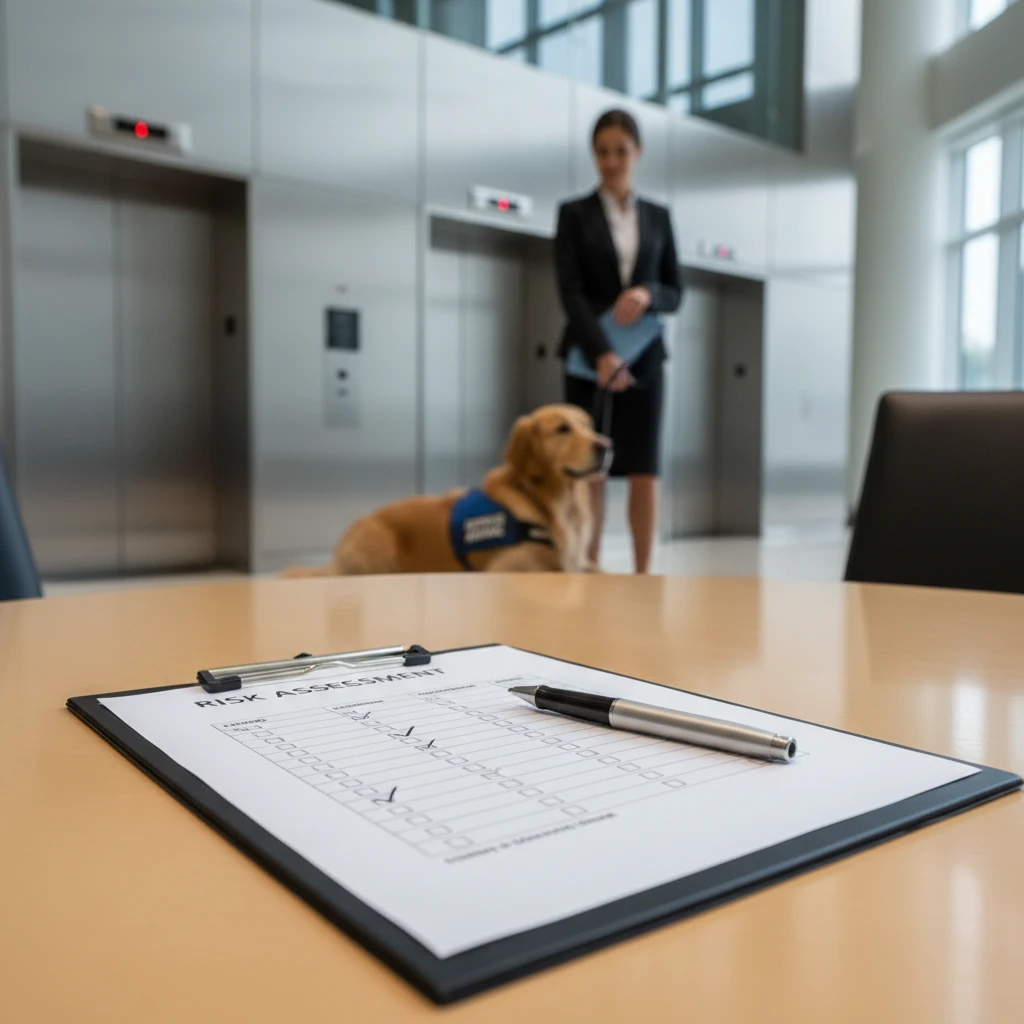
Insurers will typically require proof of a robust risk management strategy before binding cover for office dogs. A comprehensive risk assessment demonstrates to underwriters that the PCBU is proactive.
Key Elements of a Canine Risk Assessment
To satisfy both WorkSafe and insurance providers, your risk assessment should follow a structured matrix:
- Hazard Identification:
- Tripping hazards (leashes, sleeping dogs).
- Aggressive behavior (resource guarding, fear aggression).
- Hygiene (fleas, urine, dander).
- Risk Analysis (Likelihood x Consequence):
- What is the likelihood of a bite occurring in a high-stress meeting room?
- What is the consequence of a dog escaping into a busy road?
- Control Measures:
- Administrative Controls: “Dogs must be registered with the local council and hold a ‘Canine Good Citizen’ or therapy accreditation.”
- Engineering Controls: Installation of baby gates or secure pods for dogs.
- PPE: Availability of hand sanitizer and cleaning kits.
Allergy and Phobia Management Policies
Liability extends beyond physical bites. A severe allergic reaction triggered by an office dog can be classified as a workplace injury. Furthermore, forcing employees with cynophobia (fear of dogs) to work in close proximity to animals can be deemed a failure to provide a safe psychological environment.
Structuring a Policy
A robust policy protects the business against discrimination claims and health complaints. This policy should be explicit in the insurance declaration.
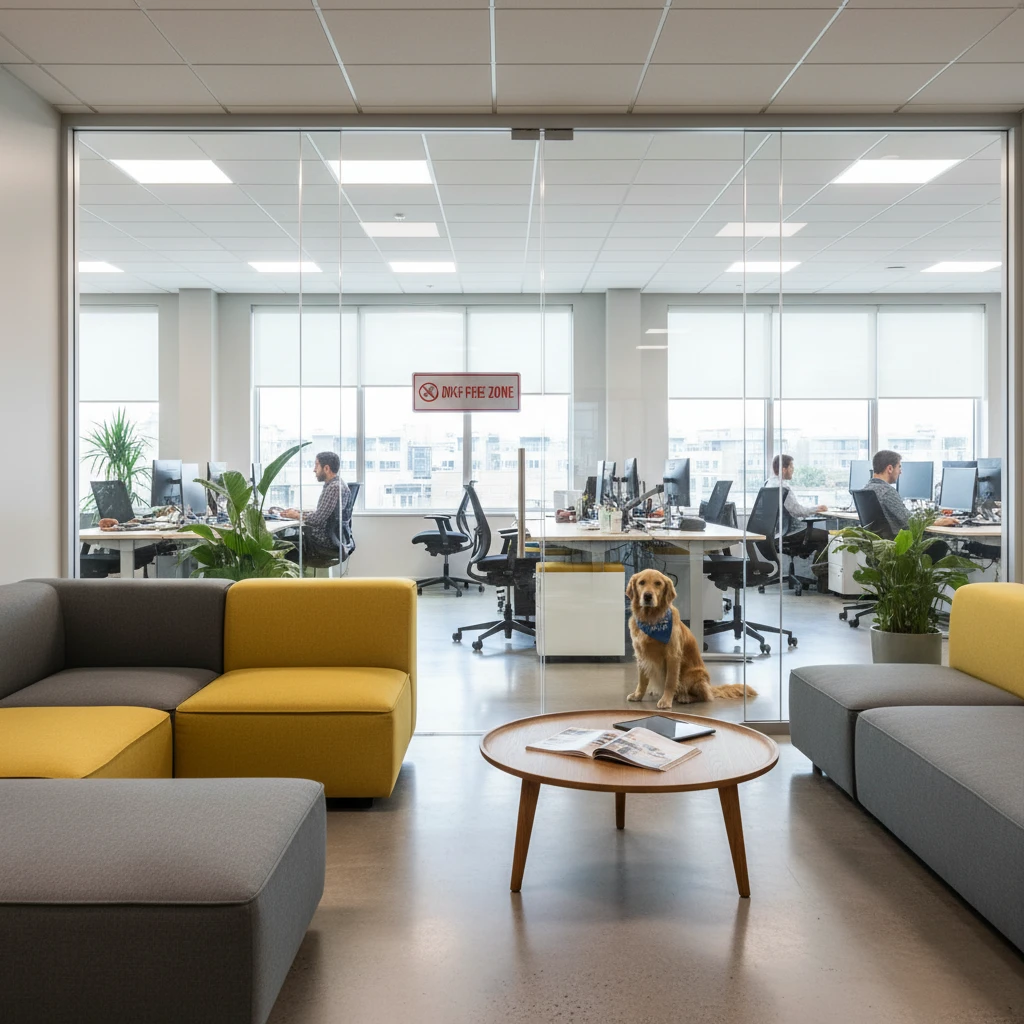
1. The “Dog-Free” Zone
Establish mandatory dog-free zones within the office (e.g., kitchens, bathrooms, and specific quiet rooms). This ensures that staff with allergies have safe harbors where dander is minimized.
2. Consultation Process
Before introducing a therapy dog or allowing office dogs, conduct an anonymous survey of all staff. If a staff member has a severe allergy, their health needs under the Human Rights Act and HSWA usually take precedence over the privilege of having a dog in the office.
3. Hygiene Protocols
Require that all visiting therapy dogs be groomed within 24 hours of the visit to minimize dander. High-efficiency particulate air (HEPA) filters should be installed in areas where the dog frequently stays.
Best Practices for Policy Implementation
To ensure your liability insurance remains valid, you must adhere to the warranties and conditions set out in the policy. Common conditions for NZ office dogs include:
Vaccination and Registration
All dogs must be currently registered with their local New Zealand city council. They must be fully vaccinated (Distemper, Hepatitis, Parvovirus, and Kennel Cough). Failure to maintain these records can void insurance coverage in the event of a disease transmission claim.
Supervision Requirements
Insurance policies generally exclude damage caused by unsupervised animals. The policy should state that the handler must be in visual contact with the dog at all times, or the dog must be secured in a crate if the handler is temporarily absent (e.g., using the restroom).
Incident Reporting
Create a specific “Canine Incident Report Form.” Any growl, snap, or scratch must be documented immediately. In the insurance world, early notification of a ‘potential circumstance’ is crucial. Delaying the report of a minor incident that later turns into a major infection or claim can lead to the insurer declining the claim.
People Also Ask
Does standard business insurance cover office dogs in NZ?
Rarely. Most standard General Liability policies in New Zealand have exclusions for animals or require them to be specifically noted on the schedule. You must contact your broker to add an extension for “visiting animals” or “office pets” to ensure you are covered for property damage and liability.
What happens if an office dog bites an employee in NZ?
The employee’s physical injury is covered by ACC. However, the business (PCBU) must report the incident to WorkSafe if the injury is serious. The business could face legal action under the Health and Safety at Work Act, and the dog owner could be liable for reparations or local council prosecution (dog control act).
Is a risk assessment mandatory for therapy dogs in offices?
Yes. Under the Health and Safety at Work Act 2015, a PCBU must manage all workplace hazards. Since a dog is a potential hazard, a documented risk assessment is legally required to demonstrate that you have taken reasonably practicable steps to ensure safety.
Can I be sued if my dog causes an allergic reaction at work?
While personal injury lawsuits are limited by ACC, an employee could raise a personal grievance for an unsafe workplace or constructive dismissal if their severe allergies are ignored. Additionally, if a visitor suffers a reaction, they could claim for costs not covered by ACC, making liability insurance vital.
What is the difference between a therapy dog and a support dog in NZ?
In NZ, a “Disability Assist Dog” (Guide/Service Dog) has legal access rights under the Human Rights Act. A “Therapy Dog” (used for AAT) or an “Emotional Support Animal” does not have automatic access rights to public places or workplaces and enters only with the permission of the business owner.
How much does liability insurance for office dogs cost?
The cost varies significantly based on the business size and risk profile. Often, it is an extension to an existing policy costing between $200 and $500 NZD per year. However, for dedicated Animal Assisted Therapy businesses, standalone liability packages can range from $800 to $2,000+ annually.