
A corporate wellness dog visit in NZ is a professional workplace wellbeing service where certified therapy dogs and handlers visit offices to alleviate employee stress and improve morale. These managed events utilize animal-assisted interactions to lower cortisol levels, facilitate team bonding, and combat burnout, all while adhering to strict New Zealand health and safety guidelines.
Turnkey Wellness Events for HR Directors
In the modern New Zealand corporate landscape, Human Resources directors face a mounting challenge: how to provide meaningful, engaging wellness initiatives that go beyond a simple fruit bowl or a discounted gym membership. The administrative burden of organizing complex events often deters companies from implementing the mental health support their staff desperately needs.
Corporate wellness dog visits in NZ offer a streamlined, turnkey solution designed specifically for busy HR professionals. A professional service provider manages the entire ecosystem of the event, ensuring that the company receives the benefits of animal-assisted therapy without the logistical headache.
A true turnkey solution includes:
- Pre-Event Assessment: Evaluating the office space for suitability and identifying a quiet zone for the animals.
- Certified Teams: Providing fully vetted therapy dogs and professional handlers who manage the animal’s welfare and interactions at all times.
- Scheduling & Communication: Handling the booking slots to ensure small groups enjoy quality time without overcrowding.
- Hygiene Management: bringing all necessary cleaning supplies, water bowls, and grooming tools to ensure the office remains pristine.

By outsourcing this function to specialists in animal-assisted therapy, New Zealand businesses can deploy high-impact wellness days that require zero setup time from internal staff. This “plug-and-play” approach allows leadership to focus on their core KPIs while simultaneously boosting their Employer Value Proposition (EVP).
Combating Staff Burnout with Animal Therapy
Burnout is becoming an epidemic in New Zealand workplaces. With the lines between home and work blurring due to hybrid models, and the economic pressures facing many Kiwis, stress levels are at an all-time high. Traditional methods of stress management often fail because they require active participation or “homework” from the employee (e.g., meditation apps or seminars).
A corporate wellness dog visit cuts through the noise by offering passive, immediate relief. The presence of a friendly, non-judgmental animal disrupts the cycle of stress. It forces a break in the workday that is restorative rather than demanding.
The Physiological Reset
When an employee interacts with a therapy dog, the effect is biological, not just psychological. This is often referred to as the “Pet Effect.” Within minutes of stroking a dog, the human body reacts by:
- Lowering Cortisol: The primary stress hormone is significantly reduced.
- Boosting Oxytocin: Known as the “cuddle hormone,” this promotes feelings of trust and relaxation.
- Reducing Blood Pressure: Physical contact with animals has been clinically proven to lower heart rates.
For staff members nearing burnout, a 20-minute session with a therapy dog can act as a circuit breaker, allowing them to return to their desks with a clearer mind and a renewed sense of perspective. It signals to the team that the company values their mental health enough to bring joy directly to them.

The Science: Why Dogs Change Office Dynamics
Beyond individual stress relief, bringing dogs into the office has a profound impact on social cohesion. In many corporate environments, silos develop where departments rarely interact. A dog visit acts as a “social lubricant.”
Research into organizational behavior suggests that shared positive experiences are critical for team building. A dog in the office creates a neutral ground. The CEO and the intern may find themselves side-by-side petting a Spaniel, engaging in conversation that wouldn’t happen in a boardroom. This flattens the hierarchy and humanizes leadership.
Furthermore, the presence of animals encourages “play”—a state often suppressed in corporate environments but essential for creativity and problem-solving. By stepping away from screens and engaging in tactile interaction, the brain shifts modes, often leading to breakthroughs in creative blocks.
Seasonal Event Packages in New Zealand
To maximize engagement, leading providers of corporate wellness dog visits in NZ offer seasonal packages aligned with the Kiwi corporate calendar. These themed events help keep the wellness program fresh and relevant throughout the year.
Mental Health Awareness Week (MHAW)
Usually held in September or October in New Zealand, MHAW is the busiest time for wellness providers. A “Paws for Mental Health” event during this week demonstrates a tangible commitment to the cause. Packages often include educational materials on mental health resources alongside the dog visit.
Pink Shirt Day (Anti-Bullying)
Celebrated in May, Pink Shirt Day focuses on kindness and inclusivity. Therapy dogs, often dressed in pink bandanas, serve as ambassadors of kindness. These events are powerful for resetting office culture and emphasizing a zero-tolerance policy for workplace bullying.
The “Christmas De-Stress” Package
The end-of-year rush (November/December) is notoriously stressful in New Zealand as businesses race to close off the year before the summer holidays. A Christmas-themed visit—complete with reindeer antlers for the dogs—provides a much-needed morale boost during the high-pressure crunch time.

Liability, Logistics, and Safety Compliance
For any commercial entity, risk management is paramount. HR Directors and Facility Managers often hesitate to book animal visits due to concerns regarding liability, allergies, and building regulations. Professional Animal Assisted Therapy providers in New Zealand address these concerns through rigorous protocols aligned with the Health and Safety at Work Act 2015.
Insurance and Certification
Reputable providers carry comprehensive Public Liability Insurance (usually up to $10 million or $20 million NZD). This indemnifies the client against accidents. Furthermore, the dogs are not just family pets; they are assessed therapy animals. They undergo temperament testing to ensure they remain calm in elevators, around sudden noises, and in crowded spaces.
Managing Allergies and Phobias
Inclusivity is vital. Not everyone loves dogs, and some are allergic. A professional logistics plan mitigates this by:
- Designated Zones: The event is held in a specific meeting room or breakout area, not the open-plan floor. This contains dander and ensures that interaction is 100% voluntary.
- Communication: Staff are notified in advance, allowing those with fears or allergies to plan accordingly.
- Hygiene Protocols: Handlers carry sanitizers and lint rollers. The area is vacuumed or cleaned post-event to remove allergens.
Building Management Approval
Many commercial leases in Auckland, Wellington, and Christchurch have strict “no animal” clauses. However, these usually apply to tenancy, not visitation. Wellness providers assist HR in drafting the necessary “Request for Access” documentation for building management, framing the visit as a supervised, time-bound contractor event rather than a “pet in the office” scenario.
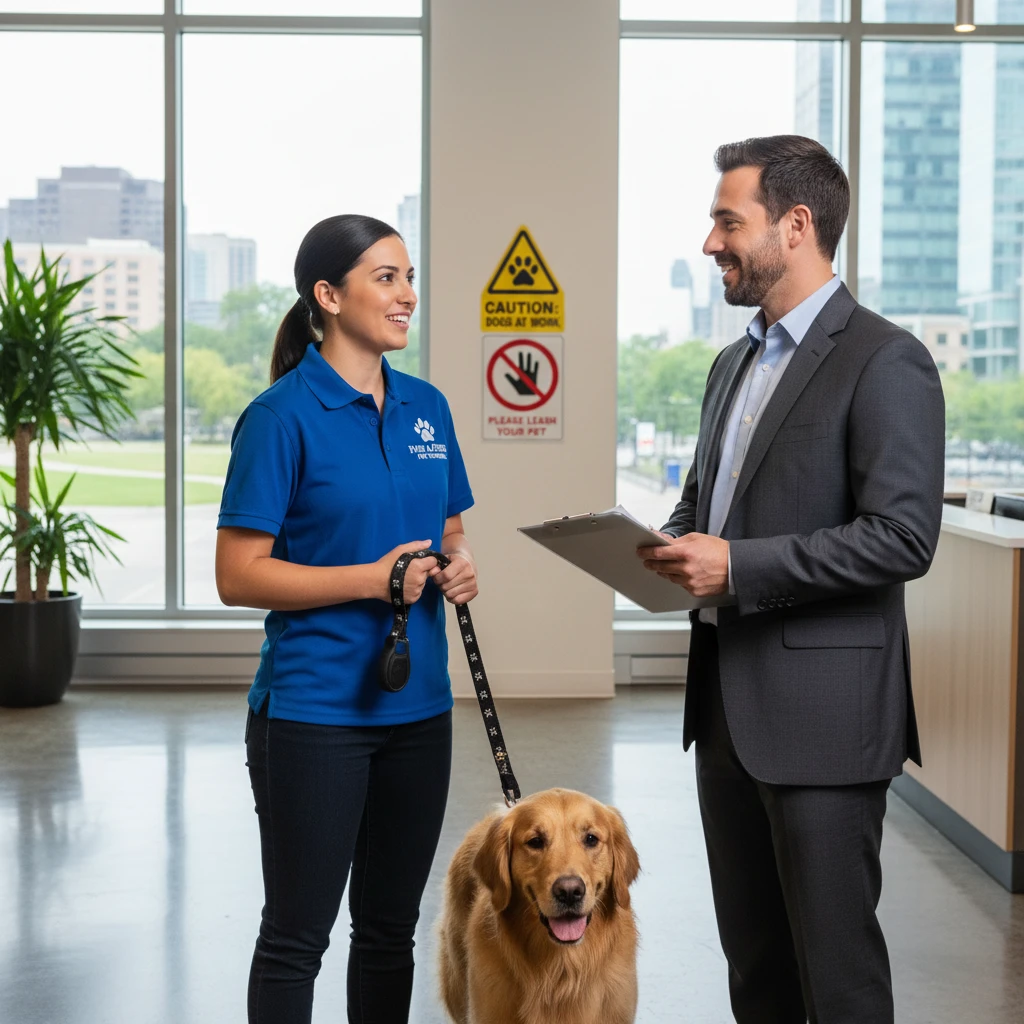
How to Implement a Dog Visit Program
Implementing a corporate wellness dog visit is a strategic move to improve retention and workplace satisfaction. Here is the standard workflow for booking a commercial session in New Zealand:
- Consultation: Determine the size of your team. The general ratio is one dog per 15-20 staff members per hour to ensuring the animal does not get fatigued and every human gets quality time.
- Site Audit: A quick review of the floor plan to select the “Wellness Zone.”
- Risk Assessment: The provider submits a RAMS (Risk Assessment and Method Statement) form to your Health & Safety officer.
- Internal Marketing: The provider supplies email templates and posters to build anticipation among the staff.
- The Visit: The team arrives 15 minutes early for setup. The session runs for 60 to 120 minutes depending on the package.
- Feedback Loop: Post-event surveys are crucial to measure the impact on staff mood and justify the ROI for future budgets.
By treating the visit as a structured wellness intervention rather than a novelty, businesses see higher engagement rates and lasting positive effects on company culture.
People Also Ask (PAA)
How much does a corporate wellness dog visit cost in NZ?
Costs vary based on the number of dogs required and the duration of the visit. Typically, prices in New Zealand range from $300 to $600+ GST for a single dog session (1-1.5 hours), scaling up for larger events with multiple handlers. This fee covers insurance, transport, handler time, and coordination.
Are the therapy dogs hypoallergenic?
While no dog is 100% hypoallergenic, many wellness providers utilize breeds with hair rather than fur (such as Poodles or Oodle mixes) to minimize dander. However, professional protocols rely on designated zones and hygiene practices to protect allergic staff regardless of the breed used.
What happens if an employee is afraid of dogs?
Participation is strictly voluntary. Visits are conducted in enclosed or designated areas (like a boardroom) rather than roaming the office floor. This ensures that staff who are fearful or uninterested can continue their work without forced interaction or anxiety.
How long should a wellness dog visit last?
The optimal duration for a single session is between 60 to 90 minutes. This prevents the therapy dogs from becoming over-tired and ensures interactions remain high-quality. For larger offices (100+ staff), companies typically book rotating sessions or multiple dog teams.
Do I need approval from my landlord for a dog visit?
Yes, you should check your lease agreement. However, most commercial landlords in NZ allow temporary visits from certified service or therapy animals when provided with proof of insurance and a risk management plan, which your provider will supply.
Can we feed the therapy dogs during the visit?
Generally, no. To ensure the safety of the dogs and maintain their training standards, feeding is restricted to the handlers. However, some providers allow staff to give specific, handler-approved treats as part of a structured interaction or trick demonstration.