
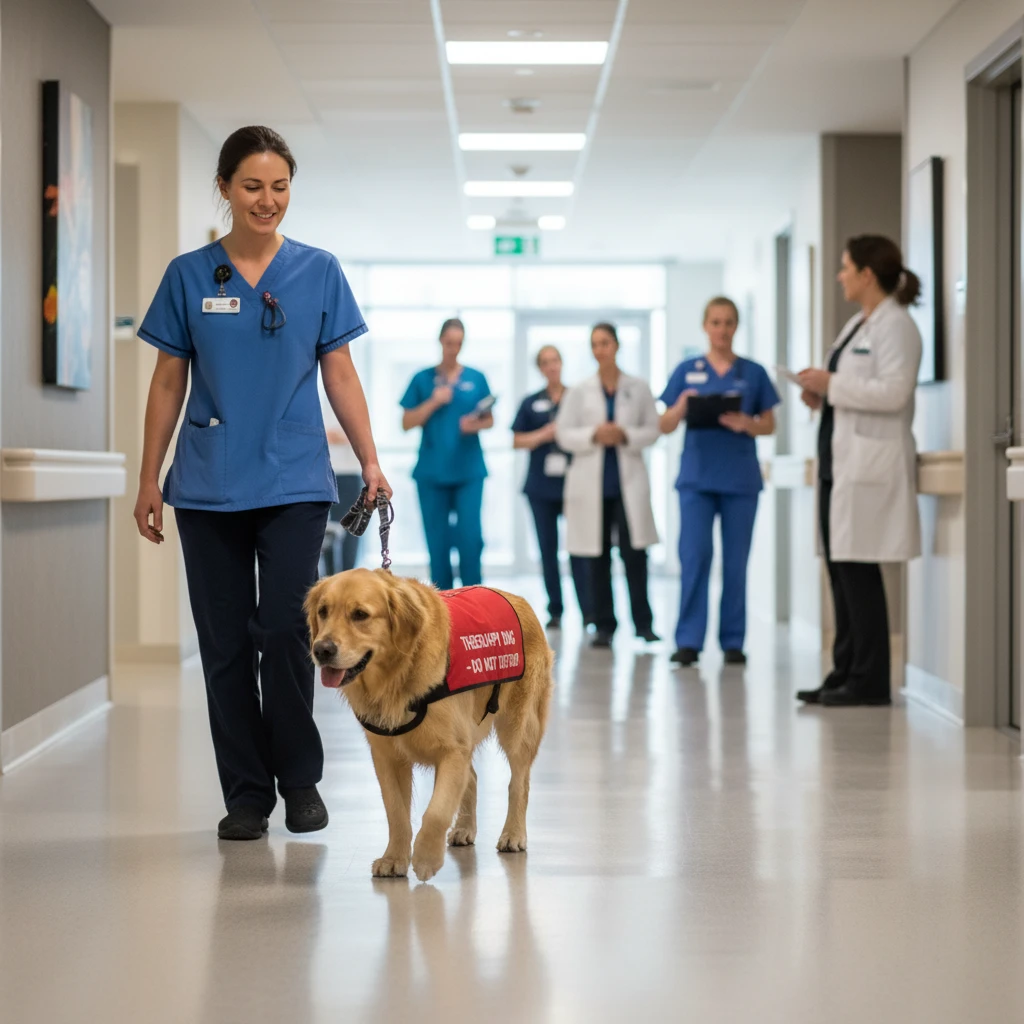
Taking dogs into hospitals in New Zealand is generally restricted to accredited therapy dogs affiliated with recognized organizations like St John or Canine Friends, and certified Disability Assist Dogs. Personal pets are typically prohibited unless specific compassionate approval is granted by the Ward Charge Nurse for palliative or end-of-life care situations, subject to strict infection control protocols.
What are the Te Whatu Ora / Health NZ Policies on Dogs?
When considering taking dogs into hospitals NZ wide, it is vital to understand that the healthcare environment is highly regulated to protect vulnerable patients. Te Whatu Ora (Health New Zealand) operates under a framework that prioritizes patient safety, specifically regarding Infection Prevention and Control (IPC).
Hospitals are high-risk environments for the transmission of zoonotic diseases (diseases passed from animals to humans). Consequently, there is no blanket “right” to bring a dog into a clinical setting unless it is a certified Disability Assist Dog as defined by the Dog Control Act 1996. For all other canines, including therapy dogs and family pets, entry is a privilege, not a right, and is governed by strict local district policies.
The Legal Distinction: Assistance vs. Therapy vs. Pets
To navigate the rules effectively, one must understand the three categories of dogs recognized by New Zealand healthcare facilities:
- Disability Assist Dogs: These include Guide Dogs, Hearing Dogs, and Mobility Dogs. They have full public access rights, including hospital wards, clinics, and waiting rooms (excluding sterile areas like operating theatres). They are working dogs, not pets.
- Therapy Dogs: These are pets that have undergone temperament testing and accreditation through organizations like St John or Canine Friends. They are invited guests. They do not have automatic access rights; they visit specific wards at specific times under a Memorandum of Understanding (MoU) with the hospital.
- Companion Animals (Pets): Ordinary family dogs. These are generally banned from hospital premises to prevent allergens, noise, and infection risks, with the exception of specific compassionate grounds.
Infection Prevention and Control (IPC) Standards
Health NZ enforces strict IPC standards. Regardless of the dog’s status, the following rules almost always apply within hospital grounds:
- Exclusion Zones: Dogs are strictly prohibited from intensive care units (ICU), burns units, isolation rooms, operating theatres, and food preparation areas.
- Hand Hygiene: Handlers must sanitize their hands before and after entering a ward. Patients must be offered hand sanitizer or wipes after touching the dog.
- Incident Reporting: Any scratch, nip, or toileting accident must be reported immediately to the Charge Nurse and an incident form filed.
Which Organizations are Approved for Hospital Visits?
If your goal is to volunteer and provide comfort to patients, you cannot simply walk in with your dog. You must be affiliated with a recognized therapy animal organization. These organizations carry the necessary public liability insurance and have established protocols with Te Whatu Ora districts.
St John (Hato Hone) Therapy Pets
St John runs one of the most recognized therapy pet programmes in New Zealand. Their “Therapy Pets” programme connects volunteers with hospitals, rest homes, and schools. To join, you must pass a rigorous assessment. Once accredited, you receive a uniform and an ID badge, which acts as your “passport” into approved facilities.
Canine Friends Pet Therapy
Canine Friends Pet Therapy is a nationwide network of volunteers specifically dedicated to visiting hospitals and rest homes. They have a long-standing reputation with New Zealand healthcare providers. Their members are easily identifiable by their yellow scarves or bandanas. Hospitals often prefer working with Canine Friends because the organization manages the rostering and compliance checks, relieving the administrative burden from the hospital staff.
Therapy Dogs New Zealand
While often focused on educational settings and private therapy practices, Therapy Dogs New Zealand also accredits teams for clinical environments. They focus heavily on the training aspect, ensuring the dog has a high level of obedience and emotional stability.

What is the Accreditation Process?
Before taking dogs into hospitals NZ wide as a volunteer, your dog must pass a temperament assessment. This is not an obedience test in the traditional sense, but a character analysis.
Temperament Assessment Criteria
Assessors look for a “bomb-proof” dog. The hospital environment is full of strange smells, loud noises (alarms, dropping trays), and erratic movements. Your dog must:
- Walk on a loose lead: No pulling or straining.
- Accept clumsy handling: Patients may pull ears, tails, or hug too tight. The dog must not react defensively.
- Ignore dropped food: Pills or hospital food may be on the floor. The dog must “leave it” instantly.
- Remain calm around equipment: Wheelchairs, walking frames, and IV stands should not startle the animal.
Health and Veterinary Clearances
Beyond behaviour, the dog must be physically healthy. Most organizations require:
- Up-to-date vaccinations (Parvovirus, Distemper, Hepatitis, Kennel Cough).
- Regular flea and worming treatments (proof of purchase or vet book often required).
- A vet check within the last 12 months confirming the dog is free of skin conditions or zoonotic infections.
Hygiene Protocols Before Visiting
When taking dogs into hospitals NZ, the preparation begins at home. The “One Health” framework dictates that we minimize the transfer of pathogens.
The 24-Hour Rule
Do not visit if your dog has shown any signs of illness in the past 24 to 48 hours. This includes vomiting, diarrhea, coughing, or any skin lesions. Likewise, if the handler is unwell (cold, flu, COVID-19 symptoms), the visit must be cancelled. Hospitals are filled with immunocompromised individuals; what is a minor bug to you could be fatal to a patient.
Grooming Standards
A strict grooming regime is required immediately before a visit:
- Brushing: The dog must be thoroughly brushed to remove loose hair and dander. Excessive shedding is a hygiene issue in sterile environments.
- Bathing: While a bath before every single visit might not be necessary for all breeds, the dog must be clean and odour-free.
- Nails: Claws must be trimmed short and filed smooth. Elderly patients have paper-thin skin; a jumping dog or a paw placed on a lap can cause a skin tear (skin avulsion) instantly if nails are sharp.
- Clean Gear: The leash, collar, and vest/bandana should be washed regularly.

Rest Home Specific Entry Requirements
Rest homes and aged care facilities in New Zealand operate slightly differently from public hospitals. They are often private businesses and viewed as the residents’ “home,” allowing for more flexibility regarding taking dogs into the facility.
Private Facility Policies
While Te Whatu Ora sets the tone for public health, a Bupa, Ryman, or Metlifecare facility will have its own visiting policy. Generally, these are more pet-friendly. Many facilities have a “house dog” or cat. However, for visiting dogs, the requirement for evidence of vaccination and a temperament check usually remains.
Resident Consent and Safety
In a rest home, not every resident loves dogs. Some may have phobias or allergies. The protocol usually involves:
- Check-in at Reception: Always sign in. This is a fire safety requirement.
- Leash Rules: Dogs should remain on a short leash. Flexi-leads are generally banned as they are a trip hazard for elderly residents using walkers.
- Toileting: Ensure the dog has toileted outside the facility grounds before entering. Carrying poop bags and cleaning spray is mandatory.
Compassionate Grounds: Can I bring my personal pet?
This is the most common query: “My father is in the hospital; can I bring his dog to see him?” The answer is: Maybe, but it requires special permission.
End-of-Life Visitation Protocols
New Zealand hospitals recognize the immense psychological benefit of the human-animal bond, especially during palliative care. To arrange a visit for a personal pet:
- Contact the Charge Nurse: Do not just show up. You must speak to the Charge Nurse or Unit Manager of the specific ward.
- Verify the Route: You may be asked to use a service elevator or a back entrance to avoid public waiting areas.
- Hygiene Check: The nurse will ask if the dog is clean, vaccinated, and free of fleas.
- Containment: The dog usually must stay in the patient’s room and cannot roam the corridors.
- Transport: Small dogs should be carried in a crate or carrier until they reach the room.

Frequently Asked Questions
Can I take my puppy to a rest home to visit?
generally, no. Puppies (under 12 months) are usually not allowed for therapy visits because their immune systems are developing, their behavior is unpredictable, and they are not fully house-trained. Most accredited organizations require dogs to be at least one year old.
What is the difference between a therapy dog and an emotional support animal (ESA) in NZ?
In New Zealand law, Emotional Support Animals (ESAs) have no legal recognition or public access rights. They are viewed as pets. Therapy dogs are also pets but have accreditation to visit facilities. Only Disability Assist Dogs have legal access rights to public places.
Do I need insurance to take my dog into a hospital?
If you are visiting as a private individual (compassionate grounds), you are personally liable for any damage or injury your dog causes. If you visit through an organization like St John, you are covered by their public liability insurance.
Can dogs go into ICU in New Zealand hospitals?
Strictly no. Intensive Care Units (ICU), High Dependency Units (HDU), and isolation rooms are sterile environments where the risk of infection or equipment interference is too high for animals.
How do I volunteer my dog for hospital visits?
You must apply through an organization like Canine Friends Pet Therapy or St John. This involves an application form, a vet check, a police background check for the handler, and a practical temperament assessment for the dog.
Are therapy dogs allowed in hospital cafes?
No. Under the Food Hygiene Regulations, animals are not permitted in areas where food is prepared or sold, regardless of whether they are therapy dogs. Only certified Disability Assist Dogs are exempt from this rule.