To register for a therapy dog training course in Wellington, applicants must first complete a pre-assessment of their dog’s temperament and obedience levels. Following this, select a scheduled intake date from an accredited provider. Registration involves submitting vaccination records, a handler background check, and course fees before commencing the hybrid learning modules.
Upcoming Course Dates in the Wellington Region
Securing a spot to register for a therapy dog training course in Wellington requires advanced planning due to the high demand for qualified therapy animal teams in the capital. Training providers typically operate on a semester or term-based intake system to ensure low student-to-instructor ratios. This structure allows for the personalized attention necessary to certify dogs for work in sensitive environments such as Wellington Hospital, local schools, and aged care facilities.
For the current operational year, intakes are generally scheduled quarterly. It is crucial for prospective handlers to monitor these dates closely, as registration windows often close two weeks prior to the course commencement to allow for administrative processing and pre-course reading distribution.

Seasonal Intake Schedules
Most accredited organizations in the Wellington region, spanning from Porirua to the Miramar Peninsula, follow a seasonal roster. The Autumn Intake usually opens for registration in late February, with practical workshops commencing in April. This is often the most popular intake as the weather in Wellington is generally more settled, allowing for outdoor distraction training along the waterfront.
The Spring Intake targets registration in July for a September start. This course often aligns with the academic year, making it ideal for educators and school counselors looking to integrate a therapy dog into their classroom for the following year. Late registration is rarely accepted due to the strict sequencing of the curriculum.
Venue Locations
When you register, you will likely be asked to select a primary location for your practical workshops. Common training hubs include:
- Central Wellington (Te Aro): Often used for urban distraction training, exposing dogs to elevators, automatic doors, and high foot traffic.
- Lower Hutt (Petone): Frequently utilized for large group obedience work due to the availability of larger community halls and parks.
- Kapiti Coast: Satellite courses are occasionally run here to service handlers living north of the city, subject to enrollment numbers.
Prerequisites for Professional Dog Training
Before you attempt to register for a therapy dog training course in Wellington, it is imperative to understand that these programs are not for basic obedience. They are advanced vocational courses designed to prepare a dog and handler team for professional work. As such, the entry bar is set high to ensure safety and efficacy in clinical and community settings.

Canine Requirements
Your dog must meet specific age and health criteria. Generally, dogs must be at least one year old to register for the full certification course, although some organizations offer a “Puppy Foundation” for younger dogs. From a health perspective, full vaccination records (DHPP and Kennel Cough) are non-negotiable. Furthermore, a veterinary clearance form attesting to the dog’s physical soundness is required; dogs with chronic pain or mobility issues may not be suitable for the physical demands of therapy work.
Temperament is the most critical prerequisite. The dog must display a natural affinity for people, low reactivity to sudden noises or strange objects, and a lack of aggression towards other dogs. Many Wellington providers require a pre-assessment video or an in-person temperament test (often based on the Canine Good Citizen standard) before your registration is formally accepted.
Handler Requirements
The human half of the team is equally important. Handlers must be 18 years or older. Because therapy work often involves interaction with vulnerable populations (children, the elderly, or patients in care), a New Zealand Police Vetting check is a standard requirement during the registration process. You must disclose any criminal history, as certain convictions may disqualify you from certification.
Online vs. In-Person Training Modules
Modern therapy dog training in New Zealand utilizes a hybrid learning model. This approach maximizes efficiency, allowing busy professionals to complete the theoretical components at their own pace while reserving valuable contact time for practical skills.
Theoretical Components (Online)
Upon successful registration, you will gain access to a Learning Management System (LMS). The theoretical modules cover essential topics such as:
- Canine Body Language: Understanding stress signals and displacement behaviors to protect your dog’s welfare.
- Zoonotic Diseases: Infection control protocols relevant to NZ healthcare standards.
- Ethics and Confidentiality: Managing client privacy and professional boundaries.
- Risk Management: Identifying hazards in a therapy setting.
These modules usually conclude with multiple-choice quizzes that must be passed before you are permitted to attend the practical workshops in Wellington.
Practical Workshops (In-Person)
The practical component is where the real work happens. These are typically held on weekends to accommodate working handlers. In Wellington, these sessions focus on translating obedience commands into a therapy context. For example, a standard “sit” is evolved into a “visit” command where the dog positions itself gently next to a wheelchair.
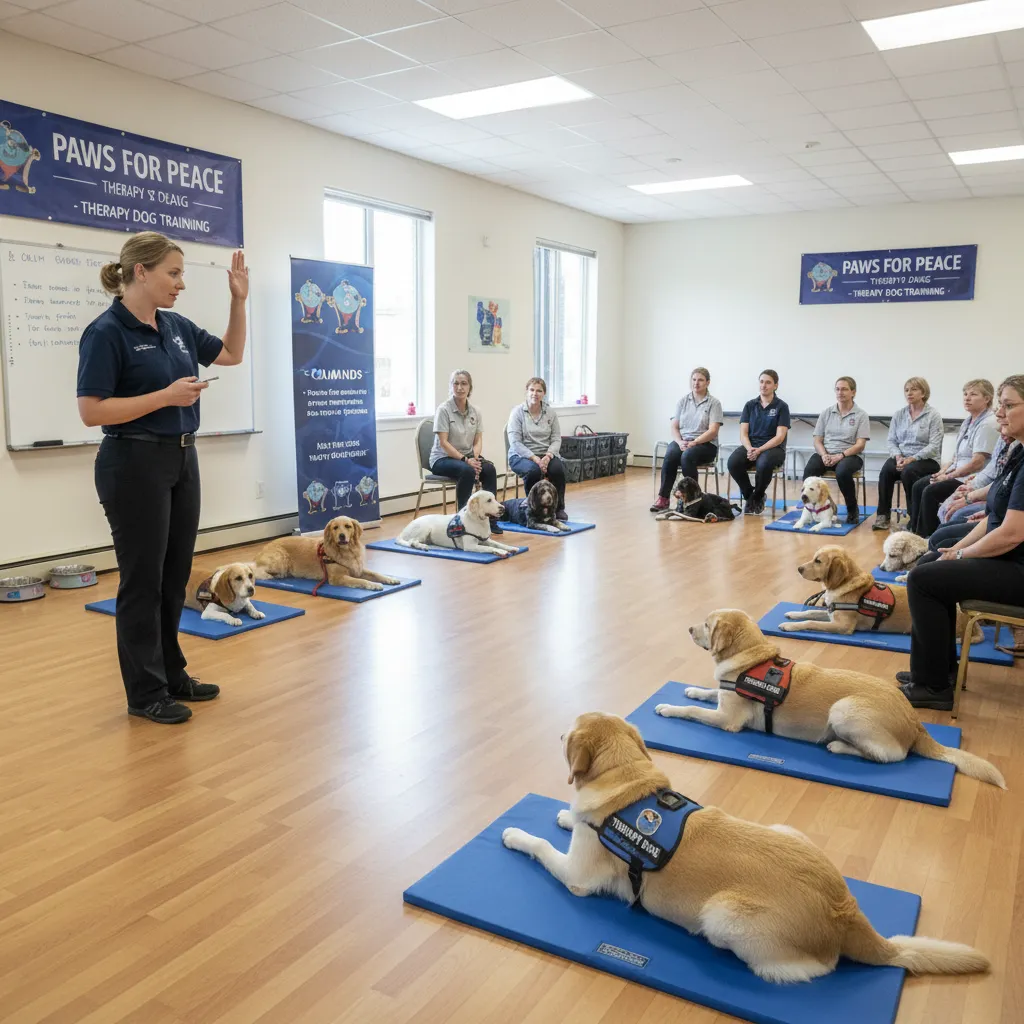
Instructors will guide you through desensitization exercises, exposing the dogs to crutches, walkers, and dropping metal trays to ensure they remain calm under pressure. This is also where handlers are assessed on their ability to advocate for their dog—recognizing when the dog is tired and needs a break.
Certification Pathways for Wellington Handlers
When you register, you should have a clear idea of your intended certification pathway. Not all therapy dogs perform the same role, and the training nuances differ depending on the end goal.
Visiting Therapy Dog
This is the most common pathway for volunteers. These teams visit facilities like rest homes or libraries (for reading programs) to provide comfort and companionship. The training focuses heavily on social graces, calmness, and the ability to be handled by strangers. The certification assessment for this level usually involves a simulated visit where the evaluator acts as a client.
Animal Assisted Intervention (AAI) Professional
This pathway is designed for health and education professionals (psychologists, occupational therapists, teachers) who intend to use their dog as a tool within their professional practice. Registration for this course is often more expensive and rigorous. The curriculum covers goal-directed interventions and documentation. For example, an OT might learn how to use grooming the dog as a way to improve a patient’s fine motor skills.
Business Logistics and Insurance
Successfully completing the course and passing the exam is not the end of the road. To operate legitimately in Wellington, there are business and logistical factors to consider.
Insurance Requirements
Once certified, you cannot work without insurance. Most reputable training organizations in New Zealand include Public Liability Insurance as part of their annual membership fee. This protects you in the event your dog accidentally causes injury or property damage during a visit. When you register for a therapy dog training course, check if the provider’s insurance policy covers the specific type of work you intend to do.
Annual Re-certification
Therapy dog certification is not a lifetime qualification. To maintain high standards, teams must re-register annually. This usually involves a reduced fee and a re-assessment of the dog’s temperament and health. This is crucial for maintaining the trust of the facilities you visit.

Step-by-Step Registration Guide
Ready to proceed? Follow this checklist to ensure a smooth registration experience for your Wellington course:
- Self-Assessment: honestly evaluate if your dog has the temperament for the work.
- Gather Documents: Scan vaccination records, desexing certificates, and your ID.
- Select a Provider: Choose a reputable organization like Therapy Dogs New Zealand or St John (if applicable to their program).
- Submit Application: Complete the online form and pay the deposit.
- Book Vetting: Initiate your police background check immediately, as this can take weeks.
- Prepare Equipment: Purchase a fixed-length lead, a flat collar or harness (check course rules), and a treat pouch.
By following this guide, you position yourself for success in becoming a certified therapy dog team, contributing positively to the Wellington community.
People Also Ask
How much does a therapy dog training course cost in Wellington?
Costs vary depending on the provider and level of certification but typically range from $300 to $800 NZD. This usually includes the assessment fee, training materials, and sometimes the first year of registration and insurance.
Can I register a rescue dog for therapy training?
Yes, rescue dogs can make excellent therapy dogs. The primary requirement is temperament, not pedigree. However, the dog must be with the handler for a minimum period (usually 6 months) to ensure a strong bond before training begins.
How long does the course take to complete?
Most courses in Wellington run for 6 to 12 weeks. This includes the online theory modules and the weekend practical workshops. The final assessment is scheduled after the training period concludes.
What happens if my dog fails the assessment?
If a team fails, the evaluator will provide specific feedback on areas for improvement. Most organizations allow you to re-register for the assessment after a mandatory waiting period (often 1-3 months) to work on those skills.
Do I need a specific breed to register?
No, therapy work is open to all breeds and mixes. While Retrievers and Poodles are common, any dog with a calm, stable, and friendly temperament can pass the certification.
Is the certification recognized throughout New Zealand?
It depends on the certifying body. Major organizations like Therapy Dogs New Zealand offer nationally recognized certification, allowing you to work in facilities across the country, not just in Wellington.