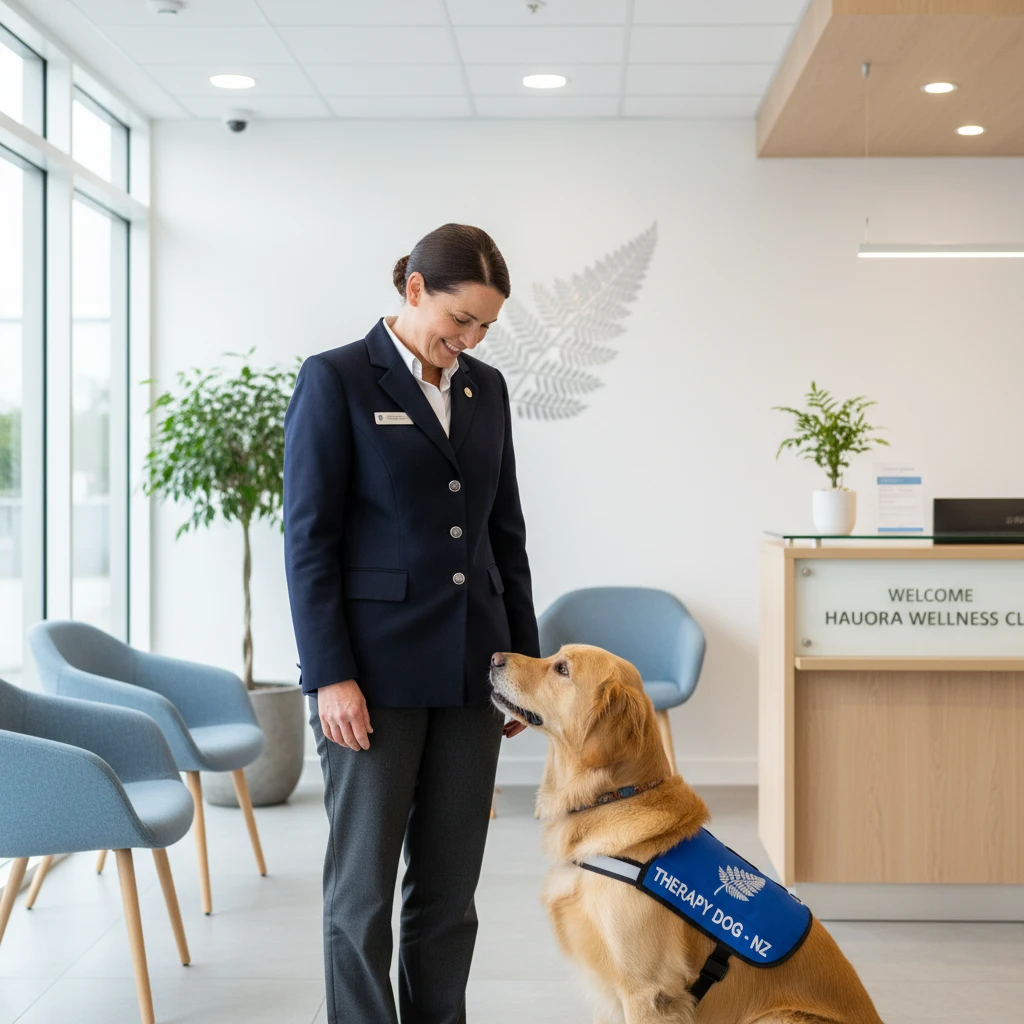
Finding reliable NZ suppliers for therapy dog vests requires targeting specialized manufacturers of working dog apparel and custom embroidery services. Top New Zealand options include dedicated tactical dog gear retailers, local canvas fabricators for bespoke medical harnesses, and suppliers providing interchangeable patches to distinguish clinical therapy dogs from public-access assistance dogs.
The Importance of Professional Branding in Clinical Settings
In the realm of Canine-Assisted Therapy (CAT), the vest is far more than a simple accessory; it is a critical piece of professional equipment that serves multiple psychological and logistical functions. For practitioners in New Zealand operating in schools, hospitals, and private clinics, a high-quality vest signals the transition from “pet” to “colleague.”
When a dog enters a facility wearing a structured vest, it sets an immediate boundary for the public and the clients. It indicates that the animal is under command and performing a specific job. This is particularly vital in pediatric wards or mental health facilities where patients may be unpredictable. The vest acts as a visual cue that facilitates the “working mindset” for the dog and commands respect from observers.
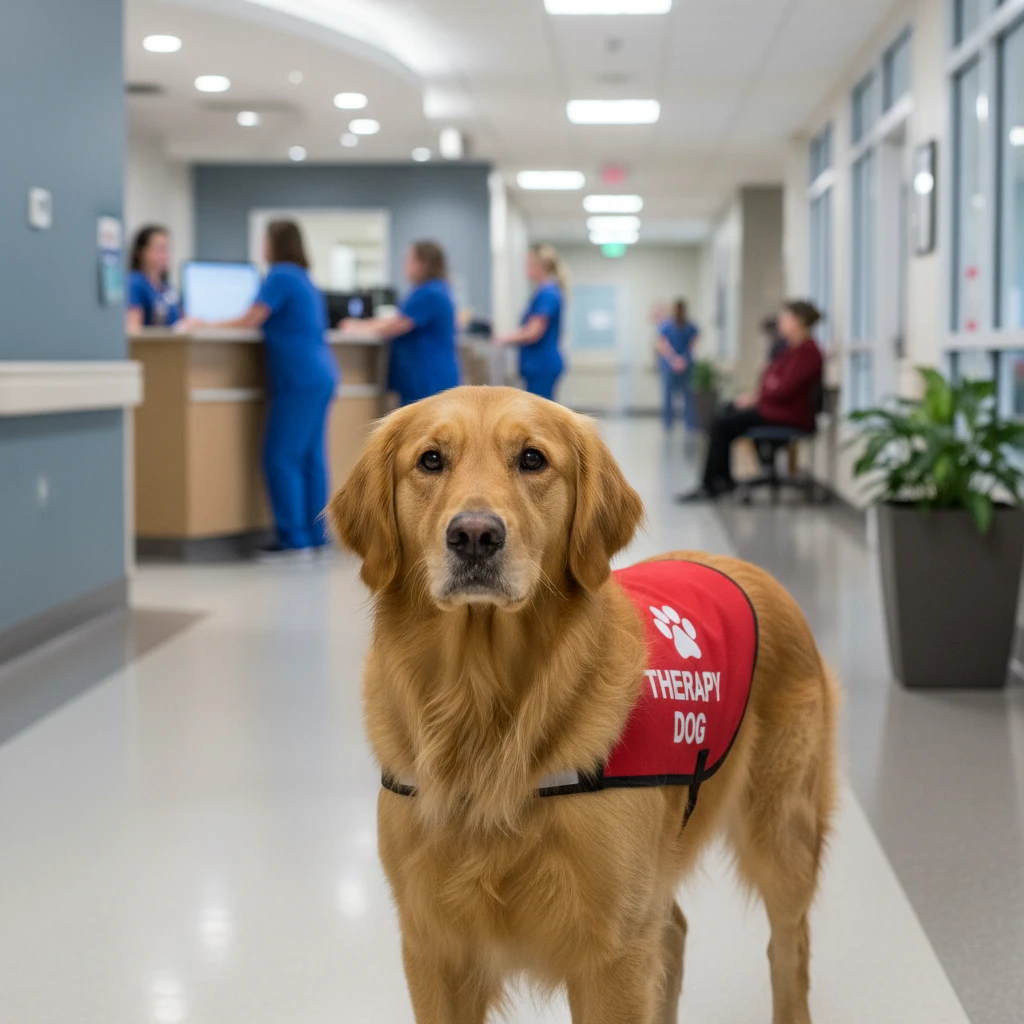
Furthermore, professional branding on the vest—such as the logo of the specific Occupational Therapy (OT) clinic or the District Health Board (DHB) authorization—adds a layer of legitimacy. It assures facility administrators and liability insurers that the animal is part of a sanctioned program, reducing friction when entering restricted areas within a facility.
Legal Restrictions: Therapy Dogs vs. Assistance Dogs in NZ
Before purchasing a vest, it is imperative to understand the strict legal distinctions in New Zealand law, specifically under the Human Rights Act 1993 and the Dog Control Act 1996. Misrepresenting a therapy dog as an assistance dog is a serious ethical breach and can lead to legal repercussions.
What is the difference in signage rights?
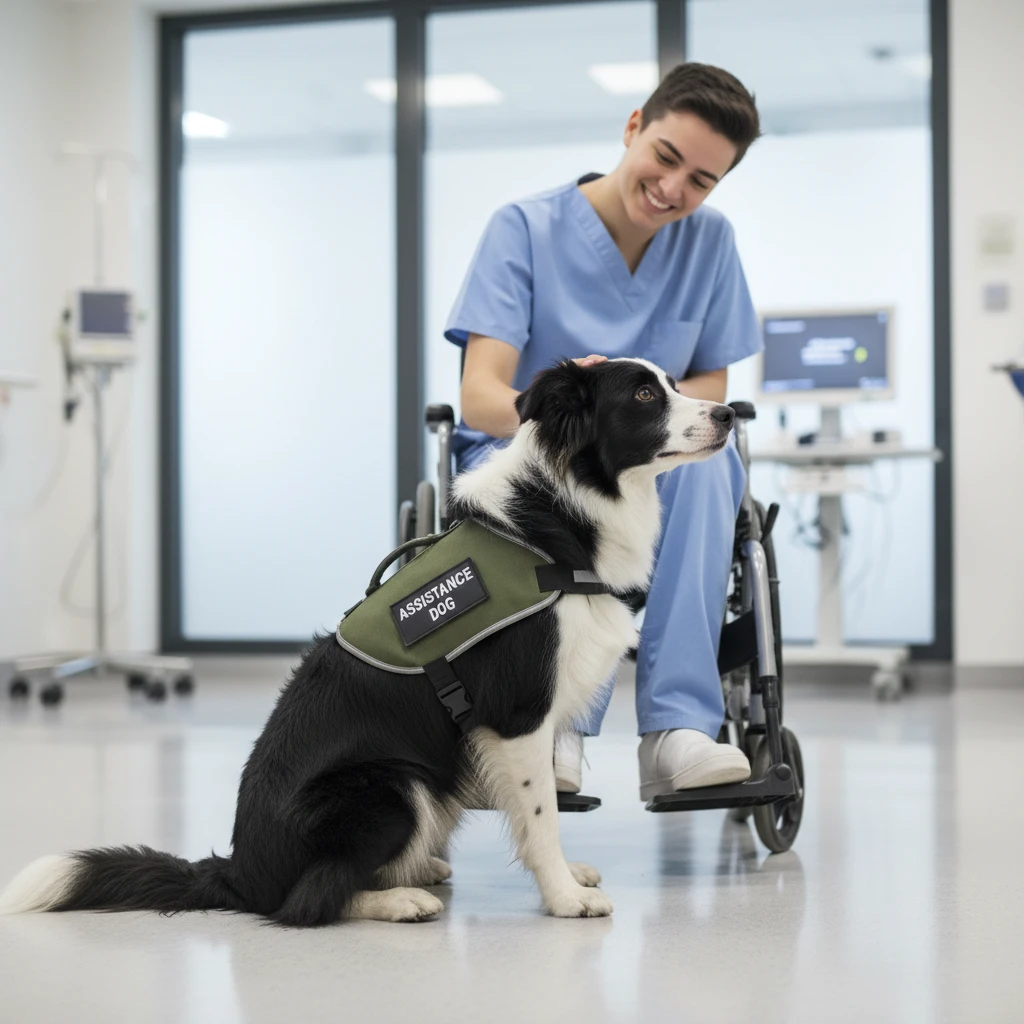
Assistance Dogs (Guide Dogs, Mobility Dogs, Hearing Dogs) have full public access rights to supermarkets, cafes, and public transport. Their vests often carry specific branding protected by organizations like Assistance Dogs New Zealand Trust (ADNZT). Therapy Dogs do not have these public access rights.
When sourcing a vest for a therapy dog in NZ, you must avoid patches that say “Service Dog,” “Assistance Dog,” or “Full Access.” Instead, compliant terminology includes:
- “Therapy Dog”
- “In Residence”
- “Facility Dog”
- “Please Ask to Pet”
Using the correct terminology prevents confusion in the community and protects the integrity of legitimate assistance dogs who rely on public access for their handler’s independence.
Customizing Vests for OT and Healthcare Roles
Occupational Therapists (OTs), physiotherapists, and counselors often require specific features on a vest that go beyond simple identification. The vest can be an interactive tool within the therapeutic session itself.
For example, in pediatric OT, a vest might be equipped with different textures (velcro, fleece, mesh) to aid in sensory integration work. Some NZ suppliers offer modular vests where handlers can attach specific tools or “communication pouches” that the dog can carry to a patient.
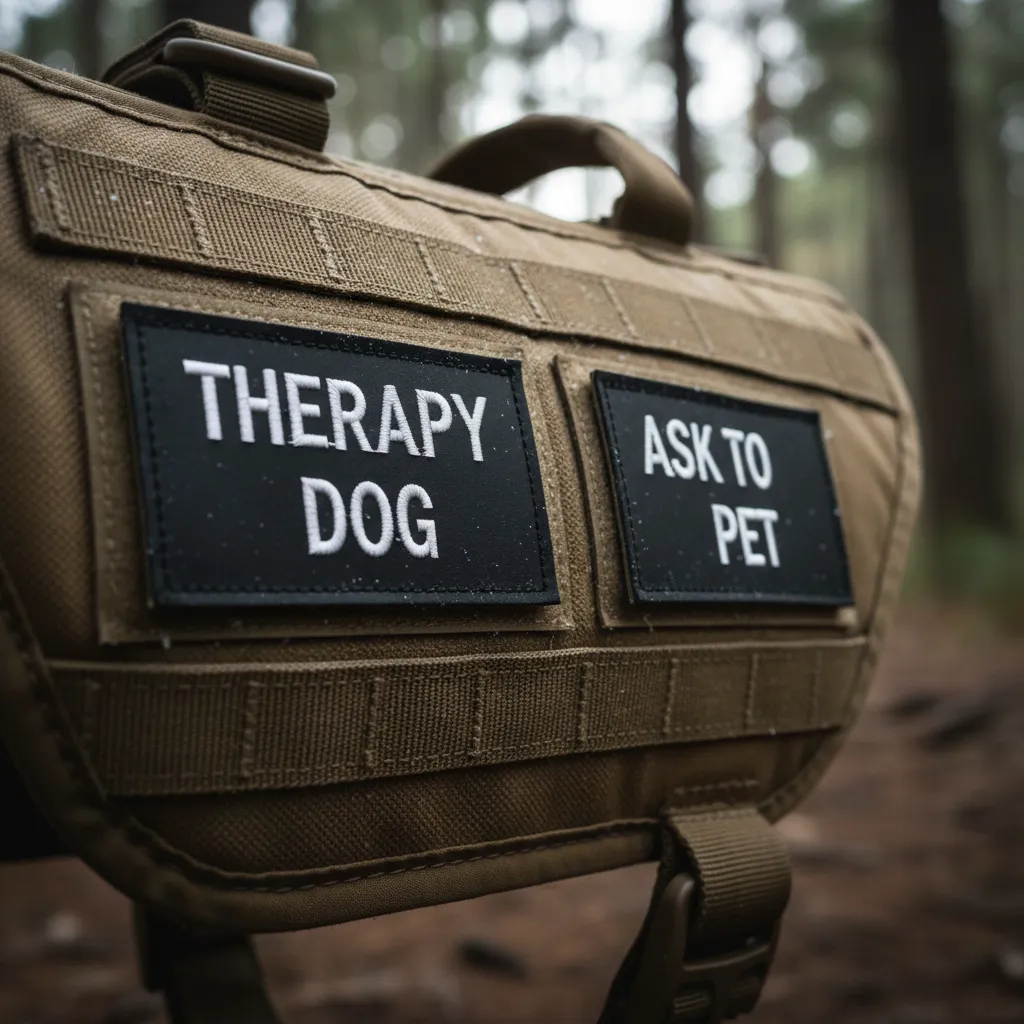
Custom embroidery is also a popular choice for New Zealand businesses. Having the dog’s name and the clinic’s phone number embroidered directly onto the harness prevents the noise of metal tags, which can be distracting or triggering for patients with sensory processing disorders. Color coding is also standard practice; while red is common for service dogs, many therapy programs in NZ prefer calming blues or greens to appear less authoritative and more approachable.
Top NZ Channels for Working Dog Apparel
Finding “off-the-shelf” therapy vests in local pet stores like Animates is rarely successful because these are specialized items. To secure professional-grade gear, you generally need to look at three categories of NZ suppliers.
1. Specialized Tactical & Working Dog Gear Retailers
Several NZ-based online retailers specialize in importing high-end tactical gear (brands like Julius-K9 or OneTigris) which are the industry standard for durability. These vests feature robust handles—essential for restraining a dog if a patient becomes aggressive—and ample space for patches.
Look for suppliers that cater to the NZ Police or security industry, as they often stock the modular “MOLLE” style vests suitable for heavy-duty therapy work.
2. Custom Canvas and Saddlery Makers
New Zealand has a rich history of saddlery and canvas work. Many local canvas fabricators who make horse covers or ute covers also produce bespoke dog vests. This is the best option for “mobility support” therapy dogs who may need a harness designed to handle weight-bearing tasks (bracing for a patient).
Commissioning a local maker ensures the fit is perfect for the dog’s specific body shape, preventing chafing during long shifts in a hospital.
3. Embroidery and Uniform Services
If you purchase a high-quality blank harness (like a Ruffwear Web Master), you can take it to local NZ uniform branding shops. These are the same companies that brand high-vis vests for construction. They can professionally heat-press or embroider “THERAPY DOG” onto the gear, ensuring the lettering doesn’t peel off after industrial washing.

How to Choose the Right Vest Material and Fit
The climate in New Zealand and the specific clinical environment dictate the choice of material. A heavy neoprene vest might be suitable for a chilly Christchurch winter but could cause overheating in an Auckland classroom during February.
Material Considerations
- Breathable Mesh: Essential for dogs working indoors in heated hospitals. It prevents the dog from overheating and panting excessively, which can be perceived as stress.
- Cordura/Nylon: The most durable option. It resists tearing if a dog brushes against a wheelchair or hospital bed. It is also easier to wipe down.
- Reflective Piping: While therapy dogs work mostly indoors, reflective strips are a safety requirement if the dog accompanies the handler to the car park at night after a shift.
The Importance of Handle Placement
For therapy work, a dorsal (back) handle is non-negotiable. It allows the handler to physically guide the dog close to a patient’s bedside or wheelchair without relying solely on a leash. The handle must be reinforced and positioned over the dog’s shoulders to avoid putting pressure on the spine.
Hygiene Protocols for Vests in Medical Environments
Infection control is a massive concern in NZ hospitals and aged care facilities. A therapy dog’s vest can be a vector for MRSA or other pathogens if not managed correctly. Unlike a standard walking harness, a therapy vest must be washed frequently.
When selecting a supplier, verify the washing instructions. The vest should be machine washable at temperatures high enough to kill bacteria, or made of a non-porous material that can be sanitized with hospital-grade wipes between patient interactions. Handlers should ideally own two vests: one being worn, and one in the wash.
Frequently Asked Questions
Do therapy dogs need to wear a vest in NZ?
While there is no national law mandating a vest for therapy dogs (unlike assistance dogs), most facilities (hospitals, schools, nursing homes) require one for insurance and identification purposes. It distinguishes the dog as a working animal and not a visitor’s pet.
Where can I buy ‘In Training’ patches in NZ?
Most online retailers selling working dog harnesses in NZ also stock Velcro patches. Common sources include specialized dog gear sites like K9 Gear or tactical equipment suppliers. You can also have custom patches made at local embroidery shops.
Can I use a red vest for my therapy dog?
Yes, but be cautious. Red is traditionally associated with Assistance Dogs (specifically mobility or medical alert). To avoid confusion, ensure the text clearly states “THERAPY DOG” or consider using other colors like blue, green, or purple, which are often preferred in therapeutic settings.
What is the best harness for a therapy dog?
The Julius-K9 IDC Powerharness is widely considered the industry standard in NZ due to its durability, handle placement, and interchangeable patch system. However, lighter mesh vests are becoming popular for indoor hospital work to prevent overheating.
Are there legal penalties for fake service dog vests in NZ?
Yes. Under NZ law, it is an offense to impersonate an assistance dog team. Using a vest that claims public access rights (e.g., “Service Dog”) for a therapy dog that does not have ADNZT certification can lead to fines and being barred from premises.
How do I measure my dog for a therapy vest?
Measure the girth (circumference) of the dog’s chest at the widest part, just behind the front legs. Also measure the neck circumference. Always check the specific sizing chart of the NZ supplier, as tactical vests often fit differently than standard walking harnesses.