
Air New Zealand currently does not accept emotional support animals (ESAs) or therapy dogs in the aircraft cabin. Only certified service dogs specifically trained to assist a person with a disability are permitted to travel in the cabin. All other support dogs must travel as checked baggage or cargo in an IATA-compliant crate.
Traveling with a support animal requires meticulous planning, especially given the strict regulations enforced by international airlines. For handlers specifically looking into the air nz therapy dog policy, understanding the distinction between a certified assistance dog and a therapy or emotional support animal is critical to avoiding travel disruption. This comprehensive guide details the current regulations, cargo options, and preparation steps for flying with your dog on Air New Zealand.

Air New Zealand’s Stance on Support Dogs
When analyzing the air nz therapy dog policy, it is vital to recognize that the airline adheres to strict safety and operational guidelines. Unlike some North American carriers that previously had looser restrictions regarding Emotional Support Animals (ESAs), Air New Zealand has maintained a consistent policy that prioritizes safety and recognized certification.
As of the most recent updates, Air New Zealand does not recognize therapy dogs or emotional support dogs as “service animals.” Consequently, they are not afforded the same privileges as certified assistance dogs, such as riding in the cabin at the handler’s feet free of charge.
Why are Emotional Support Dogs Not Allowed in Cabins?
The decision to exclude emotional support animals from the cabin is based on several operational factors:
- Safety Concerns: Without standardized training, ESAs can pose a risk to other passengers, crew, and service dogs.
- Space Constraints: Aircraft cabins have limited floor space, which is reserved for dogs that perform specific physical tasks for disabled passengers.
- Allergies and Comfort: Limiting animals in the cabin reduces the impact on passengers with severe pet allergies.
Service Dogs vs. Therapy Dogs: The Crucial Distinction
To successfully navigate the air nz therapy dog policy, you must determine if your animal qualifies as a “Service Dog” under their specific definition. If your dog meets the criteria below, they may be exempt from the cargo requirement.
What Qualifies as a Service Dog on Air NZ?
Air New Zealand defines a service dog (or assistance dog) as a dog that has been specifically trained and certified by a recognized organization to perform tasks for the benefit of a person with a disability. This includes:
- Guide Dogs: For the visually impaired.
- Hearing Dogs: For the hearing impaired.
- Mobility Assistance Dogs: For those with physical limitations.
- Psychiatric Service Dogs (PSD): Dogs trained to perform specific tasks (e.g., interrupting panic attacks, deep pressure therapy) for handlers with psychiatric disabilities.
Critical Note: Even for Psychiatric Service Dogs, Air New Zealand generally requires the dog to be certified by an organization that is a full member of Assistance Dogs International (ADI) or the International Guide Dog Federation (IGDF). Self-trained dogs or those with online certificates are typically rejected for cabin travel.

Traveling via Cargo: The Alternative for Therapy Dogs
If your dog is a therapy dog or an emotional support animal without ADI/IGDF accreditation, they must travel as a pet. Depending on the route and the size of the animal, this will be either as Checked Baggage or Manifest Cargo.
Domestic Flights within New Zealand
For domestic travel within New Zealand, therapy dogs can often travel as checked baggage. This is a simpler process where the dog is checked in at the terminal with you. However, you must book this in advance as space in the hold is limited.
International Flights
For international flights, Air New Zealand requires pets to travel as Manifest Cargo. This means you cannot simply check them in at the passenger counter. You must use a professional pet transporter or book through the Air New Zealand cargo division.
Traveling as cargo is extremely safe. The hold is pressurized and temperature-controlled, exactly like the passenger cabin. The lights are dimmed to encourage the animals to sleep.
IATA Crate Requirements and Measurements
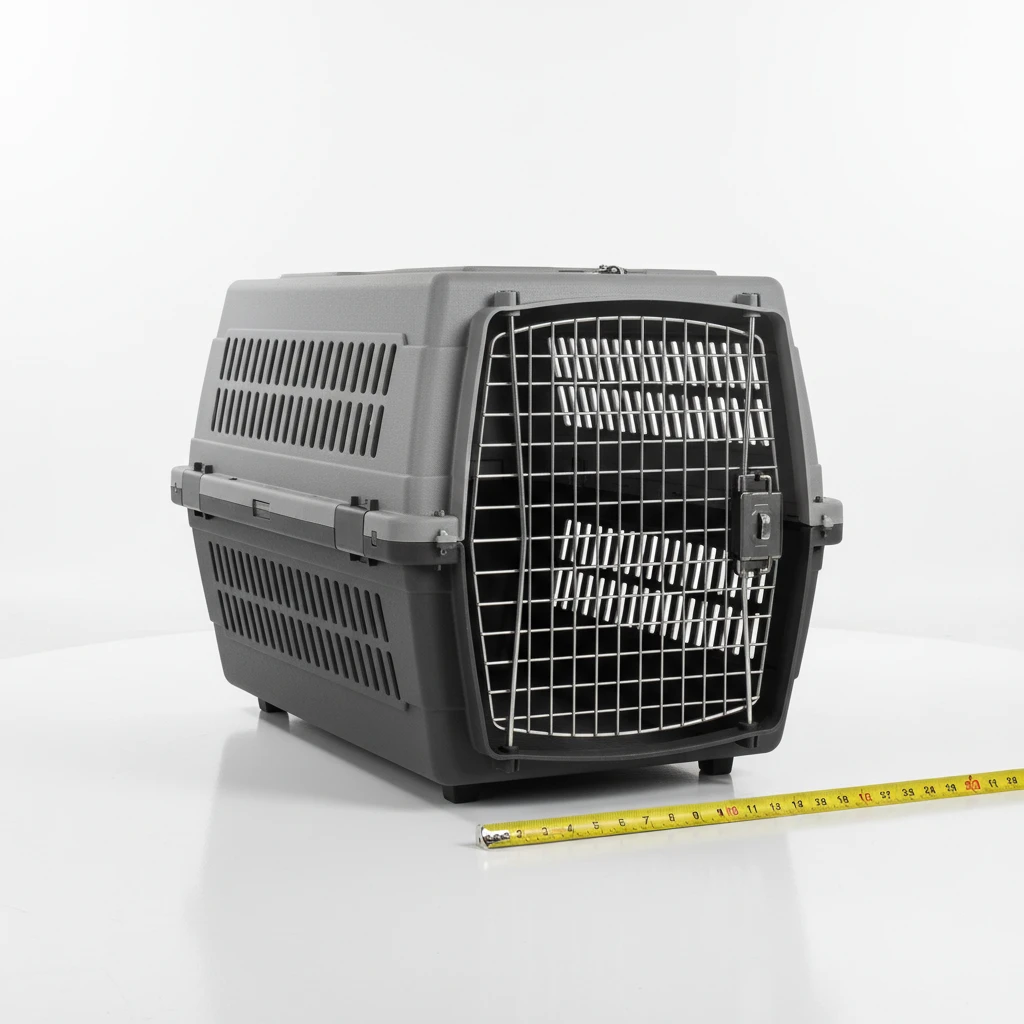
Whether your therapy dog flies as checked baggage or cargo, the most critical element of the air nz therapy dog policy compliance is the travel crate. Air New Zealand strictly enforces IATA (International Air Transport Association) Live Animal Regulations.
Selecting the Right Crate
The crate must be rigid (plastic, wood, or metal), well-ventilated, and secure. Soft-sided carriers are generally not permitted in the hold.
The “Stand, Turn, Lie Down” Rule
Your dog must be able to:
- Stand up straight without their head or ears touching the roof.
- Turn around comfortably within the crate.
- Lie down in a natural position with paws extended.
How to Measure Your Dog
To ensure you buy the correct crate size, take these measurements accurately:
- Length (A): Tip of the nose to the root of the tail (do not include the tail itself).
- Height (B): Floor to the top of the head or ear tips (whichever is higher).
- Width (C): Across the shoulders.
Formula for Internal Dimensions:
Length = A + ½ B
Width = C x 2
Height = B + 3cm (minimum clearance)
Essential Documentation and Veterinary Checks
Paperwork is the backbone of international pet travel. Missing a single document can result in your therapy dog being denied boarding or quarantined upon arrival.
1. Veterinary Health Certificate (Fit to Fly)
You will need a certificate from a registered veterinarian stating that your dog is healthy and fit for air travel. This is usually required within 10 days of your flight.
2. Vaccination Records
Up-to-date vaccination records are mandatory. This includes Rabies (for international travel), DHPP (Distemper, Hepatitis, Parvovirus, Parainfluenza), and Kennel Cough (Bordetella). Ensure vaccinations are administered at least 2 weeks before travel but not more than 1 year prior.
3. Import Permits (International)
If you are flying your therapy dog into New Zealand from overseas, the biosecurity rules are among the strictest in the world. You will likely need an import permit from the Ministry for Primary Industries (MPI) and a booked quarantine slot (if applicable) before Air New Zealand will accept your booking.
4. Export Certificates
If leaving New Zealand, you need an export certificate verifying the animal meets the requirements of the destination country.
Preparing Your Dog for Air Travel
Flying can be stressful for dogs, especially those used to being close to their handlers as therapy animals. Proper preparation mitigates anxiety and ensures a smoother journey.
Crate Acclimatization
Do not wait until the day of travel to introduce the crate. Purchase the crate weeks or months in advance. Make it a “safe space” by feeding your dog inside it and placing their favorite bedding there. If your dog is comfortable in the crate, they will be much calmer during the flight.
Hydration and Feeding
Feed a light meal approximately 4 to 6 hours before the flight. Do not feed a heavy meal right before flying to avoid motion sickness. Attach a water funnel and a sturdy bowl to the crate door so airport staff can top up water without opening the crate.
Sedation Warning
Do not sedate your dog. Air New Zealand and IATA strongly discourage the use of tranquilizers or sedatives. These drugs can lower blood pressure at high altitudes, which can be fatal. A natural calm state achieved through crate training is far safer.

Final Thoughts on Air NZ Therapy Dog Policy
While the air nz therapy dog policy may seem restrictive compared to the past, it is designed to ensure the safety of all passengers and animals. By understanding that therapy dogs must travel as cargo or checked baggage unless they are ADI-certified service animals, you can plan effectively.
Focus your energy on crate training and gathering the correct documentation. With the right preparation, your therapy dog can arrive safely at your destination, ready to provide the support you need.
People Also Ask
Does Air New Zealand allow emotional support dogs?
No, Air New Zealand does not recognize emotional support dogs for cabin travel. They must travel as checked baggage or cargo unless they are certified service dogs accredited by Assistance Dogs International.
How much does it cost to fly a dog on Air New Zealand?
Costs vary significantly based on route and weight. Domestic pet travel as checked baggage typically costs between $75 and $100 NZD. International cargo rates are calculated by volumetric weight and can range from $1,000 to over $3,000 NZD.
Can I buy a seat for my dog on Air New Zealand?
No, you cannot purchase a passenger seat for a dog. Dogs must either be certified service animals sitting on the floor at your feet or travel in the cargo hold.
What are the crate requirements for Air New Zealand?
Crates must be IATA-compliant, rigid (plastic/metal), leak-proof, and large enough for the dog to stand, turn around, and lie down comfortably. Mesh or soft-sided carriers are not allowed for cargo travel.
Are psychiatric service dogs allowed in the cabin?
Yes, but only if they are fully trained and certified by a recognized organization (like ADI or IGDF). You must provide documentation to Air New Zealand’s special assistance team at least 48 hours before travel.
How do I book my dog on an Air New Zealand flight?
For domestic checked baggage, add the pet to your booking online or via the call center. For international travel, you must book through a registered pet transporter or Air New Zealand Cargo.