
The evidence-based benefits of therapy dogs in schools encompass measurable improvements in student attendance rates, significant reductions in behavioral incidents, and enhanced academic engagement. Scientifically, interactions with therapy dogs are proven to lower cortisol levels, facilitating better emotional regulation, fostering social-emotional learning, and creating a supportive learning environment that directly correlates with student well-being.
For school principals and boards of trustees, the decision to introduce a therapy dog program moves beyond the novelty of having a pet on campus. It is a strategic intervention designed to address core educational challenges, including anxiety-related absenteeism, literacy struggles, and classroom disruption. As the focus on student well-being intensifies within the New Zealand curriculum—specifically aligning with the Te Whare Tapa Whā model of health—animal-assisted interventions (AAI) offer a data-backed solution.
This comprehensive guide aggregates academic research, attendance statistics, and behavioral data to provide the evidence necessary for a robust proposal to your School Board.
What are the primary academic research findings on school therapy dogs?
When presenting to stakeholders, anecdotal evidence is rarely sufficient. You must rely on peer-reviewed studies that quantify the physiological and psychological impact of human-animal interaction (HAI). The core of the argument rests on the biological regulation of stress.
Cortisol Reduction and Stress Regulation
Research conducted by Beetz et al. (2012) and subsequent studies have consistently demonstrated that interaction with a friendly dog significantly reduces cortisol levels (the stress hormone) and increases oxytocin production (the bonding hormone). In a school setting, high cortisol inhibits the prefrontal cortex, which is responsible for executive functions like focus, impulse control, and memory.
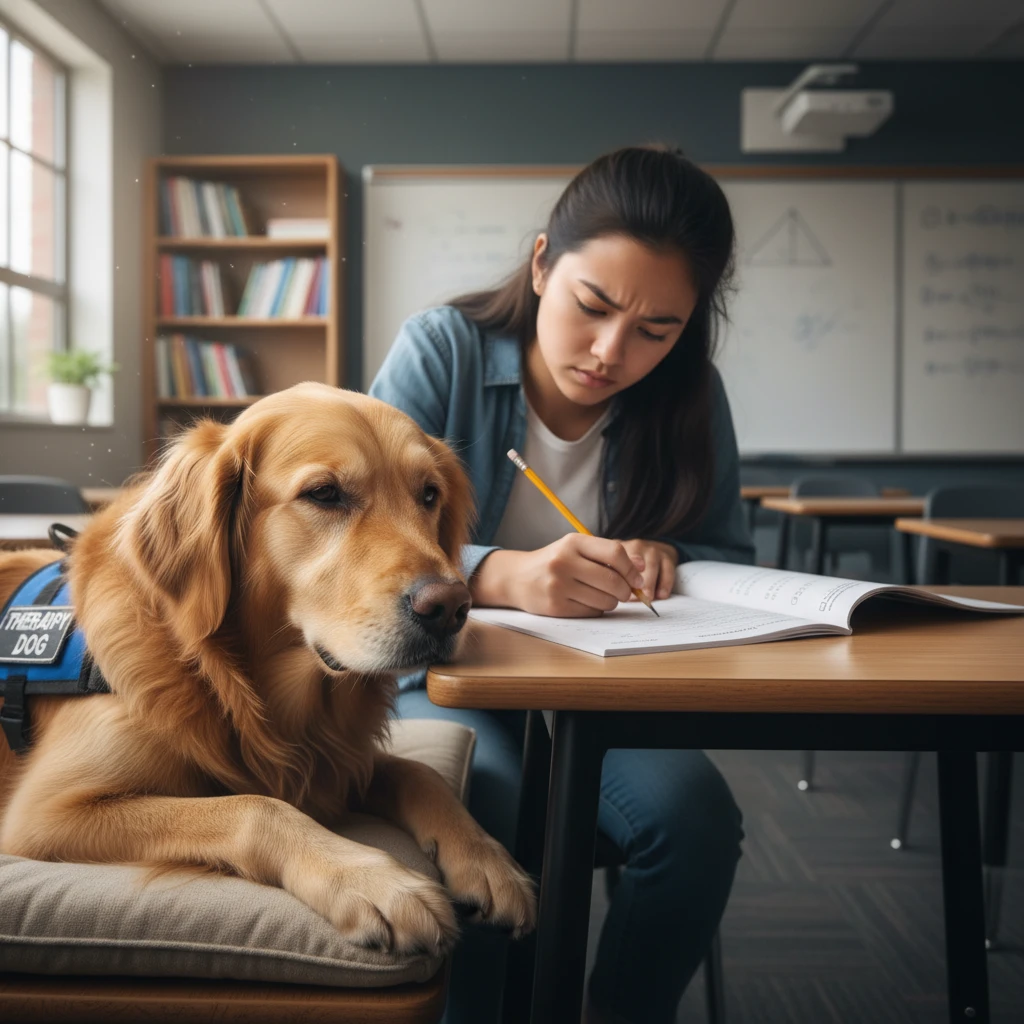
By integrating a therapy dog, schools are essentially introducing a biological stress-reduction mechanism. A study published in the Frontiers in Psychology found that students in classrooms with dogs showed a significantly lower stress response during standard academic testing compared to control groups.
Social Catalyst Effect
Research indicates that dogs act as “social lubricants.” The presence of a dog alters the social dynamic of a classroom. Kotrschal and Ortbauer (2003) found that the presence of a dog in a classroom led to a decrease in aggressive behavior and an increase in social cohesion. Students were more likely to interact positively with the teacher and peers when the dog was present. This is particularly vital for students with Autism Spectrum Disorder (ASD), where the dog serves as a bridge for social interaction.
Can therapy dogs improve school attendance rates?
One of the most compelling metrics for a Principal is attendance data. Chronic absenteeism and school refusal are often rooted in anxiety or a lack of connection to the school environment. Therapy dogs address both drivers.
Combating School Refusal
School refusal is frequently linked to separation anxiety or social phobia. The anticipation of interacting with a therapy dog provides a high-value incentive for attendance. A pilot program in Australian schools, which shares similar demographics to New Zealand, reported a 12% increase in attendance among students identified as “at-risk” during the days the therapy dog was on-site.
The dog creates a non-judgmental welcome. For a child dreading the social pressure of the playground or the academic pressure of the classroom, the dog represents a safe harbor. This “pull factor” is often more effective than punitive measures for truancy.

How do therapy dogs impact behavioral incidents?
Suspensions and stand-downs are administrative burdens that often fail to address the root cause of the behavior. Evidence suggests that Animal Assisted Education (AAE) functions as a proactive behavioral management strategy.
De-escalation and Regulation
In moments of dysregulation, a student’s ability to process verbal instruction is compromised. A therapy dog provides a tactile, non-verbal grounding mechanism. Touching the dog’s fur can rapidly lower heart rate and blood pressure, moving the student out of the “fight or flight” response much faster than traditional isolation techniques.
Data from schools implementing full-time therapy dogs often show a reduction in “Code Red” or high-level behavioral calls. The dog is not just a reward; it is a co-regulator. When a student notices the dog withdrawing from loud noises or aggression, the student often self-corrects to maintain the bond with the animal, developing empathy and self-awareness.
The “Halo Effect” on Classrooms
The benefits extend beyond individual interventions. The mere presence of a therapy dog in a room has been shown to lower the overall volume of the class. Students become more conscious of their environment to ensure the dog remains comfortable. This collective responsibility fosters a sense of community and reduces low-level disruptive behaviors that typically erode instructional time.

What is the impact on literacy and academic performance?
While behavioral and emotional support is critical, schools are ultimately academic institutions. The “Reading to Dogs” phenomenon is backed by substantial evidence regarding reading fluency and attitudes toward literature.
Reading Confidence and Fluency
The University of California, Davis, conducted a study showing that children who read to therapy dogs improved their reading skills by 12% over a 10-week period, compared to no improvement in the control group. The mechanism is the removal of performance anxiety. A dog does not judge pronunciation, speed, or stuttering. This psychological safety allows the student to practice reading aloud without the fear of peer ridicule or teacher correction, leading to increased fluency and comprehension.
How does this align with the New Zealand Curriculum?
In the New Zealand context, a therapy dog program is not an add-on; it is a vehicle for delivering the Key Competencies, particularly Managing Self and Relating to Others.
Furthermore, it aligns perfectly with Mason Durie’s Te Whare Tapa Whā model of health, which is central to pastoral care in NZ schools:
- Taha Wairua (Spiritual Health): The non-verbal, unconditional connection between child and animal.
- Taha Hinengaro (Mental Health): Stress reduction and emotional regulation.
- Taha Tinana (Physical Health): Encouraging movement and physical touch.
- Taha Whānau (Family Health): The dog becomes part of the school whānau, strengthening community bonds.
Strategies for Presenting to the Board of Trustees
When presenting this data to your Board, you must pivot from “benefits” to “risk management and policy.” A Board’s primary function is governance and liability mitigation. Your presentation must address the “What ifs.”
Addressing Allergies and Phobias
Do not dismiss these concerns. Present a mitigation plan immediately. This includes:
- Restricted Zones: The dog is not free-roaming; it has a schedule and a handler.
- Hygiene Protocols: Strict grooming schedules to minimize dander and mandatory hand-washing protocols for students.
- Opt-out Policies: Clear procedures for families who do not wish their child to interact with the dog.
Cost-Benefit Analysis
While there are costs associated with training, insurance, and care, compare these against the costs of teacher aide hours for behavioral management, truancy services, and the administrative time cost of managing disciplinary hearings. The Return on Investment (ROI) is found in recovered instructional time and increased funding associated with better attendance.

People Also Ask
What is the difference between a therapy dog and a service dog in schools?
A service dog is trained to perform specific tasks for one individual with a disability (e.g., a blind student). A therapy dog is trained to provide psychological or physiological therapy to individuals other than its handler. In a school, a therapy dog serves the student body, not a single person.
How much does it cost to implement a school therapy dog program?
Costs vary significantly but generally include the initial purchase or adoption, professional training (approx. $2,000 – $5,000 NZD for certification), public liability insurance, veterinary care, and food. Many schools fund this through grants, PTA fundraising, or sponsorship.
What are the best breeds for therapy dogs in schools?
Temperament is more important than breed. However, Retrievers (Golden and Labrador) and Poodles (or Oodle mixes) are popular due to their generally gentle nature and, in the case of Poodles, hypoallergenic coats. The dog must be assessed for low reactivity and high tolerance.
How do schools handle children who are afraid of dogs?
Respecting fear is crucial. Schools should implement a “no-approach” policy where the dog ignores students unless invited. Students with phobias are never forced to interact. Over time, many fearful students benefit from “exposure therapy” by observing the dog from a safe distance.
What certification is required for a school therapy dog in New Zealand?
While there is no single government mandate, best practice dictates certification through reputable organizations like St John, Canine Friends Pet Therapy, or specific private training organizations that offer the “Canine Good Citizen” award plus specific public access testing.
Can a teacher bring their own pet dog to school?
Bringing a pet without formal assessment and policy is high-risk and not recommended. A pet is not a therapy dog. A therapy dog requires specific temperament testing, insurance coverage, and a handler trained in animal-assisted intervention protocols to ensure safety and effectiveness.