
The primary difference between a therapy dog and an assistance dog in New Zealand lies in their legal status and purpose. Assistance dogs are legally protected disability aids with full public access rights, whereas therapy dogs provide comfort or visitation services to others and possess no special legal access privileges under the Dog Control Act 1996.
Understanding the distinction between these canine roles is crucial not only for dog owners but for business owners, landlords, and the general public. In New Zealand, the lines are often blurred by misinformation imported from overseas, particularly regarding “Emotional Support Animals.” However, New Zealand law is specific about which dogs are granted access to supermarkets, flights, and rental properties.
What is an Assistance Dog in New Zealand?
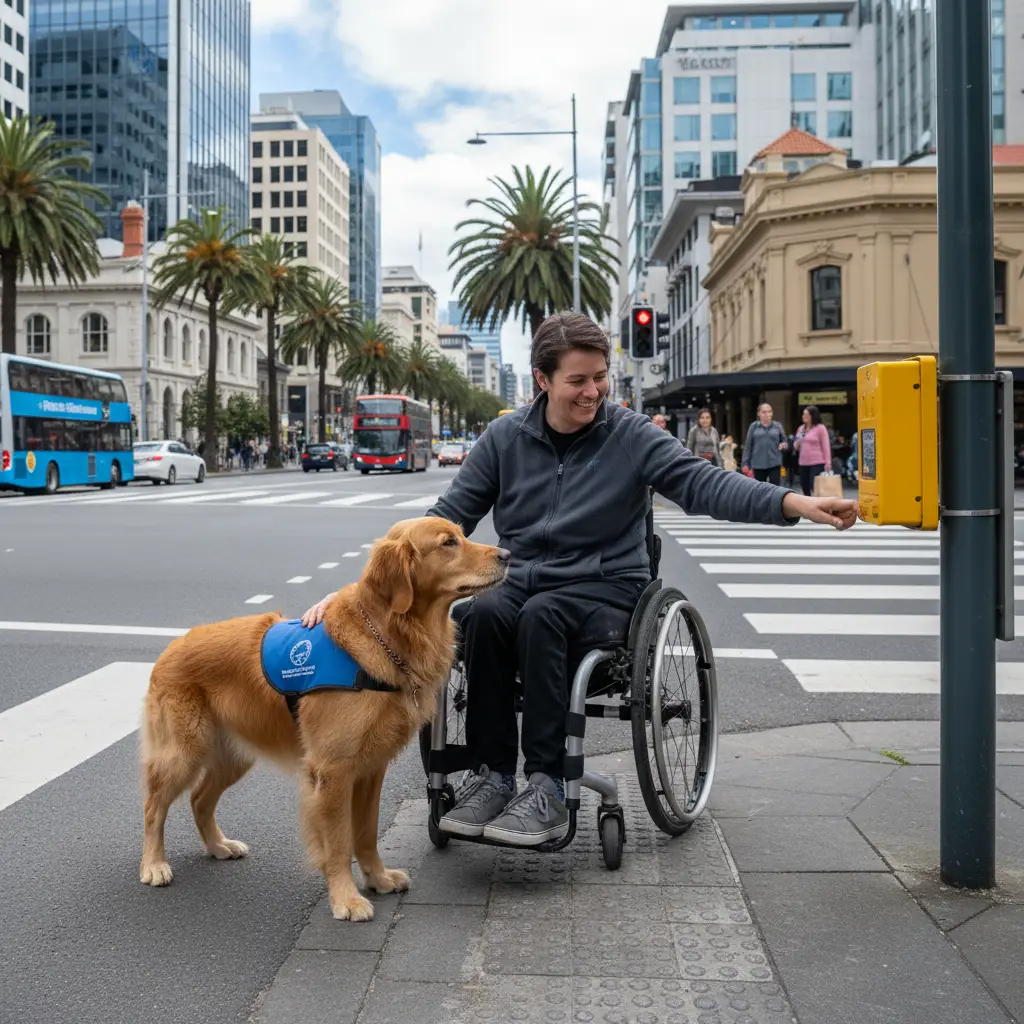
An assistance dog is not merely a pet; under New Zealand law, it is classified as a disability aid, similar to a wheelchair or a white cane. These dogs are meticulously trained to perform specific tasks that mitigate the effects of a handler’s disability. The Dog Control Act 1996 specifically defines these dogs and grants them rights that supersede standard “no dog” policies.
Assistance dogs are trained to support individuals with various disabilities, including:
- Visual Impairment: Guide dogs that help handlers navigate environments safely.
- Hearing Impairment: Hearing dogs that alert handlers to specific sounds like smoke alarms, doorbells, or crying babies.
- Mobility Issues: Service dogs that open doors, retrieve dropped items, or pull wheelchairs.
- Medical Alerts: Dogs trained to detect changes in blood sugar (diabetes) or oncoming seizures (epilepsy).
- Psychiatric Disabilities: Dogs trained to interrupt self-harming behaviors or perform deep pressure therapy for PTSD (Post Traumatic Stress Disorder).
Legal Certification
In New Zealand, for a dog to be fully recognized as an assistance dog with guaranteed access rights, it generally needs to be certified by one of the organizations recognized under the Dog Control Act. This includes organizations like Blind Low Vision NZ, Assistance Dogs New Zealand Trust (ADNZT), Hearing Dogs for Deaf People NZ, and K9 Medical Detection New Zealand.
What is a Therapy Dog in New Zealand?
A therapy dog serves a fundamentally different purpose. While an assistance dog focuses on one specific handler to mitigate a disability, a therapy dog is trained to provide affection, comfort, and entertainment to many different people. These dogs are often pets belonging to volunteers who visit environments such as rest homes, hospitals, schools, and hospices.
Therapy dogs in New Zealand typically operate under the umbrella of organizations like St John (Therapy Pets) or Canine Friends Pet Therapy. Their primary function is “Visiting.” They are invited into facilities to improve the mental well-being of patients, students, or residents.
Key Characteristics of Therapy Dogs
- Handler: The dog is usually handled by its owner, who does not necessarily have a disability.
- Focus: The dog is encouraged to interact with strangers, seek attention, and enjoy petting.
- Role: To provide psychological or physiological therapy to individuals other than their handler.

Public Access Rights: The Legal Divide
This is the most critical distinction where confusion often arises. The difference between therapy dog and assistance dog NZ legislation centers entirely on where the dog is legally allowed to go.
Assistance Dog Access
Under the Human Rights Act 1993 and the Dog Control Act 1996, it is illegal to discriminate against a person with a disability who is accompanied by a certified assistance dog. This means they must be allowed entry to:
- Restaurants, cafes, and supermarkets.
- Public transport (buses, trains, ferries) and taxis/rideshares.
- Hotels, motels, and rental accommodations.
- Cinemas, shopping malls, and government buildings.
Denying entry to a certified assistance dog is a breach of human rights in New Zealand.
Therapy Dog Access
Therapy dogs have no special legal rights to access public places where dogs are usually prohibited. They are legally considered pets.
- No Automatic Entry: You cannot take a therapy dog into a supermarket, restaurant, or mall unless the business has a “dog-friendly” policy that applies to all pets.
- By Invitation Only: Therapy dogs are only allowed in restricted areas (like hospitals or schools) when they are on active duty and have been explicitly invited by the facility management.
- Housing: Landlords are not legally required to waive “no pets” clauses for therapy dogs.

Training Standards and Accreditation
The training investment required for each category differs vastly.
Assistance Dog Training
Training an assistance dog is a rigorous process that typically takes 18 to 24 months and costs upwards of $50,000 NZD (often subsidized by the trust). The training includes:
- Public Access Test (PAT): The dog must prove it is safe, unobtrusive, and obedient in high-distraction environments.
- Task Training: The dog must learn at least three specific tasks that mitigate the handler’s disability.
- Temperament: The dog must have a low arousal threshold and must not react to other dogs, food, or loud noises.
Therapy Dog Training
Therapy dogs do not require the same level of task-specific training. However, they must pass a temperament assessment. Organizations like Canine Friends Pet Therapy look for:
- Basic Obedience: Sit, stay, leave it, and walking loosely on a lead.
- High Tolerance: The dog must tolerate clumsy handling, loud noises, and equipment like wheelchairs or walking frames without showing fear or aggression.
- Social Nature: The dog must genuinely enjoy meeting new people.
The Emotional Support Animal (ESA) Misconception
A growing issue in New Zealand is the confusion surrounding “Emotional Support Animals” (ESAs). This is a concept largely derived from United States housing and aviation laws, which do not apply in New Zealand.
In New Zealand, there is no legal recognition for Emotional Support Animals.
If a dog provides comfort to its owner but has not been trained to perform specific disability-mitigating tasks by a recognized organization, it is considered a pet in the eyes of the law. Consequently:
- ESAs do not have public access rights to supermarkets or cafes.
- ESAs do not have automatic rights to fly in the cabin of Air New Zealand aircraft.
- Landlords can legally decline a tenancy application based on the presence of an ESA (unless it is a certified assistance dog).
Attempting to pass a pet or an ESA off as an assistance dog to gain entry to businesses undermines the legitimacy of genuine assistance dogs and creates difficulties for handlers who rely on them for independence.

How to Identify the Difference
Visual identification helps the public and business owners distinguish between these dogs, though it is not always foolproof due to the availability of fake vests online.
Assistance Dog Identification
Legitimate assistance dogs in NZ will typically wear a specific coat or harness branding the organization that trained them (e.g., the bright red coat of a Blind Low Vision guide dog or the blue/yellow jacket of ADNZT). Furthermore, handlers should carry an ID card issued by the certifying organization.
Therapy Dog Identification
Therapy dogs usually wear a bandana or a scarf identifying them as volunteers for St John or Canine Friends. They only wear this identification when they are actively working (visiting). When they are not on a visit, they are “off the clock” and appear as standard pets.
Summary of Differences
To summarize the difference between therapy dog and assistance dog NZ:
- Assistance Dogs: Aid one person with a disability, have full public access rights, require 2 years of training, and are legally protected.
- Therapy Dogs: Comfort many people, have no public access rights (invite only), require temperament testing, and are legally pets.
People Also Ask
Can I take my therapy dog into a cafe in NZ?
Generally, no. Therapy dogs do not have public access rights under the Dog Control Act. You can only take a therapy dog into a cafe if that specific business has a pet-friendly policy that allows all dogs.
How do I register my dog as an assistance dog in NZ?
There is no single government registry. You must have your dog trained and certified by an organization authorized under the Dog Control Act, such as Assistance Dogs New Zealand Trust, Blind Low Vision NZ, or Hearing Dogs NZ. Self-training is possible but requires passing a Public Access Test administered by an authorized assessor to gain legal rights.
Are emotional support dogs recognized in NZ?
No. New Zealand law does not legally recognize Emotional Support Animals (ESAs). They are classified as pets and do not have the same access rights to housing, flights, or public spaces as certified assistance dogs.
Can a therapy dog live in a no-pets rental?
No. Because therapy dogs are legally classified as pets, landlords are entitled to enforce “no pets” clauses in tenancy agreements. Only certified assistance dogs are exempt from these restrictions under the Human Rights Act.
What breeds make the best assistance dogs in NZ?
Labradors, Golden Retrievers, and crosses of the two are the most common breeds used by NZ organizations due to their temperament, trainability, and public acceptance. However, Poodles and other breeds are sometimes used depending on the specific tasks required (e.g., allergy detection).
How much does it cost to train an assistance dog?
The cost to breed, raise, and train an assistance dog in New Zealand is approximately $50,000 to $75,000. However, recognized trusts often provide these dogs to clients at a significantly reduced cost or for free, funded by donations and grants.