
A risk assessment for dogs in schools is a formal safety evaluation designed to identify hazards associated with bringing animals into an educational setting, such as allergic reactions, bites, or zoonotic diseases. It establishes critical control measures—including strict supervision, hygiene protocols, and behavioral vetting—to minimize risks and ensure compliance with health and safety regulations while maximizing the therapeutic benefits for students.
Why is Risk Assessment Essential for Dogs in Schools?
Integrating dogs into the school environment, specifically for Animal Assisted Therapy (AAT) or as wellbeing support, is a growing trend in New Zealand. However, the introduction of a live animal into a classroom setting introduces variables that must be managed under the Health and Safety at Work Act 2015 (HSWA). Schools, as a Person Conducting a Business or Undertaking (PCBU), have a primary duty of care to ensure the health and safety of workers, students, and visitors.
A comprehensive risk assessment is not merely a bureaucratic hurdle; it is the foundation of a successful program. It demonstrates due diligence, protects the school from liability, and ensures the welfare of the dog. Without a robust assessment, schools expose themselves to significant legal risks and potential trauma to students should an incident occur. The assessment must be a living document, regularly reviewed and updated as the dog matures or the school environment changes.
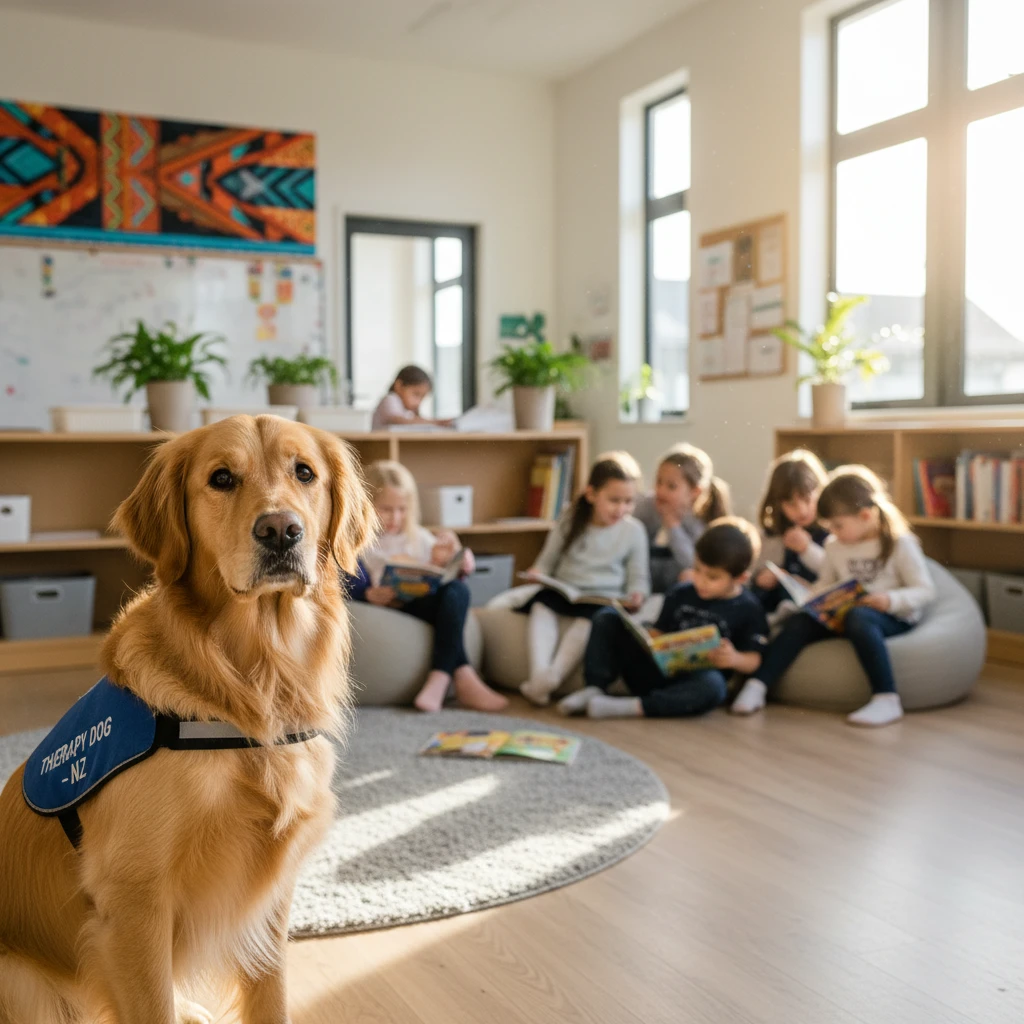
How to Identify Potential Hazards?
The first step in any risk assessment is hazard identification. In the context of dogs in schools, hazards generally fall into three categories: physical injury, health implications, and animal welfare concerns.
Physical Interactions and Behavioral Risks
Even the most docile dog can react unpredictably if startled, hurt, or stressed. Common hazards include:
- Bites and Nips: Often caused by students crowding the dog, pulling tails/ears, or disturbing the dog while eating or sleeping.
- Scratches: Unintentional injuries caused by excitement (jumping up) or play.
- Knock-overs: Larger breeds may accidentally knock over smaller children or students with mobility issues.
- Trip Hazards: Dogs lying in walkways or trailing leads can cause trips and falls.
Allergies and Zoonotic Diseases
Health risks are a primary concern for school boards and parents. You must assess:
- Allergic Reactions: Dander, saliva, and urine can trigger asthma or skin reactions in sensitive students.
- Zoonoses: Diseases transmittable from animals to humans, such as ringworm, campylobacter, or parasites (fleas/worms).
- Phobias: While not a physical disease, cynophobia (fear of dogs) can cause severe psychological distress and panic attacks, constituting a hazard to student wellbeing.
Environmental and Welfare Hazards
Risks are not one-sided; the school environment poses risks to the dog as well.
- Toxic Ingestion: Access to school supplies (glue, markers), dropped food (chocolate, raisins), or cleaning chemicals.
- Overstimulation: High noise levels and constant handling can lead to burnout or defensive aggression in the dog.
- Temperature Control: Overheating in classrooms or lack of access to fresh water.

What Are the Key Mitigation Strategies?
Once hazards are identified, the hierarchy of controls must be applied to mitigate risks to an acceptable level. Elimination of the risk is rarely possible without removing the dog, so schools must rely on substitution, engineering controls, and administrative controls.
Rigorous Selection and Temperament Testing
Not every dog is suitable for a school environment. Mitigation begins with selection:
- Professional Assessment: The dog should pass a temperament test conducted by a qualified animal behaviorist. In New Zealand, looking for certification through organizations like Canine Friends Pet Therapy or similar bodies is recommended.
- Health Screening: Mandatory veterinary checks every 6 months, including full vaccination records and parasite prevention (flea/worming) documentation.
- Breed Suitability: While individual temperament is key, breeds known for high patience and low reactivity are preferable.
Strict Supervision and Handling Protocols
Administrative controls are the most effective daily defense:
- The Handler: The dog must never be left unsupervised. A designated handler (usually a teacher or counselor) must be present at all times.
- “Two-Hand” Rule: Students should be taught to ask permission before touching the dog.
- Rest Zones: The dog must have a designated “safe zone” (a crate or office) where students are not allowed, ensuring the animal can retreat if stressed.
- Leash Rules: The dog should remain on a lead when moving through corridors or high-traffic areas.
Hygiene and Sanitation Measures
To control health risks, implement strict hygiene standards:
- Hand Washing: Mandatory hand washing or sanitizing before and after interacting with the dog.
- Cleaning Protocols: Immediate cleanup of any accidents using enzymatic cleaners. Regular vacuuming with HEPA filters to reduce dander.
- Restricted Areas: Dogs should be strictly prohibited from food preparation areas, canteens, and science labs.

Managing Parental Consent and Cultural Considerations
Transparency with the school community is vital. Before a dog enters the premises, a robust communication strategy must be executed.
The Opt-In vs. Opt-Out Model
Schools must decide whether to use an opt-in (active consent required) or opt-out model. For direct Animal Assisted Therapy sessions, active written consent is mandatory. For a general school dog presence, an opt-out form is often sufficient, provided parents are given ample notice.
The consent form should cover:
- The purpose of the dog (therapy, reading companion, wellbeing).
- The dog’s training and health status.
- Protocols for hygiene and supervision.
- A section for parents to disclose allergies or phobias.
Cultural Sensitivity
In New Zealand’s multicultural society, it is crucial to acknowledge that dogs are viewed differently across cultures. Some cultures may view dogs as unclean or dangerous. Schools must respect these views by:
- Ensuring interactions are voluntary.
- Creating dog-free routes through the school so students can avoid the animal if they wish.
- Engaging with the community to explain the hygiene measures in place.
Incident Reporting Protocols in NZ Schools
Despite the best planning, incidents can occur. Having a clear, pre-defined response plan is a requirement for compliance with Ministry of Education guidelines and the HSWA.
Immediate Response Steps
If a bite, scratch, or allergic reaction occurs:
- Isolate the Dog: The handler must immediately remove the dog to a secure area (crate or office).
- First Aid: Administer immediate first aid to the affected person. For bites, wash the wound under running water; for allergies, follow the student’s medical action plan.
- Notification: Contact parents/caregivers immediately. Inform the Principal.
Documentation and Review
Every incident, no matter how minor (even a “near miss” like a growl), must be documented in the school’s incident register. The report should include:
- Date, time, and location.
- Those involved (student, staff, dog).
- A detailed description of the events leading up to the incident.
- Actions taken immediately.
Following an incident, the risk assessment must be reviewed. Was the control measure insufficient? Does the dog require further training, or should it be retired from the program? In serious cases, WorkSafe NZ may need to be notified if the injury meets the threshold of a “notifiable injury.”

People Also Ask
Do schools need specific insurance for therapy dogs?
Yes, schools must verify that their public liability insurance covers interactions with animals. Often, standard policies may have exclusions for animals. If the dog belongs to a teacher or an external therapy provider, that individual should also hold their own third-party liability insurance.
How do you handle a child with a severe dog allergy?
If a student has a severe (anaphylactic) allergy, the risk assessment may dictate that the dog cannot be present in the same classroom or shared air space. Schools typically implement “dog-free zones” and ensure rigorous cleaning schedules. In some cases, the presence of a dog may not be feasible if the risk to a student’s health cannot be effectively mitigated.
What qualifications should a school dog have in NZ?
While there is no single mandatory legal certification for a “school dog” in NZ, it is industry best practice for the dog to pass the Canine Good Citizen test (or equivalent) and be assessed by a reputable organization like Canine Friends Pet Therapy or Therapy Dogs New Zealand.
Can a teacher bring their own pet dog to school?
A teacher cannot simply bring a pet to school without a formal process. The dog must undergo the same rigorous risk assessment, temperament testing, and board approval as a professional therapy dog. The school (PCBU) must authorize the dog’s presence as part of the workplace safety plan.
What are the signs of stress in a school dog?
Handlers must be trained to recognize subtle stress signals, including “whale eye” (showing the whites of eyes), lip licking, yawning when not tired, panting when not hot, turning the head away, or tucking the tail. Recognizing these early prevents bites.
How often should the risk assessment be reviewed?
The risk assessment should be reviewed at least annually, or immediately following any incident or near-miss. It should also be reviewed if the environment changes (e.g., new carpets, new classrooms) or if the dog’s health or behavior changes.