
What is Therapy Dog Training in NZ?
Therapy dog training NZ involves specialized behavioral coaching to prepare canines for animal-assisted interventions in schools, hospitals, and aged care facilities. It encompasses obedience, temperament assessment, and desensitization to medical equipment, ensuring dogs are safe, calm, and effective in providing emotional support across New Zealand communities.
The demand for animal-assisted therapy in New Zealand has skyrocketed in recent years. From supporting mental health initiatives in Christchurch to aiding reading programs in primary schools across the Waikato, well-trained therapy dogs are becoming integral members of the therapeutic community. However, the path to becoming a certified handler involves navigating a specific landscape of training providers, assessment criteria, and legal considerations unique to Aotearoa.
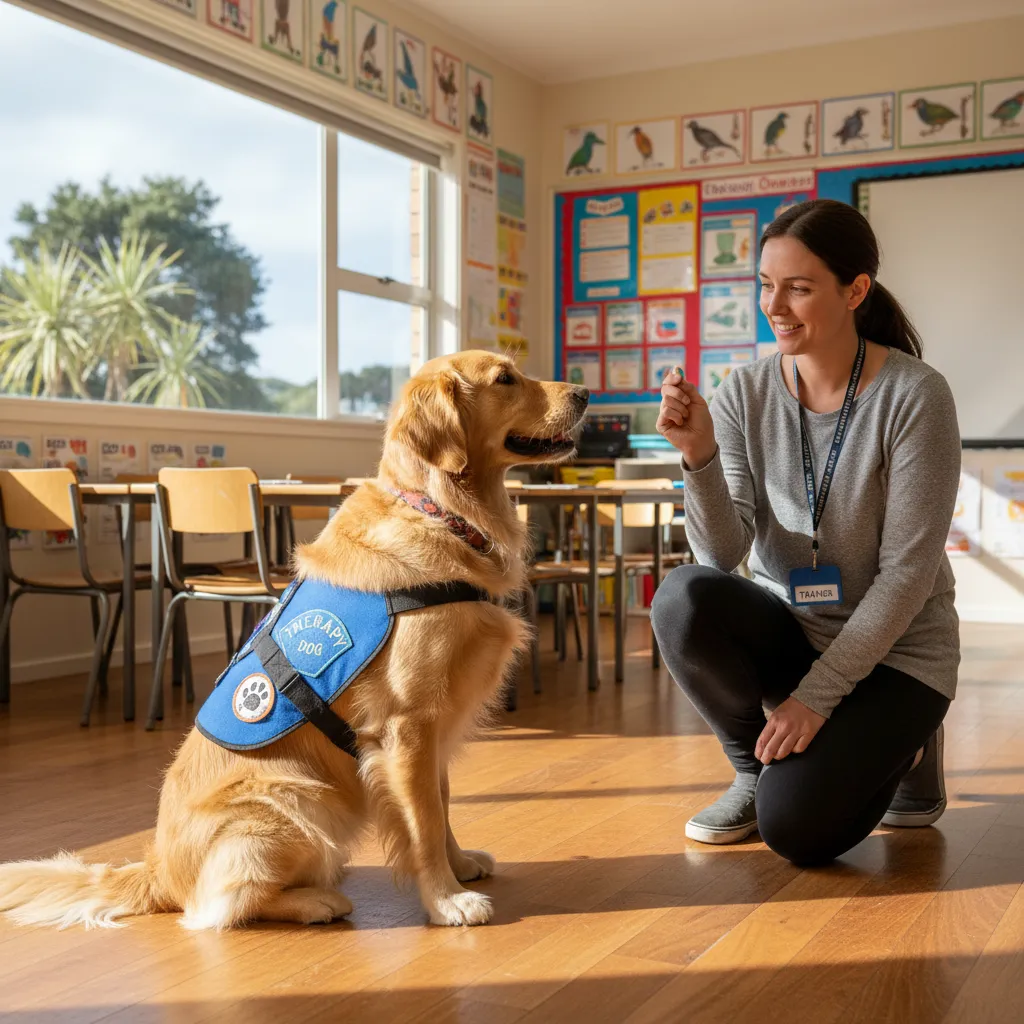
Professional Training Courses in New Zealand
When seeking therapy dog training NZ, it is crucial to distinguish between casual obedience classes and specialized therapy certification. Professional courses are designed to take a dog with good basic manners and elevate them to a level where they can work safely in complex, high-stress environments.
Accredited Training Providers
In New Zealand, training is often a hybrid of general obedience qualifications (such as the Canine Good Citizen award) and specific therapy organizations. Major entities include:
- St John Therapy Pets: Perhaps the most recognized program in NZ. They require dogs to pass a rigorous assessment. While they do not provide the initial dog training, they offer the framework and assessment for certification.
- Canine Friends Pet Therapy: A nationwide network that focuses on visiting hospitals and rest homes. They provide assessment and placement services.
- Private Behavioral Trainers: Many specialized dog trainers now offer “Therapy Dog Prep” courses. These are essential for handlers who want to work professionally (paid) rather than as volunteers.
Course Curriculum Essentials
A comprehensive therapy dog course in NZ will cover the following modules:
- Advanced Obedience: Immediate response to commands like “Sit,” “Down,” “Stay,” and “Leave it” amidst distractions.
- Desensitization: Exposure to wheelchairs, crutches, loud noises, and sudden movements common in clinical settings.
- Appropriate Greeting: Training the dog to greet people without jumping, pawing, or licking excessively.
- Handler Skills: Teaching the human half of the team how to read canine body language to prevent stress and ensure client safety.
Local Service Providers in Tier 2 Cities
While Auckland, Wellington, and Christchurch have established networks, there is a significant and growing need for therapy dog training NZ resources in Tier 2 cities. The decentralized nature of New Zealand’s healthcare system means that regions like the Bay of Plenty, Waikato, and Hawke’s Bay require localized solutions.

Hamilton and the Waikato
The Waikato region has seen a surge in demand for animal-assisted therapy, particularly within the University of Waikato and local aged-care facilities. Local dog clubs often host the Canine Good Citizen (CGC) assessments, which serve as the foundation for therapy work. Trainers in Hamilton are increasingly tailoring private packages to bridge the gap between CGC and full therapy certification.
Tauranga and Bay of Plenty
With a large retirement population, Tauranga is a hotspot for therapy dog services. Local providers here focus heavily on “visiting dog” protocols—training dogs to remain calm around medical equipment and frail individuals. Handlers in this region should look for trainers who specialize in low-arousal behavioral modification.
Napier, Hastings, and Dunedin
In these regions, the community approach is vital. Often, training occurs through local kennel clubs or specialized boutique trainers. Networking is key; many handlers find that connecting with local SPCA outreach programs or independent occupational therapists opens doors to mentorship and training opportunities.
Prerequisites and Temperament Assessment
Not every dog is suitable for therapy work. Regardless of the training quality, the dog’s inherent temperament is the deciding factor. Before investing in therapy dog training NZ, an honest assessment is required.
The Ideal Candidate
Therapy dogs must be:
- Social but not Hyper: They should enjoy human company but remain calm.
- Resilient: They must recover quickly from startling noises or clumsy handling.
- Non-Reactive: Zero aggression towards other dogs or humans is mandatory.
- Handler-Focused: The dog should look to you for guidance in new situations.
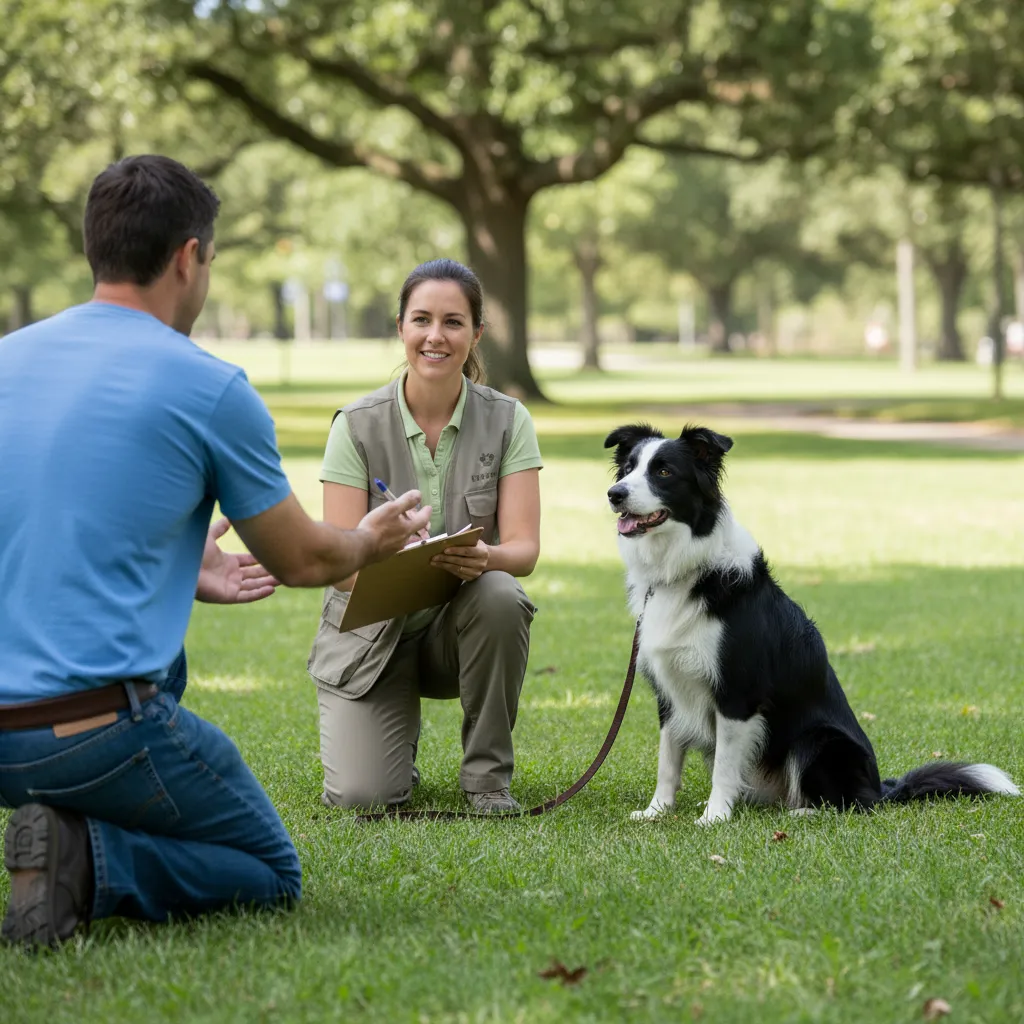
The Assessment Process
Most NZ organizations use a variation of the American Kennel Club’s Canine Good Citizen test, adapted for therapy work. This includes tests such as:
- Accepting a Friendly Stranger: The dog must allow a stranger to approach and speak to the handler without breaking position.
- Sitting Politely for Petting: The dog must welcome being petted without jumping up.
- Reaction to Distraction: A clipboard is dropped or a jogger runs past; the dog may show interest but not panic or aggression.
Insurance, Registration, and Legalities
Navigating the legal landscape is a critical component of professional therapy work. In New Zealand, the term “Therapy Dog” does not carry the same legal access rights as “Disability Assist Dogs” (like Guide Dogs or Mobility Dogs).
Registration vs. Access Rights
It is vital to understand that therapy dogs do not have public access rights to supermarkets, restaurants, or airplanes under the Dog Control Act 1996. They are only allowed in places where they are explicitly invited (e.g., the specific school or hospital they work in). Misrepresenting a therapy dog as a service dog is unethical and harms the reputation of the industry.
Insurance Requirements
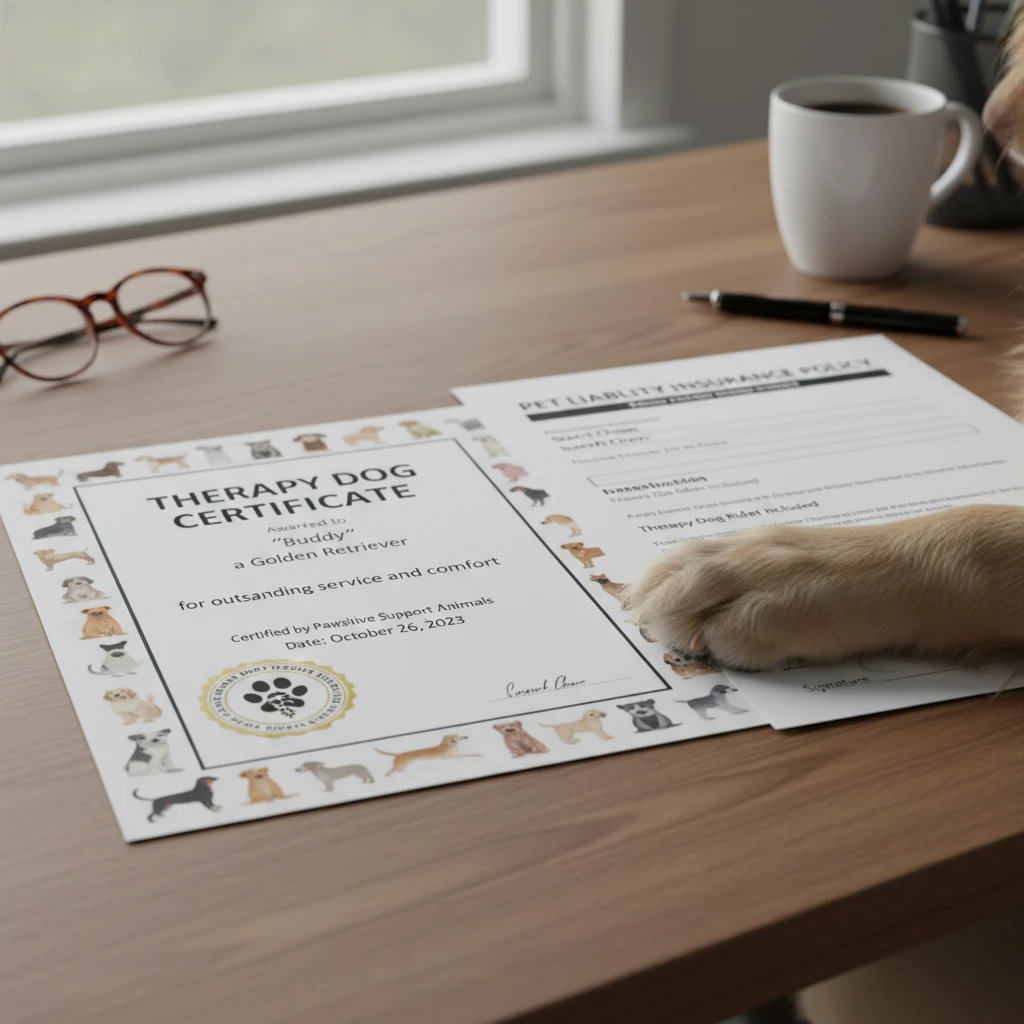
If you are operating as a commercial entity (charging for therapy sessions) or even as a volunteer, liability insurance is non-negotiable.
Volunteer Insurance: If you work with organizations like St John or Canine Friends, you are typically covered under their blanket public liability policy during approved visits.
Private Practitioner Insurance: If you are a counselor, teacher, or occupational therapist incorporating your dog into your private practice, you must inform your professional indemnity insurer. You may need a specific extension to cover animal-assisted therapy activities.
Connecting Local Handlers with Clients
Once you have completed your therapy dog training NZ and secured insurance, the next step is deployment. The market for animal-assisted intervention is diverse.
Educational Sector
Schools are increasingly seeking reading dogs. Programs like “Reading Education Assistance Dogs” (R.E.A.D) are gaining traction. Handlers should approach school principals or SENCOs (Special Educational Needs Coordinators) directly with their certification portfolio.
Corporate Wellness
A growing niche is corporate wellness. Companies hire therapy dog teams for “de-stress days.” This is a commercial avenue where professional handlers can charge hourly rates. Marketing to HR departments in major business hubs and regional centers is an effective strategy.
Aged Care and Rehabilitation
This is the traditional stronghold of therapy dogs. While often volunteer-based, private facilities are beginning to contract professional animal-assisted therapy providers to deliver structured engagement programs for residents with dementia.
Frequently Asked Questions
How much does therapy dog training cost in NZ?
Costs vary significantly. Volunteer organizations often charge a nominal membership and assessment fee (approx. $50-$100 NZD). Private professional courses for handlers can range from $500 to over $2,000 NZD depending on the duration and depth of the curriculum.
Can any breed be a therapy dog in New Zealand?
Yes, any breed can be a therapy dog provided they have the correct temperament. While Golden Retrievers and Labradors are common, mixed breeds, Poodles, and even Greyhounds make excellent therapy dogs. The focus is on behavior, not pedigree.
What is the difference between a therapy dog and a service dog in NZ?
A service dog (Disability Assist Dog) is trained to perform specific tasks for one person with a disability and has full public access rights. A therapy dog is trained to provide comfort to many people and does not have public access rights under the Dog Control Act.
How long does it take to train a therapy dog?
Generally, a dog needs to be at least 12 to 18 months old to be certified, to ensure emotional maturity. Training from puppyhood to certification usually takes 1 to 2 years of consistent work.
Do I need a qualification to work as a therapy dog handler?
While not legally mandatory to own the dog, facilities (schools, hospitals) will almost always require proof of certification from a reputable organization and liability insurance before allowing you on-site.
Can I train my own dog for therapy work?
Yes, owner-training is the most common path in NZ. However, you will likely need the support of professional trainers to prepare for the rigorous assessments required by registering bodies.