
The primary difference between therapy and assistance dogs in NZ lies in their legal status under the Dog Control Act 1996. Assistance dogs (Disability Assist Dogs) have guaranteed public access rights to almost all public places. Therapy dogs, while valuable for well-being, are legally classified as pets and do not have automatic access rights to businesses, public transport, or housing without specific permission.
The Legal Distinction: Assistance vs. Therapy Dogs
Understanding the difference between therapy and assistance dogs NZ residents rely on is crucial for handlers, business owners, and the general public. While both types of dogs provide immense value to humans, their roles and the laws governing them are vastly different.
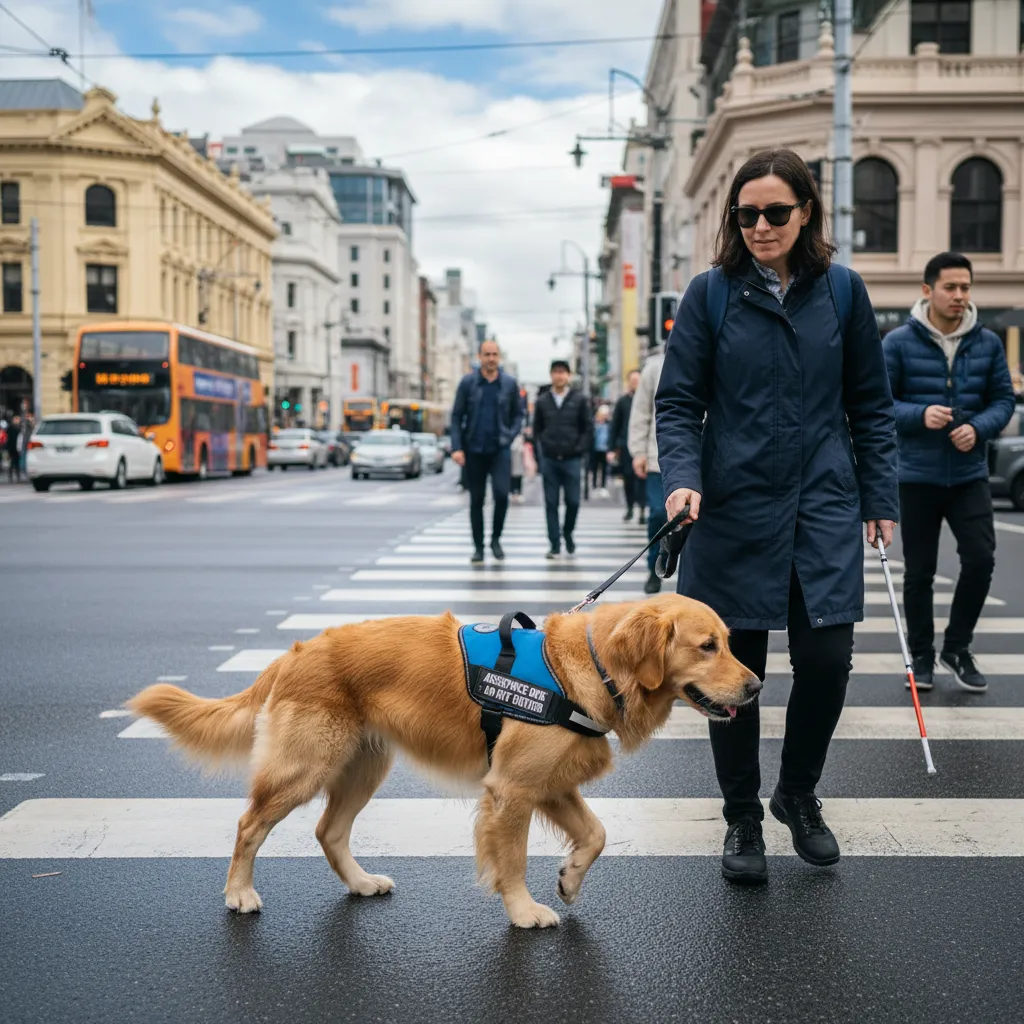
What is a Disability Assist Dog?
In New Zealand, a “Disability Assist Dog” is the legal term for what is commonly known globally as a service dog. These dogs are rigorously trained to perform specific tasks to assist a person with a disability. Under the Human Rights Act 1993 and the Dog Control Act 1996, these dogs are considered an extension of the person they assist.
To qualify as a Disability Assist Dog, the animal must be certified by one of the organizations listed in Schedule 5 of the Dog Control Act. These include organizations such as:
- Blind Low Vision NZ (formerly Blind Foundation)
- Assistance Dogs New Zealand Trust
- Hearing Dogs for Deaf People New Zealand
- K9 Medical Detection New Zealand
- Mobility Assistance Dogs Trust
These dogs have full public access rights. They can enter supermarkets, airplanes, movie theaters, and restaurants. Denying them entry is a violation of human rights legislation.
What is a Therapy Dog?
A therapy dog is trained to provide comfort, affection, and emotional support to people in hospitals, retirement homes, nursing homes, schools, hospices, and disaster areas. Unlike assistance dogs, therapy dogs are trained to interact with many people, not just their handler.
Crucially, therapy dogs do not have special legal privileges in New Zealand. Legally, they are considered companion animals (pets). While they may wear a vest from a reputable organization like St John or Canine Friends Pet Therapy while working, this vest does not grant them access to places where pets are prohibited. Their access is entirely at the discretion of the business owner or facility manager.
Clarifying the Dog Control Act 1996
To fully grasp the difference between therapy and assistance dogs NZ laws enforce, one must look at the specific sections of the Dog Control Act 1996. This legislation is the framework that local councils and businesses use to determine access policies.
Section 2: Interpretations
Section 2 of the Act specifically defines a “disability assist dog.” It limits this definition to dogs certified by the organizations mentioned previously. If a dog is not certified by one of these specific bodies, it does not legally qualify as a disability assist dog, regardless of how well-trained it is or if it provides emotional support.
Section 75: Access Rights
Section 75 is the critical component regarding public access. It states that any person with a disability assist dog is entitled to be accompanied by that dog in any public place. It explicitly overrides other regulations that might ban dogs (such as food hygiene regulations in cafes).
However, because therapy dogs do not meet the Section 2 definition, Section 75 does not apply to them. This means that a therapy dog handler cannot cite the Dog Control Act to demand entry into a premise. Doing so would be factually incorrect and could harm the reputation of legitimate assistance dog teams.

Where Therapy Dogs Can and Cannot Go in NZ
For those managing a therapy dog business or volunteering, knowing where you can legally operate is essential. Since you do not have the “all-access pass” of an assistance dog, you must navigate the landscape of private property rights and local council bylaws.
Restricted Areas (Without Permission)
Unless a business has a specific “dog-friendly” policy, therapy dogs are generally not allowed in:
- Supermarkets and Grocery Stores: Due to strict food safety standards, only disability assist dogs are permitted.
- Restaurants and Cafes (Indoors): While many cafes allow dogs in outdoor seating areas, indoor dining is usually restricted to assistance dogs only.
- Shopping Malls: Most Westfield and Kiwi Property malls in NZ have policies prohibiting pets, which includes therapy dogs not currently on an approved visit.
- Cinemas and Theaters: Generally restricted to assistance dogs.
Permitted Areas (With Arrangement)
Therapy dogs shine in environments where they are invited. Access to these locations is granted via prior agreement between the handler/organization and the facility:
- Hospitals and Hospices: Visiting hours and specific wards are arranged in advance. Strict hygiene protocols usually apply.
- Schools and Universities: Many NZ schools now employ “reading dogs” or wellbeing dogs. This is approved by the Board of Trustees.
- Aged Care Facilities: A primary workplace for therapy dogs. Access is coordinated with the activities coordinator.
- Corporate Offices: Many NZ businesses are adopting dog-friendly policies for staff wellbeing, allowing therapy dogs on site.

Navigating Transport: Air NZ, Ferries, and Buses
Transport is often the biggest hurdle for therapy dog handlers. Unlike assistance dogs, who can travel in the cabin of an aircraft or sit with their handler on a bus, therapy dogs are subject to pet travel policies.
Air New Zealand Policy
Air New Zealand has a very strict policy regarding animals in the cabin. Only certified Disability Assist Dogs are permitted to travel in the aircraft cabin with their handler.
For therapy dogs, this means:
- Domestic Flights: They must travel as checked baggage in a compliant crate. They will be placed in the cargo hold, which is pressurized and temperature-controlled.
- International Flights: They must travel as cargo.
- Exceptions: There are currently no exceptions for emotional support animals or therapy dogs on Air New Zealand. Handlers must factor in the cost of crate hire and pet transport fees when planning logistics.
Interislander and Bluebridge Ferries
Crossing the Cook Strait requires planning. Neither ferry service allows therapy dogs in the passenger lounges (which are reserved for humans and assistance dogs).
- Kennels: Both ferries offer kennels on the vehicle decks. You can rent these for a small fee.
- Remaining in Vehicle: You may leave your therapy dog in your car, but you must ensure windows are cracked and the animal has water. You generally cannot visit the vehicle while the ship is moving.
- Designated Areas: Some vessels are introducing pet-friendly cabins or areas, but these are limited and must be booked well in advance.
Public Transport (Buses and Trains)
Rules vary by region (e.g., Auckland Transport vs. Metlink in Wellington). Generally:
- Auckland: Pets are allowed on trains and buses during off-peak hours if they are in an approved carrier. Large dogs that cannot fit in a carrier are often refused unless they are assistance dogs.
- Wellington: Dogs are allowed on trains (subject to staff discretion and usually muzzled/leashed) but rules for buses are stricter.
Educating Business Owners and Negotiating Access
Because therapy dogs lack automatic access rights, the burden falls on the handler to educate business owners and negotiate entry. This is a critical skill for anyone in the Therapy Dogs NZ business niche.
The “Ask, Don’t Demand” Approach
When approaching a business (like a bookstore or a cafe) to see if you can bring a therapy dog inside, transparency is key. Never present the dog as a “service dog” if it is not. This constitutes fraud and damages the credibility of genuine assistance dogs.
Instead, pitch the benefit. Explain that the dog is a trained therapy animal. Show their certification from a body like St John or a private training establishment. Many business owners in New Zealand are becoming more “pet-friendly” and may allow access if they are assured the dog is well-behaved, toilet trained, and under control.
Handling Rejection
If a business owner says no, you must accept it gracefully. They have the legal right to refuse entry to any dog that is not a Disability Assist Dog. Arguing or citing US laws (like ADA regulations, which do not apply in NZ) will not help your case.

Housing and Tenancy Rights
The difference between therapy and assistance dogs NZ regulations enforce extends to the Tenancy Act.
- Assistance Dogs: Landlords cannot refuse a tenancy application because the applicant has a disability assist dog. They also cannot require a “pet bond” for the dog.
- Therapy Dogs: These are treated as pets. A landlord has the right to refuse pets or to place conditions on the tenancy regarding the dog. However, recent changes to tenancy laws are making it slightly easier for tenants to request pets, where landlords can only refuse on reasonable grounds. A handler should provide a “Pet CV” highlighting the therapy dog’s advanced training to alleviate landlord concerns.
People Also Ask
Can I take my therapy dog into a cafe in NZ?
Generally, no, unless the cafe has a specific pet-friendly policy. Under the Food Act 2014, animals are not allowed in areas where food is prepared. However, many cafes allow dogs in outdoor dining areas. Only certified Disability Assist Dogs have the legal right to enter indoor dining areas.
Is an emotional support animal the same as an assistance dog in NZ?
No. New Zealand law does not legally recognize “Emotional Support Animals” (ESAs) in the same way the USA does. In NZ, an ESA is legally classified as a pet and does not have public access rights under the Dog Control Act 1996.
How do I register my dog as a therapy dog in NZ?
There is no single government registry. You typically register by joining an organization such as St John, Canine Friends Pet Therapy, or by undergoing assessment with private training organizations. This registration grants you the ability to work within their programs but does not grant public access rights.
Can landlords refuse therapy dogs in NZ?
Yes. While landlords cannot refuse a certified Disability Assist Dog, they can refuse a therapy dog. However, under current tenancy laws, they must provide reasonable grounds for refusing a pet request.
Do therapy dogs fly free on Air New Zealand?
No. Only certified Disability Assist Dogs fly free of charge in the cabin. Therapy dogs must travel as cargo or checked baggage (depending on the flight) and standard pet transport fees apply.
What is the fine for refusing an assistance dog in NZ?
Refusing access to a person with a certified Disability Assist Dog is a breach of the Human Rights Act. While the Dog Control Act doesn’t set a specific “fine” for the refusal itself, the handler can lodge a complaint with the Human Rights Commission, which can lead to mediation and financial settlements for discrimination.


