
Ministry of Education funding for therapy dogs is typically secured through discretionary Learning Support budgets, Urgent Response Funds, or Board of Trustees operational grants rather than a dedicated canine fund. Schools must demonstrate a clear link between the animal intervention, student Hauora (wellbeing), and Key Competencies within the New Zealand Curriculum to validate the expenditure.
How Does Ministry of Education Funding Apply to Therapy Dogs?
Integrating a therapy dog into a New Zealand school environment is a significant investment, both financially and operationally. A common misconception among educators is that there is a specific form or fund designated solely for “School Dogs.” In reality, securing ministry of education funding for therapy dogs requires a strategic approach where the dog is positioned as a critical resource for delivering specific educational and wellbeing outcomes.
Funding is generally allocated through broader channels. The most successful applications frame the therapy dog program as an intervention strategy for high-needs students or as a school-wide initiative for positive culture. The funds often come from:
- Operational Grants: The Board of Trustees (BoT) has discretion over the operational grant. If the dog is deemed a strategic asset for the school’s charter goals, the BoT can approve budget allocation.
- Learning Support Funding (ORS/ICS): For students with Ongoing Resourcing Scheme (ORS) verification, funds can sometimes be utilized for specialist therapies, which may include Animal Assisted Therapy (AAT) if recommended by an educational psychologist.
- Urgent Response Fund (URF): While subject to availability and policy changes, URF has historically been used to support student wellbeing and attendance, areas where therapy dogs excel.
- Community Grants: While not direct MoE funding, many schools match MoE operational funds with grants from local community trusts, specifically earmarked for the capital costs of acquiring or training the dog.

Navigating the Application Cycle: The February Critical Path
Timing is everything when applying for educational funding or allocating school budgets. While the fiscal year for the Ministry of Education runs from July to June, the school financial year aligns with the calendar year. February is the critical month for finalizing budgets and deploying resources for the academic year.
Why February Matters
By February, schools have confirmed their roll returns, which dictates the operational funding entitlement. This is the window where Senior Leadership Teams (SLT) and Boards are finalizing the allocation of discretionary funds. If you are proposing a therapy dog program, your proposal must be on the desk before the February board meeting.
The Pre-February Timeline
- October-November (Previous Year): Draft your proposal. Identify the specific “pot” of money you are targeting. Begin consulting with staff to gauge buy-in.
- December: Submit a preliminary expression of interest to the Principal or BoT. This plants the seed before the summer break.
- Late January: Refine the proposal based on the confirmed staffing and student needs for the upcoming year.
- February: Formal presentation to the Board of Trustees. This presentation should align the cost of the therapy dog directly with the strategic plan for the year.
If you miss the February cycle, you are often relegated to waiting for mid-year reviews or applying for external grants, which are less predictable. The key is to have the therapy dog written into the Annual Plan as a resource required to meet specific targets.
Aligning with the New Zealand Curriculum and Te Whāriki
To justify ministry of education funding for therapy dogs, the initiative must move beyond “it’s nice to have a dog” to “this dog facilitates learning.” You must explicitly map the program to the New Zealand Curriculum (NZC) or Te Whāriki.
Key Competencies
Therapy dogs are exceptional tools for developing the Key Competencies, which are the capabilities people have for living and learning in New Zealand.
- Managing Self: Students learn emotional regulation through co-regulation with the dog. A calm dog requires a calm student. This is a direct, measurable learning outcome.
- Relating to Others: Dogs provide a non-judgmental social bridge. For students on the autism spectrum or those with social anxiety, the dog acts as a social lubricant, facilitating interaction with peers.
- Participating and Contributing: Caring for the school dog (grooming, feeding, walking) fosters a sense of responsibility and contribution to the school community.
Hauora and Te Whare Tapa Whā
The strongest funding applications leverage the Te Whare Tapa Whā model of health. A therapy dog supports all four walls of the wharenui:
- Taha Hinengaro (Mental/Emotional Health): Reducing cortisol levels, anxiety, and stress, allowing the brain to engage in learning.
- Taha Whānau (Social Health): Building connections and a sense of belonging at school.
- Taha Tinana (Physical Health): encouraging movement and physical interaction.
- Taha Wairua (Spiritual Health): The deep, non-verbal bond and unconditional acceptance provided by an animal.

Justifying the Expense: Building a Robust Business Case
When requesting public money, transparency and Return on Investment (ROI) are paramount. A therapy dog is not a one-off purchase; it is an ongoing operational expense. Your funding application must account for the Total Cost of Ownership (TCO) to avoid budget blowouts that could jeopardize the program.
The Cost Breakdown
Your budget proposal should be broken down into CAPEX (Capital Expenditure) and OPEX (Operational Expenditure):
- Initial Costs (CAPEX): Purchase price of the dog (if applicable), initial specialist training (e.g., Canine Good Citizen, Therapy Dog certification), crates, bedding, and initial vet checks.
- Ongoing Costs (OPEX): Food, annual vet vaccinations, flea/worm treatments, insurance (public liability and pet insurance), annual re-certification fees, and professional development for the handler (teacher).
The ROI Argument
How do you calculate ROI on a dog? You measure it against the cost of alternative interventions.
Example: If a school spends $10,000 annually on teacher aide hours for behavioral management for a specific cohort, and the introduction of a therapy dog reduces the need for those hours by 30% due to improved student regulation, the dog pays for itself. Furthermore, higher attendance rates (often seen when a therapy dog is present) translate to better funding stability for the school in the long run.
Risk Management and Compliance
The Ministry of Education prioritizes the health and safety of students above all else. A funding application that does not address risk will be rejected immediately. You must demonstrate that you have a comprehensive Dog Safety Policy and Risk Assessment Management System (RAMS) in place.
Essential Documentation
Your application should include drafts of:
- Allergies Management Plan: How will the school handle students with dander allergies? (e.g., Dog-free zones).
- Phobia Management: Protocols for students who are afraid of dogs.
- Incident Reporting: A clear process for what happens if a scratch or nip occurs.
- Welfare of the Animal: A policy ensuring the dog is not overworked, has a quiet retreat space, and has a dedicated primary handler.
Showing that you have considered the “worst-case scenarios” proves to the funding body (or BoT) that you are a responsible custodian of both the funds and student safety.

Success Metrics for Reporting
Securing the funding is step one; keeping it requires reporting. Ministry of Education audits and Board reviews require data. You need to establish success metrics before the dog enters the school gates.
Quantitative Metrics
These are the hard numbers that Boards love:
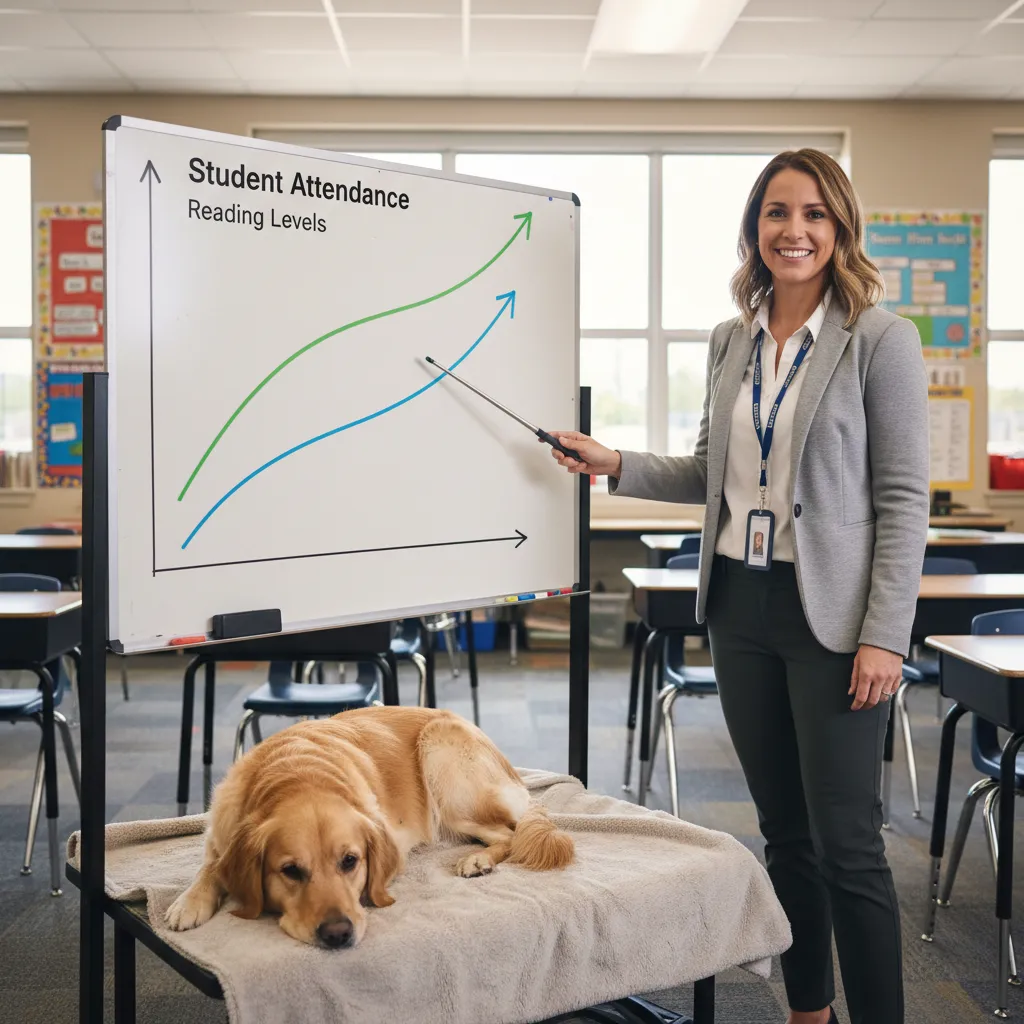
- Attendance Data: Track the attendance of target students on days the dog is present versus absent.
- Behavioral Incidents: Monitor the frequency of “stand-downs” or referrals to the principal for behavioral issues. A reduction is a strong indicator of success.
- Reading Levels: If using the dog for a “Reading to Dogs” program, track the reading age progression of participants compared to a control group.
Qualitative Metrics
These provide the narrative context to the numbers:
- Student Surveys: Simple “smiley face” surveys for younger children regarding how they feel when the dog is around.
- Teacher Observations: Anecdotal records of students who previously wouldn’t speak engaging with the dog.
- Parent Feedback: Testimonials from whānau about changes in their child’s attitude toward school.
Reporting Cadence: Provide a termly report to the Board of Trustees. This keeps the program visible and justifies the ongoing operational costs in the annual budget.
Conclusion
While there is no single “Ministry of Education Therapy Dog Cheque,” the pathway to funding is clear for those who can articulate the educational value. By aligning with the curriculum, timing your application for the February cycle, and maintaining rigorous safety and reporting standards, you can secure the resources needed to bring Animal Assisted Therapy to your school. The result is an investment that pays dividends in student Hauora, engagement, and academic success.
Does the Ministry of Education provide insurance for school therapy dogs?
No, the Ministry of Education’s risk cover typically does not extend to the veterinary costs or specific liability of a therapy dog. Schools must arrange their own public liability insurance that specifically notes the presence of a working dog, as well as pet insurance for the animal’s health needs.
Can we use Urgent Response Funding (URF) for a therapy dog?
Potentially. The Urgent Response Fund is designed to support attendance and wellbeing. If you can present a compelling case that the therapy dog is a direct intervention to re-engage students who are refusing to attend or are suffering significant anxiety, URF monies may be applicable, though this is decided on a case-by-case basis.
What qualifications does a school dog need for funding approval?
While the MoE does not set a specific standard, Boards of Trustees usually require the dog to pass a “Canine Good Citizen” test or a specific Therapy Dog certification from a recognized body (like Therapy Dogs New Zealand) to approve the risk management plan and release funds.
How do we handle students with dog allergies?
Funding applications must include a management plan. This usually involves designating “dog-free zones,” ensuring the dog is groomed regularly to reduce dander, and having strict hygiene protocols (hand washing) after interaction. The rights of students with allergies must be balanced with the benefits of the program.
Can the dog belong to a teacher, or must the school own it?
Most commonly, the dog belongs to a staff member (the handler) who covers the dog’s home life costs, while the school may fund the “working” costs (insurance, training, treats at school). Complete school ownership is rare due to the complexities of care during holidays and weekends.
Is parental consent required for a therapy dog program?
Yes. To satisfy Board requirements and community consultation obligations, schools should inform the entire community. Specific consent is often required for students participating in direct, one-on-one sessions with the dog, while general notification covers the dog’s presence on school grounds.