
Professional therapy dog handlers for hire provide certified, clinically supervised animal-assisted therapy services specifically designed for healthcare environments. Unlike volunteers, these experts possess specialized training in infection control, patient confidentiality, and goal-oriented therapeutic interventions, ensuring safety and efficacy in New Zealand’s medical and private practice settings.
In the evolving landscape of New Zealand healthcare, the demand for Animal-Assisted Therapy (AAT) has shifted from casual visitation to structured clinical intervention. Medical administrators and private practice owners are increasingly seeking professional therapy dog handlers for hire to mitigate liability and ensure measurable patient outcomes. While volunteer programs serve a vital community role, the complexities of clinical environments require a level of expertise that only professional contractors can provide.
Why Volunteers Are Insufficient for Clinical Environments
For decades, New Zealand hospitals and rest homes have relied on charitable organizations to provide visiting dogs. However, there is a distinct difference between Animal-Assisted Activities (AAA)—which are generally casual meet-and-greets—and Animal-Assisted Therapy (AAT), which is goal-directed and documented. When seeking to implement AAT, relying solely on volunteers presents significant operational gaps.
Reliability and Scheduling Consistency
Volunteers, by definition, offer their time altruistically. While noble, this model often lacks the consistency required for structured treatment plans. If a patient in a rehabilitation ward has a scheduled session to improve fine motor skills through canine interaction, a volunteer cancellation can disrupt the entire care plan. Professional therapy dog handlers for hire operate under contract, guaranteeing service delivery and adherence to strict schedules, which is critical for billing and patient progression.
Scope of Practice and Liability
A volunteer’s primary focus is the social interaction. They are rarely trained in:
- HIPAA/Privacy Act Compliance: Handling sensitive patient data.
- Infection Control: Adhering to strict hygiene protocols to prevent zoonotic transfer in immunocompromised wards.
- Crisis Management: Knowing how to react if a patient has a psychiatric episode or a medical emergency during the session.
Professional handlers carry their own professional indemnity and public liability insurance specifically rated for clinical work, removing a massive burden from the facility’s administrative team.
Essential Qualifications of Professional Handlers
When you look to hire professional therapy dog handlers, you are paying for the human’s expertise as much as the dog’s temperament. In the New Zealand market, a professional handler should possess credentials that go far beyond basic obedience training.
Clinical Certification vs. Temperament Testing
Most volunteer dogs pass a temperament test (e.g., Canine Good Citizen). A professional team, however, undergoes rigorous evaluation regarding the handler’s ability to advocate for the animal while simultaneously attending to the client’s needs. Look for handlers with backgrounds in:
- Allied Health: Many professional handlers are also Occupational Therapists, Social Workers, or Nurses.
- Ethology: A deep understanding of canine body language to prevent stress signals that could lead to a bite incident.
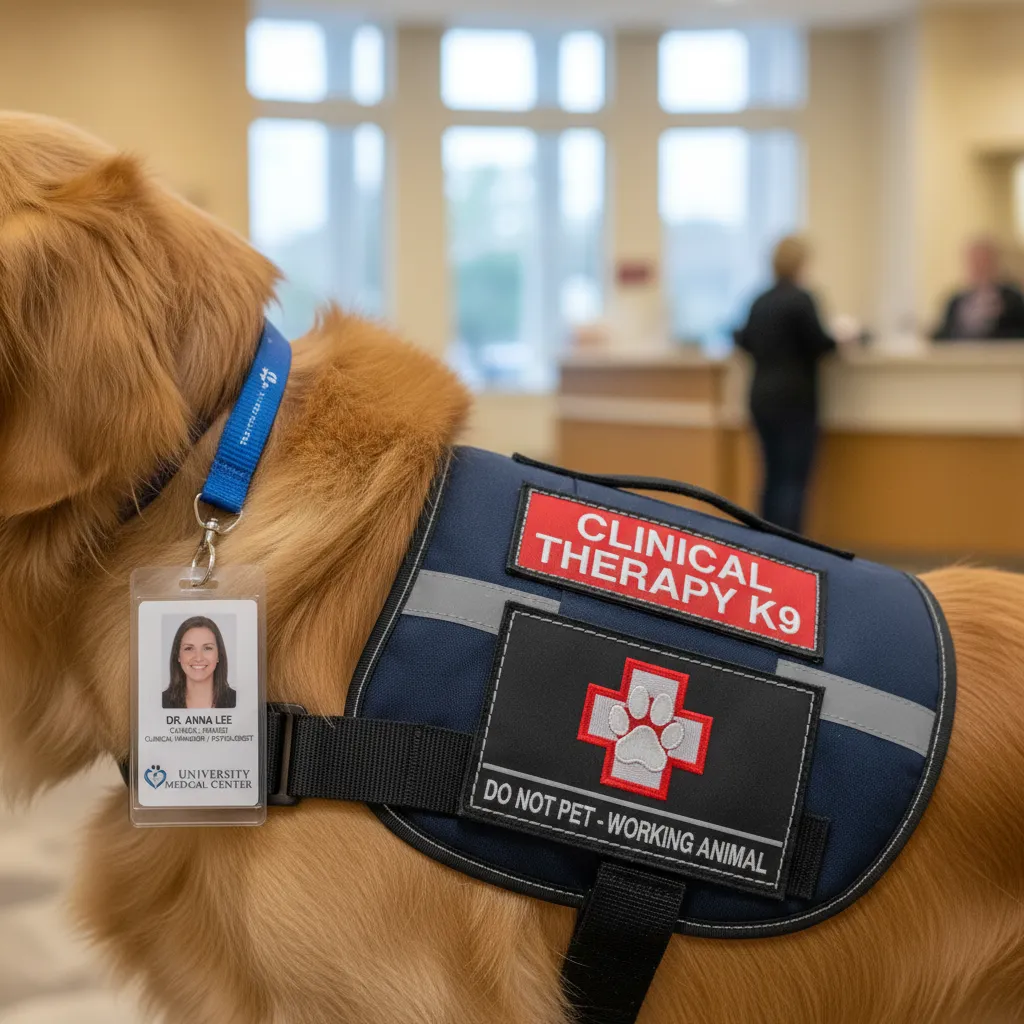
- Specialized AAT Training: Certifications from bodies like Animal Assisted Intervention International (AAII) or recognized NZ-specific clinical courses.
Documentation and Reporting Skills
A key differentiator of a professional is the ability to document. In a clinical setting, if it isn’t written down, it didn’t happen. Professional handlers are trained to write SOAP notes (Subjective, Objective, Assessment, Plan) that integrate into the patient’s medical file. This documentation is essential for justifying the therapy to funding bodies like ACC (Accident Compensation Corporation) or private insurers.
Contracting AAT Services for Private Practice
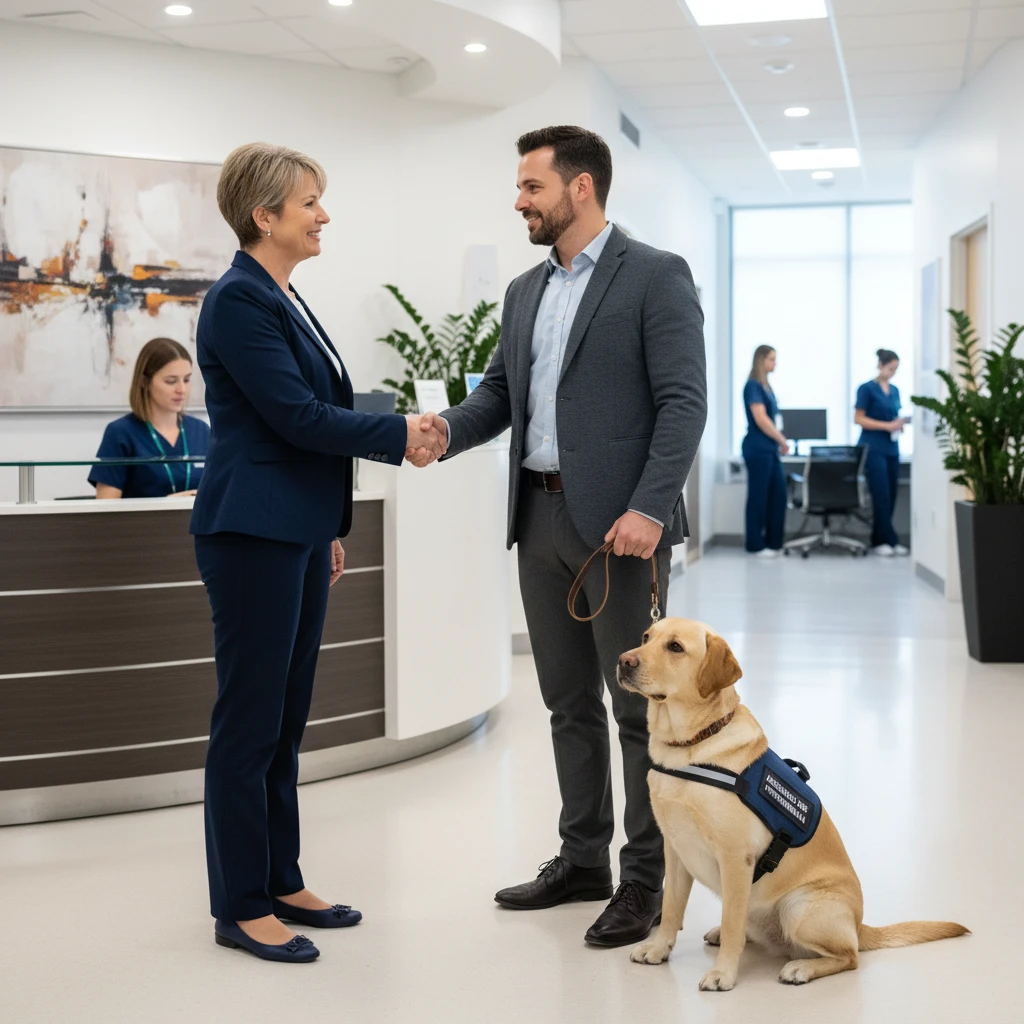
For private practices in Auckland, Wellington, or Christchurch—ranging from psychology clinics to physiotherapy studios—hiring a full-time staff member to manage a dog may not be feasible. Contracting external professional therapy dog handlers for hire is the most economic and scalable solution.
Structuring the Agreement
When drafting a contract for AAT services, several key components must be addressed to ensure clarity and safety:
- Scope of Work: Define whether the handler is conducting the therapy (if they are a licensed clinician) or facilitating the dog’s interaction while your internal staff conducts the therapy.
- The “20-Minute Rule”: Professional standards suggest dogs should not work more than a certain number of hours per day. Contracts must respect the animal’s welfare to maintain ethical standards.
- Biosecurity Protocols: The contract must stipulate grooming standards (e.g., bathed within 24 hours of a visit, nails trimmed) and vaccination schedules including Leptospirosis and Kennel Cough.
Cost Benefit Analysis
While hiring a professional involves a fee (typically hourly or per session), the ROI is found in patient retention and marketing differentiation. Clinics offering professional AAT often see higher appointment compliance rates, particularly in pediatric and mental health sectors. Furthermore, outsourcing this role eliminates the overhead of training, feeding, and insuring an in-house facility dog.
Integration with Multidisciplinary Medical Teams
The true power of hiring professional handlers lies in their ability to integrate seamlessly with existing medical teams. A professional handler does not operate in a silo; they function as part of the treatment unit.
Working with Occupational Therapists (OT)
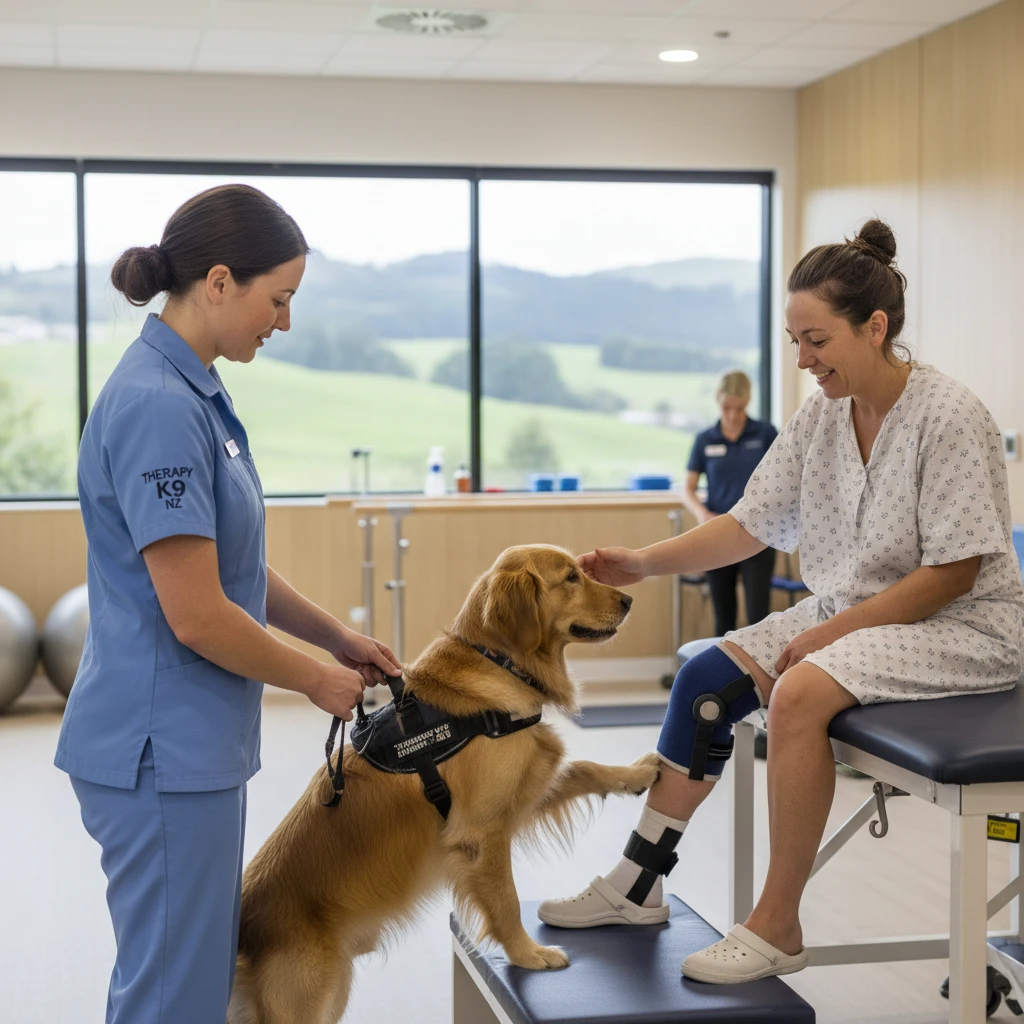
In an OT setting, the handler positions the dog to facilitate specific movements. For example, if a patient needs to work on standing balance, the handler might command the dog to place its paws on a raised platform, encouraging the patient to reach and groom the animal. The handler ensures the dog remains still and safe, allowing the OT to focus entirely on the patient’s biomechanics.
Mental Health Support Integration
For psychologists and counselors, the presence of a dog can lower cortisol levels and break down barriers to communication. A professional handler knows how to “read the room.” They can cue the dog to provide deep pressure therapy (DPT) when a patient shows signs of escalating anxiety, often before the clinician even notices the micro-expressions.

Risk Management and WorkSafe NZ Compliance
In New Zealand, the Health and Safety at Work Act 2015 imposes a duty of care on business owners to eliminate or minimize risks. Bringing an animal into a workplace creates a hazard that must be managed. Hiring professional handlers is the primary method of due diligence.
Professionals provide:
- Risk Assessment Matrices: Detailed plans identifying potential hazards (e.g., tripping, allergies, phobias) and control measures.
- Incident Reporting: Established protocols for any adverse event, no matter how minor.
- Zoonosis Control: Strict adherence to veterinary health checks to prevent the transmission of diseases from dog to human.
By hiring a professional entity, the liability shifts significantly from the facility to the contractor, provided the facility has done its due diligence in checking the contractor’s credentials.
People Also Ask
How much does it cost to hire a professional therapy dog handler in NZ?
Costs vary based on location and the handler’s qualifications. Generally, rates range from $100 to $200 NZD per hour. This fee covers the handler’s time, the dog’s maintenance, insurance, and travel. Long-term contracts for regular weekly visits often secure a lower hourly rate compared to one-off sessions.
What is the difference between a therapy dog and a service dog?
A service dog is trained to perform specific tasks for one individual with a disability (e.g., a guide dog for the blind) and has public access rights. A therapy dog is trained to provide comfort and affection to many people in clinical or educational settings and does not have automatic public access rights outside of their workplace.
Can I hire a therapy dog for a one-off event?
Yes, many professional handlers offer “wellness visit” packages for corporate events, university exam weeks, or hospital staff appreciation days. These are typically billed as Animal-Assisted Activities (AAA) rather than clinical therapy, but professional handling is still crucial for safety.
Are therapy dog handlers regulated in New Zealand?
There is no single government regulatory body for therapy dogs in NZ. However, reputable professionals adhere to standards set by international organizations like IAHAIO or local equivalents. Facilities should always request proof of insurance, police vetting for the handler, and veterinary clearance for the dog.
What insurance do professional therapy dog handlers need?
Professional handlers must carry Public Liability Insurance (often up to $5M or $10M NZD) and Professional Indemnity Insurance. This protects against claims of injury, property damage, or professional negligence during a therapy session.
How do I verify the credentials of a therapy dog handler?
Ask to see their certification paperwork, their dog’s temperament test results, and their insurance certificate. Additionally, request references from other clinical facilities they have worked with. A true professional will have a portfolio of protocols and safety documents ready to present.