
Team building activities with animals in NZ involve experiential learning workshops where corporate groups interact with therapy dogs, horses, or farm animals to enhance communication, leadership presence, and emotional intelligence. These sessions leverage the innate behavioral responses of animals to provide immediate, non-judgmental feedback on team dynamics, trust, and non-verbal signaling.
In the high-stakes environment of modern business, traditional boardroom seminars often fail to produce lasting behavioral changes. New Zealand companies are increasingly turning to a more dynamic, scientifically backed approach: team building activities with animals. By integrating Animal Assisted Therapy (AAT) principles into corporate training, organizations can unlock levels of empathy, cooperation, and leadership that standard PowerPoint presentations simply cannot reach.
Moving Beyond Standard Workshops: Why Animals?
The corporate landscape in New Zealand is shifting away from generic trust falls and obstacle courses. The search for “team building activities with animals nz” has surged as HR managers realize the profound impact of experiential learning. Unlike a human facilitator who might shy away from giving blunt feedback, an animal provides an honest, immediate mirror to a person’s energy and intention.
Animals, particularly dogs and horses, are highly sensitive to non-verbal cues. They do not care about job titles, salaries, or KPIs. They respond solely to the authenticity, confidence, and clarity of the human in front of them. This creates a level playing field where a junior employee might demonstrate superior natural leadership skills compared to a CEO, fostering a unique environment for growth and mutual respect.

The Failure of Traditional Methods
Standard workshops often suffer from the “transfer gap”—the difficulty of applying classroom concepts to real-world stress. Animal-assisted activities bridge this gap by simulating pressure in a safe environment. If a team member is stressed or aggressive, a therapy dog may withdraw; if they are calm and assertive, the dog engages. This instant biofeedback forces participants to self-regulate in real-time, a skill directly transferable to high-pressure client meetings or crisis management.
Communication Exercises with Dogs
Effective communication is the bedrock of any successful organization. However, studies suggest that over 70% of communication is non-verbal. One of the most effective components of team building activities with animals in NZ involves canine-assisted communication drills. These exercises strip away the safety net of language, forcing teams to rely on body language, tone, and intent.
The “Silent Command” Challenge
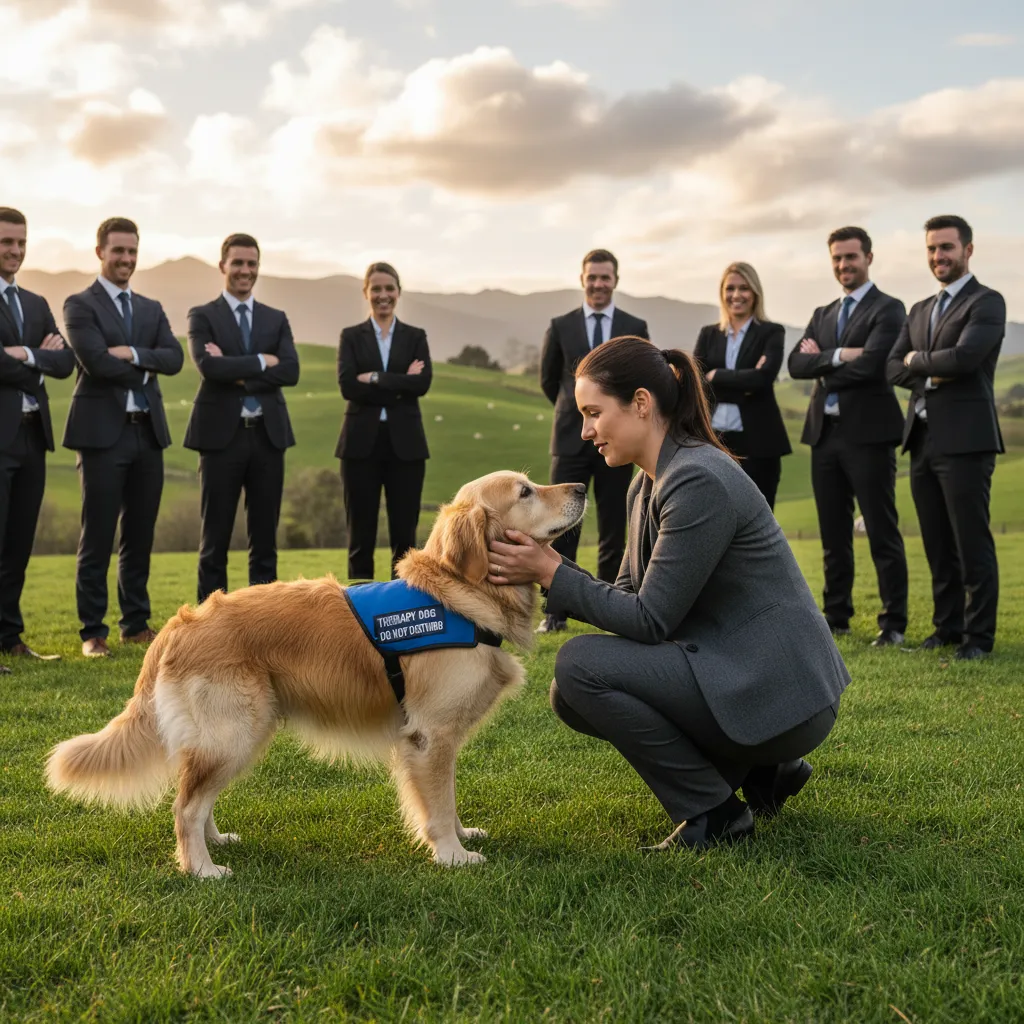
A popular exercise involves team members attempting to guide a trained therapy dog through a simple agility course without speaking. This requires:
- Clear Intent: The handler must visualize the path clearly.
- Congruent Body Language: Gestures must match the desired outcome.
- Observation: The team must read the dog’s hesitation or confusion and adjust their strategy instantly.
When a team fails to coordinate their non-verbal signals, the dog will often sit and look confused. This serves as a powerful metaphor for organizational misalignment. If leadership sends mixed signals, the workforce (like the dog) disengages. Facilitators use these moments to debrief on how mixed messages in the office lead to project stagnation.
Leadership Training Through Handling
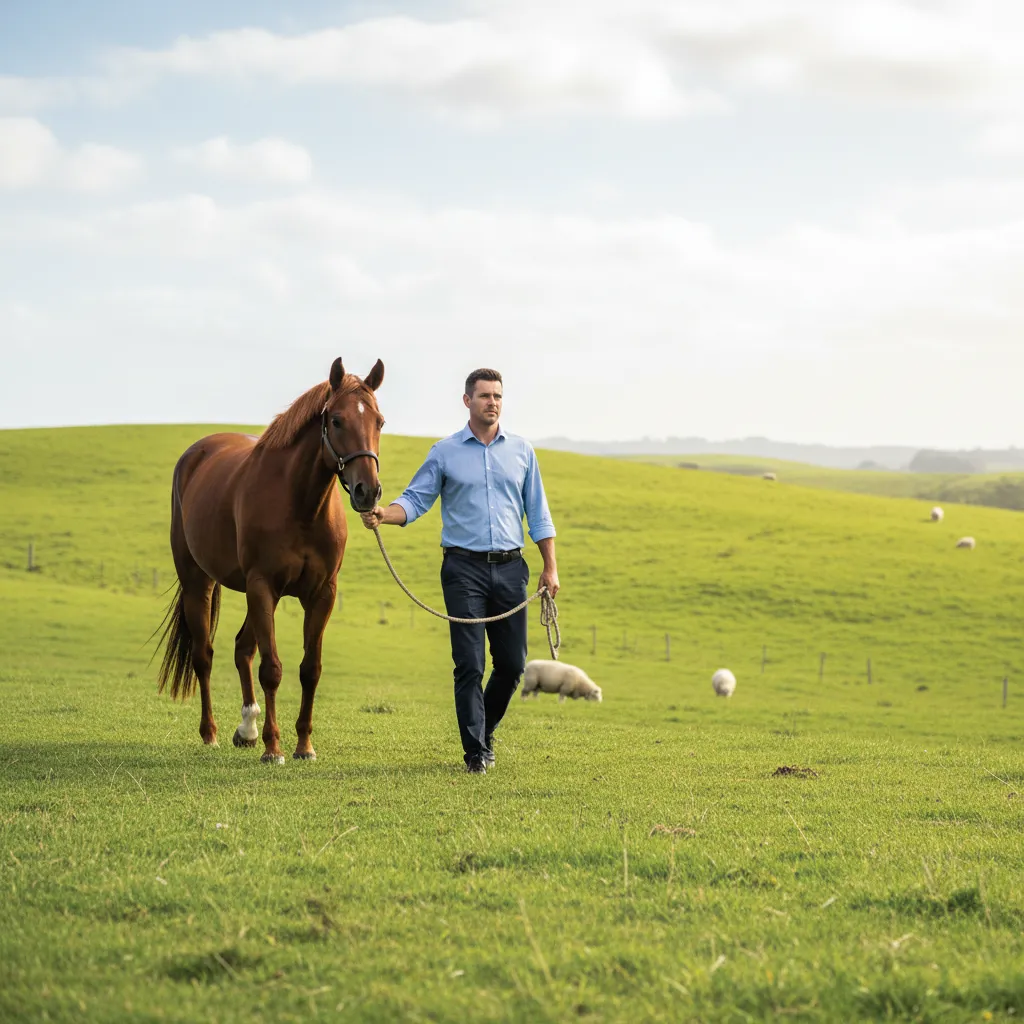
Leadership is not about dominance; it is about trust and direction. This is the core curriculum of animal-assisted leadership development. In the context of Animal Assisted Therapy New Zealand, leadership training often utilizes horses (Equine Assisted Learning) or large breed dogs to teach executives about presence and emotional regulation.
Authentic Leadership vs. Coercion
You cannot bully a 500kg horse into following you, nor can you bribe it with a salary bonus. You must earn its trust. This dynamic is explored through “handling” exercises where participants must lead an animal from point A to point B.
Key Leadership Lessons Learned:
- Emotional Regulation: Animals can smell cortisol (stress). A leader who is internally panicked but outwardly smiling will be ignored by the animal. This teaches leaders the importance of genuine composure.
- Clear Boundaries: Participants learn to set spatial boundaries with animals, akin to setting professional boundaries in the workplace.
- Patience and Adaptability: If a specific approach isn’t working, the leader must pivot immediately rather than forcing the issue—a critical skill in agile business management.
Group Bonding Experiences: The Biology of Connection
Why do team building activities with animals in NZ result in tighter-knit groups than dinner parties? The answer lies in neurobiology. Interacting with friendly animals triggers the release of oxytocin, often called the “love hormone” or “bonding chemical,” while simultaneously lowering cortisol (stress) levels.
Creating Psychological Safety
Psychological safety is the belief that one will not be punished or humiliated for speaking up with ideas, questions, concerns, or mistakes. Animals naturally create a “psychologically safe” zone. Their presence acts as a social lubricant, reducing anxiety and breaking down hierarchical barriers. When a CEO and an intern are both on the floor petting a dog, the power dynamic flattens, allowing for authentic human connection.
Shared Positive Experiences
Shared experiences are the glue of company culture. Successfully navigating a challenge with an animal creates a unique, memorable narrative for the team. These positive emotional anchors are associated with colleagues, leading to improved morale and higher retention rates. In the context of New Zealand’s focus on mental health and wellbeing in the workplace, these events tick multiple boxes for corporate social responsibility and employee wellness.

Planning Your Animal-Assisted Event in NZ
When looking to book team building activities with animals in NZ, it is crucial to select a provider that adheres to high ethical standards for both animal welfare and human safety. The market niche of Animal Assisted Therapy New Zealand is growing, but quality varies.
Checklist for Selecting a Provider
- Certified Handlers: Ensure the human facilitators are certified in Animal Assisted Interventions (AAI) or mental health. They need to manage both the animals and the group dynamics.
- Animal Welfare Policy: The best providers have strict limits on how long animals work. Avoid providers who view animals as mere props.
- Customized Programs: Look for providers who tailor the session to your specific business goals (e.g., conflict resolution vs. creativity vs. stress relief).
- Location Suitability: Whether it is a farm retreat in the Waikato or a mobile service that brings therapy dogs to your Auckland office, ensure the environment is safe and enclosed.
By investing in high-quality, animal-assisted team building, New Zealand companies are not just organizing a day out; they are investing in the emotional intelligence and cohesive fabric of their workforce.
People Also Ask
What are the benefits of animals in team building?
Animals in team building provide immediate biofeedback, reduce participant stress through oxytocin release, break down social hierarchies, and highlight non-verbal communication issues. They create a neutral, psychologically safe ground where colleagues can bond authentically without corporate pretenses.
Is animal-assisted team building safe for people with allergies?
Professional providers typically inquire about allergies beforehand. Many use hypoallergenic dog breeds or conduct activities outdoors to minimize allergens. For severe allergies, participation can be adjusted so the individual is an observer or strategist rather than a direct handler, ensuring they are still involved in the learning process.
How much does a team building event with animals cost in NZ?
Costs vary significantly based on group size, location, and the type of animals involved. A half-day session with therapy dogs at your office might start around $1,500 NZD, while a full-day equine leadership retreat including venue hire and catering can range from $250 to $500 NZD per person.
Can we do team building with animals indoors?
Yes, many therapy dog providers in New Zealand are mobile and can bring the experience to your office or a conference room, provided there is adequate space. However, activities involving horses or farm animals generally require visiting a specific facility or retreat center.
What is the difference between animal therapy and animal team building?
Animal therapy (AAT) is a clinical intervention designed to treat specific physical or mental health conditions. Animal team building is a corporate training strategy focused on improving group dynamics, communication, and leadership skills, though it utilizes similar therapeutic principles of connection and feedback.
Where can I find animal team building activities in NZ?
Major hubs for these activities include Auckland, Wellington, and Christchurch, often located on the outskirts where land is available. Search for providers specializing in “Equine Assisted Learning” or “Corporate Canine Coaching” within the Animal Assisted Therapy New Zealand network.