
Therapy dog funding in New Zealand is primarily sourced through private charitable trusts, philanthropic grants, and self-funding, as direct government aid is limited. However, costs for certified Disability Assist Dogs may be subsidized by the Ministry of Social Development’s Disability Allowance, while ACC can fund animal-assisted therapy sessions as part of a specific rehabilitation plan.
The Critical Distinction: Therapy vs. Assistance Dogs
Before navigating the complex landscape of therapy dog funding NZ, it is vital to understand the terminology used by New Zealand funding bodies. Misclassification is the number one reason funding applications are declined.
In New Zealand law (specifically the Dog Control Act 1996), there is a distinct legal difference between a Disability Assist Dog and a Therapy Dog. This distinction dictates which funding pot you can access.
- Disability Assist Dogs: These dogs are trained to perform specific tasks for a disabled person (e.g., Guide Dogs, Mobility Dogs, Hearing Dogs). They have full public access rights. Funding Status: High eligibility for government support.
- Therapy Dogs: These dogs provide comfort and affection to people in hospitals, retirement homes, schools, or disaster areas. They do not have public access rights and are often handled by a professional or volunteer. Funding Status: Low government support; relies on grants and business budgets.
- Emotional Support Animals (ESAs): Dogs that provide comfort to an owner with mental health challenges but have no specific task training. Funding Status: Very low; generally not recognized for public funding.
If you are seeking funding for a dog to assist with your own disability, you are looking for “Assistance Dog Funding.” If you are a professional looking to fund a dog to work with clients, you are looking for “Therapy Dog Program Funding.” This guide covers both avenues.
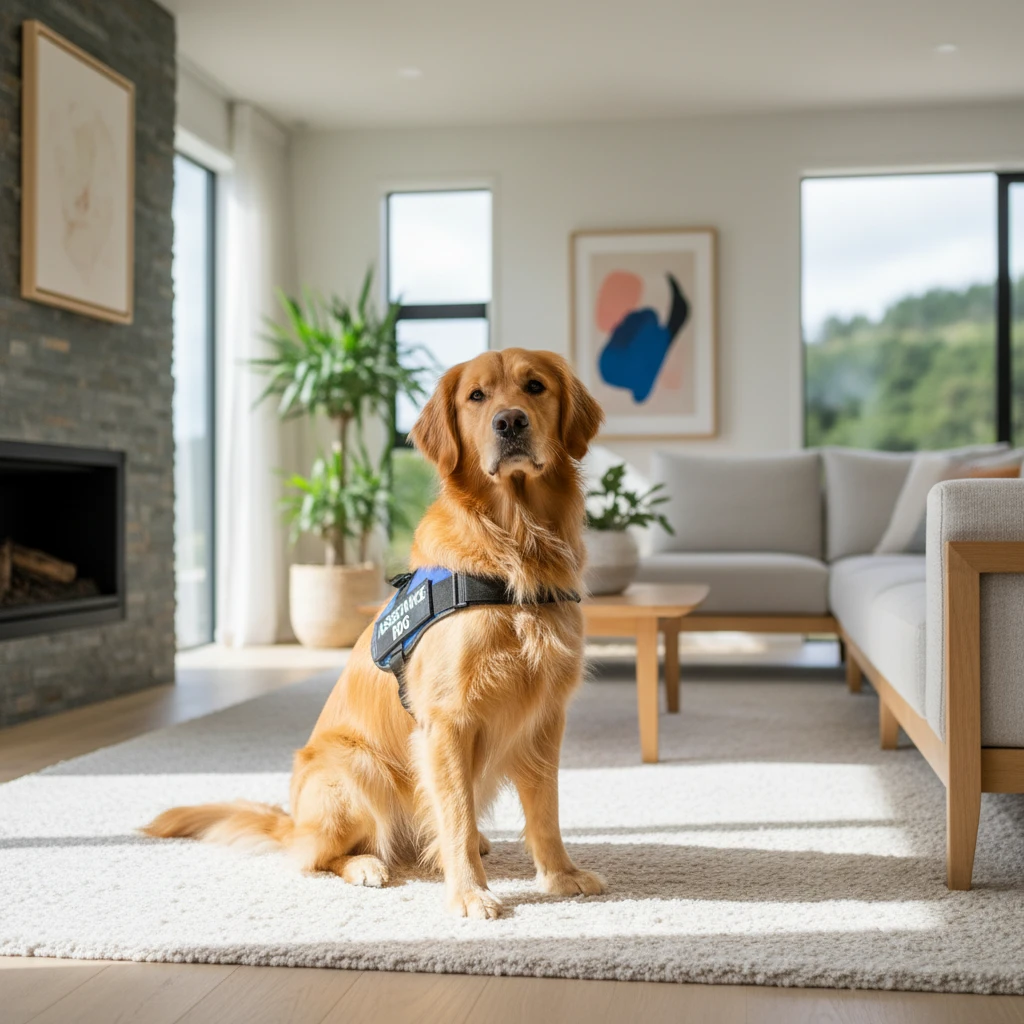
Government Support: MSD and WINZ Eligibility
The Ministry of Social Development (MSD) and Work and Income (WINZ) do not typically provide lump-sum grants to purchase a dog. However, they do offer ongoing financial support for the maintenance of certified Disability Assist Dogs.
Does WINZ pay for dog food?
Yes, but with strict criteria. If you are receiving a benefit or on a low income, you may be eligible for the Disability Allowance. This is a weekly payment for people who have regular, ongoing costs because of a disability.
To claim costs for a dog under the Disability Allowance:
- Certification is Key: The dog usually must be certified by an organization recognized under the Dog Control Act 1996 (e.g., Blind Low Vision NZ, Assistance Dogs NZ, Hearing Dogs for Deaf People NZ).
- Verification: You must provide verification of the costs involved (receipts for premium dog food, flea treatments, insurance).
- Medical Necessity: A registered health practitioner must verify that the dog is essential for your disability management.
While the allowance is capped (currently around $78.60 per week total for all disability costs), including dog maintenance can significantly offset the burden. It is rare for WINZ to fund the initial purchase or training of a therapy dog that is not a certified assistance dog.
ACC Recovery Pathways and Animal-Assisted Therapy
The Accident Compensation Corporation (ACC) operates on a model of rehabilitation and independence. ACC does not generally purchase dogs for claimants. However, they play a massive role in funding Animal-Assisted Therapy (AAT) services.
How to get ACC funding for Therapy Dog sessions?
If you are recovering from an injury (physical or mental, such as sensitive claims), your recovery plan may include counseling or physical rehabilitation. If your provider utilizes a therapy dog as a modality for your treatment, ACC funds the provider’s time, which covers the cost of the dog’s presence.
For Traumatic Brain Injury (TBI) and Spinal Injuries:
In cases of severe injury where an Assistance Dog is required for independence (e.g., opening doors, fetching items), ACC may contribute to the costs associated with an organization providing that dog. This is handled on a case-by-case basis under “Social Rehabilitation.”

Can ACC fund a psychiatric service dog?
This is a developing area. ACC has historically been hesitant to fund the training of psychiatric service dogs due to the lack of regulation in the industry. However, if a claimant can prove via their medical team that a dog is the most cost-effective and evidence-based solution for their independence (e.g., preventing panic attacks to allow a return to work), a case can be made. These are “High Tech / Specialized Equipment” requests and require robust advocacy from occupational therapists.
Charitable Trusts and Private Grants
Since government funding is tight, the majority of therapy dog funding in NZ comes from the philanthropic sector. This applies to both individuals seeking a dog and organizations (like schools) wanting to implement a therapy dog program.
Top Funding Sources in New Zealand
- The Halberg Foundation: Focuses on sport and recreation for physically disabled young people, but they sometimes support equipment or costs that facilitate activity, which could theoretically overlap with mobility dogs in active contexts.
- Lottery Individuals with Disabilities Committee: This is a significant funding body. They provide grants for vehicles and scooters, but can also consider “communication equipment.” While dogs are a stretch, specific equipment for the dog to enable communication might be considered.
- Givealittle: Crowdfunding is the most successful route for non-certified therapy dogs. A compelling story explaining the medical necessity of the dog often raises the $20,000+ needed for private training.
- Lions Clubs and Rotary: Local chapters frequently sponsor assistance dogs for community members. A formal presentation to the local board is usually required.

Funding for Therapy Dog Businesses and Schools
If you are a school principal, a counselor, or an entrepreneur looking to introduce a therapy dog into your workplace, the funding model shifts from “welfare” to “investment.”
School Funding Models
Schools in New Zealand often use the Operations Grant to fund therapy dogs under “Learning Support.” Alternatively, schools apply for grants from:
- Pub Charity / The Lion Foundation: These gaming trusts distribute millions annually. Schools can apply for a therapy dog as a “learning resource” or “student welfare initiative.”
- PTA Fundraising: Many school therapy dogs are funded entirely by the Parent-Teacher Association.
Business Grants
For private practitioners (psychologists, OTs) wanting to train their own dog to use in practice, this is a capital expense. You may be eligible for:
- Regional Business Partner Network: While they won’t buy the dog, they offer capability vouchers that could pay for business coaching on how to structure your therapy dog business model.
- Whānau Ora: If your service specifically targets Māori health outcomes, Whānau Ora commissioning agencies may fund the implementation of therapeutic modalities, including taonga (which can include animals in specific holistic contexts).
The Financial Reality: What You Need to Fund
When applying for grants, specificity wins. Do not ask for “money for a dog.” Ask for specific line items. Here is the typical cost breakdown for a therapy dog in NZ:
| Expense Category | Estimated Cost (NZD) | Potential Funder |
|---|---|---|
| Purchase of Puppy | $2,500 – $4,500 | Self / Givealittle |
| Professional Training | $15,000 – $30,000 | Gaming Trusts / Lions Clubs |
| Public Access Testing | $200 – $500 | Self |
| Insurance (Annual) | $800 – $1,200 | WINZ (partial) |
| Food & Vet (Annual) | $2,500+ | WINZ Disability Allowance |

Frequently Asked Questions
Can I get a grant for an emotional support dog in NZ?
It is very difficult. Emotional Support Animals (ESAs) are not recognized under the Dog Control Act 1996 in the same way Assistance Dogs are. Most government and gaming trust grants require the dog to be a certified Disability Assist Dog. Crowdfunding is usually the best option for ESAs.
Does Southern Cross insurance cover therapy dogs?
Generally, private health insurance in NZ does not cover the purchase of a therapy dog. However, some policies may cover psychological consultations where a therapy dog is present, provided the practitioner is registered.
How much does a fully trained assistance dog cost in NZ?
The total cost to raise and train a legitimate assistance dog in New Zealand is approximately $40,000 to $60,000 NZD. Organizations like Assistance Dogs NZ Trust often subsidize this heavily through their own fundraising, asking families to contribute a smaller portion (e.g., $20,000).
Can I use my KiwiSaver to buy a therapy dog?
No. KiwiSaver can generally only be withdrawn for first home purchases, retirement, or significant financial hardship. Purchasing a therapy dog does not currently meet the criteria for financial hardship withdrawal regulations.
Are there specific grants for autistic children to get dogs?
Yes, but they are competitive. The Halberg Foundation and specific autism support networks sometimes offer grants. However, most families rely on the “Assistance Dogs New Zealand Trust” waiting list, which provides the dog at a subsidized rate rather than a direct cash grant.
Do therapy dogs fly for free in NZ?
Only certified Disability Assist Dogs fly for free in the cabin on Air New Zealand. Therapy dogs and Emotional Support Animals must travel as pets (usually in the hold) and standard fees apply.