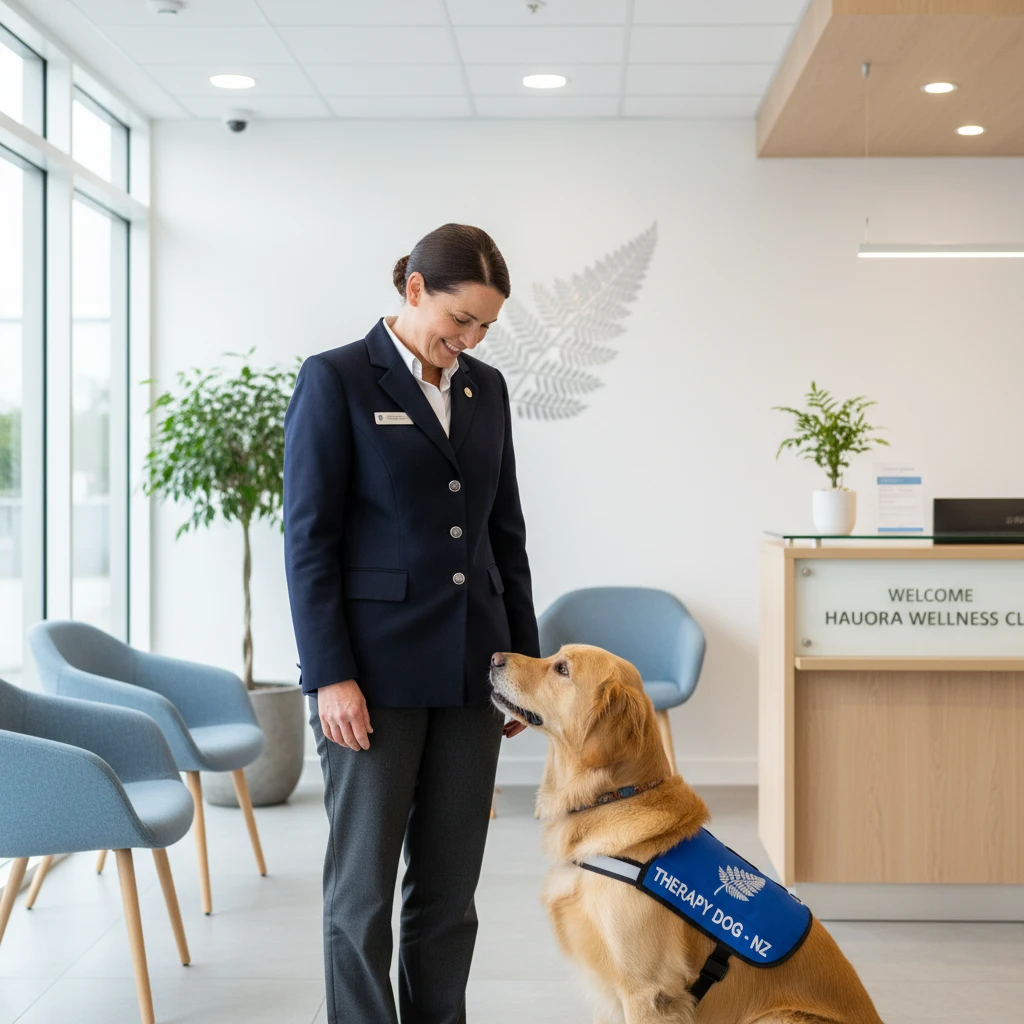
Biothane leashes are the industry standard for New Zealand clinical settings due to their non-porous, waterproof coating that prevents bacterial absorption and cross-contamination. To buy medical-grade Biothane leashes in NZ, therapy dog handlers should prioritize specialized local manufacturers using genuine Beta-series webbing, ensuring equipment meets strict hospital infection control protocols and Occupational Therapy safety requirements.
Why Biothane is Superior for Infection Control
In the high-stakes environment of New Zealand healthcare facilities, from Starship Hospital to local aged care centers, infection control is paramount. For therapy dog handlers and Occupational Therapists (OTs), the equipment used is just as critical as the animal’s training. Traditional materials like nylon, cotton, and leather act as fomites—porous surfaces capable of carrying infectious agents such as MRSA, C. diff, and Staphylococcus.
Biothane, specifically the Beta series often utilized in medical-grade applications, is a polyester webbing with a TPU or PVC coating. This unique composition renders the material completely waterproof and non-porous. Unlike nylon, which is hygroscopic and absorbs bodily fluids, saliva, and environmental contaminants, Biothane creates an impermeable barrier.
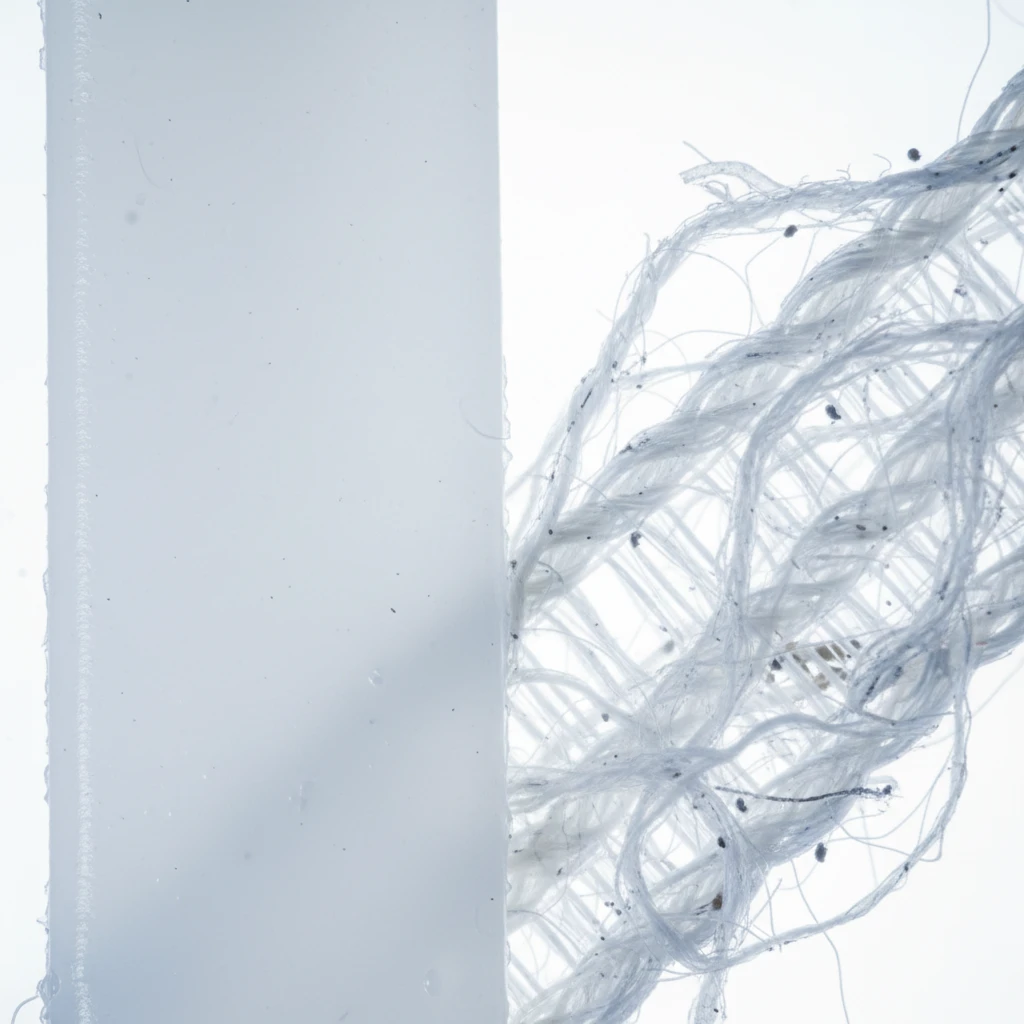
For NZ clinical settings, this means a leash that touches a hospital floor does not become a biological hazard. It can be wiped down instantly between patient interactions, satisfying the rigorous hygiene audits required by District Health Boards (DHBs). Furthermore, Biothane does not retain odors, a crucial factor when working in oncology wards or with patients who have heightened sensory sensitivities or nausea.
Where to Buy Biothane Leashes in NZ
Finding high-quality, genuine Biothane in New Zealand requires navigating between mass-produced pet store imports and specialized custom manufacturers. For clinical use, off-the-shelf options often lack the specific hardware durability or length customization required for therapy work. Here is how to identify professional suppliers within the New Zealand market.
Specialized NZ Custom Manufacturers
The most reliable source for clinical-grade gear is New Zealand-based artisan manufacturers who specialize in working dogs. These businesses often cater to police K9 units, search and rescue (LandSAR), and therapy organizations. When searching for “where to buy biothane leashes NZ,” look for vendors who expressly state they use Genuine BioThane® USA material. Cheap PVC knockoffs often crack in NZ’s UV conditions or become sticky over time, compromising hygiene.
Top-tier NZ suppliers will offer:
- Custom Lengths: Critical for wheelchair work where standard 1.2m leashes are dangerous.
- Hardware Options: Stainless steel or solid brass hardware is non-negotiable for longevity and hygiene. Zinc alloy can corrode and trap bacteria.
- Stitching vs. Riveting: For clinical use, double-capped rivets are often preferred over stitching, as thread can fray and harbor bacteria, whereas rivets provide a smooth, wipeable seal.
Medical Supply Crossovers
Some disability aid suppliers in New Zealand are beginning to stock assistance dog equipment. While their inventory is often lower, purchasing through these channels can sometimes be invoiced directly to organizations or covered under specific funding streams depending on the nature of the therapy business.
Customizing Leashes for Occupational Therapy Use
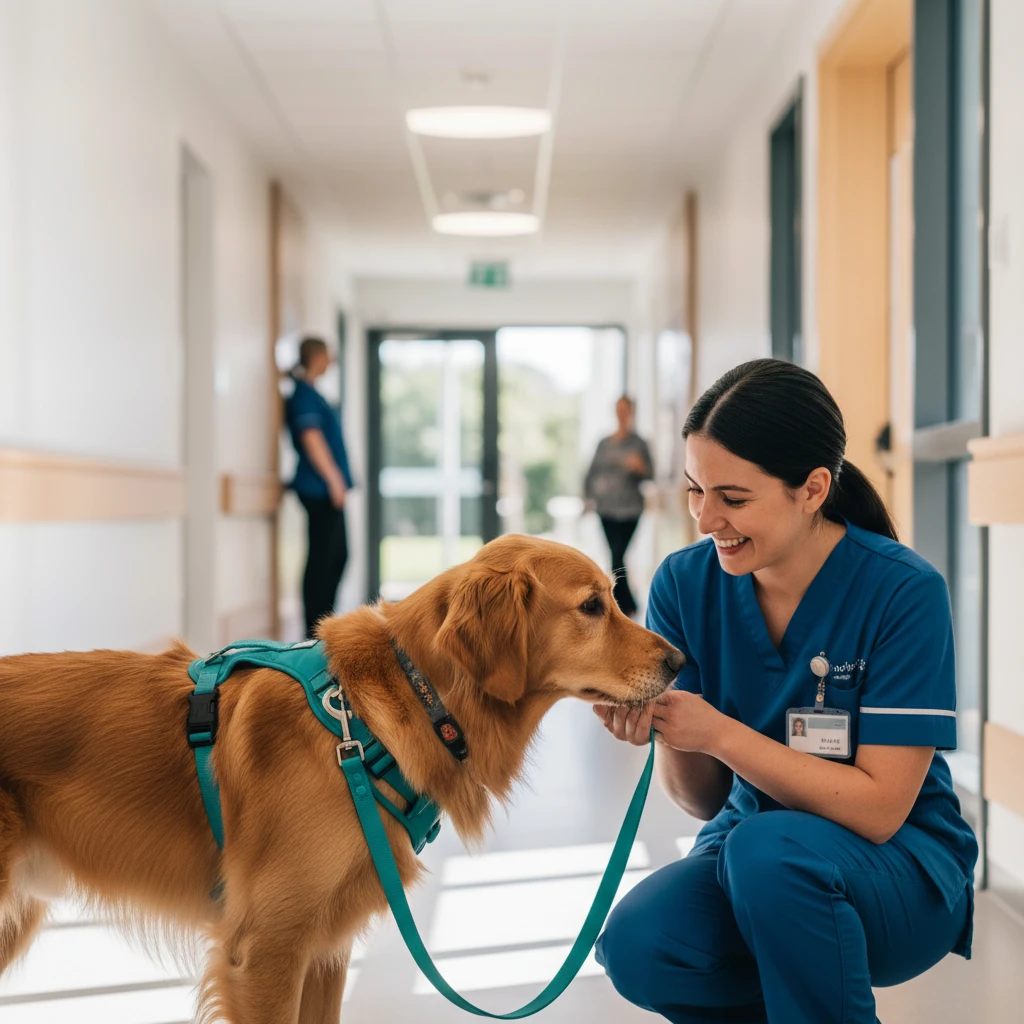
Occupational Therapy (OT) involves complex physical interactions. A standard dog leash is rarely sufficient for the nuanced needs of a clinic. Biothane’s structural integrity allows for significant customization without sacrificing strength, making it the material of choice for OTs designing interventions.
Multi-Handle Configurations
In a therapy session, the handler (the OT) often needs primary control while allowing the patient (the client) to feel they are “walking” the dog. Biothane leashes can be fabricated with secondary traffic handles or dual-attachment points. This “buddy leash” system is vital for safety, allowing the professional to intervene instantly if the dog needs to be corrected or if the patient loses their balance.
High-Visibility and Color Coding
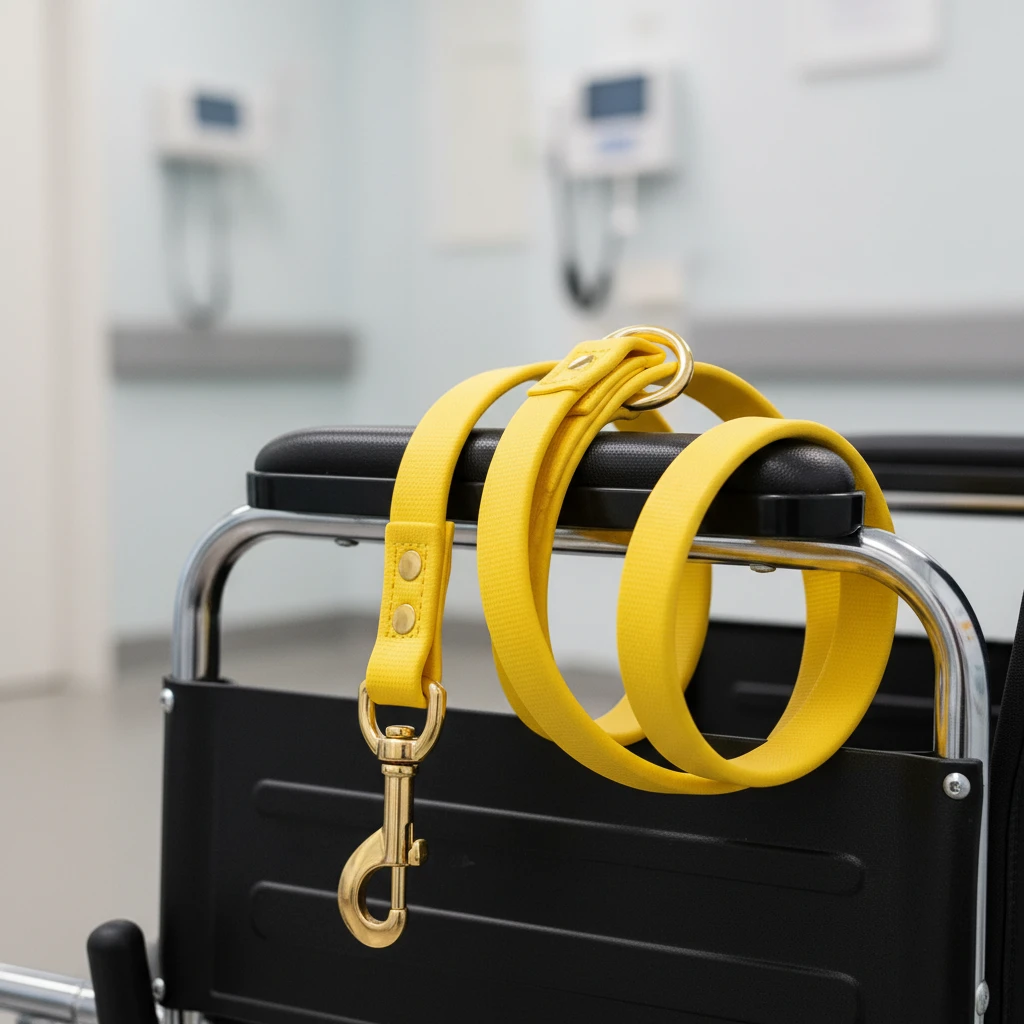
Biothane comes in high-visibility colors that serve a functional purpose in NZ clinics. Bright neon yellows or oranges ensure the leash is visible against hospital linoleum, preventing tripping hazards for elderly patients or those with gait mobility issues. Furthermore, color-coding can be used to denote the dog’s status; for example, a red leash might signal “Do Not Pet” or “Working,” while a green leash indicates “Interaction Allowed.”
Wheelchair and Bedside Compatibility
Therapy dogs in New Zealand often work with patients in wheelchairs or confined to hospital beds. A standard leash is too long and drags on the floor (contamination risk) or gets tangles in wheels (safety risk). Custom Biothane couplers or short “tab” leashes (30cm-40cm) allow the dog to work close to the apparatus without slack. The stiffness of Biothane prevents it from getting caught in spokes as easily as a limp nylon strap.
Cleaning and Maintenance of Clinical Equipment
The primary commercial driver for adopting Biothane in NZ therapy businesses is the ease of maintenance. However, “easy to clean” does not mean “self-cleaning.” Establishing a rigorous protocol is essential for liability and patient safety.
Approved Disinfectants
Biothane is chemically resistant to most common hospital-grade disinfectants. In New Zealand, the following are commonly used and safe for Beta-series Biothane:
- Isopropyl Alcohol (70%): Excellent for spot cleaning and immediate disinfection between patients. It evaporates quickly and leaves no residue.
- Chlorhexidine: Often used in veterinary settings; safe for the material but requires wiping to prevent stickiness.
- Virkon S: The gold standard for biosecurity in NZ. Biothane can be dunked in a Virkon solution without degrading the internal webbing, provided the hardware is dried thoroughly afterward.
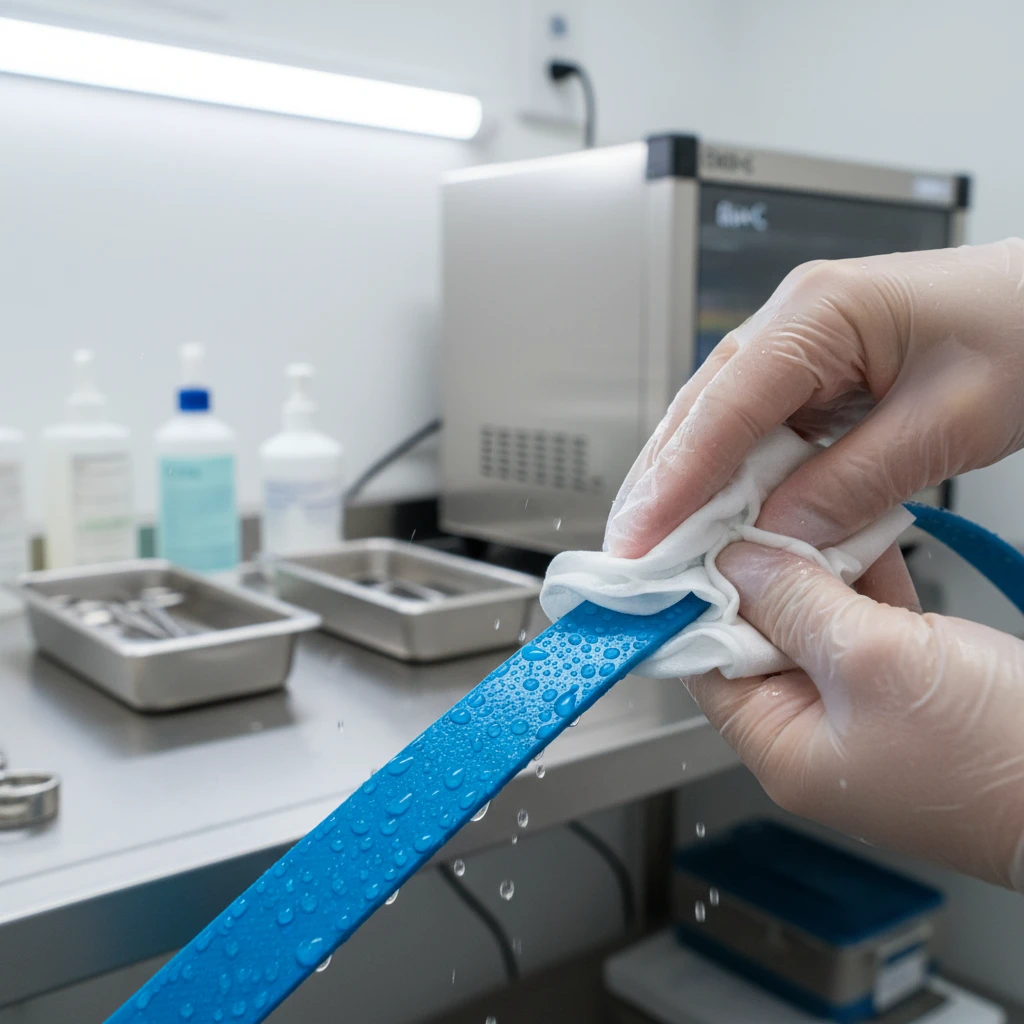
The Cleaning Workflow
For a therapy dog business, the workflow should be:
- Visual Inspection: Check for cuts in the coating. If the inner webbing is exposed, the leash is no longer waterproof and must be retired from clinical use.
- Debris Removal: Rinse with warm water to remove fur or dander.
- Chemical Disinfection: Spray or wipe with the approved clinical disinfectant.
- Drying: Hang to dry. Biothane dries in minutes, unlike nylon which can take hours and smell of dampness.
The Commercial Viability of Medical-Grade Gear
For NZ businesses managing therapy dogs, the upfront cost of Biothane is higher than nylon. A standard nylon leash might cost $20 NZD, while a custom Biothane lead ranges from $45 to $80 NZD depending on hardware and length. However, the Return on Investment (ROI) is significantly higher for clinical operators.
Longevity: A nylon leash in a high-use clinical setting will fray, fade, and absorb odors within 3-6 months. It requires machine washing, which degrades the stitching. A Biothane leash can last 3-5 years with daily use, retaining its color and structural integrity.
Liability Reduction: Using visibly clean, medical-grade equipment demonstrates a duty of care. In the event of an infection control audit or a patient complaint regarding hygiene, being able to demonstrate that non-porous, sterilizable equipment is used provides a layer of professional protection for the business.
Frequently Asked Questions
Is Biothane better than leather for therapy dogs?
Yes, for clinical settings, Biothane is superior to leather. Leather is porous and organic, meaning it can absorb bacteria, viruses, and odors. It is also damaged by harsh hospital disinfectants. Biothane provides the look and feel of leather but is completely synthetic, waterproof, and sanitizable.
Where can I buy custom length Biothane leashes in NZ?
You can buy custom length Biothane leashes from specialized NZ artisan makers such as detection dog suppliers or boutique dog gear websites. Search for vendors who explicitly mention “Genuine BioThane USA” and offer customization options for length and hardware to ensure it meets your clinical needs.
Can you use bleach on Biothane leashes?
While Biothane is chemically resistant, frequent use of diluted bleach (sodium hypochlorite) can eventually fade the color and potentially weaken the stitching if not rinsed thoroughly. For NZ clinical standards, 70% Isopropyl alcohol or Virkon is generally preferred as it is effective against pathogens without being as corrosive to the hardware (rivets and clips).
Are Biothane leashes heavy for small therapy dogs?
Standard Biothane (Beta 520) has a similar weight and drape to leather. However, for smaller therapy dogs, you should look for “Super Heavy” width (which is actually just thicker) or standard width in a thinner profile. Many NZ suppliers offer different widths (e.g., 13mm vs 19mm). The 13mm width is lightweight and suitable for smaller breeds used in lap therapy.
Does Biothane get sticky in NZ humidity?
Genuine Biothane (Beta series) is designed to maintain a leather-like feel and does not get sticky in humid conditions, unlike cheap PVC knockoffs. If a leash feels sticky, it is likely a lower-quality imitation material or it has not been rinsed properly after cleaning with certain chemicals.
How do I know if a leash is genuine Biothane?
Genuine Biothane has a specific matte finish (Beta series) and a consistent internal webbing structure. It is generally stamped or sold by authorized converters. In NZ, reputable sellers will list the specific series of Biothane used. If the price is extremely low (under $20 NZD), it is likely a generic PVC coated webbing, which may not have the same antimicrobial resistance or durability.