
The best therapy dog training schools in New Zealand, such as Therapy Dogs New Zealand and Canine Friends Pet Therapy, offer structured certification programs focusing on temperament assessment, advanced obedience, and desensitization. These schools provide the necessary accreditation for dogs to work in schools, hospitals, and aged care facilities across Aotearoa, ensuring safety and efficacy in therapeutic environments.
Top Therapy Dog Training Providers in NZ: A Comparative Analysis
Choosing the right training institution is the most critical step in your journey toward handling a certified therapy dog. In New Zealand, the market is split between large, non-profit organizations that manage volunteer networks and private training academies that offer specialized preparation courses. Below is a detailed comparison of the primary entities dominating the landscape.

Therapy Dogs New Zealand (TDNZ)
Therapy Dogs New Zealand is widely regarded as the gold standard for those seeking to integrate dogs into professional environments, particularly within the education sector. Their “Paws in Schools” program is specifically designed to accredit dogs working alongside teachers and counselors.
Key Features:
- Focus: Professional integration (schools, workplaces).
- Structure: TDNZ requires a rigorous assessment of both the handler and the dog. They do not just train the dog; they train the team.
- Verdict: Best for professionals (teachers, therapists) wanting to bring their own dog to work.
Canine Friends Pet Therapy
If your goal is volunteerism rather than professional integration, Canine Friends Pet Therapy is the largest network in the country. While they are less of a “training school” in the commercial sense, their assessment process acts as a strict gateway that validates the training you have done elsewhere.
Key Features:
- Focus: Visiting hospitals, rest homes, and hospices.
- Structure: They rely on local liaison officers to assess temperament. They look for dogs that are calm, handle sudden noises well, and accept handling by strangers.
- Verdict: Best for volunteers seeking to serve their community.
St John Pet Therapy
Similar to Canine Friends, St John operates a highly respected pet therapy program. Their “training” is effectively a stringent vetting process. Passing a St John assessment is a badge of honor that speaks volumes about a dog’s stability.
Private Training Academies (Preparation Courses)
Several private dog training schools in NZ offer “Therapy Dog Prep” courses designed to get you ready for the assessments mentioned above. Notable mentions include:
- Mark Vette’s Dog Zen (Online/Auckland): Offers behavioral foundations crucial for therapy work.
- Local obedience clubs: Many offer Canine Good Citizen (CGC) awards, which are often a prerequisite for therapy registration.
Curriculum Differences: What Do They Teach?
Not all training programs are created equal. When reviewing the best therapy dog training schools in NZ, you will notice distinct differences in their curriculum focus. Understanding these nuances is essential for matching a program to your dog’s specific personality and your end goals.
The Core Pillars of Therapy Training
Regardless of the provider, a legitimate therapy dog curriculum must cover three specific areas:
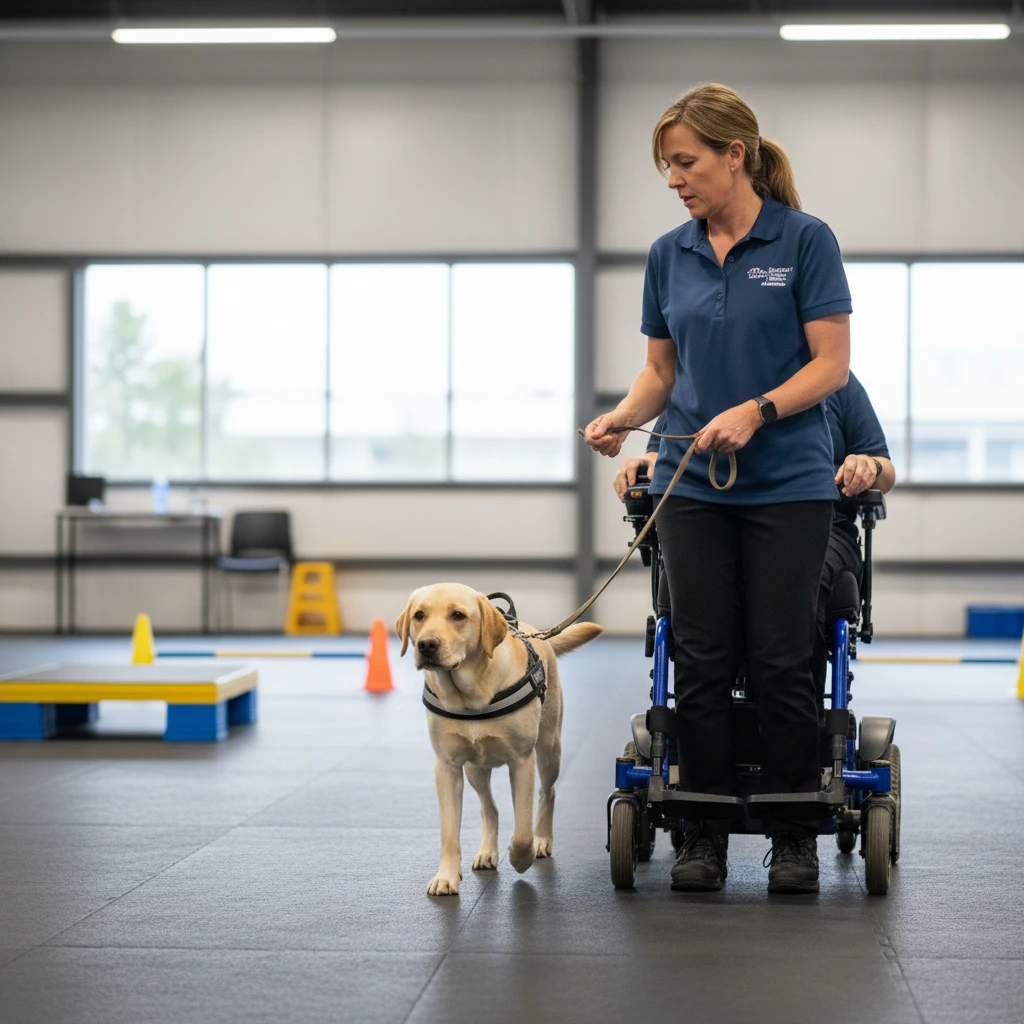
- Desensitization to Medical Equipment: Dogs must remain neutral around wheelchairs, crutches, dropping metal trays, and strange scents (antiseptic, etc.).
- Impulse Control: The ability to ignore food on the floor and remain calm when approached excitedly by children or patients with limited motor control.
- Loose Leash Walking: A therapy dog must never pull, regardless of distractions.
Temperament vs. Obedience
A major differentiator in curriculum is the balance between obedience and temperament. Schools like TDNZ place a heavy emphasis on temperament assessment. A dog can have perfect obedience (sit, stay, heel) but fail as a therapy dog if they are aloof or easily stressed. The best schools incorporate “resilience training”—teaching the dog to recover quickly from startling events.
Regional Availability: Auckland, Wellington, Christchurch
Access to hands-on training varies significantly across the North and South Islands. While online courses are growing, physical attendance is often required for final assessments.
Auckland
Auckland holds the highest concentration of private trainers offering therapy dog preparation. Providers here often have access to simulated environments (mock classrooms or hospital rooms) which provides superior proofing for the dogs. Therapy Dogs New Zealand has a strong foothold here with regular assessment days.
Wellington
The capital sees a strong presence of Canine Friends Pet Therapy. Training in Wellington often leverages the urban environment to test dogs in high-traffic areas. Several private trainers in the Hutt Valley specialize in the Canine Good Citizen Bronze/Silver/Gold awards, which act as excellent stepping stones.
Christchurch and the South Island
Post-earthquake, the demand for therapy dogs in Christchurch spiked, leading to a robust community of support. Training availability has improved, with local dog clubs offering specific “manners” classes tailored toward future therapy work. However, for specialized certification from national bodies, handlers may occasionally need to travel or wait for visiting assessors.
Success Rates and Reviews
When analyzing reviews for “best therapy dog training schools NZ,” it is vital to read between the lines. Commercial intent requires due diligence. Here is what current data and user feedback suggest regarding success rates.
Interpreting Pass Rates
A school with a 100% pass rate should be viewed with skepticism. Therapy work is demanding, and not every dog is suitable. The most reputable organizations have a pass rate closer to 60-70% for the initial assessment. This indicates high standards.
Positive Review Indicators:
- Post-Certification Support: Look for reviews that mention ongoing support. Does the school help if the dog regresses?
- Real-World Scenarios: The best reviews mention that training took place in public, not just a quiet hall.
- Honesty: High-quality trainers will tell you early if your dog is not suitable, saving you money in the long run.

Cost Structures and Certification Validity
The investment in therapy dog training involves both financial costs and time. In New Zealand, the pricing models vary between the “Volunteer” model and the “Professional” model.
The Volunteer Model
Organizations like Canine Friends Pet Therapy usually charge a nominal annual membership fee (often under $50 NZD) and a small fee for the assessment. The cost here is low because the handler is volunteering their time to the community.
The Professional Model
If you are a counselor or teacher engaging a private trainer to prepare your dog for TDNZ certification, costs can range from $500 to $2,000 NZD depending on the intensity of the course. This often includes:
- 6-8 weeks of group classes.
- Private one-on-one troubleshooting sessions.
- The assessment fee.
- Uniforms/Vests (upon passing).
Therapy Dogs vs. Disability Assist Dogs in NZ
It is imperative to clarify the legal standing of the dogs graduating from these schools. In New Zealand, there is a distinct legal difference between a Therapy Dog and a Disability Assist Dog.
Disability Assist Dogs: Protected under the Human Rights Act 1993 and the Dog Control Act 1996. They have public access rights to supermarkets, planes, and restaurants. Organizations like Assistance Dogs NZ train these animals.
Therapy Dogs: Do not have public access rights. They are allowed into specific facilities (schools, hospitals) only by invitation and arrangement. The training schools listed in this article focus on Therapy Dogs. Ensure you are enrolling in the correct stream for your needs. A therapy dog certification does not grant you the right to take your dog into a shopping mall or on a flight.

Final Verdict on Selecting a School
To select the best therapy dog training school in NZ, define your end user. If you are a professional wanting to use a dog as a clinical tool, Therapy Dogs New Zealand is your primary target. If you are a dog owner wanting to give back to the elderly or sick, Canine Friends Pet Therapy or St John are the premier choices. Ensure any private trainer you hire is preparing you specifically for the assessments of these recognized bodies.
How much does therapy dog training cost in NZ?
Costs vary significantly. Volunteer organizations like Canine Friends may only charge a small membership fee ($30-$50 NZD). Professional preparation courses through private trainers can range from $200 for basic manners to over $1,500 for comprehensive therapy-specific workshops.
Can any breed be a therapy dog in New Zealand?
Yes, any breed can technically be a therapy dog, provided they pass the temperament assessment. However, breeds known for gentle natures, such as Golden Retrievers, Labradors, and Poodles, are most common. Restricted breeds in NZ may face significant hurdles regarding insurance and liability.
What is the difference between a therapy dog and a service dog in NZ?
A service dog (Disability Assist Dog) is trained to perform tasks for a person with a disability and has legal public access rights. A therapy dog provides comfort to many people and does not have public access rights to places like supermarkets or cafes unless invited.
How long does it take to train a therapy dog?
It typically takes 1 to 2 years to fully train a therapy dog. Most organizations require the dog to be at least one year old before they can sit the final assessment to ensure they have reached emotional maturity.
Are therapy dogs allowed in NZ shops and restaurants?
No. Therapy dogs do not have the same legal access rights as Disability Assist Dogs. They are only allowed in dog-friendly businesses or facilities where they have been specifically invited for work purposes.
Does St John train therapy dogs in NZ?
St John does not typically train dogs from scratch; rather, they assess and accredit existing pet dogs for their Community Care program. Your dog must already have a high level of obedience and a calm temperament before applying for assessment.