
Back to school anxiety support dogs are specially trained therapy animals utilized to alleviate stress during educational transitions. By lowering cortisol levels and stimulating oxytocin production, these dogs provide non-judgmental emotional regulation, helping students overcome school refusal, separation anxiety, and social apprehension during the critical start-of-term period.
For many families and educators across New Zealand, February marks a significant shift in daily rhythm. As the long summer holidays conclude and Term 1 commences, the excitement of a new school year is often overshadowed by apprehension. This is where back to school anxiety support dogs play a pivotal role in modern educational wellbeing strategies.
Animal Assisted Therapy (AAT) has moved beyond a novelty to become a scientifically backed intervention for student mental health. In the context of the New Zealand school system, incorporating therapy dogs into the return-to-school strategy offers a tangible solution to the increasing rates of student anxiety and school avoidance.
February Focus: Navigating the Transition Period
The transition from the freedom of a Kiwi summer to the structured environment of the classroom is jarring for many students. The “February Focus” for many pastoral care teams is centered on mitigating the shock of this routine change. Back to school anxiety support dogs serve as a bridge between the comfort of home and the demands of the school environment.
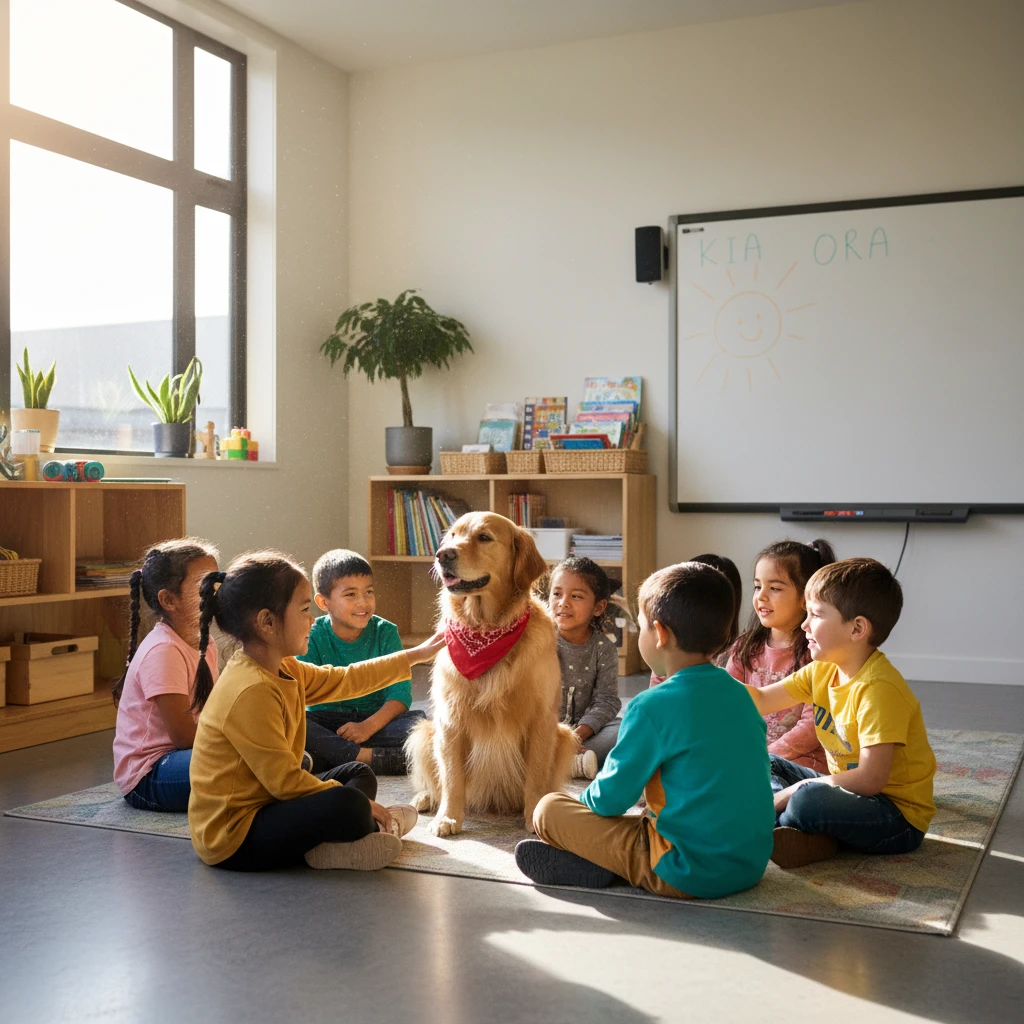
When a therapy dog is present during the first weeks of Term 1, the school environment immediately feels less hostile and more welcoming. The dog acts as a social lubricant and a focal point that is external to the student’s internal anxieties. Instead of walking into a classroom worrying about social hierarchy or academic pressure, the student’s attention is drawn to the animal.
Identifying the Signs of Transition Anxiety
Before implementing canine-assisted interventions, it is crucial to recognize what transition anxiety looks like. It often manifests as:
- Physical somatic complaints: Stomach aches or headaches in the morning.
- Behavioral regression: Outbursts or withdrawal in students who are usually regulated.
- Separation distress: Difficulty leaving caregivers at the school gate.
Deploying support dogs during drop-off times or morning assemblies directly addresses these symptoms by providing an immediate source of comfort and a reason to enter the school grounds.
How Can Support Dogs Help with School Refusal?
School refusal is distinct from truancy; it is driven by severe emotional distress rather than defiance. Traditional disciplinary methods are often ineffective and can exacerbate the trauma. Back to school anxiety support dogs offer a therapeutic alternative that focuses on positive reinforcement.
The presence of a therapy dog changes the neurological association a child has with school. Instead of the “fight or flight” response triggered by the school gate, the anticipation of seeing a therapy dog can trigger the “seek and reward” system in the brain.
Structured Interventions for High-Anxiety Students
For students engaging in school refusal, a general visit may not be enough. We recommend structured, one-on-one or small group sessions:
- The “Meet and Greet” Incentive: The student agrees to attend school for a specific period (e.g., one hour) with the guarantee of spending 15 minutes grooming or walking the therapy dog.
- Non-Verbal Decompression: Students with high anxiety often suffer from “verbal overload.” Spending time with a dog requires no conversation, allowing the student’s nervous system to settle without the pressure to explain their feelings.
- Graduated Exposure: The dog accompanies the student to increasingly difficult areas of the school (e.g., from the counselor’s office to the library, and eventually to the classroom door).

The Science: How Dogs Reduce Anxiety
The effectiveness of back to school anxiety support dogs is grounded in biology. Interactions with friendly animals have been proven to lower cortisol (the stress hormone) and increase oxytocin (the bonding hormone). In a school setting, this biological regulation is essential for learning.
A stressed brain cannot learn. When a student is in a state of high anxiety, their prefrontal cortex—the area responsible for executive function and learning—goes offline. A therapy dog helps regulate the student’s physiology, bringing them back into the “window of tolerance” where learning can occur. This aligns closely with the Te Whare Tapa Whā model of health, specifically supporting Taha Hinengaro (mental and emotional wellbeing).
Settling New Entrants and Transition Years
The most acute anxiety is often found in “transition years”—New Entrants (5-year-olds), Year 7s (intermediate), and Year 9s (high school). These cohorts face an entirely new environment, new peer groups, and new expectations simultaneously.
New Entrants: The Separation Bridge
For 5-year-olds, the therapy dog acts as a transitional object. It is a warm, living creature that provides the physical comfort they might be missing from a parent. A “patting station” set up near the new entrant classrooms can significantly reduce the time it takes for children to settle in the morning.
Year 9 Integration
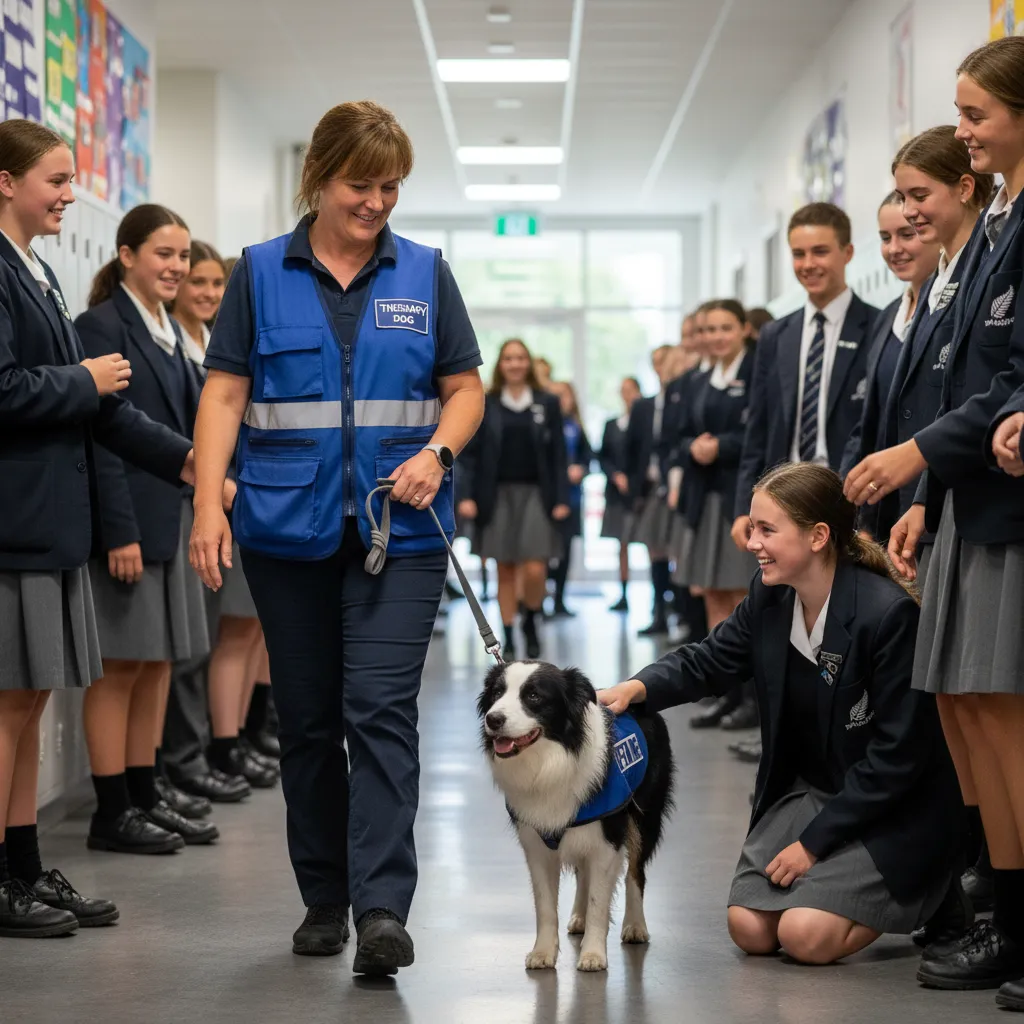
For high schoolers, anxiety is often social. A therapy dog breaks down social barriers. It gives students a neutral topic of conversation and a shared experience, facilitating peer bonding. In our NZ high school programs, we often see the most withdrawn students interacting with peers for the first time while gathered around a support dog.
Booking Start-of-Term Visits in NZ
As the demand for mental health support in schools rises, securing back to school anxiety support dogs for the start of Term 1 requires forward planning. Schools and private clients should prioritize booking these interventions well before the academic year begins.
Our Animal Assisted Therapy services are tailored to the specific needs of the educational institution. Whether you require a one-off assembly presentation to normalize anxiety or a recurring weekly program for a targeted group of at-risk students, professional handling is key.
What to Expect in a Session
When you book a professional therapy dog team, you are not just getting a dog; you are getting a clinical intervention. Our handlers are trained to:
- Assess risk and monitor dog body language to ensure safety.
- Facilitate interactions that meet specific therapeutic goals (e.g., confidence building, emotional regulation).
- Work alongside SENCOs (Special Educational Needs Coordinators) and school counselors.
- Adhere to strict hygiene and health and safety protocols required by the Ministry of Education guidelines.
Commercial Note: Due to the high volume of requests during February, we advise schools to lock in their schedules by December of the previous year. However, we maintain a waitlist for emergency intervention slots for acute cases of school refusal.
People Also Ask
Does animal therapy actually help with school anxiety?
Yes, studies consistently show that animal-assisted therapy significantly reduces physiological markers of stress, such as heart rate and cortisol, and improves self-reported anxiety levels in students, promoting better school attendance and engagement.
How much does a therapy dog visit cost in New Zealand?
Costs vary depending on the provider, duration, and frequency. Generally, a session can range from $150 to $300 NZD. Some schools utilize funding from the Ministry of Education’s Urgent Response Fund or other wellbeing grants to cover these costs.
Can I bring my own dog to school to help my anxious child?
Generally, no. Schools have strict health and safety policies. Therapy dogs undergo rigorous temperament testing and specific training to handle the unpredictable school environment. A pet dog, regardless of how friendly, does not have the insurance or certification required for school grounds.
What breeds are best for back to school anxiety support?
There is no single “best” breed, but Retrievers (Golden and Labrador), Poodles, and Cavaliers are popular due to their gentle temperaments. The individual dog’s temperament, training, and ability to remain calm in noisy environments are more important than the breed.
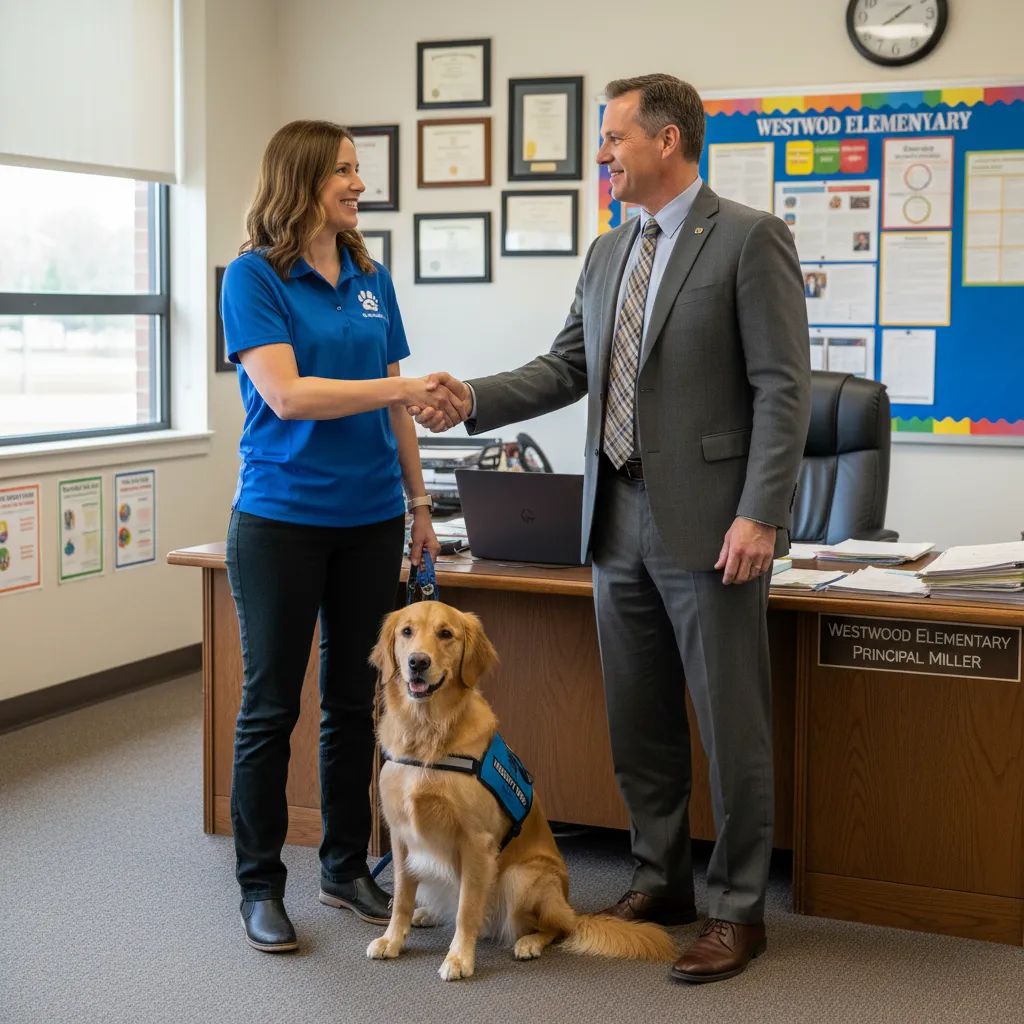
How do I convince my school principal to allow a therapy dog?
Present a proposal focusing on the evidence-based benefits for student wellbeing, attendance, and learning outcomes. Offer to use a certified provider with public liability insurance to mitigate risk concerns. Many principals are open to it when safety and educational value are demonstrated.
Is animal-assisted therapy covered by funding in NZ?
While not universally covered by the public health system, funding can often be accessed through specific channels such as ACC (if related to an injury/trauma), Individualized Funding (IF) for disability support, or school-based mental health budgets.