
Therapy dog training in New Zealand involves specialized certification pathways designed to validate a dog’s temperament and obedience for animal-assisted interventions. Training options range from volunteer assessment preparation for organizations like St John and Canine Friends to professional Animal Assisted Therapy (AAT) diplomas for clinicians, focusing on advanced impulse control, desensitization to medical equipment, and clinical safety protocols.
The demand for qualified therapy dog teams in New Zealand is at an all-time high. From supporting tamariki in schools to providing comfort in rest homes and assisting clinicians in private practice, the role of a therapy dog is both rigorous and rewarding. However, navigating the landscape of therapy dog training NZ can be complex due to the distinction between volunteer visiting dogs and professional therapy partners.

Pathways to Becoming a Therapy Dog Team
In New Zealand, the route you take depends entirely on your end goal. Are you a dog owner wishing to volunteer your time, or are you a health/educational professional wishing to integrate a dog into your practice? Understanding this distinction is the first step in selecting the right training module.
1. The Volunteer Visiting Pathway
This is the most common route for dog owners. Organizations such as St John (Therapy Pets), Canine Friends Pet Therapy, and Therapy Dogs New Zealand operate on a volunteer model. The training focus here is on temperament and basic obedience.
These dogs visit hospitals, rest homes, and schools to provide comfort. They do not require complex clinical training, but they must be bombproof in public settings. Training for this pathway usually involves:
- Completing a Canine Good Citizen (CGC) course (often a prerequisite).
- Specific desensitization training (loud noises, rough handling, medical equipment).
- Passing an official assessment by the specific organization.
2. The Professional Animal-Assisted Therapy (AAT) Pathway
This pathway is for professionals—psychologists, counsellors, occupational therapists, and teachers. The training here is significantly more rigorous and often requires the handler to hold a relevant tertiary qualification.
In this context, the dog is not just a visitor but an active participant in a therapeutic plan. Training involves:
- Advanced obedience and task training.
- Clinical hygiene and infection control.
- Risk management and legal liability.
- Animal welfare within a working environment.
Prerequisites for Enrollment
Before paying for a course or booking an assessment, your dog must meet specific baseline requirements. Therapy work is not suitable for every dog, regardless of how much the owner loves them. It requires a specific psychological profile.
Age and Health Requirements
Most reputable training providers in New Zealand require the dog to be at least 12 to 18 months old before final certification. This ensures the dog has passed the puppy adolescence phase and their temperament is stable. Additionally, a full veterinary clearance is mandatory, checking for:
- Up-to-date vaccinations (core NZ vaccines + Kennel Cough).
- Regular flea and worming treatment.
- Absence of chronic pain (e.g., arthritis) which could make handling uncomfortable.
- Zoonotic disease screening.
Temperament Assessment
You cannot “train” a dog to enjoy therapy work; they must inherently enjoy social contact. Trainers will look for:
- High Threshold for Stress: The dog recovers quickly from sudden noises or surprises.
- Low Prey Drive: The dog is not distracted by cats, birds, or other animals.
- Affiliative Nature: The dog actively seeks human connection without being boisterous.
- Lack of Resource Guarding: The dog must not growl when toys or food are taken away.
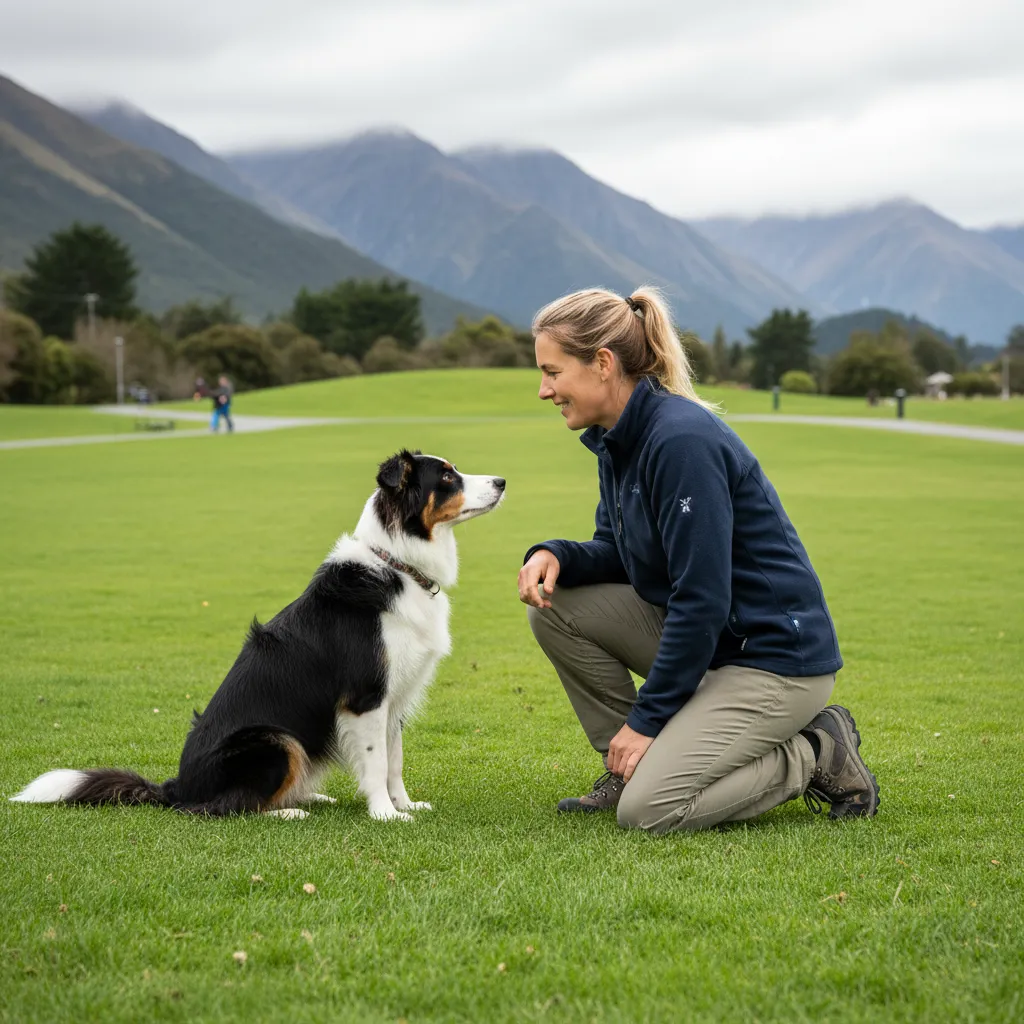
Professional Courses vs. Volunteer Assessments
For those seeking commercial training services, understanding the difference between a “course” and an “assessment” is vital for budgeting and time management.
Professional Certification Courses
These are comprehensive educational programs, often running for 6 to 12 months. Providers in New Zealand (often aligned with international bodies like IAHAIO) offer structured learning. These courses are an investment and are designed for career enhancement.
What you pay for:
- Mentorship: One-on-one coaching with animal behaviourists.
- Curriculum: Modules on canine body language, ethics, and intervention strategies.
- Insurance Eligibility: Many professional indemnity insurers require a certificate from a recognized provider to cover the dog’s work.
Volunteer Assessments
Volunteer organizations generally do not provide the “training” themselves; they provide the assessment. They expect you to have trained the dog yourself or hired a private trainer to reach the required standard before you apply.
If you are aiming for this route, your commercial interaction will likely be with local dog clubs or private trainers who offer “Therapy Dog Prep” classes or “Canine Good Citizen” classes.
The Curriculum: What Does Training Cover?
Whether you are self-training for an assessment or enrolled in a diploma course, the core skills required for therapy dog training in NZ remain consistent. The goal is safety and predictability.
1. Advanced Impulse Control
A therapy dog must have an impeccable “Leave It” command. In a hospital, a dropped pill could be fatal to a dog. In a school, a child’s lunch must be ignored. Training focuses on ignoring high-value items until released.
2. Desensitization to Medical Equipment
Dogs are naturally wary of strange objects. Training involves positive reinforcement conditioning to:
- Wheelchairs and electric scooters.
- Crutches and walking frames (the sound of metal hitting the floor).
- Oxygen tanks and IV poles.
- Unusual gaits or erratic movements from patients.
3. Polite Greetings
Jumping up is an automatic fail. Therapy dogs must keep “four on the floor.” Training emphasizes sitting or standing calmly for petting, even when the person petting them is clumsy or loud. This includes “heavy handling” exercises where the dog is gently tugged or hugged to ensure they do not react defensively.

Cost of Training in New Zealand
Investing in therapy dog training varies significantly based on the level of certification required. Below is a breakdown of estimated costs in the New Zealand market for 2024.
Initial Foundation Training
Before specific therapy training, the dog needs basic manners.
- Puppy School: $150 – $250 (6-8 weeks)
- Adolescent/Grade 1 Obedience: $180 – $300
- Canine Good Citizen (CGC) Course & Assessment: $150 – $250
Specialized Therapy Training
Private Trainer Prep (Hourly):
If you are hiring a private behaviourist to prep your dog for a St John assessment, expect to pay between $120 and $200 per hour. Most dogs require 3-5 sessions to polish their skills if they already have basic obedience.
Professional Certification Courses:
For clinicians seeking a Diploma or Certificate in Animal Assisted Interventions:
- Short Courses / Workshops: $500 – $1,200
- Full Certification Programs: $2,500 – $5,000+
Note: Professional courses often include the cost of assessment, manuals, and ongoing support.
Ongoing Costs
Once certified, there are recurring costs to maintain status:
- Annual Registration/Membership Fees: $50 – $150
- Annual Vet Health Check: $80 – $120
- Uniform/Vest/ID: $50 – $100 (often one-off)
Certification, Accreditation, and Insurance
In New Zealand, the term “Therapy Dog” is not protected by law in the same way “Disability Assist Dog” is. This means there is no single government body that certifies therapy dogs. However, due diligence is critical for liability.
Why Accreditation Matters
If you are a professional (e.g., a school counsellor), your employer will require proof of competence. Using a generic online certificate is rarely sufficient for NZ schools or DHBs (District Health Boards). You should look for trainers who utilize the Canine Good Citizen (CGC) framework or are affiliated with international bodies.
Insurance Implications
Standard pet insurance does not cover liability if your dog bites someone while “working.” If you are using your dog in a professional capacity, you must inform your business liability insurer. They will almost certainly ask for proof of training from a reputable NZ provider before extending coverage.

Frequently Asked Questions
Can my own dog be a therapy dog in NZ?
Yes, any breed can theoretically be a therapy dog in New Zealand, provided they pass the temperament and health assessments. There are no breed restrictions, but the dog must be calm, controllable, and eager to interact with strangers. Aggressive or fearful dogs are not eligible.
How much does a therapy dog cost in NZ?
The cost varies. If you are training your own pet for volunteer work, costs are low (approx. $500 for obedience classes and assessments). If you are purchasing a fully trained therapy dog from a provider, costs can exceed $20,000, though this is rare in NZ. Most people train their existing pets.
What is the difference between a service dog and a therapy dog in NZ?
This is a critical legal distinction. A Disability Assist Dog (Service Dog) is trained to perform tasks for a disabled handler and has legal public access rights (shops, planes, cafes) under the Dog Control Act 1996. A Therapy Dog supports others and does NOT have public access rights; they can only go where invited (e.g., schools, hospitals).
Do therapy dogs need to be neutered?
Most reputable organizations in NZ require therapy dogs to be desexed. This reduces hormonal behaviors (marking, mounting, aggression) that are unacceptable in clinical or educational environments. Exceptions are rarely made and usually only for professional breeding stock with impeccable temperament.
Can I take my therapy dog into shops in NZ?
No. Therapy dogs do not have the same legal privileges as Guide Dogs or Mobility Dogs. You cannot take a therapy dog into supermarkets, restaurants, or shopping malls unless the business owner explicitly grants you permission. They are considered pets when not actively working in their designated facility.
How long does therapy dog training take?
From puppyhood to full certification, the process typically takes 1.5 to 2 years. The dog needs time to mature. If starting with an adult dog who already has basic obedience, specific therapy prep training can take 3 to 6 months depending on the dog’s aptitude and the handler’s dedication.