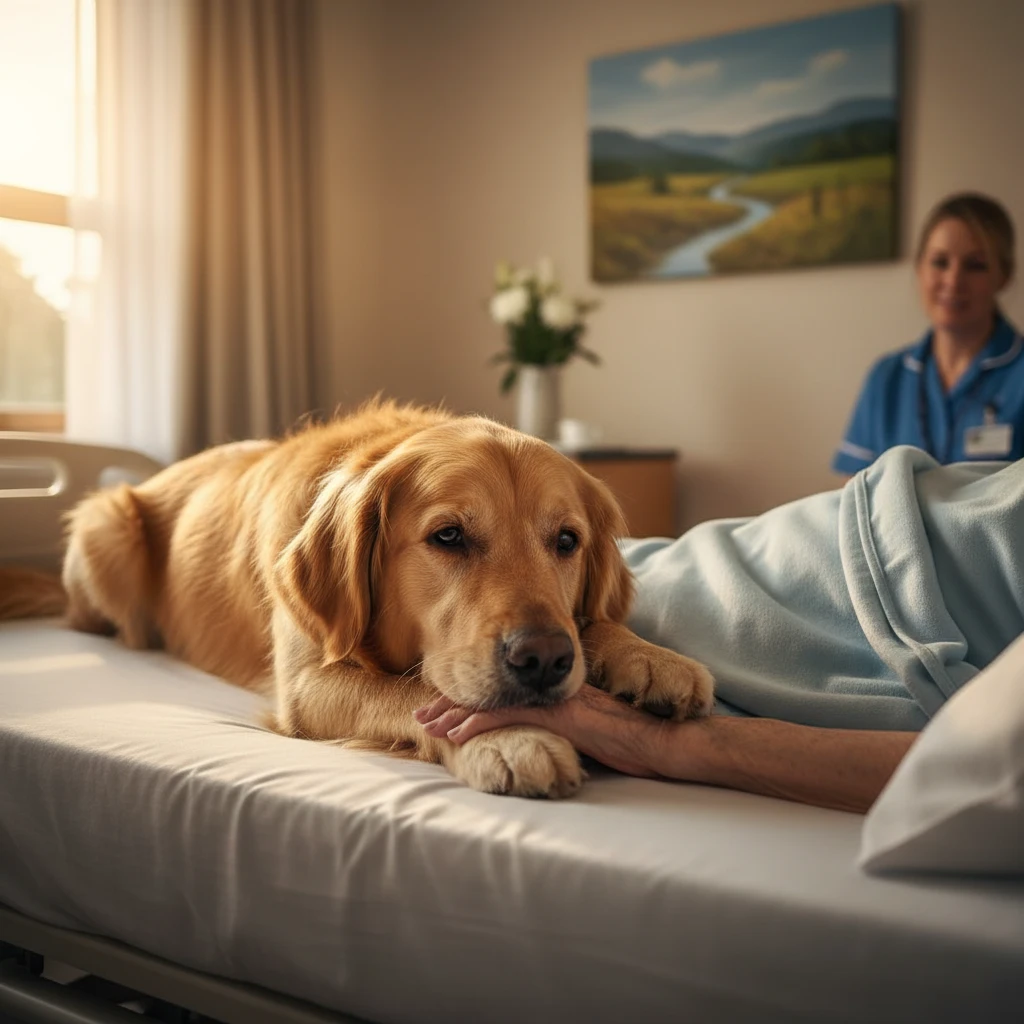
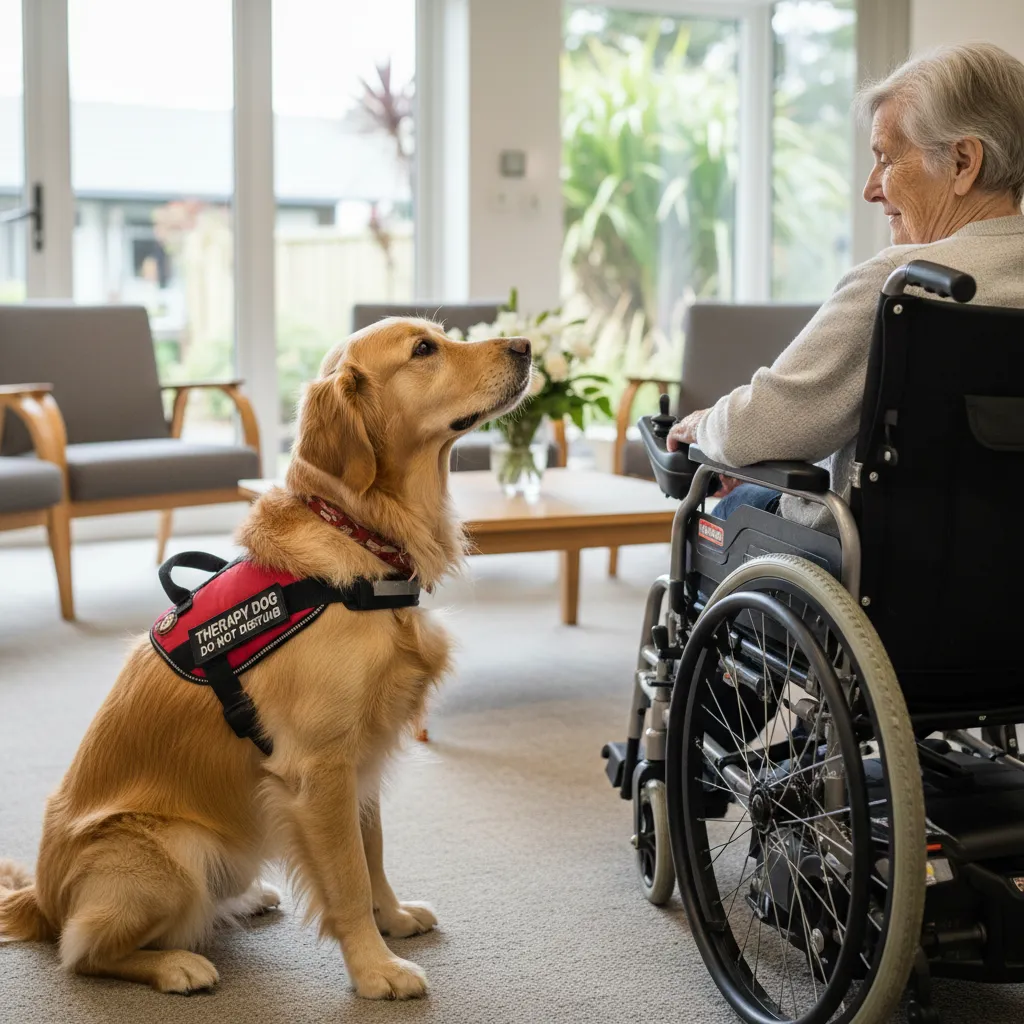
Staff training for therapy dog visits is a comprehensive educational framework designed to prepare healthcare teams for safe animal-assisted interventions. It encompasses instruction on canine body language, infection control protocols, emergency response procedures, and the clinical integration of animals into patient care plans to ensure safety and therapeutic efficacy.
The Foundation of Safe Animal-Assisted Therapy
Implementing a visiting therapy dog program requires more than simply inviting a handler and their canine into a facility. For New Zealand healthcare providers, aged care facilities, and educational institutions, the success of these programs hinges on rigorous staff training. Without a team that is educated on the logistics and safety parameters of animal visits, the therapeutic benefits can be overshadowed by preventable risks.
Under the Health and Safety at Work Act 2015, facility managers have a duty of care to eliminate or minimize risks to workers and patients. Staff training for therapy dog visits acts as a primary control measure. It ensures that every interaction is supervised by knowledgeable professionals who can facilitate engagement while maintaining a sterile and safe environment. This training transforms a passive visit into an active, goal-oriented therapeutic session.

What Should Staff Know About Dog Body Language?
One of the most critical components of staff training for therapy dog visits is the ability to read canine body language. While therapy dogs are selected for their calm temperaments, they are sentient beings that can experience stress, fatigue, or discomfort. Staff members act as the second line of defense (after the handler) in recognizing when a dog needs a break.
Recognizing Signs of Stress in Therapy Dogs
Healthcare staff must be trained to identify subtle “calming signals” that indicate a dog is becoming overwhelmed. If a staff member notices these signs, they must know how to intervene politely to end the interaction or give the dog space. Key indicators include:
- Whale Eye: Showing the whites of the eyes in a crescent shape.
- Lip Licking: Quick, repetitive flicking of the tongue over the nose when no food is present.
- Yawning: An exaggerated yawn when the dog is not tired, often used to release tension.
- Avoidance Behaviors: Turning the head away, hiding behind the handler, or refusing to approach a patient.
Understanding The ‘Consent Test’
Training should include the concept of the “consent test.” Staff should be taught to encourage patients to pet the dog for three seconds and then stop. If the dog leans in or nudges for more, the interaction is consensual. If the dog moves away or remains passive, the interaction should end. This empowers staff to advocate for the animal’s welfare, which in turn models empathy for patients and residents.
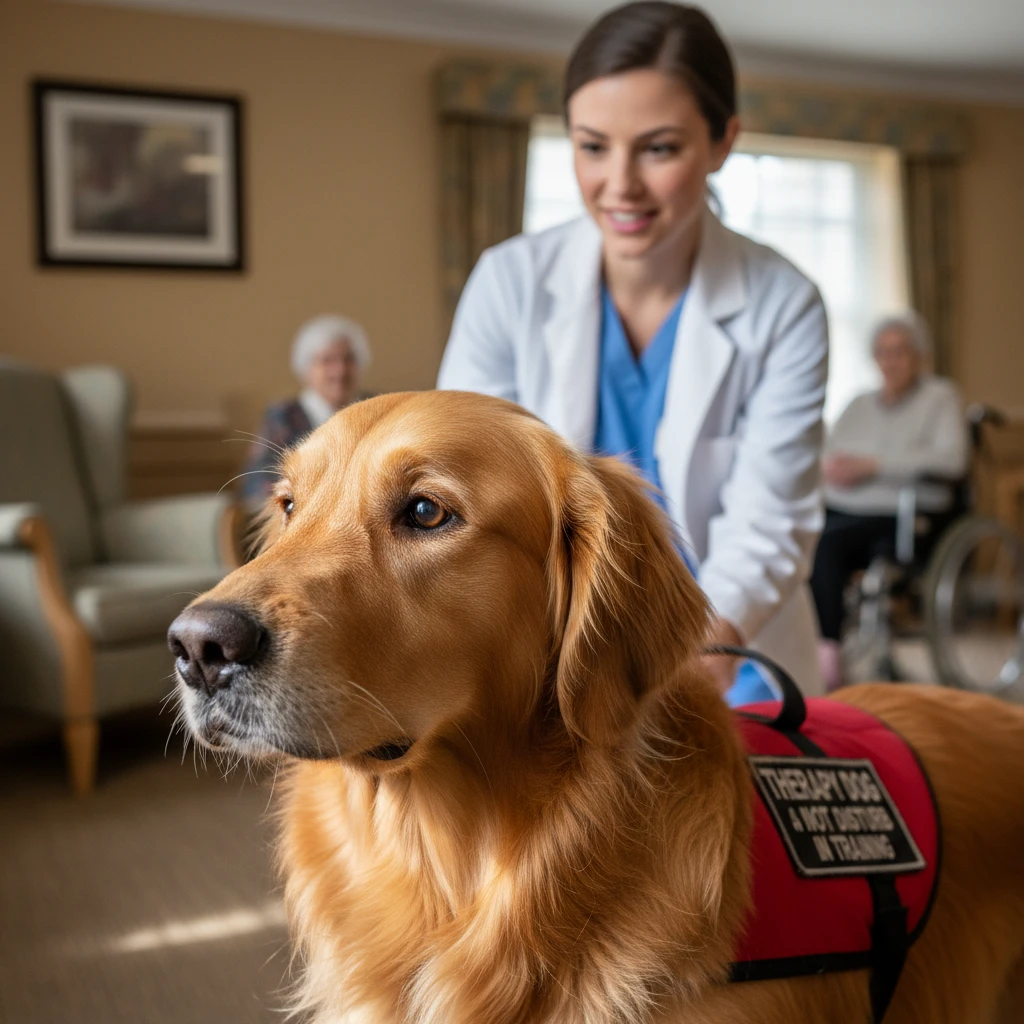
How to Handle Animal-Related Emergencies?
Even with the most docile animals and experienced handlers, accidents can happen. Staff training for therapy dog visits must cover specific emergency response protocols to ensure a swift and coordinated reaction to any incident.
Protocol for Nips or Bites
Although rare with certified therapy dogs, staff must know the procedure for a bite incident. The training should cover:
- Immediate Separation: How to safely separate the animal from the person without escalating the situation.
- Medical Attention: Immediate wound care protocols, including washing the area and assessing the need for tetanus boosters or antibiotics.
- Reporting: Completion of a detailed incident report, including the dog’s registration details, handler information, and witness statements.
- Notification: Informing the certifying body (e.g., St John, Therapy Dogs NZ) immediately, as this usually triggers a suspension and review of the team.
Sanitation and Infection Control
In a clinical environment, biological hazards are a concern. If a dog vomits, urinates, or defecates within the facility, staff must know the specific cleaning protocols. This usually involves:
- Using specific enzymatic cleaners that are safe for animals but hospital-grade for disinfection.
- Cordoning off the area immediately.
- Disposing of waste in biohazard containers if necessary.
- Ensuring hand hygiene is enforced for all patients who touched the animal prior to the incident.
How to Integrate Dog Visits into Care Plans?
To move from “petting time” to “animal-assisted therapy,” staff must be trained on integrating visits into individual care plans. This section of training is vital for Occupational Therapists, Recreational Therapists, and Registered Nurses.
Setting SMART Goals
Staff should learn how to write Specific, Measurable, Achievable, Relevant, and Time-bound goals involving the dog. Examples include:
- Physical Therapy: “Patient will brush the dog for 5 minutes to improve upper limb range of motion.”
- Cognitive Therapy: “Patient will recall the dog’s name and breed to practice short-term memory recall.”
- Social Engagement: “Resident will verbalize three commands to the dog to encourage vocal projection and assertiveness.”
Documentation and Review
Training must cover how to document these interactions in clinical notes. Staff need to record the duration of the visit, the patient’s mood before and after, and the specific physical or cognitive outcomes achieved. This data is crucial for justifying the ongoing cost and logistics of the therapy program.

Managing Staff Allergies and Fears
An often-overlooked aspect of logistics is the comfort of the staff themselves. Not all healthcare workers are comfortable around dogs, and some may have severe allergies. Effective staff training for therapy dog visits includes management strategies for these human resource issues.
Addressing Cynophobia (Fear of Dogs)
Management must create a culture where staff feel safe admitting a fear of dogs without judgment. Training should include:
- Zoning Protocols: Establishing “dog-free zones” (e.g., medication rooms, staff kitchens) where staff can retreat.
- Communication Signals: A system where a staff member can signal they are uncomfortable, allowing a colleague to take over the supervision of the visit.
- Desensitization: Optional educational sessions for staff who wish to overcome their fears in a controlled environment.
Allergy Management Strategies
To accommodate staff with allergies, training must cover the logistical flow of the visit. This includes:
- Pathways: Predetermined routes the dog will take to minimize dander spread in common areas.
- Grooming Standards: Ensuring handlers understand that dogs must be bathed within 24 hours of a visit to reduce allergens.
- HVAC Considerations: Understanding how air conditioning systems might circulate allergens and seating allergic staff accordingly.
Logistics and Hygiene Standards in NZ Facilities
The final pillar of staff training revolves around the operational logistics that keep the facility running smoothly during a visit. New Zealand has strict hygiene standards for healthcare facilities, and animal visits must adhere to these.
Entry and Exit Protocols
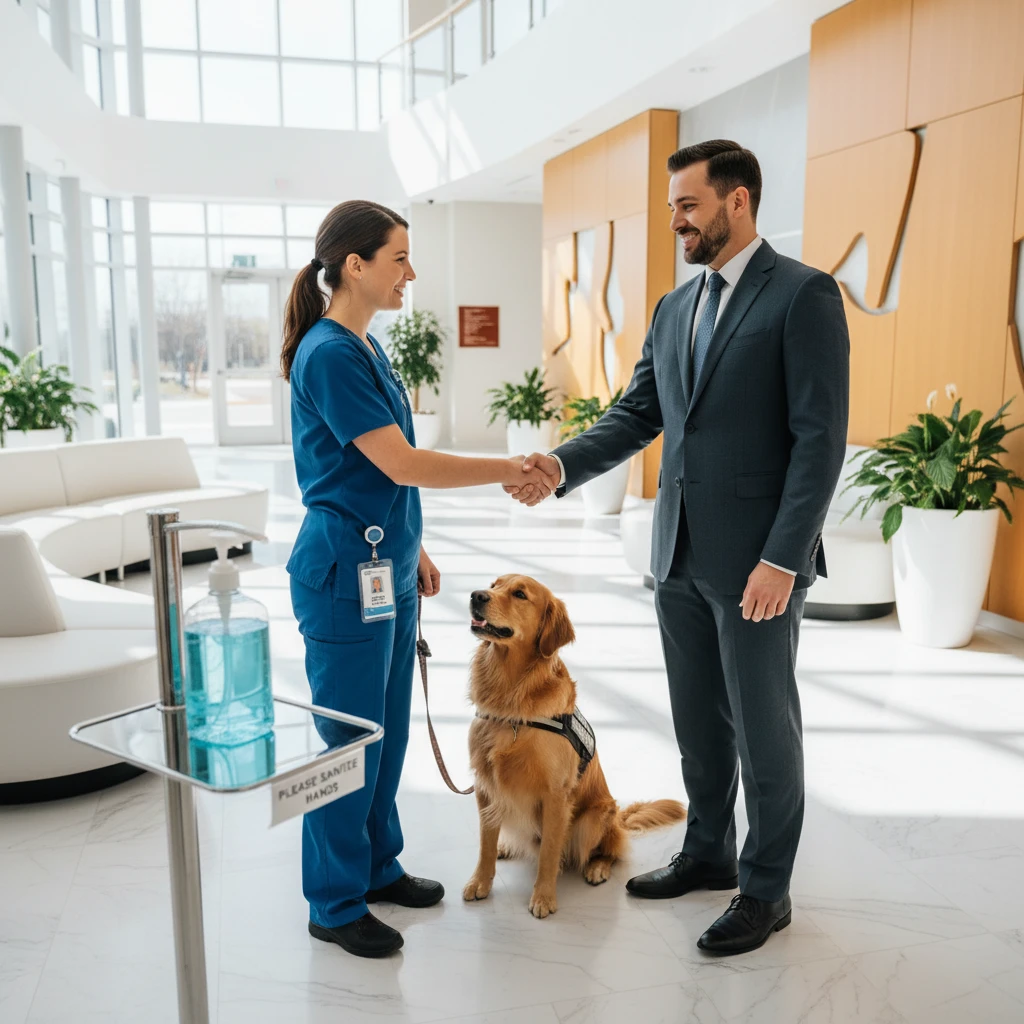
Staff must be trained on the physical logistics of the dog’s arrival. This includes checking that the handler has their ID badge visible, verifying the dog is on a short lead (not a retractable one), and ensuring the dog does not interact with other service animals or visitors in the lobby unless appropriate.
Hand Hygiene Compliance
The most effective way to prevent zoonotic disease transmission is hand hygiene. Staff training should emphasize:
- Offering hand sanitizer to every patient before and after touching the dog.
- Ensuring the handler sanitizes their hands between rooms.
- Monitoring patients with compromised immune systems to ensure they do not touch their face or mouth during the interaction.
Conclusion
Staff training for therapy dog visits is an investment in safety, compliance, and clinical excellence. By educating caregivers on body language, emergency protocols, and care plan integration, facilities can unlock the full potential of animal-assisted therapy. A well-trained staff ensures that every tail wag translates into a meaningful, safe, and therapeutic moment for those in care.
How often should staff receive training for therapy dog visits?
Staff should receive initial training during their onboarding process and attend refresher courses annually. Additionally, brief “toolbox talks” or updates should occur whenever policies change or a new therapy dog team is introduced to the facility.
What are the key signs of a stressed therapy dog?
Key signs include whale eye (showing whites of eyes), lip licking, excessive yawning, panting when not hot, turning away from patients, and tucking the tail. Staff should intervene if these signs appear to give the dog a break.
Can staff members bring their own dogs for therapy visits?
Generally, no. A personal pet is distinct from a certified therapy dog. Therapy dogs undergo rigorous temperament testing and insurance validation. Staff bringing untrained pets creates significant liability and safety risks unless the dog has been officially certified by a recognized organization.
Who is liable if a therapy dog causes an injury?
Liability is complex and depends on the specific circumstances. Typically, the certified handler holds public liability insurance through their certifying organization. However, the facility may share liability if they failed to provide a safe environment or if staff negligence contributed to the incident.
How do you document therapy dog interactions in NZ healthcare?
Interactions should be documented in the patient’s care notes. Entries should include the duration of the visit, the specific activity performed (e.g., grooming, walking), the patient’s behavioral response, and progress toward specific therapeutic goals.
What vaccinations do therapy dogs need in New Zealand?
Therapy dogs in NZ must be fully vaccinated (DHPP and Leptospirosis) and have up-to-date flea and worm treatments. Proof of these vaccinations is usually required by the facility management before the first visit and must be updated annually.