
In New Zealand, emotional support dogs do not hold the same legal status as certified Disability Assist Dogs under the Human Rights Act 1993. Consequently, landlords are not legally obligated to accept emotional support animals unless specified in the tenancy agreement, though they cannot unreasonably refuse permission if a tenancy agreement already allows for pets with consent.
What is the difference between Disability Assist Dogs and Emotional Support Dogs in NZ?
Navigating the rental market in New Zealand can be challenging, particularly when a canine companion is involved. To understand your rights, it is critical to distinguish between the two primary categories of support animals recognised—or not recognised—under New Zealand law. The terminology used can determine whether a landlord has the right to decline your tenancy application.
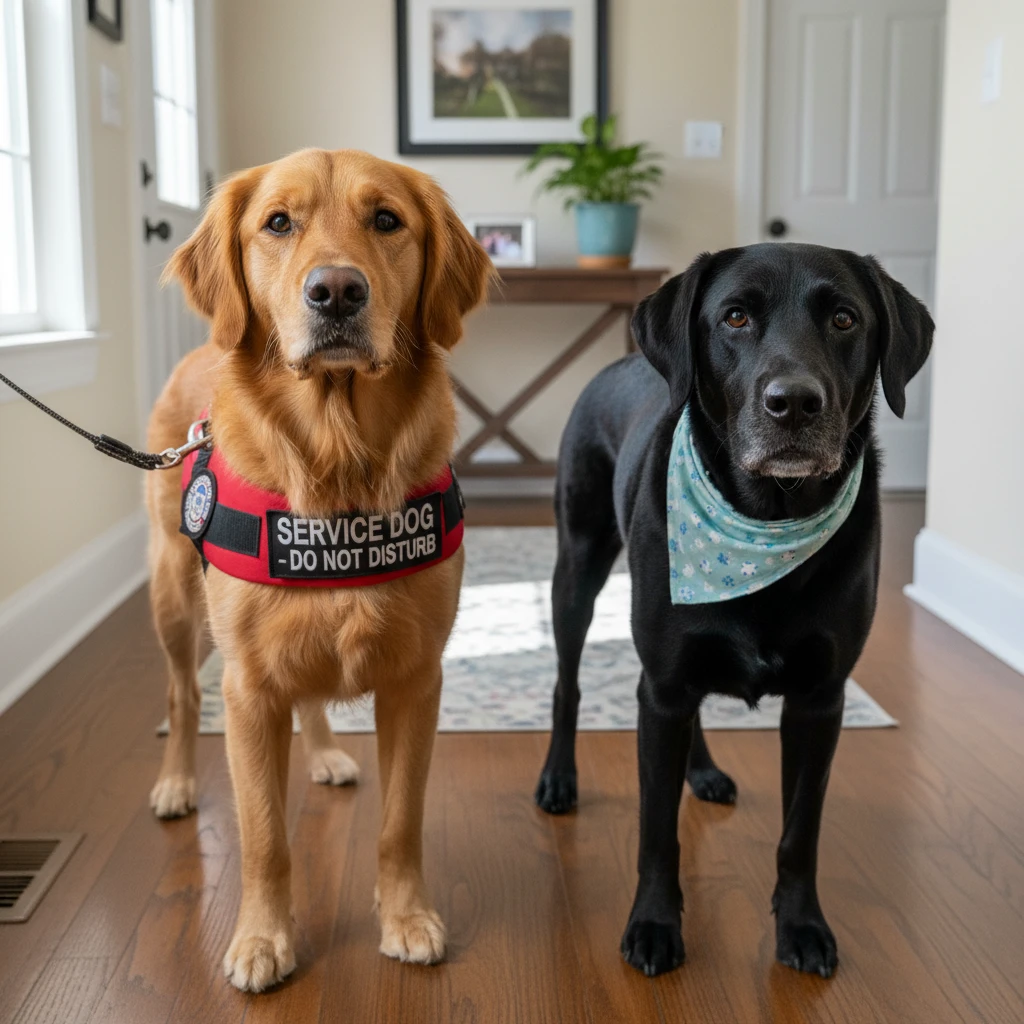
Disability Assist Dogs
Under the Dog Control Act 1996 and the Human Rights Act 1993, Disability Assist Dogs are granted specific legal protections. These are dogs that have been certified by one of the organisations listed in Schedule 5 of the Dog Control Act (such as Blind Low Vision NZ, Assistance Dogs NZ, or Hearing Dogs for Deaf People NZ).
Key Rights:
- Right of Access: Landlords and property managers cannot refuse a tenancy application or decline entry solely because the tenant has a Disability Assist Dog.
- Discrimination: Refusing a rental property to someone with a certified Disability Assist Dog constitutes discrimination under the Human Rights Act.
- No Pet Clauses: A standard “no pets” clause in a tenancy agreement does not apply to certified Disability Assist Dogs.
Emotional Support and Therapy Dogs
Emotional Support Animals (ESAs) and Therapy Dogs fall into a different category. While they provide immense mental health benefits, companionship, and therapeutic support to their owners, they are not currently recognised as Disability Assist Dogs under NZ legislation.
This means that owners of emotional support dogs do not automatically have the right to bring their dog into a rental property. The dog is legally viewed as a “pet,” and the standard rules regarding pets in rental properties apply. However, the landscape is shifting slightly regarding what constitutes “reasonable” grounds for refusal, which we will explore in the context of Tenancy Tribunal rulings.
How do NZ Rental Laws view Emotional Support Dogs?
The Residential Tenancies Act 1986 (RTA) governs the relationship between landlords and tenants. Historically, landlords had broad discretion to ban pets entirely. However, recent amendments and evolving interpretations have nuanced this stance.
Currently, the law does not explicitly ban “no pets” clauses, but it does require landlords to act reasonably. If a tenancy agreement states that pets are allowed “with the landlord’s consent,” the landlord cannot withhold that consent unreasonably.
The “Reasonable” Test
If you are already in a tenancy that allows pets with consent, or if you are negotiating a new lease, the landlord must have a valid reason to say no to your emotional support dog. Valid reasons might include:
- The property is not fully fenced or suitable for a dog.
- The body corporate rules (in an apartment complex) strictly prohibit animals.
- The dog is a breed known to be aggressive or is listed as a menacing dog.
- The property has specific heritage features that could be damaged.
Invalid reasons (which could be challenged) might include:
- A blanket dislike of dogs without considering the specific animal.
- Unfounded fears about damage that can be mitigated by bond or insurance.
- General noise concerns without evidence that the specific dog is noisy.
What are the recent Tenancy Tribunal rulings on pets?
The Tenancy Tribunal provides a mechanism for resolving disputes between landlords and tenants. Reviewing past rulings gives us insight into how Adjudicators view emotional support dogs and pets in general.

There is a growing trend in Tribunal decisions that favours the tenant when a landlord’s refusal is deemed arbitrary. For example, if a tenant requests to bring in an emotional support dog and provides evidence of the dog’s good behaviour and the owner’s need for the animal, the Tribunal often looks for concrete evidence from the landlord as to why the property is unsuitable.
Case Study Example (Generalised):
In cases where a tenant provided a letter from a GP or psychologist stating the dog is necessary for mental health, Adjudicators have sometimes weighed this heavily against a landlord’s general reluctance. However, because ESAs are not Disability Assist Dogs, the Tribunal cannot force a landlord to accept the dog if the tenancy agreement explicitly states “No Pets” from the outset. The leverage usually exists when the agreement is silent on pets or says “with consent.”
It is vital to note that damages are a major factor. Tenants are fully liable for any damage their therapy dog causes. Tribunal rulings consistently uphold that tenants must pay for professional carpet cleaning or repairs to scratched doors upon vacating.
How should you ask a landlord for permission?
Since the law doesn’t automatically protect emotional support dogs, your approach to the landlord is the single most important factor in securing a home. Transparency and professionalism are your best tools.
1. Be Upfront but Strategic
Do not hide the dog. Finding out about an unauthorised dog is a common reason for 14-day notices to remedy or termination of tenancy. Instead, introduce the topic early but after you have established yourself as a desirable tenant candidate.
2. Offer Additional Protections
To alleviate a landlord’s anxiety about their investment, offer specific clauses to be added to the tenancy agreement. This shows you are responsible and understand their perspective.
- Professional Cleaning Clause: Offer to have the carpets professionally steam cleaned and fumigated for fleas upon vacating.
- Damage Liability: Reiterate in writing that you accept full liability for any damage caused by the dog.
- Inspections: Offer to allow an initial inspection 4-6 weeks after moving in to prove the property is being maintained.

How to create a Pet CV for your application
In a competitive rental market, a “Pet CV” can be the deciding factor. This document serves to humanise your animal and provide proof of their suitability for a rental property. It shifts the landlord’s mental image from “potential mess” to “well-behaved companion.”
Components of a Strong Pet CV
Basic Information
Include the dog’s name, age, breed, and size. Desexing status is crucial—landlords prefer desexed animals as they are generally calmer and less prone to marking territory.
Health and Registration
Provide proof that the dog is currently registered with the local council (e.g., Auckland Council, Wellington City Council). Attach copies of vaccination records to show the animal is healthy and flea-free.
Training and Temperament
This is the most critical section for a therapy or support dog.
Certificates: If your dog has completed the Canine Good Citizen test or any obedience training, include the certificates.
Support Role: Briefly explain the dog’s role as a support animal (without oversharing private medical details). A simple statement like, “Bella provides essential emotional support and is trained to remain calm and quiet indoors,” works well.
References
Just like you need references, so does your dog. Ask previous landlords or property managers to provide a brief statement confirming the dog caused no damage and was not a nuisance regarding noise. If you haven’t rented with the dog before, a reference from a veterinarian or dog trainer is a good alternative.
Photos
Include a high-quality photo of your dog looking calm and well-groomed. Avoid photos of the dog on furniture (couches or beds) as many landlords prefer pets to stay on the floor.

What can you do if a landlord unreasonably refuses?
If you are in an existing tenancy where the agreement states pets are allowed with consent, and you believe the landlord is withholding consent unreasonably, you have options.
Step 1: Written Communication
Write a formal letter or email asking for the specific reasons for the refusal. Remind them of the “reasonableness” requirement under the RTA if applicable to your contract.
Step 2: Mediation
If the landlord refuses to budge, you can apply to the Tenancy Tribunal for mediation. This is a facilitated discussion where a mediator helps both parties reach an agreement. It is faster and less confrontational than a hearing.
Step 3: Tenancy Tribunal Hearing
If mediation fails, the matter may go to a hearing. You will need to prove that the dog is suitable for the premises and that the landlord’s refusal is unjustified. Bring your Pet CV, photos of the property showing it is suitable (e.g., fencing), and any medical letters supporting your need for the emotional support dog.
Note: If you are applying for a new rental and are turned down, it is very difficult to challenge this legally, as landlords can choose tenants based on a variety of factors. The protections are much stronger for existing tenants asking for permission.
People Also Ask (PAA)
Can a landlord ask for a pet bond in NZ?
No, landlords in New Zealand cannot charge a specific “pet bond.” The maximum bond a landlord can legally charge is the equivalent of four weeks’ rent. Charging an extra bond for a pet is unlawful. However, tenants are responsible for any damage caused by the pet.
Does a doctor’s note make my dog a service dog in NZ?
No. A doctor’s letter may classify your dog as an Emotional Support Animal (ESA), but it does not grant the dog “Disability Assist Dog” status under the Human Rights Act. Only dogs certified by specific organisations (like Blind Low Vision NZ) have automatic legal access rights.
Can a body corporate ban pets even if the landlord agrees?
Yes. Even if your individual landlord agrees to the pet, you must comply with the Body Corporate rules of the complex. If the Body Corporate rules ban pets, you generally cannot keep one, though some rules can be challenged if they are deemed oppressive or unreasonable under the Unit Titles Act.
Are landlords allowed to say no to pets in NZ?
Yes, landlords can include a “no pets” clause in the tenancy agreement. However, if the agreement says “pets with consent,” they cannot unreasonably withhold that consent. For Disability Assist Dogs, they cannot say no.
What happens if I hide a pet from my landlord?
Hiding a pet is a breach of the tenancy agreement (if the agreement prohibits pets). The landlord can issue a 14-day notice to remedy the breach (remove the dog). If you fail to comply, they can apply to the Tenancy Tribunal to end the tenancy.
How do I certify my dog as a therapy dog in NZ?
Therapy Dog certification is usually done through organisations like Therapy Dogs New Zealand or St John. This involves temperament testing and training. However, this certification is for visiting facilities (like rest homes) and does not grant the same rental rights as Disability Assist Dogs.