A school therapy dog policy template NZ is a formal governance document outlining the operational framework for introducing a therapy animal into an educational setting. It establishes clear protocols for risk management, animal welfare, hygiene standards, and insurance liability to ensure compliance with the Health and Safety at Work Act 2015 and the Animal Welfare Act 1999.
Introducing a therapy dog into a New Zealand school environment is a transformative initiative that can significantly enhance student wellbeing, emotional regulation, and literacy engagement. However, the transition from a good idea to a successful program relies entirely on robust governance. Without a comprehensive policy, schools expose themselves to liability, safety risks, and potential welfare issues for the animal.
This guide provides a deep dive into constructing a watertight policy, ensuring that your school meets all legislative requirements while fostering a safe, nurturing environment for students, staff, and the therapy dog.
Essential Components of a School Dog Policy
When drafting a school therapy dog policy template NZ, the document must serve as the single source of truth for the program. It cannot be vague; it must be prescriptive. The Ministry of Education allows schools significant autonomy, but this places the onus of due diligence squarely on the Board of Trustees and Senior Leadership Team.
Rationale and Educational Purpose
The policy must begin by clearly articulating why the dog is on site. This section prevents the program from being viewed as a novelty or a pet-keeping exercise. It should link directly to the school’s strategic goals regarding student wellbeing or learning support.
Key elements to include:
- Therapeutic Goals: Define whether the dog is for emotional support, reading assistance (e.g., Read to a Dog schemes), or general anxiety reduction.
- Target Demographics: Specify if the dog is accessible to all students or reserved for specific SEN (Special Educational Needs) departments.
- Curriculum Integration: How the dog’s presence supports key competencies in the New Zealand Curriculum, such as managing self and relating to others.

Roles and Responsibilities
Ambiguity regarding who is responsible for the dog is a leading cause of program failure. Your policy must delineate the hierarchy of care.
The Handler: usually a teacher or counselor, owns the dog and is responsible for its training, insurance, and daily care. The policy must state that the handler retains full control of the animal at all times.
The School Leadership: Responsible for facilitating the environment, approving risk assessments, and managing communication with the community.
The Students: Responsible for adhering to interaction rules (e.g., “ask before petting”).
Certification and Eligibility
Not every dog is suitable for a school environment. The policy must set a high bar for entry. In New Zealand, self-training is common, but external validation is crucial for liability protection.
Your policy should mandate:
- Temperament Testing: Evidence of a pass from a recognized body (e.g., Canine Friends Pet Therapy or a private behaviorist assessment).
- Vaccination Records: Up-to-date core vaccinations (Parvovirus, Distemper, Hepatitis, and Kennel Cough).
- Worming and Flea Treatment: Mandatory regular schedules to prevent zoonotic transfer.
Health, Safety, Hygiene, and Welfare Clauses
This section constitutes the bulk of your policy and is the primary defense against liability. It must align with the Health and Safety at Work Act 2015, viewing the dog as a potential hazard that must be managed.
Risk Assessment and Management (RAMS)
A static policy is not enough; it must be supported by a dynamic Risk Analysis and Management System (RAMS). The policy should reference a separate RAMS document that identifies specific risks such as bites, scratches, allergies, and phobias.
Sample Policy Clause:
“A full risk assessment must be conducted prior to the dog’s first entry onto school grounds and reviewed termly. This assessment will identify control measures for interactions between the dog and students, staff, and visitors.”
Hygiene and Sanitation Protocols
Schools are high-traffic environments. Adding an animal increases the biological load. The policy must be explicit about hygiene to satisfy parents and health officials.
- Toileting: Designate specific areas off-limits to students where the dog may toilet. State the procedure for immediate disposal (e.g., double-bagging and external bin disposal).
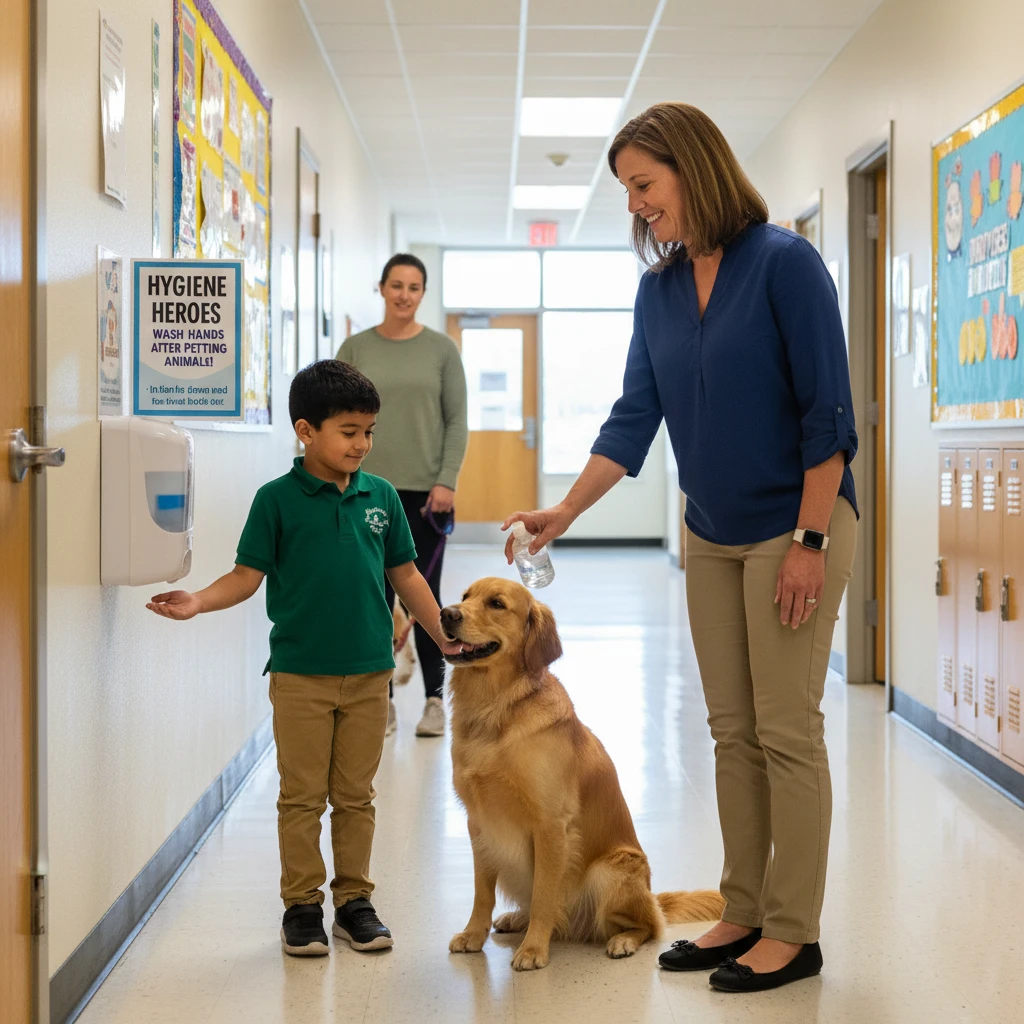
- Hand Washing: Mandate hand washing or sanitizing before and after every interaction with the dog.
- Grooming: The dog must be groomed before arriving at school to minimize dander and shedding, which exacerbates allergies.
- Restricted Areas: Clearly list areas where the dog is forbidden, such as the canteen, food technology rooms, and sick bays.
Allergy and Phobia Management
You cannot assume all students will welcome a dog. The policy must prioritize the health of students with allergies or cynophobia (fear of dogs).
Opt-Out Protocol: The policy must include a mechanism for parents to opt their children out of any contact with the dog. A register of students with allergies must be maintained and checked by the handler before entering any classroom.
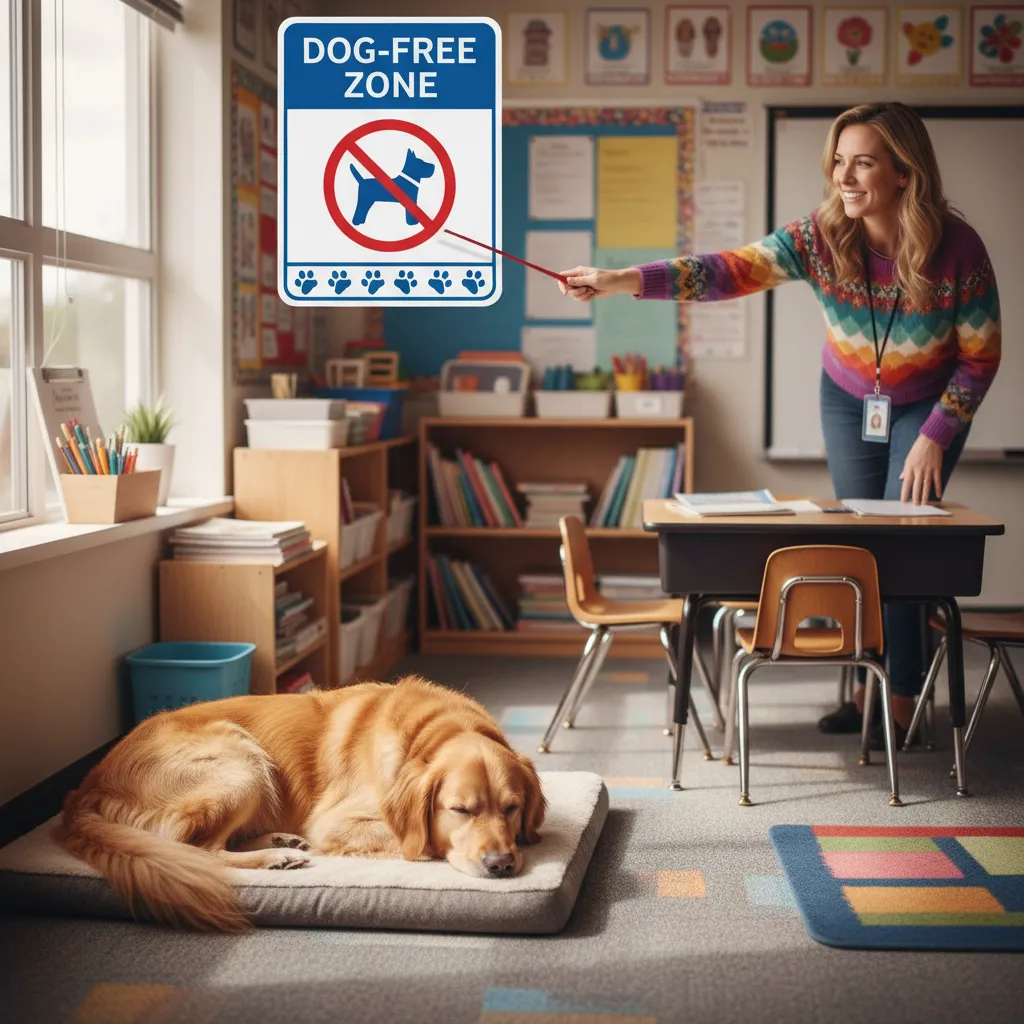
Dog-Free Zones: Establish “safe zones” in the school where the dog never goes, ensuring students with severe allergies or fears have a sanctuary.
Animal Welfare (The Five Domains)
Under the Animal Welfare Act 1999, the school (as a Person in Charge of Animals) has a legal duty to ensure the physical and mental health of the dog. A tired or stressed dog is a dangerous dog.
Your policy must include:
- Rest Periods: Mandatory breaks where the dog is in a crate or quiet office, away from students. A common standard is 20 minutes of rest for every hour of work.
- Water Access: Constant access to fresh water.
- Right of Refusal: The handler must be empowered to remove the dog from a situation immediately if the dog shows signs of stress (lip licking, whale eye, panting) without fear of administrative reprisal.
Legal Sign-off and Insurance Alignment
Before a paw steps onto the playground, the administrative backend must be flawless. This involves liability coverage and formal Board approval.
Liability Insurance
Standard Ministry of Education liability cover may not automatically extend to animal-related incidents. It is imperative to check with the school’s insurance provider.
Policy Requirement:
“The dog handler must provide evidence of Third Party Public Liability Insurance specifically covering the dog for working activities. Alternatively, the Board of Trustees must obtain written confirmation from the school’s insurer that the therapy dog program is covered under the existing policy.”
Board of Trustees (BoT) Approval
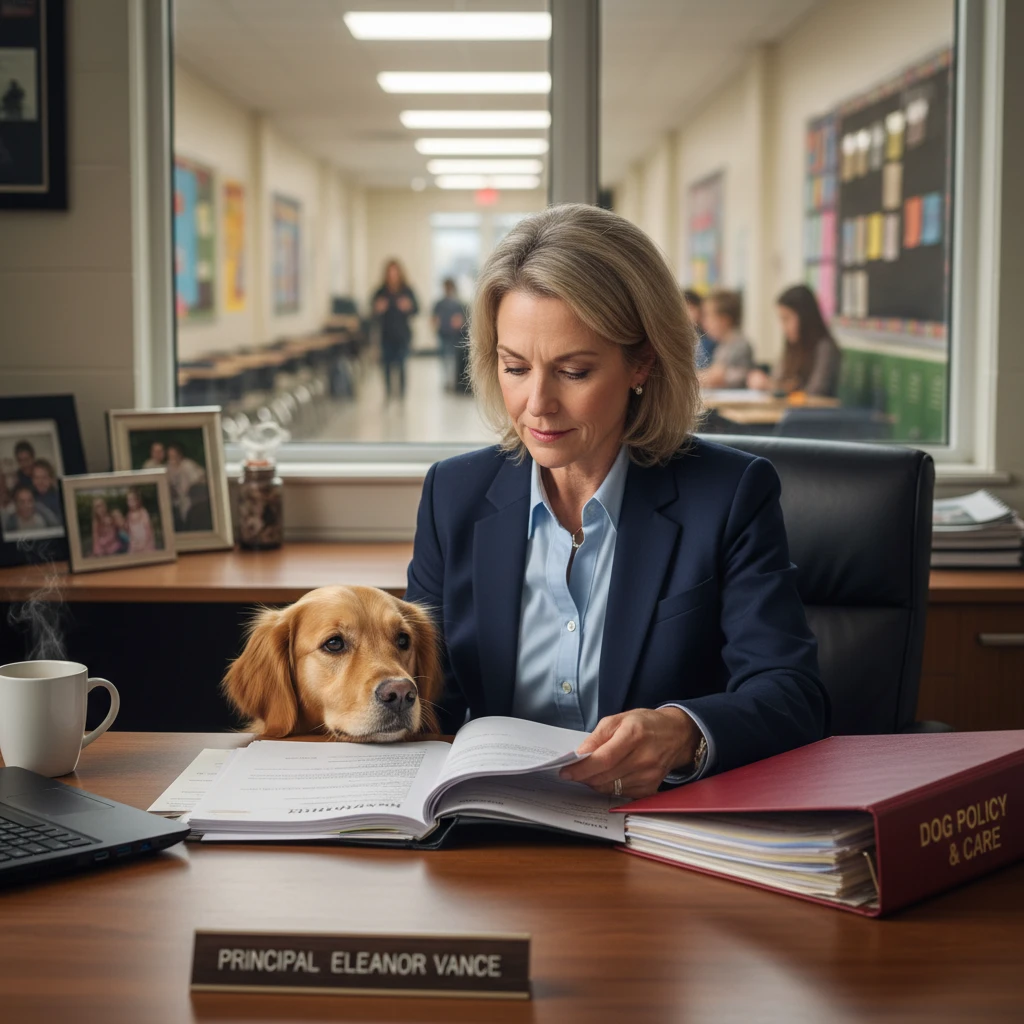
The policy is a governance document. It requires formal ratification by the BoT. The policy should state that the program is approved on a trial basis initially (e.g., 6 months) and requires Board sign-off to continue.
This section should also outline the complaints procedure. If a parent has a grievance regarding the dog, it should follow the standard school complaints policy, but the therapy dog policy should explicitly reference this pathway.
Structuring Your Policy Template
To assist you in drafting your school therapy dog policy template nz, utilize the following structure. This ensures all critical areas are covered in a logical flow.
1. Introduction and Purpose
Define the ‘Why’. Reference the school’s values and the specific benefits (social, emotional, academic) the dog brings.
2. Scope
Define who this policy applies to (Staff, Students, Visitors, Contractors) and where it applies (School grounds, school trips).
3. The Dog and Handler
- Criteria for the dog (Breed, age, temperament).
- Criteria for the handler (Training completed, relationship to the school).
- Identification (e.g., The dog must wear a specific vest or bandana when ‘working’).
4. Operational Procedures
- Arrival and departure protocols.
- Movement through the school (Always on a lead).
- Interaction rules (One student at a time, supervision ratios).
5. Health and Safety
- Hygiene rules.
- Cleaning of waste.
- Management of allergies.
- Incident reporting (Bites, scratches, near misses).
6. Emergency Procedures
What happens in a fire drill? (The dog is evacuated with the handler). What happens if the dog becomes ill or injured on site?
Reviewing and Updating Policies Annually
A policy is a living document. The school environment changes, staff change, and the dog ages. A static policy becomes dangerous over time.
The Annual Review
Set a fixed date for the policy review, ideally at the start of the academic year. The review should involve:
- The Handler: To provide feedback on the dog’s coping mechanisms and workload.
- The Senior Leadership Team: To assess the educational impact.
- Health and Safety Officer: To review any incidents or near-misses recorded in the accident register.

Incident-Triggered Reviews
The policy must state that an immediate review is triggered by any “adverse event.” If a child is scratched, or if the dog growls, the program must be suspended immediately pending a full investigation and policy review. This “suspension clause” is vital for protecting the school’s reputation and liability position.
Community Consultation
In New Zealand schools, community engagement is key. When updating the policy, it is best practice to inform the community of any significant changes. This maintains transparency and trust, particularly with parents who may be hesitant about animals in the classroom.
People Also Ask
Do schools need specific insurance for therapy dogs in NZ?
Yes. While schools have general liability insurance, it often excludes animal-related incidents. Schools must confirm with their provider that the therapy dog is covered or require the handler to carry Third Party Liability insurance specifically for animal-assisted therapy activities.
What is the best breed for a school therapy dog?
There is no single “best” breed, but temperament is key. Breeds known for low reactivity, high patience, and low prey drive—such as Golden Retrievers, Labradors, and Poodles (often chosen for their hypoallergenic coats)—are popular. However, individual temperament testing is more important than breed.
How do you handle students with dog allergies?
Schools must maintain a register of allergic students. The policy should mandate hand washing after contact, regular grooming of the dog to reduce dander, and the establishment of “dog-free zones.” Students with severe allergies should be in classes that the dog does not visit.
What are the legal requirements for school dogs in NZ?
The primary legislations are the Health and Safety at Work Act 2015 (managing risks to students/staff) and the Animal Welfare Act 1999 (ensuring the dog’s needs are met). The Education and Training Act 2020 also implies a duty of care to provide a safe physical and emotional environment.
Can a teacher bring their own dog to school?
Only if formally approved and governed by a policy. A teacher cannot simply bring a pet. The dog must pass temperament assessments, and the Board of Trustees must approve the initiative as part of a structured wellbeing or educational program.
How do you introduce a therapy dog to a school?
Start with a proposal to the Board, followed by a risk assessment and policy drafting. Once approved, introduce the dog gradually—starting with half-days or visits to the staffroom only—before allowing limited, supervised student interactions.