Therapy dog liability insurance in New Zealand is a specialized commercial coverage designed to protect animal handlers and aged care facilities against financial risks associated with animal-assisted interventions. While ACC covers most personal injury costs, this insurance is critical for covering property damage, statutory liability (Health and Safety fines), legal defense costs, and exemplary damages not covered by the state scheme.
The Landscape of Therapy Dog Liability in NZ
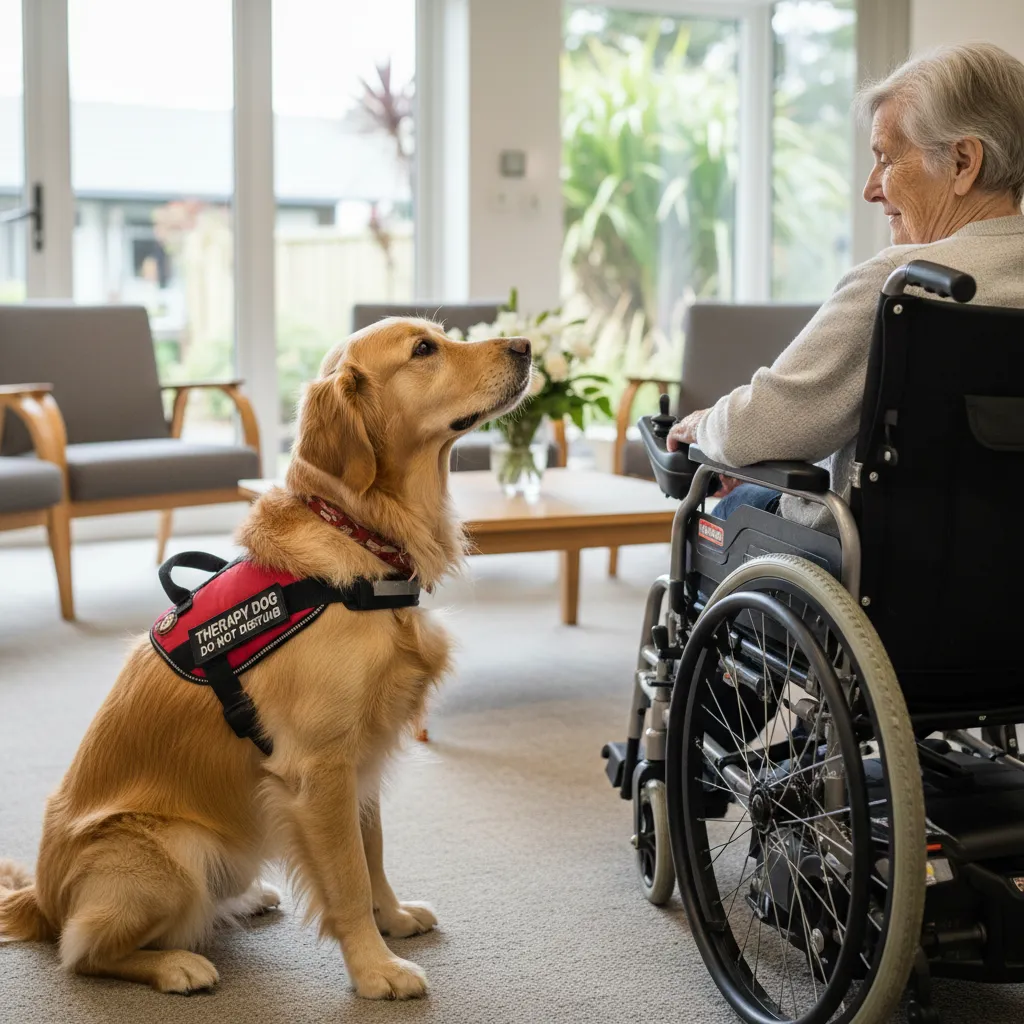
Integrating Animal-Assisted Therapy (AAT) into aged care facilities offers profound psychological and physiological benefits for residents. However, for facility managers and therapy dog handlers in New Zealand, the introduction of animals into a clinical or residential environment introduces specific legal and financial risks that must be managed through robust therapy dog liability insurance nz policies.
The insurance landscape in New Zealand is unique due to the Accident Compensation Corporation (ACC) scheme. Unlike other jurisdictions where liability insurance primarily covers personal injury lawsuits, in New Zealand, the focus shifts. Since ACC provides no-fault cover for personal injuries (such as a dog bite or a fall caused by a dog), businesses often mistakenly believe they do not need liability insurance. This is a dangerous misconception.
Liability insurance for therapy dogs in NZ primarily addresses:
- Property Damage: If a dog damages expensive medical equipment, personal belongings of residents (like hearing aids or glasses), or facility infrastructure.
- Statutory Liability: Defense costs and fines if the facility or handler is prosecuted under the Health and Safety at Work Act 2015 for failing to manage risks.
- Exemplary Damages: In rare cases of gross negligence, courts can award punitive damages which ACC does not cover.
- Reparations: Court-ordered payments to victims over and above ACC entitlements.
Public Liability Requirements for Visiting Dogs
When establishing a therapy dog program, whether through external volunteers or internal staff, Public Liability (PL) insurance is the first line of defense. This coverage protects the insured against claims of third-party property damage or injury (to the extent not covered by ACC) arising from their business activities.
What are the minimum coverage limits?
For New Zealand aged care facilities and visiting therapy providers, the industry standard for Public Liability is typically $5 million to $10 million NZD. While smaller limits exist, the potential for high-cost damage in a medical environment usually necessitates higher coverage. For instance, if a dog were to trip a staff member carrying expensive medical technology, the replacement costs could escalate quickly.
Who holds the policy?
One of the most common points of confusion is determining who is responsible for the insurance—the facility or the handler.
- External Providers (Visiting Organizations): Professional organizations (e.g., St John, Canine Friends Pet Therapy) typically hold their own blanket Public Liability policies that cover their registered volunteers. Aged care facilities must request a Certificate of Currency from these organizations annually to ensure the cover is active.
- Independent Professionals: Private occupational therapists or counselors who use their own dogs in practice must hold their own commercial liability insurance that specifically notes “Animal Assisted Therapy” as a business activity.
- Resident Dogs (Facility Owned): If the aged care facility owns the dog, the facility’s own Public Liability policy must be extended to cover the animal. This is not automatic and must be declared to the insurer.
Does Standard Facility Insurance Cover Animal Visits?
A critical question for facility managers is: Does my existing commercial insurance cover the risks of visiting animals? The short answer is often “no,” or at least, “not without conditions.”
Standard commercial liability policies for healthcare facilities are designed to cover risks associated with human care—slips, trips, medical malpractice, and building safety. They frequently contain exclusions for “hazardous activities” or specific exclusions regarding animals. If a facility allows a therapy dog on-site without notifying their insurer, they may inadvertently void their policy for any incident related to that animal.
The “Duty of Disclosure”
Under New Zealand insurance law, the insured has a duty of disclosure. Introducing a live animal into a workplace is considered a “material fact” that alters the risk profile of the business. Facilities must formally notify their broker or underwriter of the AAT program.
Insurers will typically require the following before agreeing to cover the risk:
- Risk Management Plan: A documented protocol for how the dog is managed (leash rules, hygiene, interaction supervision).
- Veterinary Clearance: Proof of up-to-date vaccinations and flea/worm treatments.
- Behavioral Assessment: Certification that the dog has passed a temperament test (such as the Canine Good Citizen award).

Professional Indemnity for Animal Handlers
While Public Liability covers physical mishaps (dog bites, broken vases), Professional Indemnity (PI) insurance covers the advice and therapeutic service provided. This is particularly relevant for healthcare professionals in NZ who bill for their time and utilize dogs as a clinical tool.
When is PI required?
If a registered health professional (such as a Psychologist, Occupational Therapist, or Physiotherapist) prescribes interaction with a dog as part of a treatment plan, they are delivering a professional service. If a client alleges that the therapy was ineffective, caused psychological regression, or that the handler failed to exercise a duty of care in their professional capacity, Public Liability will not respond. PI is required to defend against allegations of breach of professional duty.
For example, if a therapist uses a dog to help a stroke victim with mobility, and the therapist pushes the patient too hard causing a setback, the claim relates to the professional judgment of the therapist. If the dog is central to that judgment, the PI policy must acknowledge the use of AAT modalities.
Risk Management & Legal Compliance
Insurance is the financial safety net, but risk management is the practical application of safety that prevents claims. In the context of therapy dog liability insurance nz, insurers will look favorably upon facilities that strictly adhere to the Health and Safety at Work Act 2015.
Strict Liability Scenarios
New Zealand’s Dog Control Act 1996 imposes strict liability on dog owners. This means the owner is liable for damage done by the dog regardless of whether they were negligent. For a business, this heightens the need for comprehensive insurance.
Essential Documentation for Insurers
To secure the best premiums and ensure valid coverage, aged care facilities should maintain:
- Incident Reporting Logs: Any growl, nip, or scratch must be logged, even if minor.
- Infection Control Protocols: Procedures for hand hygiene before and after dog contact to prevent zoonotic diseases.
- Exclusion Zones: Clearly defined areas where dogs are not permitted (e.g., food preparation areas, sterile medical rooms).

Selecting NZ Insurance Brokers for Healthcare AAT
Finding an insurance policy that specifically covers “Animal Assisted Therapy” can be challenging in the general market. Most direct-to-consumer insurers (banks, general websites) do not have the flexibility to underwrite commercial animal risks effectively.
Broker vs. Direct Insurance
For this niche, utilizing a specialized insurance broker is highly recommended. Brokers act as intermediaries who can negotiate with underwriters to tailor clauses specifically for therapy dogs. They can ensure that the definition of “Business Activity” in the policy schedule explicitly includes “Provision of Animal Assisted Therapy Services.”
Key Questions to Ask Your Broker
When vetting a broker or policy for your aged care facility, ask the following:
- “Does this policy exclude damage caused by animals under the general exclusions?”
- “Is there a sub-limit for statutory liability fines related to animal control acts?”
- “Does the policy cover volunteers handling the animals, or only paid employees?”
- “Are there specific breed exclusions I need to be aware of?”

Conclusion
Securing appropriate therapy dog liability insurance in NZ is a non-negotiable aspect of running a modern, holistic aged care facility. While the ACC scheme provides a buffer for personal injury, the gaps regarding property damage, statutory liability, and professional indemnity are significant.
Facility managers must move beyond assuming standard policies are sufficient. By actively engaging with specialist brokers, enforcing strict risk management protocols, and understanding the nuances of New Zealand liability law, aged care providers can safely unlock the immense therapeutic potential of dogs for their residents without exposing their business to financial ruin.
People Also Ask
Do I need insurance for a visiting pet in a care home?
Yes. Even for informal visits, the owner of the pet should have personal liability insurance (often attached to contents insurance) that covers their pet’s actions away from home. However, the facility should also have contingent liability cover in case the pet owner’s insurance fails or is insufficient.
Does ACC cover dog bites in care homes?
ACC generally covers the treatment costs and rehabilitation for personal injuries caused by dog bites in New Zealand. However, ACC does not cover property damage (e.g., torn clothing, broken glasses), nor does it cover legal fines or emotional distress damages that might be awarded in civil court.
How much does therapy dog insurance cost in NZ?
The cost varies significantly based on the level of cover and the nature of the business. For an individual handler, liability extensions might cost between $300 and $600 annually. For a facility adding AAT to a commercial policy, premiums may increase depending on the risk assessment provided to the insurer.
What is the difference between assistance dog and therapy dog insurance?
Assistance dogs (like guide dogs) have specific legal rights of access under the Human Rights Act and are often covered under specialized policies for disability aids. Therapy dogs do not have the same public access rights and are considered a business tool or visitor, requiring commercial liability insurance rather than personal assistance coverage.
Can volunteers get therapy dog liability insurance?
Individual volunteers often find it difficult to purchase standalone commercial liability insurance. It is standard practice for the organization they volunteer for (e.g., the charity or the care facility) to extend their organizational Public Liability policy to cover registered volunteers while they are performing authorized duties.
What are the strict liability rules for dogs in NZ?
Under the Dog Control Act 1996, the owner of a dog is liable for damage done by the dog. This is “strict liability,” meaning the victim does not need to prove the owner was negligent, only that the dog caused the damage. This makes liability insurance essential for any business involving dogs.