
Therapy dogs in New Zealand schools do not possess automatic legal rights of access under the Human Rights Act 1993, unlike certified assistance dogs. Instead, their presence is governed by the discretion of the School Board of Trustees, requiring adherence to the Health and Safety at Work Act 2015 and specific school policies regarding animal visitors.
The integration of therapy dogs into New Zealand educational environments has surged in popularity, driven by a growing body of research supporting their positive impact on student wellbeing, literacy, and emotional regulation. However, for school administrators, educators, and therapy dog handlers, the legal landscape surrounding these canine visitors can be nebulous. Unlike Guide Dogs or certified Disability Assist Dogs, therapy dogs occupy a unique legal niche that requires careful navigation of education law, health and safety regulations, and liability considerations.
This guide provides a definitive analysis of the legal rights, responsibilities, and logistical requirements for introducing therapy dogs into NZ schools. We will dissect the difference between public access and private discretion, the role of the Board of Trustees, and the necessary frameworks to ensure a compliant and safe environment.
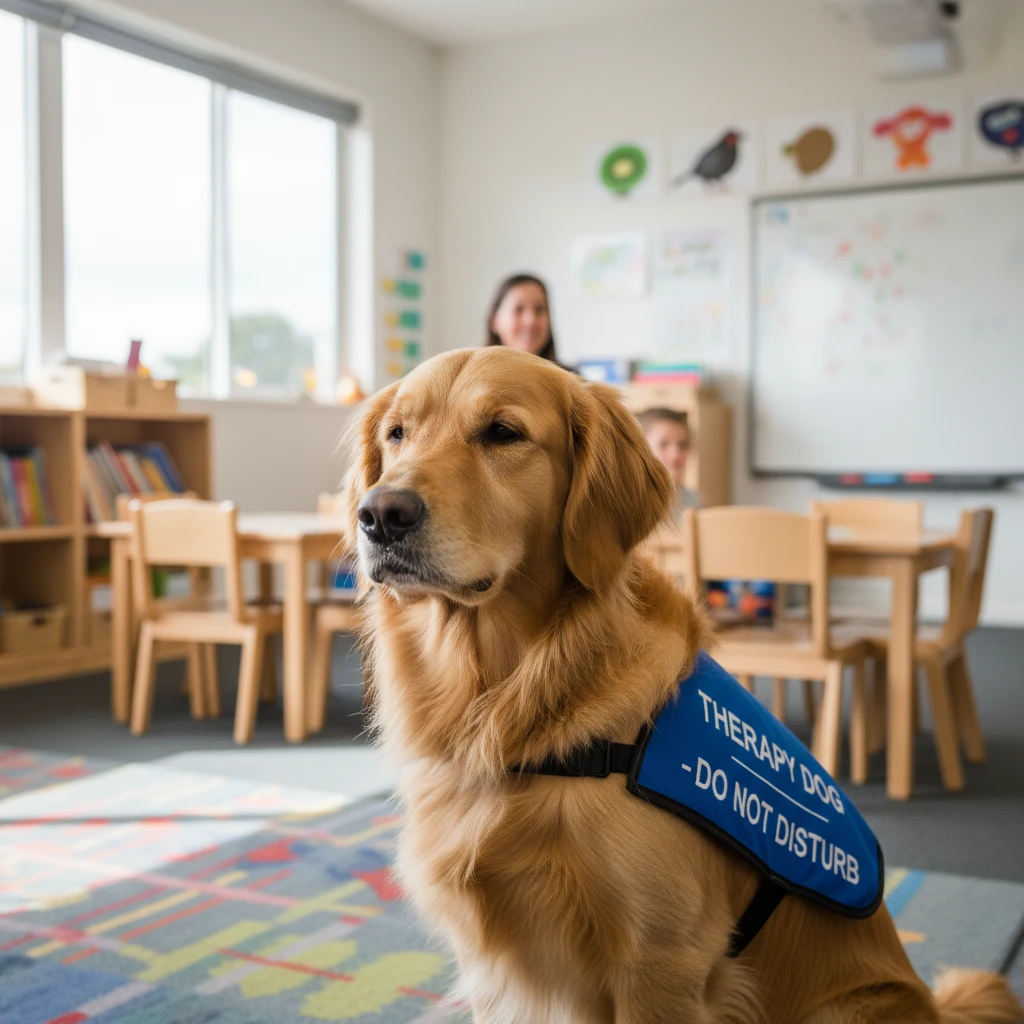
The Legal Distinction: Therapy Dogs vs. Assistance Dogs
To understand the legal rights of therapy dogs in NZ schools, one must first understand what a therapy dog is not. In New Zealand law, specifically under the Dog Control Act 1996 and the Human Rights Act 1993, there is a strict delineation between a Disability Assist Dog and a Therapy Dog.
What is a Disability Assist Dog?
A Disability Assist Dog is certified by an authorized organization (such as Blind Low Vision NZ, Assistance Dogs NZ, or Hearing Dogs for Deaf People NZ). These dogs are trained to perform specific tasks for a single disabled person. Under the Human Rights Act, these dogs have guaranteed public access rights. Denying them entry to a school would generally constitute discrimination.
What is a Therapy Dog?
A Therapy Dog is trained to provide affection, comfort, and support to people in hospitals, retirement homes, nursing homes, schools, libraries, hospices, or disaster areas. Crucially, in New Zealand, therapy dogs do not have automatic public access rights. They are not considered medical equipment required for a disability but rather a therapeutic tool or intervention.
Consequently, a handler cannot walk into a school claiming a “legal right” to be there based on the dog’s certification. Access is entirely a privilege granted by the property owner or manager—in this case, the School Board of Trustees.
Education and Training Act Requirements
The Education and Training Act 2020 provides the overarching framework for how New Zealand schools operate. While the Act does not explicitly mention “therapy dogs,” it outlines the powers and responsibilities of the Board of Trustees, which directly impacts animal policies.
Board Responsibility for Safety and Bylaws
Under the Act, the Board is the governing body responsible for the management of the school. This includes the power to make bylaws for the control and management of the school, including the safety of students and staff. Therefore, the decision to allow a therapy dog on site is a governance decision.
The Board must ensure that any program introduced, including a therapy dog program, supports the school’s charter and strategic goals regarding student wellbeing and educational achievement. If a therapy dog program is deemed to disrupt the educational environment or pose a safety risk that cannot be mitigated, the Board has the legal authority (and obligation) to deny access.
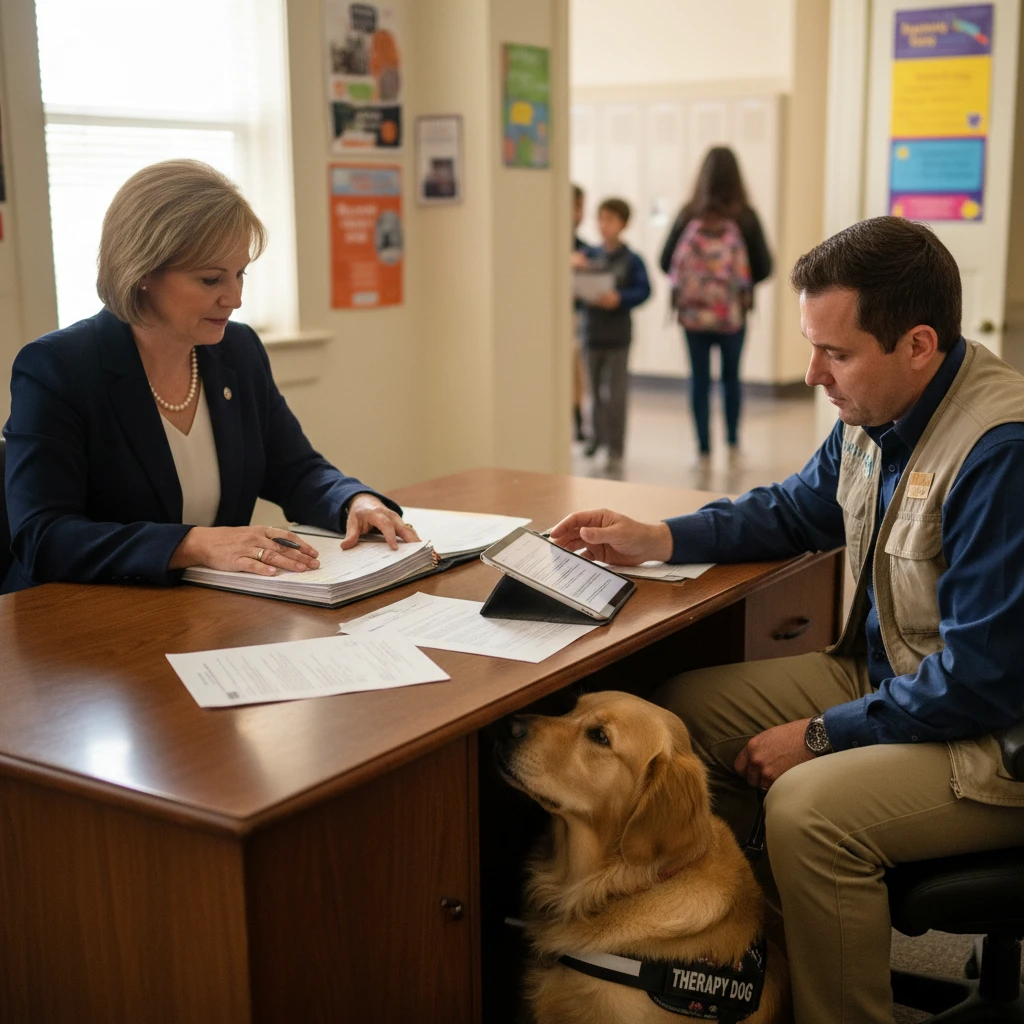
Public Access vs. School Board Discretion
A common misconception among new therapy dog handlers is that schools are “public places” and therefore open to the public. While schools serve the public, the grounds are not public property in the same way a park or a sidewalk is.
Trespass Act 1980
Schools have the right to control who (and what) enters their premises. Under the Trespass Act 1980, a school representative can require a person to leave or warn them to stay off the property. This extends to animals. If a therapy dog is brought onto school grounds without explicit permission, the school is within its legal rights to demand the removal of the animal.
The Approval Process
Because access is discretionary, it must be formalized. A verbal “it’s fine” from a teacher is legally insufficient. Formal approval should be minuted in Board meetings. This protects the school and the handler by establishing that the dog is on-site for authorized school business, which is vital for insurance and liability purposes.
The Health and Safety at Work Act 2015 (HASWA)
The most significant legal hurdle for therapy dogs in NZ schools is the Health and Safety at Work Act 2015. Schools are PCBU (Persons Conducting a Business or Undertaking). They have a primary duty of care to ensure, so far as is reasonably practicable, the health and safety of workers (teachers) and other persons (students, visitors) is not put at risk.
Risk Assessment Requirements
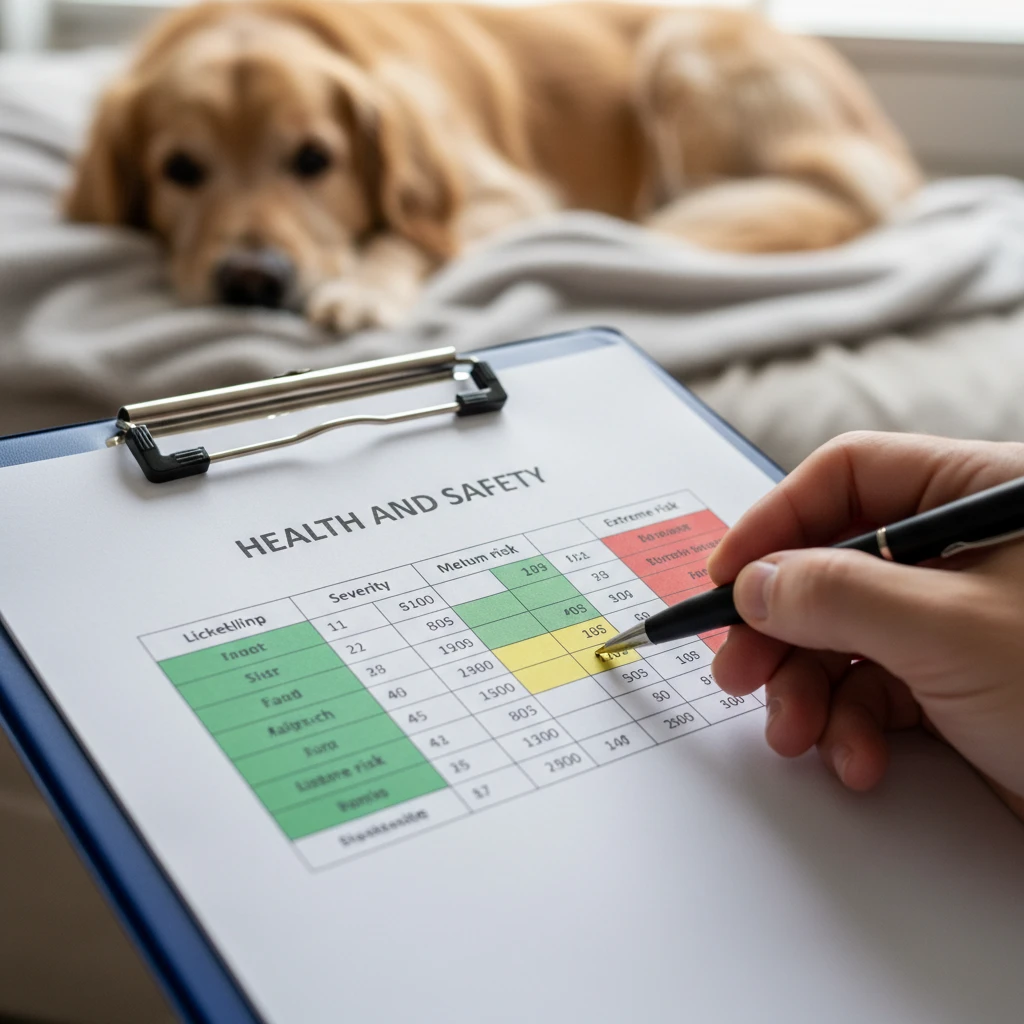
Before a therapy dog enters a classroom, a comprehensive Risk Assessment Management Plan (RAMP) is legally required. This document must identify hazards and control measures. Key hazards include:
- Allergies: How will the school manage students with severe dander allergies? Legal precedent suggests the health of a student with a severe allergy takes priority over the presence of a therapy dog.
- Zoonotic Diseases: Protocols for flea/worm control and vaccination records.
- Dog Bites/Aggression: Even the gentlest dog can bite if provoked. What are the protocols for interaction?
- Phobias: Cultural or traumatic fear of dogs among students or staff.
Failure to have a documented risk assessment could leave the Board and the Principal liable for significant fines if an incident occurs. The legal right to have the dog is contingent upon the ability to manage these risks safely.
Human Rights Commission Guidelines
The Human Rights Commission (HRC) offers guidelines that distinguish clearly between assistance animals and companion/therapy animals. It is vital for schools to understand this to avoid discrimination claims.
The “Reasonable Accommodation” Argument
Sometimes, a parent may argue that their child requires a therapy dog at school as a “reasonable accommodation” for a disability (e.g., anxiety or autism). If the dog is not a certified Disability Assist Dog:
- The school is not automatically legally obligated to allow the dog.
- However, the school is obligated to consider the request fairly.
- The school must determine if allowing the dog is a reasonable adjustment or if it imposes “unjustifiable hardship” (e.g., due to health and safety risks to others).
If the dog is a certified Disability Assist Dog (e.g., an Autism Support Dog from a recognized organization), the Human Rights Act applies, and the school must allow the dog unless there is a grave risk to safety that cannot be mitigated.
Drafting a School-Specific Animal Policy
To operate legally and safely, every school hosting a therapy dog must draft a specific policy. This policy serves as the legal contract between the handler, the school, and the community.
Key Components of a Robust Policy
A legally sound policy should include the following clauses:
- Certification Standards: The policy should mandate that the dog and handler team are certified by a reputable therapy dog organization (e.g., Therapy Dogs New Zealand or St John). This transfers the burden of proof for the dog’s temperament onto the certifying body.
- Hygiene and Veterinary Health: Mandatory annual vet checks, vaccination proof, and regular grooming standards.
- Identification: The dog must wear a vest or bandana identifying it as a working dog to distinguish it from pets.
- Restricted Areas: Clearly defined “no-go” zones (e.g., food technology rooms, sick bays, or areas where allergic students are present).
- Incident Management: A clear protocol for what happens if a scratch, bite, or toileting accident occurs.

Liability and Insurance Considerations
Who pays if the dog damages property or injures a child? This is a critical legal question.
Public Liability Insurance
Most schools hold public liability insurance, but standard policies may exclude animal-related incidents. Schools must check with their insurance provider (often through the Ministry of Education’s Risk Management Scheme) to confirm coverage.
Furthermore, external therapy dog providers (businesses or volunteers) should carry their own Public Liability Insurance (usually up to $5 million or $10 million). The school should request a Certificate of Currency before the dog enters the grounds. This ensures that if the dog causes an accident, the liability does not fall solely on the school’s budget.
Conclusion
While therapy dogs offer immense value to the educational ecosystem in New Zealand, they do not enjoy the statutory access rights of assistance dogs. Their presence in schools is a privilege granted by the Board of Trustees, contingent upon rigorous adherence to the Health and Safety at Work Act 2015.
For schools, the path to a successful program lies in governance: clear policies, robust risk assessments, and open communication with the school community. By respecting the legal distinctions and prioritizing safety, schools can harness the power of canine therapy while minimizing legal exposure.
People Also Ask (PAA)
Do therapy dogs have the same rights as guide dogs in NZ?
No. Guide dogs (and other certified Disability Assist Dogs) have guaranteed access rights under the Human Rights Act 1993 and the Dog Control Act 1996. Therapy dogs do not have these automatic rights and can be denied entry to public places or schools by the owners/managers of those premises.
Can a school board ban therapy dogs?
Yes. The School Board of Trustees has the legal authority to manage the school premises and ensure health and safety. If they deem a therapy dog to be a risk or a distraction to education, they have the right to decline a request for the dog to visit or reside at the school.
What certification is required for a therapy dog in NZ schools?
There is no single government-mandated certification for therapy dogs in NZ. However, for liability and safety reasons, schools strongly prefer (and should require) certification from recognized organizations like Therapy Dogs New Zealand, St John, or Canine Friends Pet Therapy to ensure the dog has passed temperament testing.
Who is liable if a therapy dog bites a student?
Liability can be shared. The dog’s owner/handler is primarily responsible under the Dog Control Act. However, the school (Board of Trustees) could also be liable under the Health and Safety at Work Act if they failed to take reasonable steps to manage the risk (e.g., lack of supervision or risk assessment).
How do schools handle students with dog allergies?
Schools must prioritize the health of students. Under HASWA, schools must manage risks. This usually involves creating “dog-free zones,” ensuring the dog does not enter the classroom of an allergic student, and maintaining high cleaning standards. If an allergy is severe/anaphylactic, the student’s safety may override the ability to have a dog on site.
Can a teacher bring their own dog to school as a therapy dog?
Only with explicit Board approval and a formal policy in place. A teacher cannot unilaterally decide to bring their pet. The dog should undergo the same temperament testing and risk assessment as an external therapy dog to ensure it is suitable for the chaotic school environment.


