
The Canine Good Citizen (CGC) program in New Zealand is a four-level certification established by Dogs New Zealand to promote responsible dog ownership. While not legally mandatory for all pets, the CGC Foundation level is frequently a prerequisite for therapy dog organizations to ensure dogs have basic obedience, stable temperaments, and predictability in public settings.
What is the Canine Good Citizen NZ Program?
The Canine Good Citizen (CGC) program is a comprehensive training and assessment scheme established by Dogs New Zealand (formerly the New Zealand Kennel Club). It serves as the national standard for identifying dogs that have the training and demeanor to be reliable members of the community. Unlike competitive obedience or agility, which focus on precision sport performance, the CGC focuses on practical, real-world manners.
For dog owners in New Zealand, obtaining a CGC title is more than just a certificate; it is a testament to the bond between handler and canine. It demonstrates that the owner has taken the time to socialize their pet and teach them how to navigate human society without causing disruption or fear. The program is open to all dogs, regardless of breed, age, or pedigree status. Whether you own a pedigree Golden Retriever or a mixed-breed rescue, the standard of behavior remains the same.

The Philosophy: A Trained Dog is a Happy Dog
The core philosophy driving the CGC NZ initiative is that a trained dog has more freedom. Dogs that pull on the lead, jump on strangers, or cannot settle in public are often left at home. Conversely, a Canine Good Citizen is welcome in more places, including cafes, parks, and specifically, in therapeutic environments. The program emphasizes positive reinforcement and building a relationship based on trust and clear communication.
Decoding the Four Levels of Certification
The Dogs NZ CGC program is structured into four distinct levels, each increasing in difficulty and complexity. To progress, a dog and handler team must pass the levels sequentially, starting with Foundation.
1. The Foundation Level
The Foundation Award is the entry point and the most critical level for prospective therapy dogs. It ensures the dog is under control and poses no threat to the public. The exercises at this level are designed to test basic manners.
Key exercises include:
- Appearance and Grooming: The dog must accept being brushed and having their paws and ears handled by a stranger (the assessor). This is vital for therapy work where patients may touch the dog.
- Walking on a Loose Lead: The dog must walk without pulling, demonstrating control.
- Recall: The dog must return to the handler when called.
- Stay on Lead: A short duration stay to prove impulse control.
- Social Interaction: The dog must remain calm while the handler stops to talk to another person.
2. The Bronze Level
Once Foundation is achieved, the Bronze level introduces more duration and distance. It tests the dog’s ability to remain obedient even when the handler is not immediately by their side. This level often acts as a bridge between basic pet ownership and advanced obedience.
Key differentiators in Bronze include longer stays and more complex walking patterns. The dog is expected to ignore mild distractions, which simulates real-world environments like busy sidewalks or parks.

3. The Silver Level
The Silver Award significantly raises the bar, introducing elements of public safety and vehicle control. This level is excellent for dogs that travel frequently with their owners.
Specific challenges include:
- Vehicle Control: The dog must wait calmly in a car with the door open until told to exit, and then exit in a controlled manner. This prevents dogs from bolting into traffic.
- Road Safety: Walking along a road and crossing safely.
- Examination of the Dog: A more thorough physical check, ensuring the dog is comfortable with invasive handling.
4. The Gold Level
The Gold Award is the pinnacle of the CGC program. It requires a dog that is fully under control off-lead and can respond to commands instantly, even in emergencies. Very few dogs reach this level without dedicated, long-term training.
The defining exercise of the Gold level is the Emergency Stop. The dog is sent away from the handler and must stop and drop into a down position instantly upon command. This is a life-saving skill. Additionally, the dog must demonstrate the ability to walk calmly through a crowd of people and other dogs without a lead, showing perfect heelwork.
Why Do Therapy Groups Require CGC Foundation?
If you are aspiring to volunteer with organizations such as Therapy Dogs New Zealand, St John, or Canine Friends Pet Therapy, you will likely encounter a requirement for the Canine Good Citizen Foundation award (or an internal assessment that mirrors it closely). But why is this specific certification the industry standard?
1. Objective Assessment of Temperament
Therapy work is not just about a dog being friendly; it is about a dog being predictable. A friendly dog that jumps up can scratch an elderly patient’s thin skin or knock over a child in a hospital. The CGC Foundation assessment provides an objective, third-party verification that the dog has bite inhibition, impulse control, and accepts handling.
2. Liability and Insurance
Therapy organizations carry significant public liability insurance. To secure coverage, insurers often require proof that the dogs involved have been vetted for safety. The Dogs NZ CGC is a nationally recognized standard. Holding this certificate provides a paper trail of due diligence, proving that the organization took steps to ensure the dog was safe to deploy in schools, hospitals, or rest homes.
3. Simulating the Therapy Environment
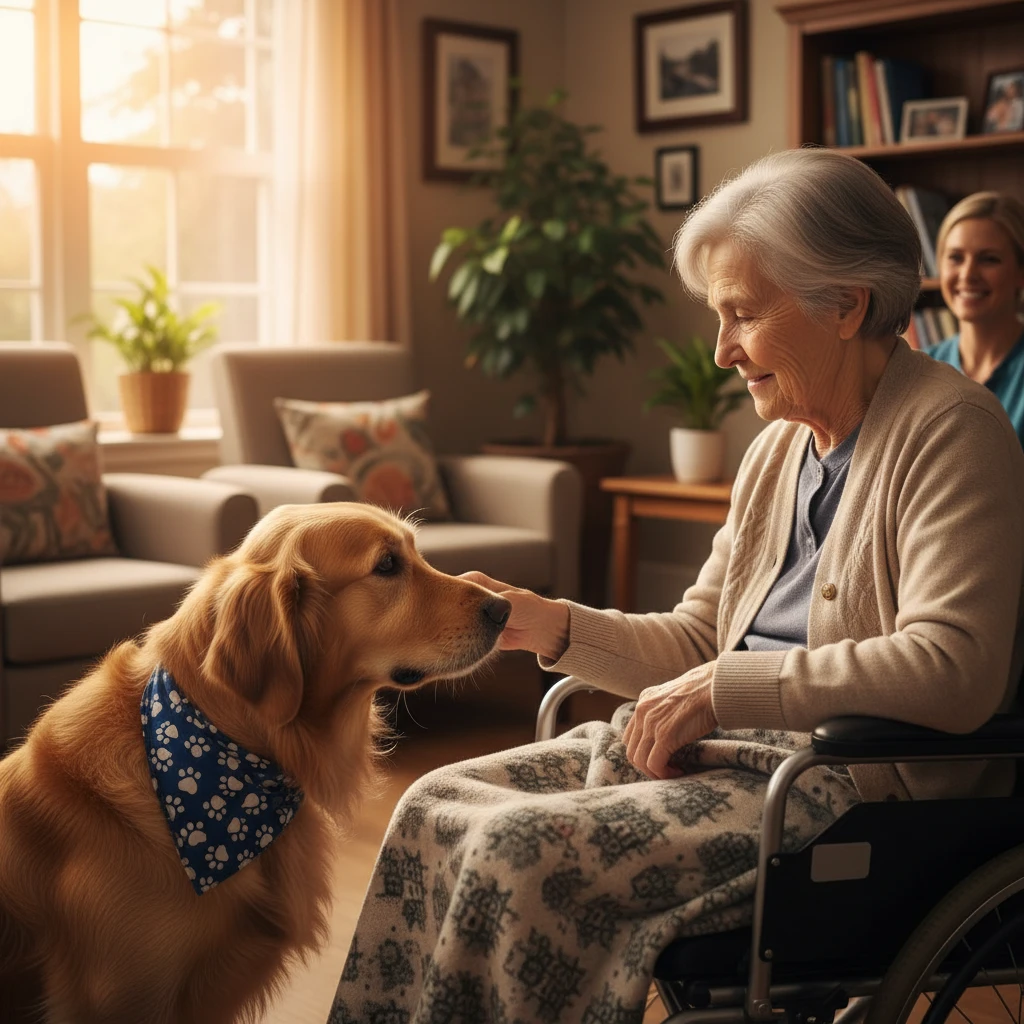
The exercises in the Foundation test mimic the therapy environment. For example, the “Appearance and Grooming” section of the test ensures a dog doesn’t snap when their paws or ears are touched. In a therapy setting, a patient with limited motor control might accidentally pull an ear or squeeze a paw too hard. A CGC-certified dog has demonstrated the resilience and passive temperament required to handle this without aggression.
How to Fix Common Training Issues Before the Test?
Many handlers fail their first attempt at the CGC not because their dog is aggressive, but because of minor handling errors or lack of preparation. Here is how to fix common issues.
Fixing the “Jump Up” During Greetings
The most common failure point is the dog jumping on the assessor during the meet-and-greet. To fix this, practice the “four on the floor” rule. Never reward your dog for greetings unless all four paws are on the ground. During the test, you may be allowed to ask your dog to “sit” while being greeted. Use this to your advantage. A sitting dog cannot jump.
Improving Loose Leash Walking
If your dog pulls, you will not pass the Foundation level. Use a flat collar for the test (check chains or slip leads are generally not permitted or discouraged depending on the specific club rules, but fixed collars are standard). Practice changing pace and direction frequently. If the dog forges ahead, turn 180 degrees and walk the other way. This teaches the dog to pay attention to your body language rather than just the environment.
Finding a CGC Assessor Near You
Dogs New Zealand maintains a list of registered clubs and authorized assessors. You cannot simply have a local trainer sign off on the award; it must be an official event or assessment organized through an affiliated club.
Steps to Certification
- Locate a Club: Visit the Dogs NZ website and search for obedience clubs in your region (e.g., Auckland, Wellington, Christchurch).
- Enroll in Classes: While not mandatory to take the class to sit the test, enrolling in a CGC-specific 8-week course is highly recommended. These courses are tailored specifically to the test exercises.
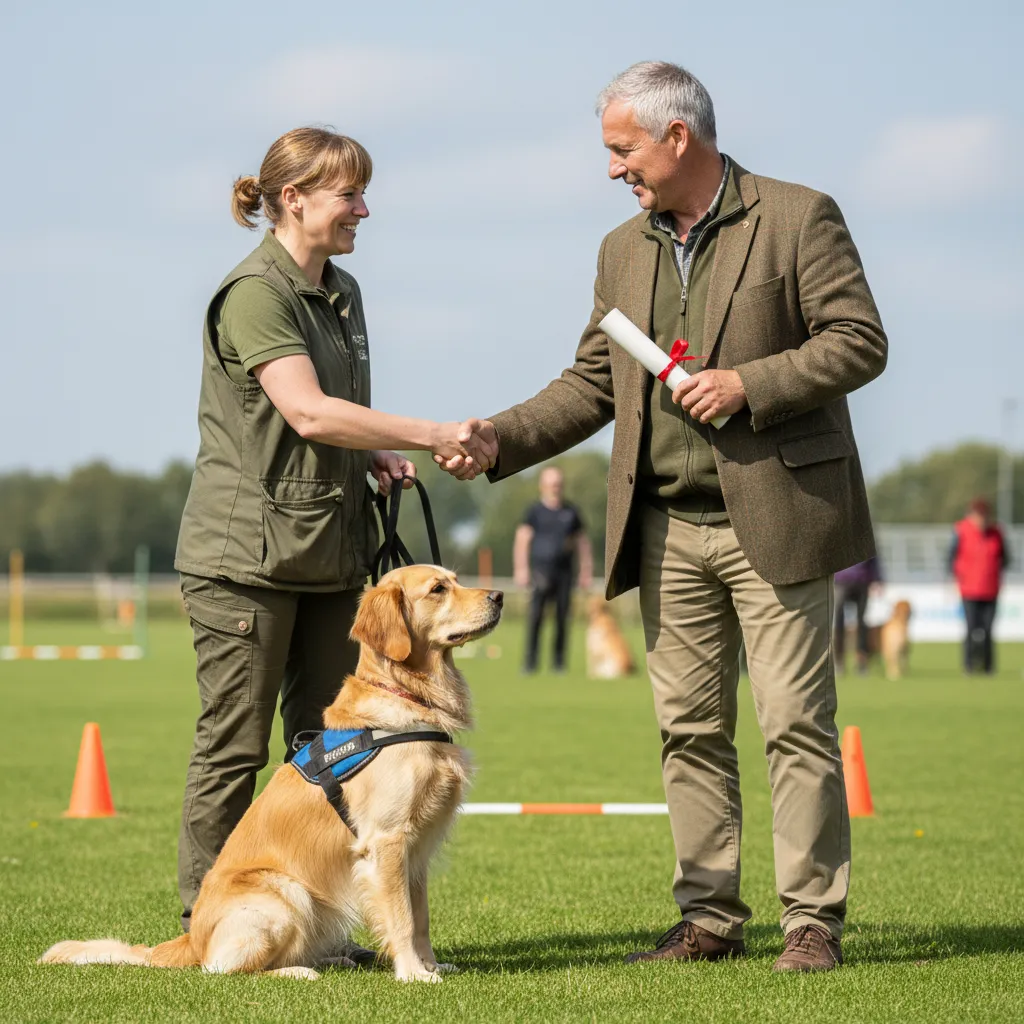
- Book the Assessment: Assessments are usually held at the end of a school term or training block. There is typically a small fee for the certificate and the patch.
People Also Ask
How much does the Canine Good Citizen course cost in NZ?
Costs vary by club, but typically an 8-week training course leading up to the assessment ranges from $80 to $150 NZD. The assessment fee itself is usually nominal, often between $10 and $20 to cover the cost of the certificate and ribbon.
Can a mixed breed dog get the Canine Good Citizen award?
Yes, absolutely. The Canine Good Citizen program is open to all dogs, regardless of breed or mix. You do not need “papers” or a pedigree to participate. The program focuses entirely on the dog’s behavior and training level.
Does the CGC award expire?
No, the Canine Good Citizen award does not strictly expire. However, if you are using the certification for therapy work, the therapy organization may require re-testing every year or two to ensure the dog’s temperament has not changed as they age.
What is the difference between CGC Foundation and Bronze?
Foundation is the entry level focusing on basic manners and handling on a lead. Bronze is the next step up, requiring longer duration stays (1 minute vs 30 seconds) and more control amidst distractions. Foundation is usually the minimum for therapy work.
Can I train for CGC at home without a club?
Yes, you can train the exercises at home. However, you must attend an official assessment day hosted by a Dogs NZ affiliated club to receive the actual certification. You cannot be assessed via video or by a private trainer at home.
What happens if my dog fails the CGC test?
If you fail, there is no penalty other than not receiving the certificate. You are encouraged to continue training and re-sit the assessment at a later date. Assessors will usually provide specific feedback on which exercises need improvement.