
Canine Friends Pet Therapy NZ is a registered charitable organization comprising volunteers who visit hospitals, rest homes, and hospices with their well-behaved dogs. To join the team, prospective members must locate a local Liaison Officer, pay a membership fee, and pass a rigorous assessment to ensure their dog possesses the calm temperament and obedience required for therapeutic visitation.
History and Mission of Canine Friends Pet Therapy NZ
Founded in 1990 by Eileen Curry, Canine Friends Pet Therapy NZ began with a simple yet profound observation: the presence of a dog can significantly alter the atmosphere of a medical or care facility. What started as a small group of enthusiasts in the Wellington region has blossomed into a nationwide network of over 2,000 members visiting hundreds of facilities across New Zealand.
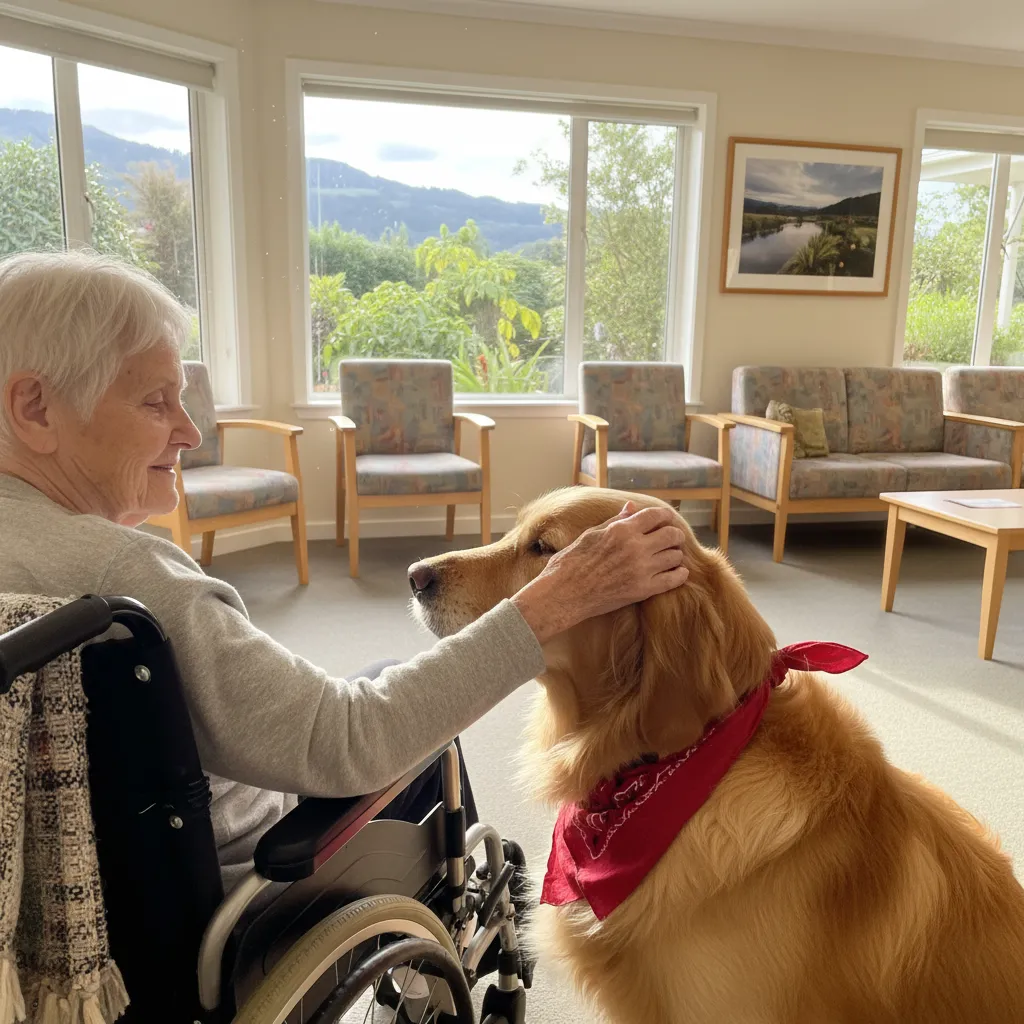
The mission is straightforward but impactful: to bring comfort, companionship, and a sense of normalcy to people who are unwell, lonely, or in care. Unlike service dogs, which are trained to perform specific tasks for individuals with disabilities, the dogs within the Canine Friends network are “visiting therapy dogs.” Their primary job is to offer unconditional love and tactile comfort.
The organization operates on the understanding that the human-animal bond has tangible therapeutic benefits. Scientific studies consistently show that interacting with a friendly dog can lower blood pressure, reduce cortisol (stress) levels, and stimulate the release of oxytocin. For patients in palliative care or residents in dementia units, a visit from a Canine Friends volunteer can be the highlight of their week, unlocking memories and prompting conversation where there was previously silence.
Differences Between St John and Canine Friends
When considering volunteering with a therapy dog in New Zealand, most owners narrow their choices down to two main organizations: St John (Hato Hone) Therapy Pets and Canine Friends Pet Therapy NZ. While both organizations share the noble goal of community service, there are distinct operational differences that may influence which team you decide to join.
Organizational Focus and Scope
St John is a massive humanitarian organization primarily known for its ambulance services. Their Therapy Pets program is one arm of a much larger entity. This often means they have significant infrastructure and brand recognition. However, their program includes not just dogs, but mostly dogs, and occasionally other animals depending on the region.
Canine Friends Pet Therapy NZ, conversely, is entirely dedicated to dogs. It is a specialist organization run by dog lovers for dog lovers. This singular focus often results in a more “club-like” feel, where the nuances of canine behavior are deeply understood by the administration.
Coverage Areas
Geography often dictates the choice. While both have a national presence, there are specific towns or districts where one is more active than the other. Canine Friends has a very strong presence in the lower North Island and parts of the South Island, whereas St John might have exclusive contracts with certain District Health Boards (DHBs). It is vital to check which organization holds the visitation rights for the specific hospital or rest home you wish to visit.
Uniform and Branding
St John volunteers typically wear the recognizable St John uniform, aligning them with the medical emergency brand. Canine Friends volunteers usually wear casual attire accompanied by a specific ID badge, and their dogs wear a distinctive scarf or bandana. For some volunteers, the relaxed nature of the Canine Friends dress code is a benefit, fostering a more neighborly, less clinical vibe during visits.
The Assessment Process: What to Expect
Joining Canine Friends Pet Therapy NZ is not as simple as owning a cute dog. The organization maintains strict safety standards to protect both the volunteers and the vulnerable populations they visit. The assessment is a critical step in the transactional journey of becoming a member.

Prerequisites for Assessment
Before you even book an assessment, your dog must meet basic criteria:
- Age: Dogs must generally be at least one year old. Puppies are rarely consistent enough for therapy work.
- Health: Full vaccination records, regular worming/flea treatment, and general good health are mandatory.
- Ownership: You must have owned the dog for at least 6 months to ensure a solid bond and understanding of the dog’s behavior.
The Practical Test
The assessment is conducted by a qualified assessor and typically simulates a visiting environment. Here is what they look for:
1. Loose Lead Walking: Your dog must walk calmly on a loose lead without pulling. In a hospital corridor, a pulling dog is a trip hazard.
2. Reaction to Sudden Noises: Assessors may drop a clipboard or use medical equipment that beeps. The dog can be startled but must recover quickly and not show aggression or extreme fear.
3. Accepting Rough Handling: Patients, particularly those with dementia or motor control issues, may pet a dog clumsily. They might pull an ear or tail gently. The dog must tolerate this without growling or snapping.
4. The “Leave It” Command: Hospitals have pills on floors; rest homes have food scraps. A reliable “leave it” command is a safety non-negotiable.
Membership Fees and Benefits
Is there a cost to volunteer? Yes. While you are donating your time, there is an annual membership fee associated with joining Canine Friends Pet Therapy NZ. Understanding why this fee exists is important for prospective members.
Breakdown of Fees
As of the most recent updates, the annual subscription is nominal (usually between $30 and $50 NZD, though this is subject to change). This fee covers:
- Public Liability Insurance: This is the most critical component. It protects you in the unlikely event your dog causes damage or injury during a sanctioned visit.
- Administration Costs: Running a national charity requires software, communication tools, and administrative support.
- Identification: The fee covers the cost of your photo ID badge and your dog’s identifying bandana or scarf.
Member Benefits
Beyond the ability to visit facilities, membership offers a community aspect. You gain access to newsletters, regional meetings, and the support of a Liaison Officer who can help navigate any issues that arise during your volunteering. Furthermore, many members find deep personal satisfaction and a sense of purpose, which is the intangible but primary benefit of the subscription.

How to Find a Liaison Officer Near You
The structure of Canine Friends is decentralized, relying heavily on regional Liaison Officers. These volunteers are the gatekeepers and managers for specific geographic areas. You cannot simply walk into a hospital and start visiting; you must go through a Liaison.
Step-by-Step Search Strategy
To start your application, follow these steps:
- Visit the Official Website: Go to the Canine Friends Pet Therapy NZ website.
- Navigate to “Contact” or “Join Us”: Look for a regional map or a list of branches.
- Identify Your Region: The list is usually broken down by province (e.g., Wellington, Canterbury, Bay of Plenty).
- Email the Liaison: Send a professional email introducing yourself and your dog. Mention your dog’s breed, age, and why you think they would be a good fit.
If there is no Liaison Officer listed for your specific town, contact the nearest main center. They may have a remote coordinator or can advise if a new branch is being established.
Preparing Your Dog for Therapy Work
If you have decided to join, preparation is key. Even the friendliest family pet might struggle in a high-stimulus environment like a hospital ward. Here is how to prepare your dog for success.
Desensitization Training
Expose your dog to medical equipment if possible. Walk them past wheelchairs, crutches, and walkers. If you don’t have access to these, use a shopping trolley or a suitcase on wheels to simulate the noise and movement of hospital carts. Reward your dog for ignoring these objects and focusing on you.
Socialization vs. Therapy
There is a difference between a dog that loves to play and a therapy dog. A therapy dog needs to be “calmly social.” They should not jump up to greet people. Practice the “four on the floor” rule strictly. If your dog jumps on a frail patient, it could cause serious injury (skin tears or falls). Practice greetings where the dog sits to be petted.
Grooming Standards
Hygiene is paramount. Before every visit (and before your assessment), your dog should be immaculately groomed. This means:
- Nails: Trimmed short to prevent scratching patients’ thin skin.
- Coat: Washed and brushed to remove dander and loose hair.
- Parasites: Strictly up to date on flea and worm control.
Safety and Protocols During Visits
Once you are a member, adherence to protocol ensures the longevity of the program. You are a guest in medical facilities, and one bad incident can jeopardize the program for everyone.
The “On-Leash” Rule
Dogs must remain on a lead at all times. Retractable leads are generally banned because they offer less control. A fixed 1-1.5 meter lead is standard. You must always be at the other end of that lead; you cannot tie the dog to a bed or chair.
Recognizing Canine Stress
You are your dog’s advocate. Therapy work is tiring for dogs; they absorb a lot of emotion and deal with strange smells. Watch for signs of stress:
- Lip licking
- Yawning when not tired
- Turning the head away
- Panting heavily in a cool room
If your dog shows these signs, it is time to end the visit. A standard visit should rarely exceed 45 minutes to an hour.
Conclusion
Joining Canine Friends Pet Therapy NZ is a commitment that offers immense rewards. It allows you to share the joy your dog brings you with those who need it most. By understanding the differences between organizations, preparing for the assessment, and connecting with a Liaison Officer, you can ensure a smooth transition from pet owner to therapy volunteer. The process is rigorous to ensure safety, but the result—seeing a patient smile for the first time in days—is worth every bit of effort.
Do therapy dogs in NZ need to be a specific breed?
No, Canine Friends Pet Therapy NZ accepts all breeds and mixed breeds. The deciding factor is temperament, not pedigree. Whether you have a Chihuahua or a Greyhound, if the dog is calm, friendly, and passes the assessment, they are welcome. However, restricted breeds under NZ law may be excluded.
Can I volunteer if I work full time?
Yes, many volunteers work full time. Visits can often be arranged for weekends or evenings, depending on the facility’s schedule. However, consistency is preferred, so committing to a regular slot (e.g., every second Saturday) is helpful for the facility staff.
What is the difference between a therapy dog and a service dog in NZ?
A service dog (or assistance dog) is trained to perform specific tasks for a person with a disability and has legal access rights to all public places. A therapy dog is a pet that visits facilities to provide comfort; they do not have public access rights to shops, cafes, or planes.
How often do I need to visit?
Requirements vary by region, but generally, a commitment of at least one visit per fortnight is encouraged. This helps build a relationship with the residents or patients. Regularity is often more important than frequency.
Does my dog need to be desexed to join Canine Friends?
While policies can update, generally, desexing is highly recommended and often required for therapy work to prevent hormonal behaviors (like marking or aggression) that could be problematic in a medical setting. Check with your local Liaison for the current strict ruling.
What happens if my dog fails the assessment?
If your dog fails, the assessor will explain why. Often, it is a minor training issue that can be fixed. You are usually encouraged to work on the specific issue (e.g., pulling on the lead) and re-sit the assessment after a period of training.