
A therapy dog business in New Zealand involves integrating trained canines into professional health, educational, or corporate services, requiring strict adherence to the Health and Safety at Work Act 2015. Success demands specialized professional indemnity insurance, verified canine temperament assessments, and robust infection control policies to ensure client safety and therapeutic efficacy.
Foundations of a Professional AAT Practice in NZ
Establishing a therapy dog business in New Zealand requires a distinct shift in mindset from pet ownership to clinical partnership. Animal-Assisted Therapy (AAT) is not merely bringing a dog into a room; it is a goal-directed intervention in which an animal that meets specific criteria is an integral part of the treatment process. In the context of New Zealand’s business landscape, this requires a formal structure that separates volunteer visitation (like St John Therapy Pets) from professional, revenue-generating practice.
The demand for AAT in New Zealand is growing rapidly across sectors including aged care, special education, private psychology practices, and corporate wellness programs. However, to capitalize on this market niche, you must first define your business model. Are you a sole trader offering visiting services? Are you a registered psychologist integrating a dog into your clinical space? Or are you starting an agency that manages multiple handler-dog teams?

Defining Your Service Scope
Clarity in your service offering is the first step in logistics. In New Zealand, the industry generally categorizes services into three tiers, and your business plan must reflect which one you are providing to ensure accurate insurance and marketing:
- Animal-Assisted Therapy (AAT): Delivered by a health or human service professional with specialized expertise within the scope of their profession.
- Animal-Assisted Education (AAE): Delivered by an educational professional with specialized expertise.
- Animal-Assisted Activities (AAA): Motivational, educational, or recreational opportunities (often the entry point for new businesses not run by clinicians).
Legal Compliance, Insurance, and Risk Management
The most critical logistical hurdle for a therapy dog business in NZ is navigating the legal landscape. Unlike the U.S., New Zealand does not have a central government body that “registers” therapy dogs with public access rights equivalent to disability assist dogs. Therefore, your business logistics must focus on private access agreements and liability management.
The Health and Safety at Work Act 2015
Under NZ law, a therapy dog in a workplace is considered a potential hazard that must be managed. As a business owner (PCBU – Person Conducting a Business or Undertaking), you are legally required to eliminate or minimize risks associated with your work.
You must develop a comprehensive Risk Assessment Management System (RAMS) specific to canine interactions. This document should detail:
- Zoonotic Disease Control: Protocols for flea/worm treatments and vaccination schedules.
- Physical Injury Prevention: Protocols for bites, scratches, or trips caused by the animal.
- Allergy Management: Procedures for identifying and managing client allergies before sessions.
- Animal Welfare: Mandatory rest periods and water access to prevent animal fatigue, which is a leading cause of behavioral incidents.
Insurance Logistics
Standard public liability insurance often excludes damage or injury caused by animals. You must secure a policy that specifically covers “Animal-Assisted Therapy” or “Working Dogs.” In New Zealand, this often requires a specialized broker.
Your insurance package should include:
- Public Liability: At least NZD $2 million coverage for third-party injury or property damage.
- Professional Indemnity: If you are providing advice or therapeutic intervention.
- Statutory Liability: Covers legal defense costs if you are prosecuted under the Health and Safety at Work Act or the Dog Control Act 1996.

Training Standards and Certification Logistics
While there is no single government accreditation, operating a credible business requires third-party validation of your dog’s temperament. Relying solely on your own assessment is a conflict of interest that holds little weight in a court of law or with insurance underwriters.
Recommended Certifications for NZ Businesses
To establish authority and trust, your business should align with recognized standards. The Canine Good Citizen (CGC) program, administered by Dogs New Zealand, is the baseline industry standard for obedience and temperament. While CGC is not a therapy certification, it is the foundational logistics step.
For higher-level verification, consider these pathways:
- Therapy Dogs New Zealand: Offers assessment and accreditation processes that are recognized by many NZ institutions.
- Empower Assistance Dogs: While focused on assistance dogs, they offer resources and standards that can guide high-level therapy dog training.
Your business logistics must include a recurring schedule for re-certification (usually annually) to prove the dog’s continued suitability for work.
Sourcing Equipment and Professional Services
Running a therapy dog business requires specific equipment to maintain professionalism and hygiene. This is not about pet supplies; it is about business assets.
Essential Gear for the Working Dog
Your dog should be easily identifiable as a working animal, even if they do not have the same legal access rights as Guide Dogs. This helps with crowd control and sets client expectations.
- Uniforms/Vests: Source high-quality vests with “THERAPY DOG” clearly embroidered. Avoid “Service Dog” patches to prevent legal confusion. Local NZ suppliers can customize these with your business branding.
- Hygiene Kits: Every handler must carry a portable kit containing pet-safe disinfectant, poop bags, hand sanitizer for clients, and a lint roller.
- Mat/Place Marker: A portable mat that signifies the dog’s “safe space” during sessions is crucial for animal welfare and boundary setting.

Veterinary Partnerships
Logistically, you need a formal relationship with a veterinarian. Unlike a pet owner, a business needs:
- Health Certificates: Written proof of health status every 6-12 months for clients/facilities.
- Zoonotic Clearance: Specific screening for parasites that could be transmitted to vulnerable populations (e.g., in hospitals or schools).
Marketing and Scaling Your Therapy Dog Business
Once the logistics of compliance and equipment are settled, the focus shifts to client acquisition. The New Zealand market is receptive but requires education regarding the benefits of professional AAT.
Targeting the Right Sectors
Don’t try to market to everyone. Successful AAT businesses in NZ usually niche down:
- Education Sector: Schools are increasingly funding “wellbeing” initiatives. Market your services as a support for reading programs (literacy support dogs) or exam stress relief.
- Aged Care: Rest homes have budgets for diversional therapy. Position your service as a reliable, insured, and risk-managed alternative to casual volunteers.
- Corporate Wellness: Large NZ corporations are investing in staff mental health. “Destress days” with therapy dogs are a high-margin service offering.
Digital Presence and Trust Signals
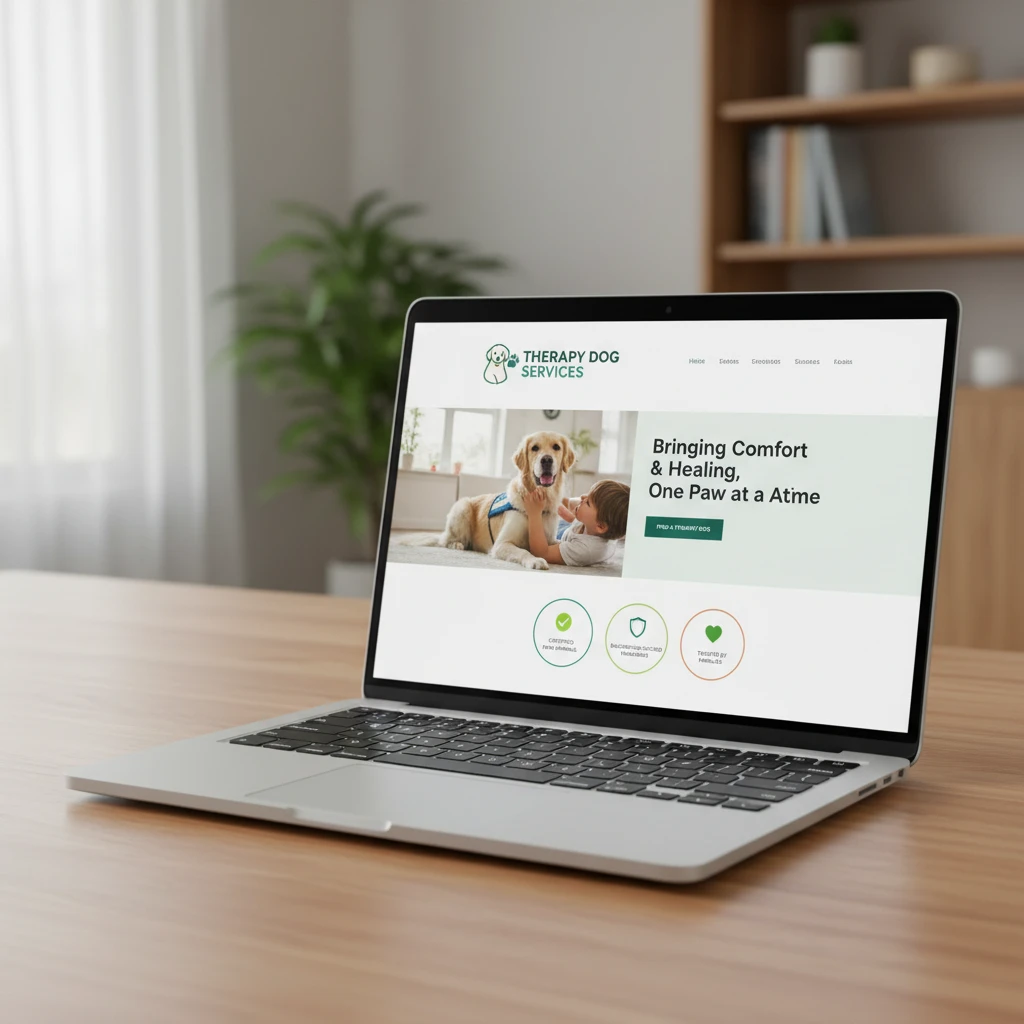
Your website must look clinical and professional, not like a dog walker’s blog. Include a specific “Compliance” page where you list your insurance details, RAMS overview, and your dog’s certifications. This transparency is your biggest selling point against amateur competitors.
Frequently Asked Questions
Do I need a specific qualification to start a therapy dog business in NZ?
While you don’t need a specific degree to run an Animal-Assisted Activities business, providing clinical Animal-Assisted Therapy (AAT) requires you to be a qualified healthcare or educational professional. However, all businesses should have documented dog handling training.
How much does public liability insurance cost for a therapy dog business?
Costs vary based on your specific activities, but specialized liability insurance for animal businesses in NZ typically ranges from $400 to $1,200 per year. It is crucial to declare that you are working with animals to ensure the policy is valid.
Can my therapy dog go into supermarkets and restaurants?
No. In New Zealand, only Disability Assist Dogs (like Guide Dogs) have legal public access rights under the Dog Control Act 1996. Therapy dogs only have access to places where they have been invited or where the business owner has granted permission.
What is the difference between St John Therapy Pets and a private business?
St John Therapy Pets is a volunteer organization where handlers do not get paid. A private therapy dog business charges a fee for services, requires its own commercial insurance, and often provides more specialized or consistent therapeutic interventions.
Which dog breeds are best for therapy work in NZ?
There is no specific breed requirement; it is entirely about temperament. However, Retrievers, Labradors, and Poodles (and their crosses) are popular due to their generally biddable nature and hypoallergenic qualities (in the case of Poodles), which are preferred in clinical settings.
How do I price my therapy dog services?
Pricing depends on the sector. Corporate wellness events often command higher hourly rates ($150-$300+ NZD/hr), while schools and non-profits may expect lower rates ($80-$150 NZD/hr). Factor in travel time, insurance costs, and grooming expenses when setting rates.