
Therapy dogs in New Zealand are selected and trained dogs that provide comfort, affection, and emotional support in environments such as hospitals, schools, rest homes, and private clinical practices. Unlike Disability Assist Dogs, therapy dogs do not have automatic public access rights under the Dog Control Act 1996 and must have specific permission to enter public facilities.
As the therapeutic landscape in Aotearoa evolves, the integration of canine-assisted interventions (CAI) has moved beyond simple volunteer visits to become a sophisticated clinical modality. For health professionals, educators, and facility managers in 2025, understanding the distinction between a pet, a visiting therapy dog, and a clinical facility dog is paramount for legal compliance and therapeutic success.
The NZ Therapy Dog Landscape: Definitions & Legalities
One of the most critical aspects of operating within the New Zealand sector is understanding the legal framework. Confusion often arises regarding “registration” and access rights. In late 2024, the distinction remains legally binding under the Dog Control Act 1996 and the Human Rights Act 1993.

What is the difference between Assistance Dogs and Therapy Dogs in NZ?
This is the most common point of friction in the industry. It is vital to distinguish between the three main categories of working canines:
- Disability Assist Dogs: These dogs are certified by organisations listed in Schedule 5 of the Dog Control Act (e.g., Blind Low Vision NZ, Assistance Dogs NZ). They have full public access rights to supermarkets, aircraft, and restaurants. Their primary function is to perform tasks for a specific individual with a disability.
- Therapy Dogs: These dogs are trained to provide comfort to many people. They have no legal public access rights. They can only enter businesses, schools, or hospitals by invitation or prior arrangement. They are not covered by the Human Rights Act in terms of access.
- Emotional Support Animals (ESAs): In New Zealand, ESAs have no legal recognition or public access rights. Airlines like Air New Zealand generally do not accept ESAs for in-cabin travel unless they meet specific, rigorous criteria often aligned with assistance dogs.
For a business model, this means you cannot market a therapy dog training course promising that clients can take their dogs “everywhere.” Doing so violates NZ commerce and fair trading standards.
Bridging the Gap: Charity Visitation vs. Clinical Practice
The New Zealand market is currently bifurcated into two distinct operational models: the Volunteer Visitation Model and the Professional Clinical Model. Understanding where you fit determines your insurance needs and training requirements.
The Volunteer Model
Organisations such as St John (Therapy Pets) and Canine Friends Pet Therapy operate on a volunteer basis. These dogs are generally family pets with sound temperaments who visit rest homes or hospitals for social engagement. The “handler” is usually the owner, who acts as a volunteer. The liability generally rests with the umbrella organisation.
The Professional Clinical Model
This is the growth sector for 2025. This involves registered professionals—Occupational Therapists, Psychologists, Counsellors, or Social Workers—integrating a dog into their distinct scope of practice. Here, the dog is not just a visitor; it is a clinical tool used to achieve specific therapeutic goals (e.g., increasing range of motion, reducing anxiety during disclosure, or regulating sensory input).
In this model, the liability rests with the private practitioner or the employing DHB/NGO. The standard of training and documentation must be significantly higher than the volunteer model because the dog is working in a high-stakes environment with vulnerable clients.
Business Logistics: Insurance, Funding & WorkSafe
Running a business that involves therapy dogs in New Zealand requires navigating specific logistical hurdles. Neglecting these can lead to significant financial and reputational risk.

Insurance Requirements
Standard business liability insurance often excludes damage caused by animals. If you are a private practitioner taking a dog into a school or clinic, you must ensure your Public Liability and Professional Indemnity policies explicitly cover “Animal Assisted Intervention.”
Many NZ insurers will require proof of certification from a reputable trainer before adding this clause. Do not assume your standard contents or business policy covers a dog bite or a trip-and-fall accident caused by a long line.
WorkSafe NZ Implications
Under the Health and Safety at Work Act 2015, a therapy dog in a workplace is considered a potential hazard that must be managed. A PCBU (Person Conducting a Business or Undertaking) must:
- Identify the risks (e.g., allergies, zoonosis, bites, tripping).
- Implement control measures (e.g., hygiene protocols, quiet zones for the dog).
- Monitor these controls.
Failure to have a documented Risk Assessment specifically for the canine can result in penalties if an incident occurs.
Funding Streams
How do you monetize or fund therapy dog programs in NZ?
- ACC (Accident Compensation Corporation): While ACC does not typically fund “therapy dog sessions” as a line item, they do fund Occupational Therapy or Psychological services. If the dog is a tool used during a funded session to achieve the rehabilitation goal, it is generally an accepted part of the service provision, provided the clinical rationale is sound.
- Ministry of Education: Schools often use Learning Support funding to pay for external providers who may utilize therapy dogs, particularly for neurodiverse students.
- Philanthropic Grants: Organisations like the Lotteries Commission or local community trusts often fund Animal Assisted Education programs in low-decile schools.
Clinical Protocols & Risk Management
To operate professionally in 2025, you need a robust policy framework. “Trusting the dog” is not a policy. Below are the essential protocols required for clinical integration.
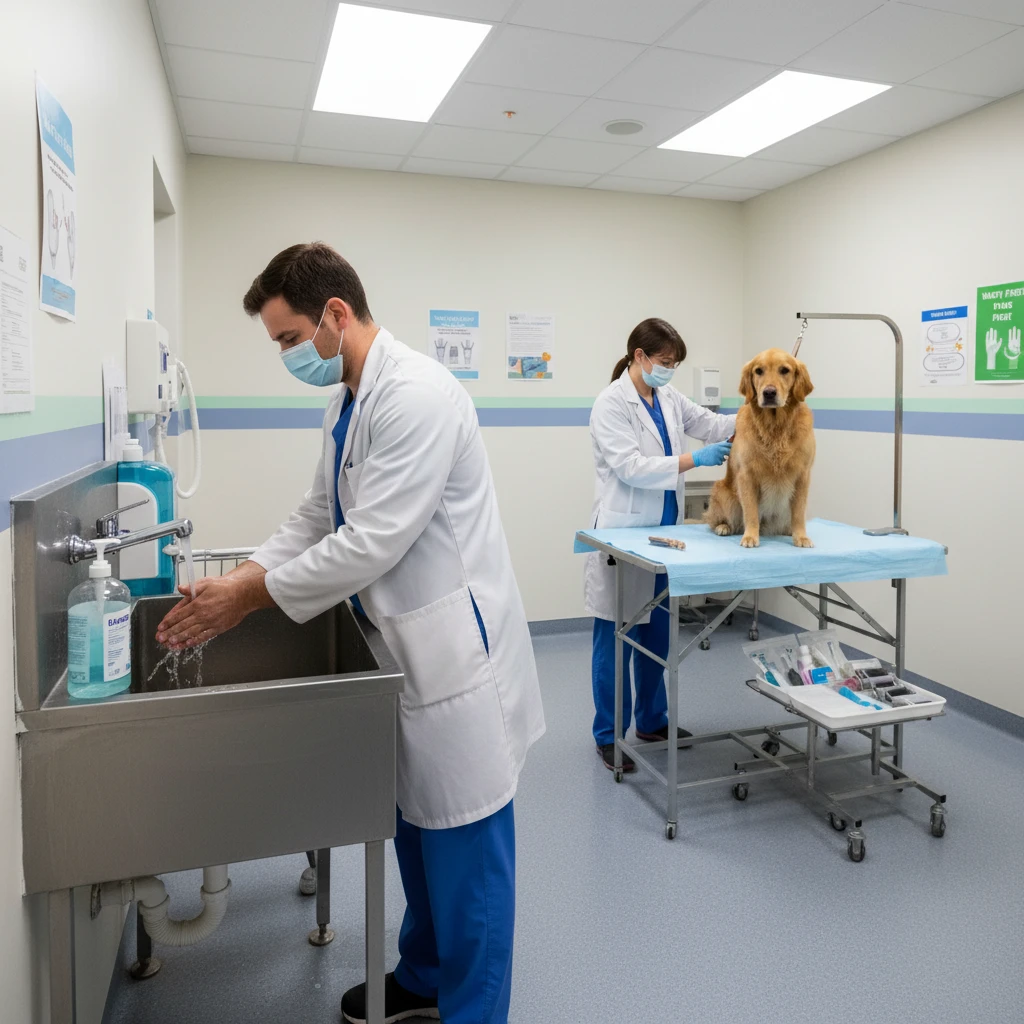
Infection Control & Zoonosis
In a post-COVID world, hygiene is scrutinised heavily. Your protocol must include:
- Grooming: Dogs should be groomed within 24 hours of a clinical visit to reduce dander and allergens.
- Parasite Control: Rigorous flea and worming schedules are non-negotiable. Records must be kept for audit purposes.
- Hand Hygiene: Mandatory hand sanitising for clients before and after interaction.
- Exclusion Zones: Dogs must be prohibited from sterile areas, food preparation areas, and medication rooms.
Canine Welfare & Consent
The Animal Welfare Act 1999 places a duty of care on the handler. In a therapy setting, the dog’s welfare is paramount. Handlers must be trained to recognise Calming Signals (lip licking, yawning, turning away). A “Consent Test” should be performed frequently: if you stop petting the dog, do they re-engage or move away? If they move away, the interaction ends. This protects the dog from burnout and the client from a potential defensive reaction.
Training Pathways & Certification in NZ
There is no government-run registry for therapy dogs in New Zealand. Certification is industry-regulated, meaning the credibility of your dog depends on the credibility of the organisation that certified it.
Owner-Trainer vs. Programme Trained
Most therapy dogs in NZ are owner-trained with the support of professional trainers. Few organisations provide fully trained dogs due to the high cost (upwards of $30,000).
Key Competencies for Assessment
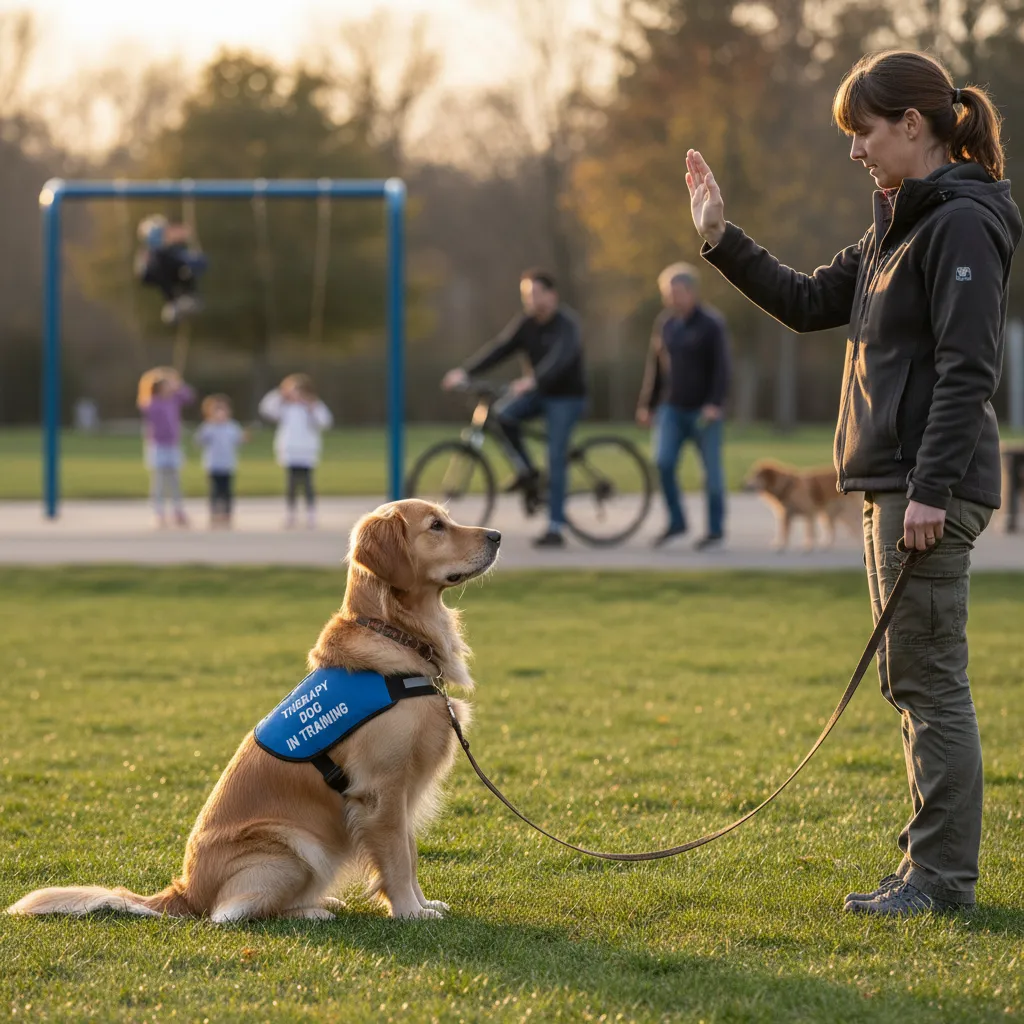
Regardless of the training provider, a therapy dog in NZ must pass an assessment usually covering:
- Loose Lead Walking: No pulling, even around distractions (wheelchairs, crutches).
- Reaction to Noise: Recovery from sudden loud noises (dropped trays, alarms) within seconds.
- Gentle Acceptance: Accepting clumsy petting or handling without mouthing or jumping.
- Leave It: Ignoring dropped food or medication instantly.
- Separation: Remaining calm if the handler steps out of sight briefly.
Directory of NZ Resources and Stakeholders
For those looking to enter the industry or source a dog, these are the primary stakeholders active in 2024/2025.
- Therapy Dogs New Zealand (TDNZ): A leading organisation offering assessment and accreditation for volunteer and professional teams. They provide insurance coverage for their registered members.
- Canine Friends Pet Therapy: The largest network of volunteer visitation teams, focusing primarily on hospitals and rest homes.
- St John Therapy Pets: A massive volunteer network providing community service. Excellent for hobbyists but not for private clinical practice.
- K9 Medical Detection NZ: While focused on medical detection (cancer, bowel disease), they set high standards for working dogs in NZ.
- Animals in Schools Education Trust: Provides guidelines for implementing dogs in educational settings safely.
People Also Ask
Can I take my therapy dog into supermarkets in NZ?
No. Therapy dogs do not have public access rights under the Dog Control Act 1996 or the Food Act 2014. Only certified Disability Assist Dogs (like Guide Dogs) are permitted in supermarkets and places where food is prepared. Taking a therapy dog into a supermarket without permission is a breach of regulations.
How do I certify my dog as a therapy dog in NZ?
Certification is done through private organisations such as Therapy Dogs New Zealand or St John (for volunteers). The process typically involves a temperament test, an obedience assessment (often similar to Canine Good Citizen), and a specialized therapy dog assessment in a simulated environment.
What is the difference between an assistance dog and a therapy dog in NZ?
An assistance dog is trained to perform specific tasks to mitigate a disability for one person and has legal public access rights. A therapy dog is trained to provide comfort to many people and has no legal public access rights; they only visit places by invitation.
Does ACC cover therapy dog sessions?
ACC does not have a specific billing code for “Therapy Dog Sessions.” However, if a registered provider (like an Occupational Therapist or Psychologist) uses a therapy dog as a modality within a standard funded session to achieve rehabilitation goals, the session itself is covered.
What breeds make the best therapy dogs?
Temperament is more important than breed. However, Retrievers (Golden and Labrador), Poodles, and Cavalier King Charles Spaniels are popular in NZ due to their generally social and biddable nature. The dog must be confident, calm, and recover quickly from startling situations.
How much does therapy dog training cost in NZ?
Costs vary significantly. Volunteer assessments may cost a small membership fee (e.g., $50-$100/year). Professional training courses for clinical facility dogs can range from $500 for online theory components to over $5,000 for intensive practical workshops and private coaching.