
Managing dog phobias in schools requires a comprehensive strategy involving opt-in consent models, designated dog-free zones, and gradual exposure protocols known as desensitization. Schools must prioritize the emotional safety of students with cynophobia by establishing clear boundaries, utilizing ‘traffic light’ interaction systems, and ensuring therapy dogs remain leashed and under strict handler control at all times.
Creating Inclusive Environments with Therapy Dogs
The integration of therapy dogs into New Zealand schools has seen a meteoric rise, driven by the tangible benefits to student wellbeing, literacy, and emotional regulation. However, the introduction of a live animal into an educational setting brings logistical challenges that must be managed with professional rigour. The goal is to create an inclusive environment where the presence of a therapy dog enhances the learning ecosystem without alienating students who suffer from allergies or cynophobia (fear of dogs).
Inclusivity in this context means acknowledging that “safety” looks different for every student. For a child with anxiety, the dog is a source of comfort; for a child with a phobia, that same dog is a source of terror. A successful therapy dog programme rests on the principle of “Challenge by Choice.” No student should ever be forced to interact with the animal. Instead, the environment must be engineered to allow for avoidance, observation, or interaction based entirely on the student’s comfort level.
Managing Dog Phobias in Schools: A Strategic Approach
Cynophobia is one of the most common animal phobias among children. It can stem from past trauma, lack of exposure, or learned behaviour from parents. Managing dog phobias in schools is not merely about keeping the dog away from fearful students; it is about structuring the school day so that the fear does not impact the student’s access to education.
The Opt-In Consent Model
The foundation of managing phobias is the “Opt-In” model. Unlike an “Opt-Out” model where participation is assumed unless stated otherwise, an Opt-In model requires active consent. Before a therapy dog programme launches:
- Survey the Community: Send questionnaires to all families to identify students with fears or allergies.
- Identify Non-Participants: Create a confidential register of students who must not have contact with the dog.
- Visual Identifiers: In some junior settings, non-participating students might wear a specific badge or wristband during “dog hours” to alert the handler immediately, though discretion is preferred for older students.
Zoning and Movement Control
To effectively manage phobias, the school must control the dog’s movement rigorously. Free-roaming dogs are a liability in a school setting. Instead, utilize a zoning system:
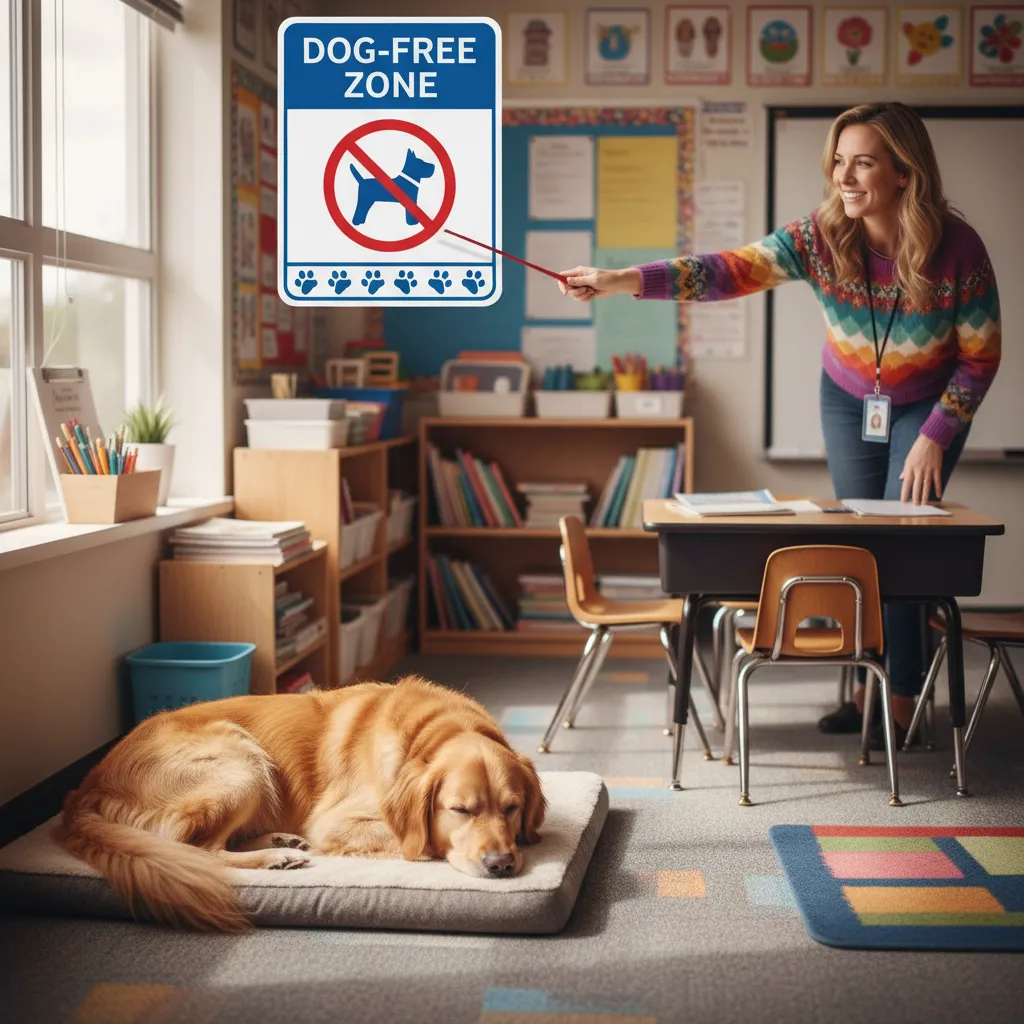
- Dog-Free Zones: Areas such as the cafeteria, specific toilet blocks, and high-traffic corridors during class changes should be permanently dog-free.
- The Hub Model: Rather than the dog visiting classrooms, the dog resides in a specific room (e.g., the counsellor’s office or library). Students come to the dog, ensuring that those who wish to avoid the animal can easily do so.
- Leash Protocols: The dog should be on a leash at all times when moving through common areas, with the handler positioning themselves between the dog and the students.
Gradual Desensitization Techniques
For students with mild to moderate fears, a school therapy dog can actually be a therapeutic tool to overcome cynophobia, provided the process is voluntary and managed by professionals. This process is known as systematic desensitization.
The Traffic Light System
Implementing a colour-coded interaction system helps students visualize their boundaries and control their exposure.
1. Red Zone (No Contact):
The student is in the same building as the dog but has no visual contact. They know the dog is present but are assured it will not enter their space. This builds trust in the school’s containment protocols.
2. Amber Zone (Visual Observation):
The student observes the dog from a distance or through a window. They can see the dog is calm, obedient, and under control. This challenges the cognitive distortion that the dog is unpredictable or dangerous. The student might watch a training session from across the school hall.
3. Green Zone (Controlled Interaction):
Only when the student initiates it, they may move to closer proximity. This might involve standing near the dog while the dog is in a “down-stay” command. Eventually, this can progress to throwing a treat or patting the dog’s back (less threatening than the head).

Comprehensive Allergy Management Plans
While phobias are psychological, allergies are physiological and carry significant health risks. Managing allergies requires a multi-faceted approach involving hygiene, air quality, and strict grooming standards.
Myth-Busting: Hypoallergenic Dogs
It is crucial to understand that there is no such thing as a 100% hypoallergenic dog. While breeds like Poodles or Labradoodles shed less hair, allergens are found in dander (skin flakes), saliva, and urine. Therefore, relying solely on the breed is insufficient for student safety.
Air Filtration and Environmental Hygiene
To mitigate airborne allergens, schools should invest in proper air filtration strategies in rooms where the therapy dog operates.
- HEPA Filtration: Utilize portable air purifiers equipped with True HEPA (H13 or H14) filters. These can capture 99.97% of particles as small as 0.3 microns, including pet dander.
- Ventilation: Ensure rooms have adequate cross-ventilation. Open windows where possible to dilute indoor air with fresh outdoor air.
- Soft Furnishings: Minimize carpets and fabric sofas in the therapy room. Hard surfaces (vinyl, wood) are easier to clean and do not trap dander. If rugs are used, they must be machine washable and cleaned weekly.

Grooming Protocols
The handler must adhere to a strict grooming schedule to reduce the allergen load the dog brings into the school.
- Bathing: The dog should be bathed 24-48 hours prior to the school week to remove loose dander.
- High-Velocity Drying: Professional grooming blasts out loose coat and dander.
- Daily Brushing: This should be done outside the school grounds before the dog enters the building.
- Wipes: Use pet-safe grooming wipes on the dog’s coat upon arrival to remove surface pollen or dust collected during the commute.
Hygiene Barriers
Strict hand hygiene is non-negotiable. Any student who interacts with the dog must wash their hands immediately afterward. Hand sanitizer stations should be mounted at the entrance and exit of the room where the dog resides. Furthermore, students with known allergies should be advised to change their clothes when they get home if they have been in close contact with the animal.
Communication Strategies for Concerned Parents
The success of a therapy dog programme often hinges on parental support. Transparency is key to managing the anxieties of parents who may have children with allergies or phobias.
The Introduction Letter
Before the dog enters the school, send a comprehensive letter outlining the programme. This letter should not just announce the dog but explain the logistics of safety. Include details on:
- The dog’s certification and training level.
- The specific insurance held by the handler/school.
- The hygiene protocols in place.
- The “Opt-Out” or “Opt-In” form for allergies and phobias.
Addressing Concerns Directly
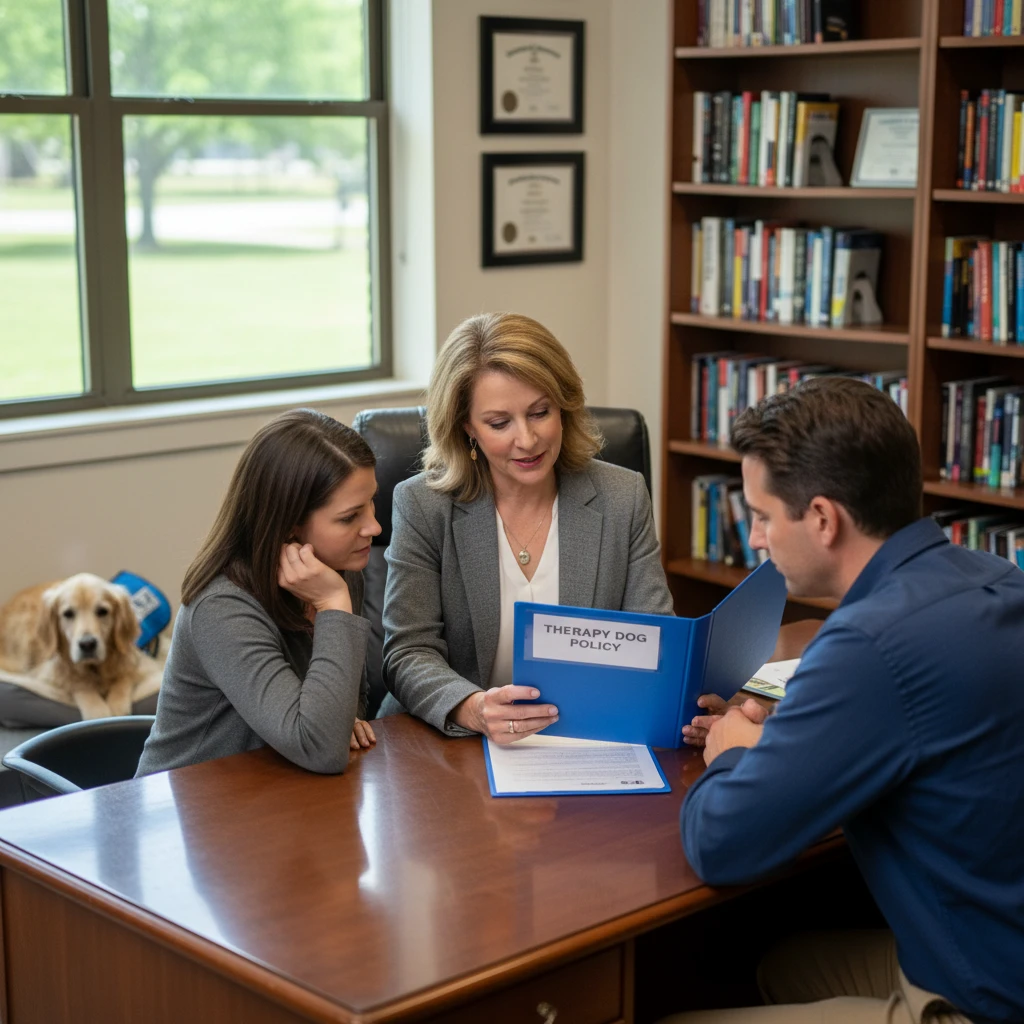
When a parent raises a concern, arrange a face-to-face meeting. Listen to their specific fears. Often, parents imagine a dog running loose in the classroom. Explain the “Hub Model” and the leash protocols. Show them the Risk Assessment document. Demonstrating that you have anticipated the risks and have control measures in place usually alleviates anxiety.
Operational Logistics and Risk Assessment
From a business and logistics perspective, managing a therapy dog in a New Zealand school requires compliance with the Health and Safety at Work Act 2015. The dog is considered a hazard that must be managed.
Developing a Risk Matrix
Schools must develop a specific Risk Assessment for the therapy dog. This document should categorize risks based on Likelihood and Consequence.
- Risk: Child with severe allergy comes into contact with dog.
- Control: Dog prohibited from cafeteria; separate designated room for dog; EpiPens accessible; register of allergic students checked daily.
- Risk: Child with phobia encounters dog unexpectedly.
- Control: Dog wears high-visibility vest; “Dog on Site” signage at reception; rigorous timetable for dog movement.
- Risk: Dog becomes overwhelmed and snaps.
- Control: Strict time limits for dog work (e.g., 2 hours on, 1 hour off); quiet retreat area for dog; handler trained in canine body language.
By treating the therapy dog programme with the same logistical rigour as a science lab or a playground, schools can ensure that the benefits of canine-assisted therapy are delivered safely, effectively, and inclusively.
Frequently Asked Questions
What should schools do if a student has a severe dog allergy?
If a student has a severe (anaphylactic) allergy, the school must implement strict exclusion zones. The dog should be restricted to specific areas the allergic student does not access. High-efficiency air filtration should be used, and the dog’s movement paths should not cross the student’s daily route. In extreme cases, the dog may need to be excluded from the school entirely, as student safety is the priority.
How can you tell if a student is genuinely afraid of the therapy dog?
Signs of genuine cynophobia include freezing, crying, hiding behind adults or furniture, trembling, or attempting to flee the room when the dog appears. Unlike general dislike, a phobia triggers a fight-or-flight response. Teachers should be trained to recognize these non-verbal cues immediately.
Are certain dog breeds better for schools with allergic students?
While no dog is 100% hypoallergenic, low-shedding breeds like Poodles, Bichon Frises, and Schnauzers are generally better. However, the individual dog’s hygiene (regular bathing and grooming) is more important than the breed, as dander and saliva are the primary allergens, not just fur.
Can a school be liable if a child is bitten by a therapy dog?
Yes, schools and handlers can be liable. In New Zealand, this falls under the Health and Safety at Work Act. Liability is minimized by ensuring the dog is certified by a reputable organization, holds specific public liability insurance, and that a robust Risk Assessment and Management Plan (RAMP) is actively followed.
What is the best way to introduce a therapy dog to a hesitant class?
Start with a “dog-free” introduction where the handler explains the rules and shows photos of the dog. Then, introduce the dog in a large space (like a hall) where the dog is on a leash and distance is maintained. Allow students to approach one by one only if they choose to.
How often should a therapy dog be groomed for school use?
A therapy dog should be brushed daily to remove loose hair and dander. A full bath should occur at least once every 2 to 4 weeks, or 24 hours before the start of the school week. Nails should be trimmed weekly to prevent accidental scratching.


