
A dogs in the workplace policy NZ is a formal framework outlining rules for bringing canines into business premises, ensuring compliance with the Health and Safety at Work Act 2015. It addresses hygiene, behavior standards, liability, and risk management to balance employee wellbeing with workplace safety obligations.
As the conversation around mental health in the workplace evolves, New Zealand businesses are increasingly looking toward innovative solutions to improve staff wellbeing. One such solution gaining significant traction is the integration of therapy dogs into the office environment. However, moving from a “no animals allowed” rule to a dog-friendly culture requires more than just good intentions; it requires a robust legal and operational framework.
What is the Legal Framework for Dogs in NZ Workplaces?
In New Zealand, there is no specific legislation that explicitly bans dogs from general office environments (excluding food preparation areas, which have strict Food Act 2014 regulations). However, the primary governing legislation is the Health and Safety at Work Act 2015 (HSWA). Under this Act, a Person Conducting a Business or Undertaking (PCBU) has the primary duty of care to ensure, so far as is reasonably practicable, the health and safety of workers and other persons.
Bringing a dog onto the premises introduces new hazards that must be managed. If a dog bites an employee, trips a client, or causes an allergic reaction, the PCBU could be held liable for failing to manage that risk. Therefore, a comprehensive risk assessment is mandatory before allowing paws through the door.

Identifying Hazards Under HSWA
To comply with NZ law, you must identify potential risks associated with animals on site. These typically include:
- Physical Injury: Bites, scratches, or being knocked over (particularly relevant for staff with mobility issues).
- Biological Hazards: Fleas, worms, and zoonotic diseases.
- Slips, Trips, and Falls: Dogs lying in walkways or water spilled from bowls.
- Psychological Stress: Impact on staff with cynophobia (fear of dogs).
Once identified, these risks must be eliminated or minimized. This is where your dogs in the workplace policy NZ becomes a critical legal document, serving as your control measure.
What Are the Benefits of Office Dogs for Mental Health?
The push for dog-friendly policies is not merely a trend; it is backed by substantial data regarding workplace wellness. In the context of New Zealand’s growing focus on mental health support in professional sectors, therapy dogs offer tangible benefits.
Reduction in Cortisol Levels
Interacting with a friendly dog has been scientifically proven to lower cortisol (stress hormone) levels and increase oxytocin (the bonding hormone). In high-pressure NZ corporate environments, such as law firms or tech startups, the presence of a therapy dog can act as a natural circuit-breaker for stress.
Enhanced Team Cohesion
Dogs act as social lubricants. They encourage conversations between departments that might not otherwise interact. A quick chat over a dog in the breakroom can break down silos and improve overall company culture. This sense of community is vital for employee retention.

Attracting and Retaining Talent
In a competitive job market, a dog-friendly policy is a significant perk. It signals a flexible, modern, and empathetic company culture. For millennials and Gen Z workers, the ability to bring a dog to work—or interact with an office therapy dog—can be a deciding factor in accepting a job offer.
How to Draft a Robust Dogs in the Workplace Policy NZ
Drafting a policy requires precision. It must be clear, enforceable, and fair to all staff. Below are the essential components that every NZ business must include in their documentation.
1. Eligibility and Assessment
Not every dog is suitable for the workplace. Your policy should stipulate that access is a privilege, not a right. Require a “probationary period” for any new dog. The policy should mandate that dogs must be:
- Fully house-trained.
- Socialized and non-aggressive.
- Obedient to basic commands (sit, stay, recall).
- Clean and free of parasites.
2. Vaccination and Hygiene Requirements
To satisfy health and safety requirements, you must demand proof of current registration with the local council (e.g., Auckland Council or Wellington City Council tags) and up-to-date vaccinations (Parvovirus, Distemper, Hepatitis, Kennel Cough). Regular flea and worm treatments must be a condition of entry.
3. “Zero Tolerance” Aggression Clause
The policy must explicitly state that any sign of aggression—growling, snapping, or lunging—results in immediate and permanent expulsion from the workplace. There should be no grey area here, as the liability risk for the PCBU is too high.

4. Designated Zones and Leash Rules
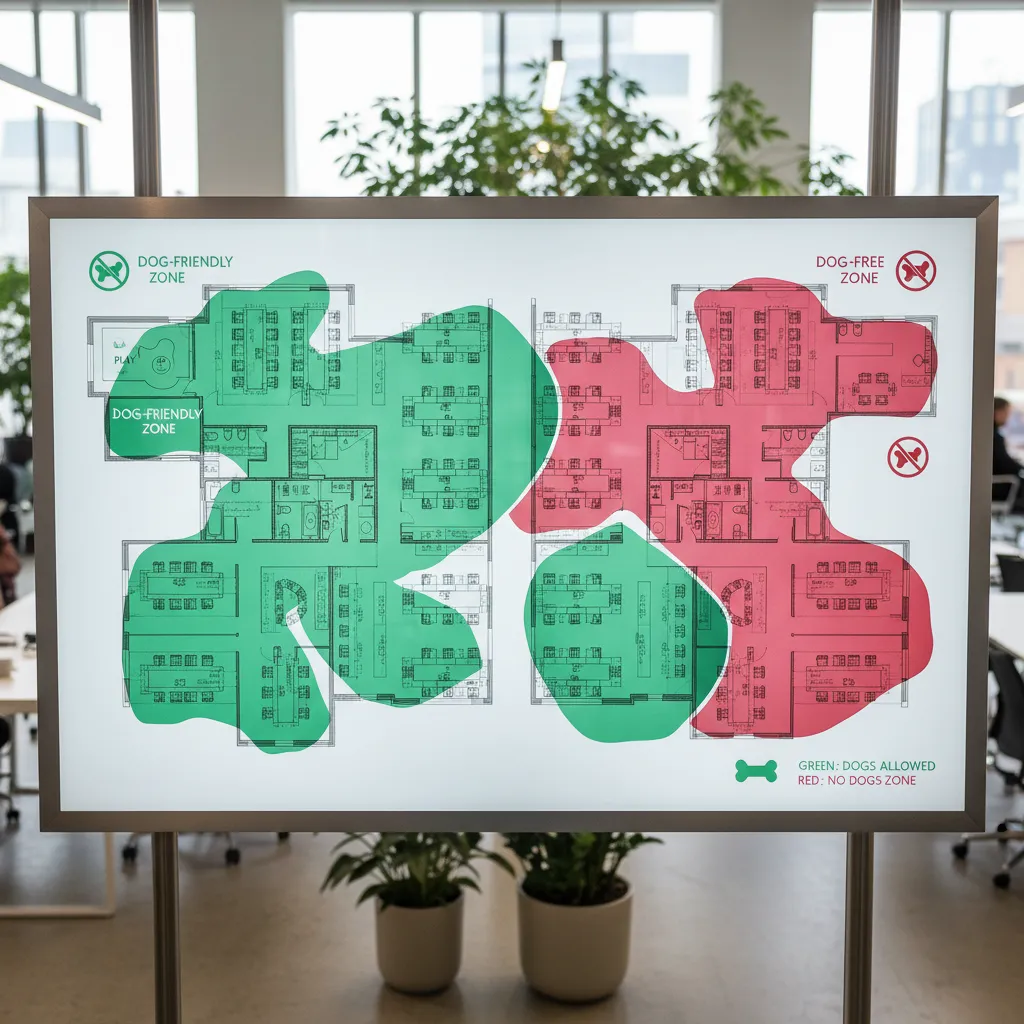
Define where dogs can and cannot go. Kitchens, bathrooms, and server rooms should be strictly off-limits. Decide whether dogs must be on a leash at all times or if they can be off-leash in specific secure areas (like a gated office). Most robust policies require dogs to be leashed when moving through common areas.
Therapy Dogs vs. Pet Dogs: Understanding the Difference
It is crucial for employers to distinguish between a certified Therapy Dog and a staff member’s pet. This distinction often dictates the level of access and the insurance requirements.
Therapy Dogs: These animals have undergone rigorous training and assessment to provide psychological or physiological support to individuals other than their handlers. In New Zealand, organizations like Therapy Dogs New Zealand set high standards for temperament and obedience. These dogs are working animals designed to be calm in chaotic environments.
Pet Dogs: These are companion animals without specific vocational training. While they can provide comfort, their behavior is less predictable. A workplace policy might allow certified therapy dogs greater access than general pets due to their proven reliability.
Note on Disability Assist Dogs: It is illegal under the Human Rights Act 1993 to refuse entry to a Disability Assist Dog (e.g., Guide Dogs, Mobility Dogs). These are distinct from therapy dogs and must be granted access to all public areas.
How to Manage Allergies and Phobias in the Office?
One of the biggest hurdles to implementing a dogs in the workplace policy NZ is balancing the desires of dog owners with the rights of employees who have allergies or cynophobia.
Consultation is Key
Under the HSWA, you must engage with your workers on health and safety matters. Before launching the policy, conduct an anonymous survey to gauge staff sentiment. If an employee has a severe allergy, their health takes precedence over the privilege of having dogs in the office.
Creating Dog-Free Zones
If you have a mixed workforce, designated “dog-free zones” are essential. This ensures that staff with mild allergies or fears have a safe harbor where they can work without anxiety. High-efficiency particulate air (HEPA) filters should be installed to manage dander levels in the air.
The Dispute Resolution Process
Your policy must outline a clear path for complaints. If a dog is causing a distraction (barking, whining) or making a staff member uncomfortable, there must be a formal process to address it without the complainant fearing retaliation. Usually, this involves a “three strikes” rule for nuisance behavior, but immediate removal for safety concerns.
Practical Implementation Checklist for HR Managers
Ready to move forward? Use this checklist to ensure you have covered your bases before the first dog arrives.
- Legal Review: Have your employment lawyer review the policy to ensure it doesn’t breach the terms of your commercial lease (check with your landlord first!).
- Insurance Check: Contact your business liability insurance provider to confirm that damage or injury caused by animals is covered.
- Signage: Place clear signage at the entrance of the office informing visitors that dogs are on the premises.
- Pet CVs: Create a file for every dog containing their photo, vaccination records, and emergency contact details for the owner.
- Emergency Kit: Stock a “Dog Clean-Up Kit” with enzymatic cleaners, poop bags, and gloves.
Integrating dogs into the workplace can be a transformative move for company culture in New Zealand. By prioritizing safety, respecting all employees’ needs, and adhering to a strict policy framework, businesses can reap the mental health rewards while minimizing liability.
People Also Ask
Can I bring my dog to work in NZ?
There is no automatic legal right to bring your dog to work in New Zealand unless it is a certified Disability Assist Dog (like a Guide Dog). Bringing a pet or therapy dog is entirely at the discretion of the employer (PCBU) and must be agreed upon in workplace policies.
Is it legal to have dogs in the office in NZ?
Yes, it is legal provided the business is not involved in food preparation (Food Act 2014 restrictions). However, the employer must comply with the Health and Safety at Work Act 2015, ensuring the dog does not pose a risk to workers or visitors.
What if a colleague is allergic to dogs?
Employers have a duty of care to all staff. If a colleague has a severe allergy, the employer must manage this risk. This may result in the dog being banned, or strict segregation (dog-free zones) and air filtration being implemented. The health of the allergic employee generally takes precedence over the privilege of bringing a dog.
Does the Health and Safety Act cover office dogs?
Yes. Under the HSWA 2015, a dog is considered a potential hazard. The PCBU must identify risks (bites, trips, allergies) and implement control measures to eliminate or minimize these risks. Failure to do so can result in significant penalties.
What is the difference between a service dog and a therapy dog in NZ?
A Service Dog (Disability Assist Dog) is legally protected under the Human Rights Act and allows the handler access to almost all public spaces. A Therapy Dog is trained to provide comfort but does not have the same legal public access rights and enters workplaces only with permission.
Can a landlord ban dogs in a commercial lease?
Yes. Many commercial leases in New Zealand contain standard clauses prohibiting animals. Before implementing a dog-friendly policy, a business must check their lease agreement and get written consent from the landlord or property manager.