
What is a Reading to Dogs Program in NZ?
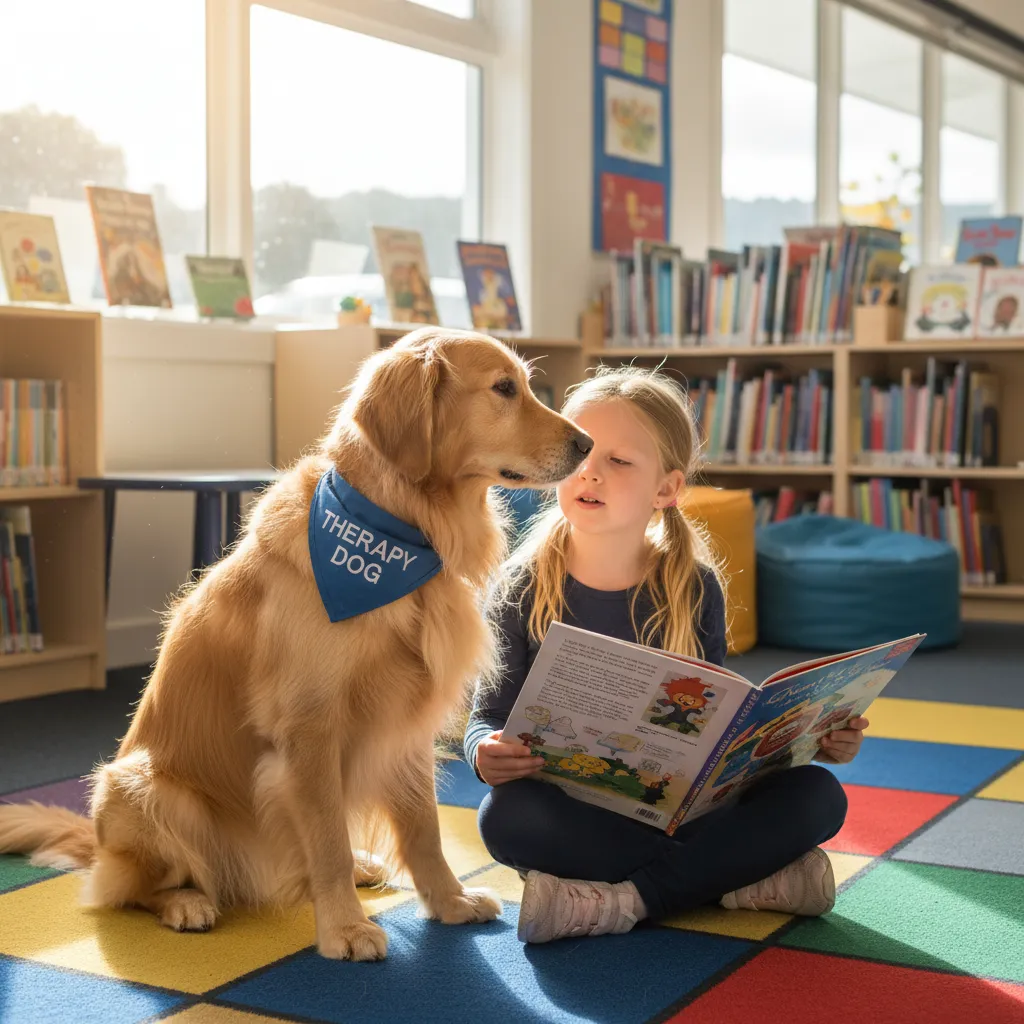
A reading to dogs program NZ is a specialized literacy intervention where children read aloud to trained therapy dogs and their handlers. Designed to boost confidence and reading fluency, these programs utilize the non-judgmental presence of a canine companion to lower anxiety, allowing students to focus on comprehension and vocalization without fear of correction or peer pressure.
Across New Zealand, from Auckland’s urban libraries to rural schools in the South Island, a quiet revolution is taking place in literacy education. Educators are increasingly turning to a unique resource to help struggling readers: trained therapy dogs. While the concept may seem whimsical to the uninitiated, the logistics, psychology, and results behind a reading to dogs program NZ are grounded in serious educational theory and rigorous safety standards.
For school administrators, librarians, and literacy coordinators, understanding how to deploy these programs effectively requires moving beyond the novelty factor. It involves navigating the intersection of animal behavior, child psychology, and operational logistics. This guide provides a deep dive into the professional implementation of canine-assisted reading initiatives within the New Zealand educational landscape.
The Science Behind Canine-Assisted Reading
The Physiology of Reading Anxiety
To understand why reading to dogs works, one must first understand the physiological barrier many children face: anxiety. When a child who struggles with literacy is asked to read aloud in a classroom, their body often reacts with a ‘fight or flight’ response. Cortisol levels spike, and the brain’s executive functions—responsible for decoding text and comprehension—become impaired.
The presence of a therapy dog acts as a biological circuit breaker. Research indicates that positive interactions with animals release oxytocin, a hormone associated with bonding and relaxation, while simultaneously lowering cortisol. In this chemically altered state, the child’s brain is more receptive to learning. The dog provides what educators call a “non-evaluative audience.” Unlike a teacher who may correct pronunciation or a peer who might giggle at a mistake, the dog simply listens. This removes the fear of failure, which is often the primary obstacle to reading fluency.
The Affective Filter Hypothesis
Linguist Stephen Krashen’s “Affective Filter Hypothesis” suggests that emotional variables such as anxiety, motivation, and self-confidence can prevent input from reaching the language acquisition part of the brain. If the filter is “up” (high anxiety), learning is blocked.
Canine-assisted reading programs effectively lower this filter. In the New Zealand context, where literacy rates are a constant focus of the Ministry of Education, interventions that address the emotional component of reading are proving to be powerful adjuncts to traditional phonics and whole-language instruction. The dog transforms the activity of reading from a performance to a shared social interaction.
Implementing Programs: From ‘Bark in the Park’ to Classroom Corners
New Zealand has seen various iterations of these programs. The most notable public facing model is often found in council libraries, such as the “Bark in the Park” events or specific library sessions run by Auckland Council and other local bodies. However, structured implementation in schools requires a different operational model.
The Library Model vs. The School Model
Public Library Model: These are often drop-in sessions or booked appointments. They rely on parental involvement to bring the child to the venue. The environment is less controlled than a classroom, but it serves a vital community engagement role. Programs here often focus on fostering a love for books rather than strict remedial literacy.
School Intervention Model: This is a targeted approach. Learning support coordinators identify specific students (often reading 12–24 months behind their chronological age) for weekly sessions. The environment is controlled, usually a quiet corner of the library or a resource room. Consistency is key here; the student reads to the same dog and handler team for a set term (e.g., 8–10 weeks) to build rapport.

Logistics: Safety, Hygiene, and Legalities
For a business or school looking to facilitate a reading to dogs program NZ, the logistics are the most critical component. Ignoring these can lead to liability issues and program failure.
Risk Assessment and Management
Under the Health and Safety at Work Act 2015, schools must take all practicable steps to ensure safety. Introducing an animal into the workplace (school) requires a specific risk assessment.
- Allergies: Schools must survey parents regarding allergies. Sessions should be held in a room with hard flooring rather than carpet to facilitate cleaning, or in a specific area that allergic students do not frequent.
- Phobias: Not all children love dogs. The program must be opt-in, and clear signage should indicate when and where a dog is on the premises so fearful students can avoid the area.
- Sanitation: Hand sanitizer must be mandatory before and after the session. The dog should be groomed within 24 hours of the visit to minimize dander and dirt.
The Handler’s Role
The handler is just as important as the dog. In a professional NZ context, the handler is not a teacher. Their role is to manage the dog and ensure the animal’s welfare. They should be trained to:
- Monitor Stress Signals: Recognizing whale eye, lip licking, or panting in the dog.
- Facilitate, Don’t Teach: The handler should not correct the child’s reading unless prompted. They might say, “Rover didn’t quite hear that part, can you read it to him again?” This attributes the need for repetition to the dog, not the child’s error.

Measuring Literacy Improvements
To justify the logistical effort of a reading to dogs program, schools must measure outcomes. Data collection should be twofold: quantitative (reading metrics) and qualitative (behavioral changes).
Quantitative Metrics
Schools should conduct pre- and post-program assessments using standard NZ testing tools such as:
- Running Records: Assessing accuracy and self-correction rates.
- BURT Word Reading Test: Measuring word recognition.
- Reading Age vs. Chronological Age: Tracking the gap closure over a 10-week period.
It is not uncommon for students in these programs to advance their reading age by 3 to 6 months within a single term, largely due to increased practice volume motivated by the dog.
Qualitative Metrics
Often, the most significant shifts are behavioral. Teachers should track:
- Confidence: Willingness to read aloud in class.
- Attitude: Shift from avoiding library time to seeking it out.
- Attendance: Reductions in truancy on “dog days.”
Finding Accredited Volunteer Teams in NZ
You cannot simply invite a parent with a friendly pet to run a program. For insurance and safety purposes, you must use accredited organizations. In New Zealand, several bodies manage the testing, vetting, and insurance of therapy dog teams.
Canine Friends Pet Therapy
Canine Friends Pet Therapy is a nationwide network of volunteers. While historically focused on hospitals and rest homes, many members participate in “Reading to Dogs” initiatives in libraries and schools. Their dogs undergo rigorous temperament testing to ensure they remain calm in chaotic environments.
St John Therapy Pets
St John runs a well-structured “Therapy Pets” program. They have specific protocols for schools and reading programs. Their volunteers are police-vetted (a requirement for anyone working with children under the Children’s Act 2014) and their dogs are assessed for suitability in educational settings.
Establishing a Private Program
Some schools may choose to have a staff member’s dog certified. This requires the staff member to undergo external assessment through a reputable trainer to certify the dog as a “Therapy Dog” (distinct from a Service Dog). This model allows for more flexibility but places the liability and insurance burden squarely on the school, rather than a third-party organization.

Conclusion
Implementing a reading to dogs program NZ is a strategic investment in student wellbeing and literacy. It bridges the gap between emotional safety and academic rigor. By following strict safety protocols, utilizing accredited volunteer teams from organizations like Canine Friends or St John, and maintaining a focus on measurable outcomes, New Zealand schools can unlock the potential of their most reluctant readers. The key is to treat the program not as a novelty event, but as a structured, evidence-based intervention that leverages the unique human-animal bond.
People Also Ask
How much does a reading to dogs program cost for NZ schools?
Most programs run by volunteers from organizations like Canine Friends Pet Therapy or St John are free of charge or require a small donation to cover administrative costs. However, schools may incur costs for setting up the reading space, hygiene supplies, and staff time for coordination.
What breeds are best for reading programs?
There is no specific breed required. The most important factor is temperament. Dogs must be calm, patient, non-reactive to sudden noises, and happy to sit still for extended periods. Common breeds in NZ include Golden Retrievers, Labradors, and Greyhounds, but mixed breeds are equally capable if they pass temperament testing.
Are therapy dogs the same as service dogs in New Zealand?
No. Service dogs (like guide dogs) are trained to perform specific tasks for a person with a disability and have legal access rights to all public places. Therapy dogs are trained to provide comfort and affection to many people and do not have automatic public access rights; they are invited into specific facilities like schools.
How long should a reading session with a dog last?
Individual reading sessions usually last between 15 to 20 minutes per child. A dog should generally work for no more than 60 to 90 minutes in total before needing a substantial break, as the mental energy required to remain calm and attentive is taxing for the animal.
What qualifications do the handlers need?
Handlers in NZ need to be police vetted (Children’s Act 2014 compliant) and usually undergo training provided by their certifying organization (e.g., St John). They must understand canine body language and basic confidentiality rules regarding the students they interact with.
Can a school use a teacher’s pet dog for the program?
It is not recommended to use a pet dog without formal assessment. Even a friendly family pet may react unpredictably in a high-stimulus school environment. To ensure safety and insurance coverage, any dog used should be assessed and certified by a professional animal behaviorist or therapy dog organization.


