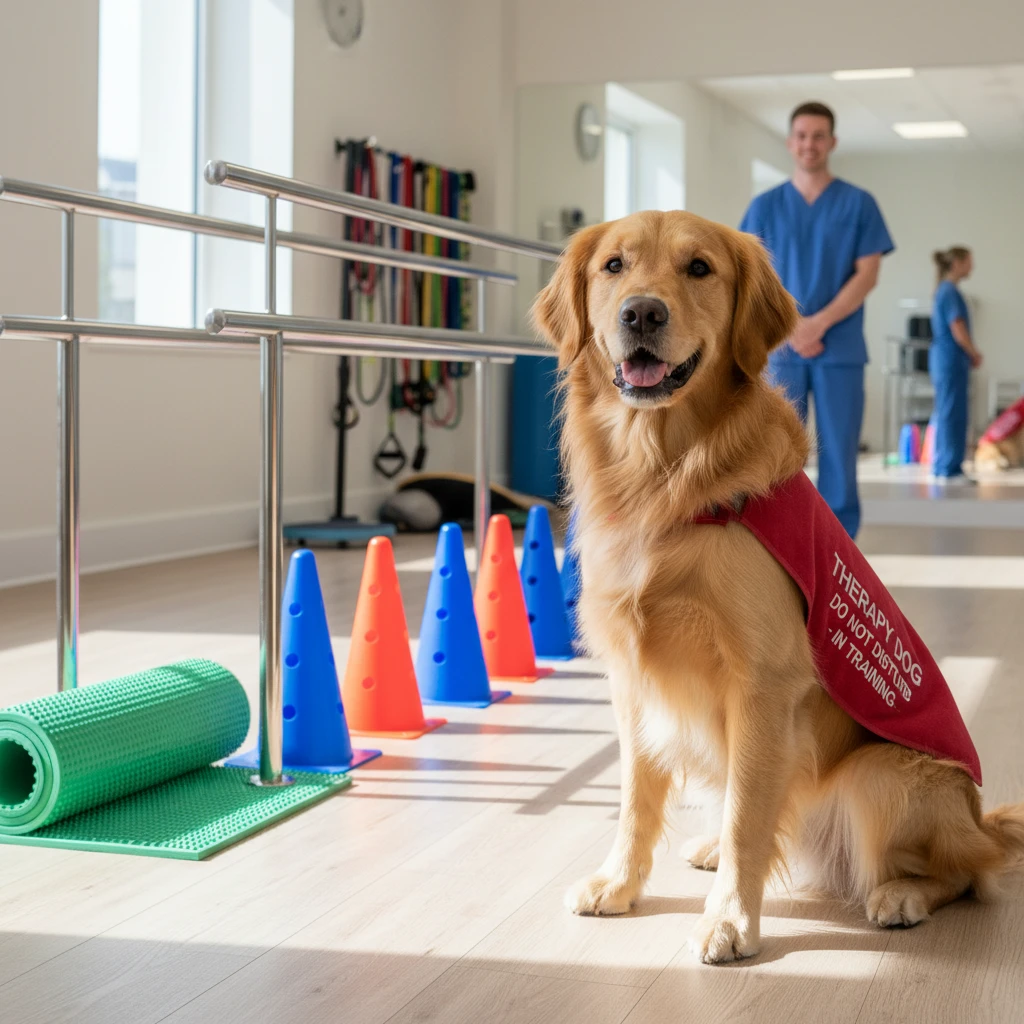
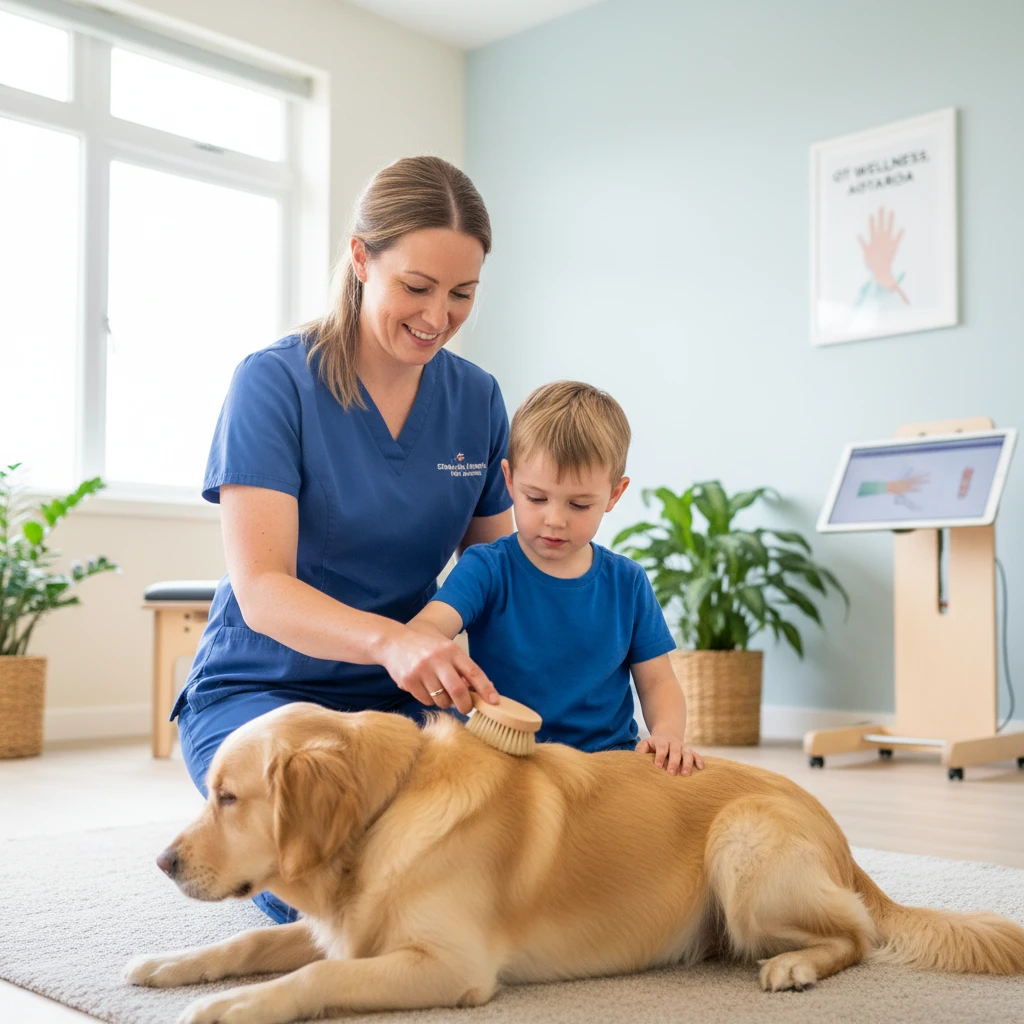
AAT documentation templates in NZ must integrate standard clinical reporting with specific animal-handler interaction logs to meet Health Information Privacy Code requirements. Effective templates include sections for SOAP notes, animal welfare checks, Goal Attainment Scaling (GAS), and specific outcome measures required by funding bodies like ACC and MSD to validate the therapeutic efficacy of the intervention.
The Strategic Importance of Standardized AAT Documentation
In the evolving landscape of Animal-Assisted Therapy (AAT) in New Zealand, documentation acts as the bridge between a heartwarming interaction and a clinically recognized intervention. For business owners and logistics managers in the therapy dog sector, robust documentation is not merely an administrative burden; it is a critical asset for liability protection, funding continuity, and clinical legitimacy.
Unlike standard Occupational Therapy (OT) or counseling notes, AAT documentation requires a dual-focus approach. You are tracking the progress of the human client while simultaneously recording the behavior, welfare, and specific interventions of the therapy animal. Without standardized aat documentation templates nz providers rely on, practitioners risk failing audits from bodies like the Accident Compensation Corporation (ACC) or the Ministry of Social Development (MSD).
Professional documentation serves three primary functions in this niche:
- Clinical Continuity: It ensures that the “Golden Thread”—the logical connection between assessment, goal setting, intervention, and outcome—remains unbroken.
- Risk Management: It provides legal proof that the animal was under control, healthy, and utilized safely during the session.
- Revenue Assurance: It validates invoices submitted to payers, proving that the service delivered matches the service billed.
The Anatomy of an Effective AAT Documentation Template
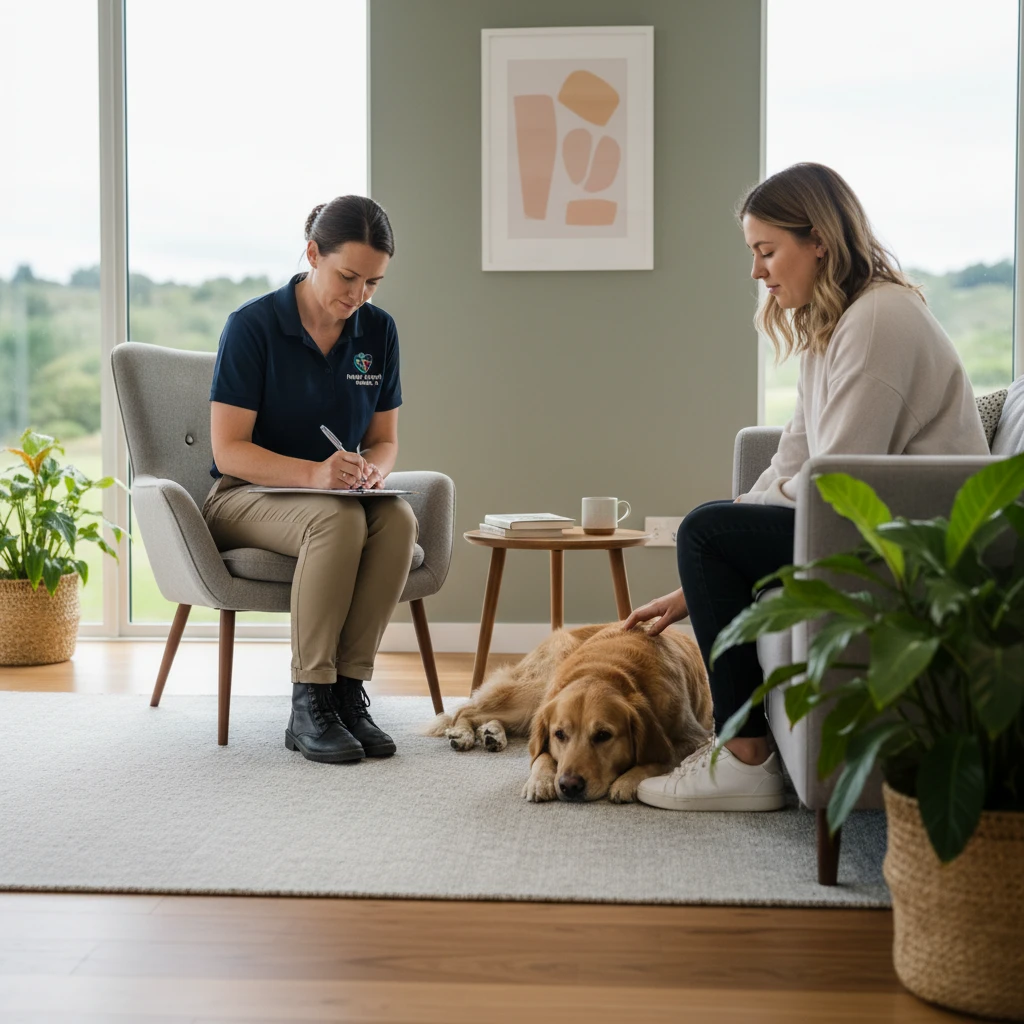
To satisfy New Zealand’s clinical standards, a generic progress note is insufficient. An effective AAT template must capture specific data points that justify the presence of the animal in the therapeutic environment. Below is the structural breakdown of what your templates must contain.
1. Session Logistics and Safety Protocols
Before recording clinical progress, the template must establish the safety of the environment. This is crucial for liability coverage in NZ.
- Date, Time, and Duration: Exact timestamps are required for ACC invoicing.
- Location: Clinic, home visit, or community setting (relevant for travel claims).
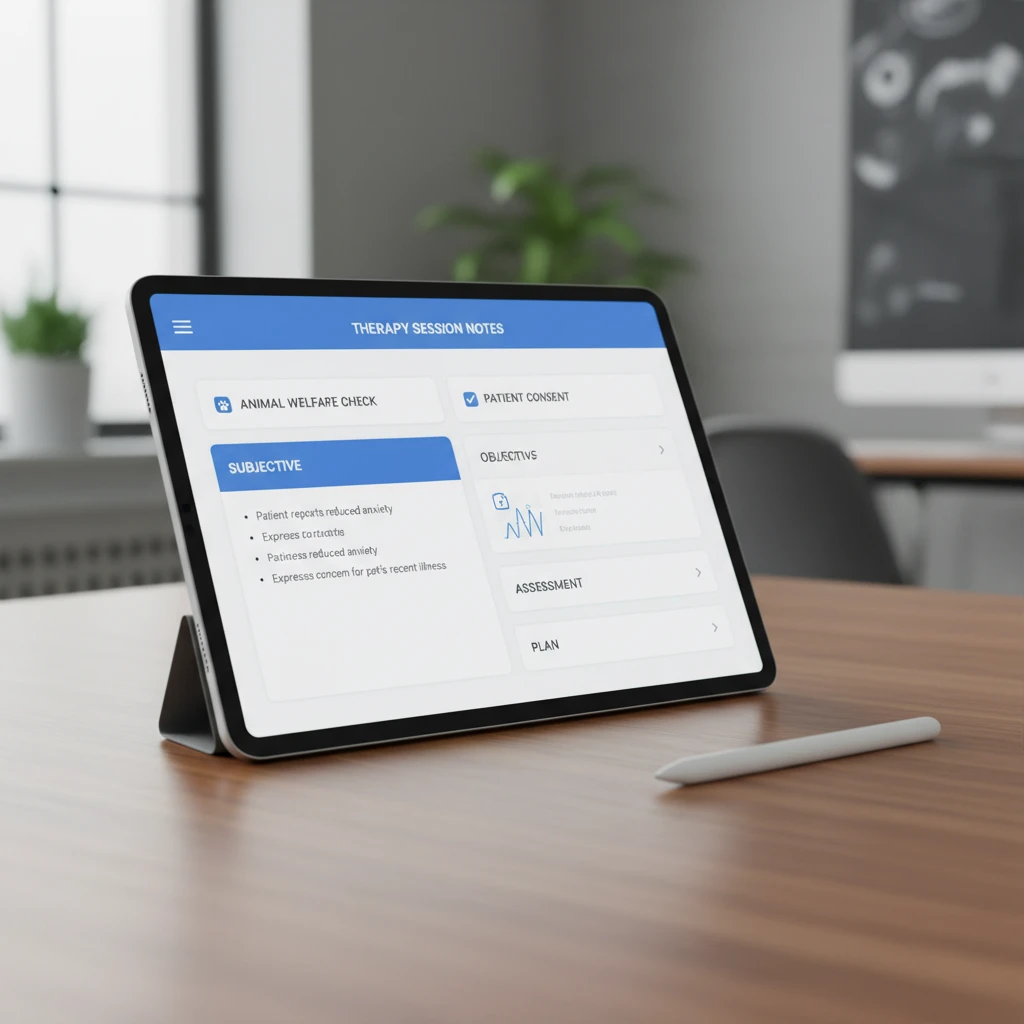
- Animal Welfare Check: A checkbox confirming the therapy dog was healthy, groomed, and showing no signs of stress prior to the session.
- Risk Assessment: A brief note on any environmental hazards identified and mitigated.
2. The Clinical SOAP Note (AAT Adapted)
The SOAP format is the gold standard for health documentation. However, for AAT, it requires specific modifications:
- Subjective (S): What the client reported. Example: “Client stated they felt anxious arriving but felt ‘calmer’ when petting the dog.”
- Objective (O): Observable facts. This is where the animal’s specific role is documented. Example: “Dog performed ‘chin rest’ command for 5 minutes. Client’s heart rate decreased from 95 to 82 bpm during this interaction.”
- Assessment (A): Clinical interpretation. Example: “The presence of the therapy dog facilitated increased verbal disclosure and reduced physical signs of agitation.”
- Plan (P): Future steps. Example: “Continue AAT to build rapport; introduce grooming tasks to improve fine motor skills next session.”
3. Animal-Specific Intervention Codes
To justify the specialized nature of AAT, your template should categorize the type of interaction. Is it:
- Passive Interaction: Presence, observation, tactile comfort.
- Active Interaction: Grooming, walking, playing fetch.
- Directed Intervention: Using the dog to model behaviors or utilizing commands to achieve a physical goal (e.g., “clip the leash” for dexterity).
Measuring Outcomes in Animal-Assisted Therapy
Subjective feelings of “happiness” are not sufficient for clinical funding. To secure long-term contracts with NZ health providers, you must utilize validated outcome measures. Your documentation system should integrate these scales directly.
Goal Attainment Scaling (GAS)
GAS is highly effective for AAT because it allows for individualized goal setting. A template using GAS might look like this:
- -2 (Much less than expected): Client refuses to interact with the dog.
- -1 (Less than expected): Client interacts only when prompted multiple times.
- 0 (Expected outcome): Client engages in 5 minutes of sustained grooming.
- +1 (More than expected): Client engages in grooming and initiates verbal commands.
- +2 (Much more than expected): Client independently plans a sequence of interactions.
Standardized Psychometric Tools
Depending on the therapeutic focus, incorporate standard NZ-recognized scales such as:
- Kessler-10 (K10): For distress and anxiety monitoring.
- WHO-5: For general well-being.
- Visual Analogue Scales (VAS): For pain or anxiety, taken pre- and post-session to demonstrate the immediate impact of the animal intervention.
Software Solutions for OT Progress Notes and AAT
While paper templates are acceptable, digital solutions offer superior security, searchability, and efficiency. For NZ businesses, data sovereignty (where the data is hosted) is a key consideration.
Top Practice Management Software in NZ
When selecting software, look for the ability to create custom forms so you can build your aat documentation templates directly into the system.
- Cliniko: Extremely popular in NZ. It allows for custom treatment note templates. You can create a specific “AAT Session Note” template with mandatory fields for animal welfare checks.
- Splose: A newer entrant gaining traction among Allied Health professionals. It offers robust automation and integrates well with Xero for New Zealand tax compliance.
- Power Diary: Offers excellent telehealth features and customizable forms.
- Noted: A NZ-based software specifically designed for the social sector and NGOs, often used by organizations funded by MSD.
Digital vs. Paper: The Efficiency Gap
Using digital software allows you to duplicate previous notes (saving time on static data) and focus purely on the clinical changes. Furthermore, digital platforms often have built-in compliance checks, preventing you from closing a file until all mandatory fields—like the risk assessment—are completed.
Privacy and Data Protection (Privacy Act 2020)
In New Zealand, handling client information falls under the Privacy Act 2020 and the Health Information Privacy Code 2020. AAT providers are classified as health agencies when they hold health information.
Key Compliance Requirements for Documentation
Your documentation strategy must adhere to the following principles:
- Purpose (Rule 1): You must only collect information necessary for the therapy. Do not collect extraneous details about the client’s family unless relevant to the AAT intervention.
- Security (Rule 5): This is the most critical logistical aspect.
- Paper Notes: Must be stored in a locked cabinet in a locked room.
- Digital Notes: Must be password protected with Two-Factor Authentication (2FA). Devices must be encrypted.
- Access (Rule 6): Clients have the right to request their notes. Your templates should be written professionally, assuming the client will read them one day. Avoid jargon or judgmental language.
- Retention: Health regulations generally require retaining records for 10 years from the last interaction (or 10 years from the age of 16 for minors).
Mandatory Reporting of Privacy Breaches
If you lose a notepad containing client names or a laptop is stolen, and it poses a risk of serious harm, you must report this to the Privacy Commissioner. Using secure cloud-based software minimizes this risk compared to physical files.
Reporting Results to ACC and MSD
For many AAT businesses in New Zealand, the Accident Compensation Corporation (ACC) and the Ministry of Social Development (MSD) are the primary payers. Their reporting requirements are stringent and transactional.
ACC Reporting Standards
ACC operates on a model of “treatment injury” or “rehabilitation.” Your documentation must clearly link the animal therapy to a functional outcome related to the injury.
- The “How” and “Why”: It is not enough to say “The client walked the dog.” You must write: “The client walked the dog for 200 meters to improve dynamic balance and endurance post-TBI, utilizing the dog’s harness for stability.”
- Measurable Progress: ACC looks for graphs and trends. Use your software to pull data from your GAS or VAS scores to show a trajectory of improvement over approved sessions.
- Provider Qualifications: Ensure the documentation clearly states the qualifications of the handler (e.g., Registered OT, Psychologist) as ACC funds the therapist, with the animal viewed as a tool/modality.
MSD Reporting Standards
MSD contracts often focus on social outcomes, independence, and community participation.
- Narrative Reporting: MSD often values case studies. Your templates should allow space for a “Success Story” or narrative summary that describes a breakthrough moment facilitated by the animal.
- Attendance and Engagement: MSD tracks engagement closely. Documenting that a client attended therapy specifically because of the dog’s presence (when they previously refused therapy) is a powerful metric for retaining funding.

Conclusion
Developing robust aat documentation templates nz is not just about administrative compliance; it is about legitimizing the field of Animal-Assisted Therapy. By utilizing structured SOAP notes, integrating validated outcome measures, and adhering strictly to the Privacy Act 2020, NZ businesses can ensure their logistics are sound and their funding is secure. Whether you choose software like Cliniko or a secure paper system, the goal remains the same: to tell the story of client progress through the unique lens of the human-animal bond.
People Also Ask
What are the legal requirements for keeping AAT notes in NZ?
Under the Health Information Privacy Code 2020, AAT providers must keep records secure (password protected or locked away), accurate, and accessible to the client upon request. Records must generally be retained for 10 years.
Can I use standard OT templates for Animal-Assisted Therapy?
Standard OT templates are a good base but are insufficient on their own. You must add sections for animal welfare checks, specific animal interventions, and risk assessments to cover liability and clinical justification for the animal’s presence.
Which software is best for AAT documentation in New Zealand?
Cliniko, Splose, and Power Diary are the top choices. Cliniko is widely used for its customizable templates, allowing you to build specific AAT forms, and it complies with NZ data privacy laws.
How do I write an ACC report for Animal-Assisted Therapy?
Focus on functional outcomes. Clearly describe how the animal was used as a modality to achieve specific rehabilitation goals (e.g., balance, memory, fine motor skills) that would have been difficult to achieve otherwise. Use data and standardized scales.
Do I need to document the dog’s behavior in the client’s notes?
Yes. Documenting the dog’s behavior (e.g., “Dog remained calm,” “Dog alerted to client anxiety”) provides clinical evidence of the intervention’s mechanism and proves that safety protocols were followed.
What is Goal Attainment Scaling (GAS) in AAT?
GAS is a method of scoring the extent to which a client’s individual goals are achieved. In AAT, it allows you to measure specific interactions, such as grooming or walking the dog, on a scale from -2 (worse than expected) to +2 (better than expected).