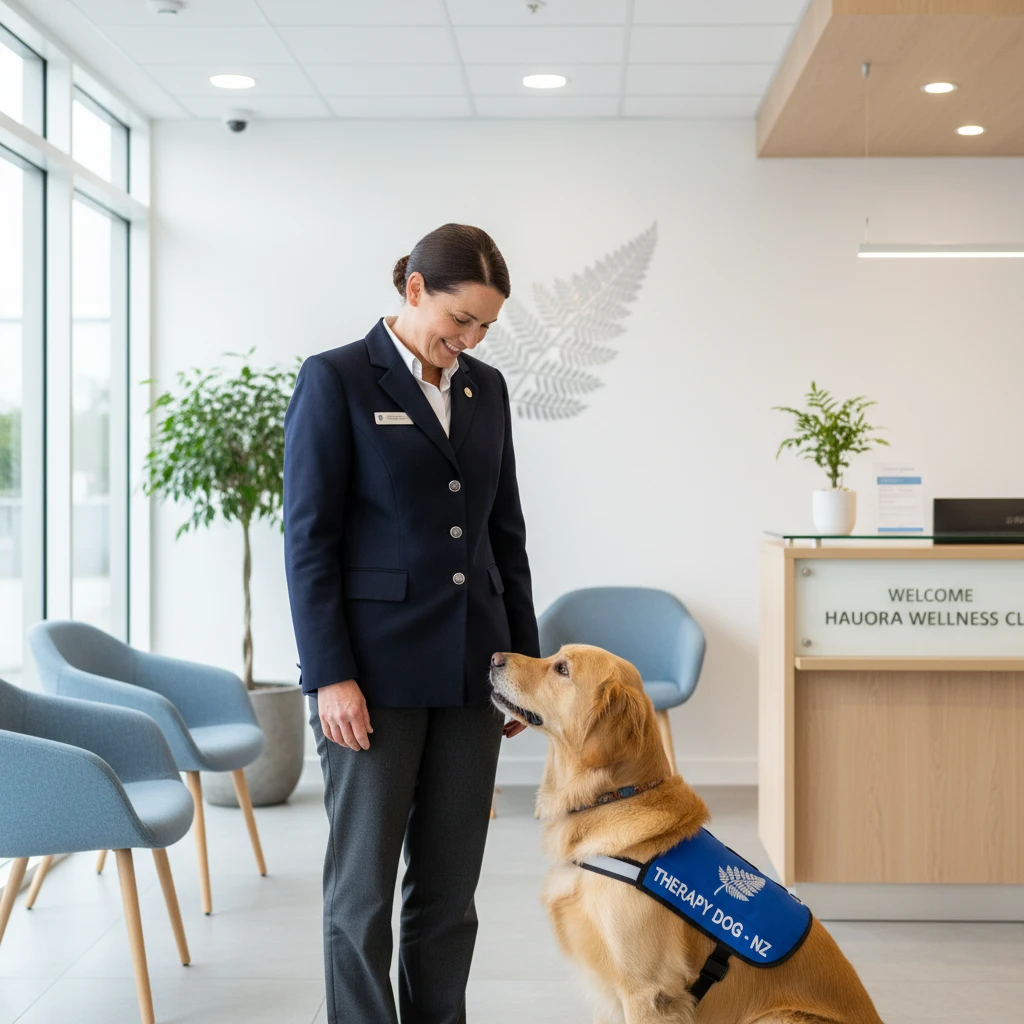
Workplace health and safety compliance for therapy dogs involves implementing rigorous risk management strategies, adhering to the Health and Safety at Work Act 2015 (HSWA), and maintaining comprehensive hazard registers. It requires Persons Conducting a Business or Undertaking (PCBUs) to ensure that the introduction of animals into professional environments does not compromise the physical or psychological safety of workers, clients, or the animals themselves.
Integrating therapy dogs into New Zealand workplaces—ranging from corporate offices to high-stakes clinical environments—offers immense benefits for mental health and organizational culture. However, the presence of animals introduces a unique set of variables into the occupational health and safety ecosystem. Compliance is not merely a box-ticking exercise; it is a legal imperative that protects the business, the handler, and the public.
Navigating the Health and Safety at Work Act 2015
In New Zealand, the cornerstone of all workplace safety is the Health and Safety at Work Act 2015 (HSWA). For businesses looking to introduce therapy dogs, understanding this legislation is the first step toward compliance. The Act shifts the focus from merely recording incidents to proactively identifying and managing risks.
What is a “Reasonably Practicable” Step?
The HSWA requires businesses to take all steps that are “reasonably practicable” to ensure health and safety. When applied to therapy dogs, this means you must assess the likelihood of a risk occurring (e.g., a dog bite or an allergic reaction) against the severity of the harm and the cost/effort to mitigate it.
For a therapy dog program, reasonably practicable steps might include:
- Mandating temperament assessments for all dogs entering the premises.
- Establishing “dog-free zones” for staff with allergies or cynophobia (fear of dogs).
- Implementing strict hygiene protocols to prevent zoonotic transfer.
The Concept of Shared Duties
Under the HSWA, duties are not transferable. Even if a therapy dog handler is an external contractor, the business owner (PCBU) retains responsibility for the safety of their workers and clients while the dog is on-site. Both parties must consult, cooperate, and coordinate their activities to ensure no gaps in safety protocols exist.
PCBU Responsibilities for Therapy Dog Handlers
A Person Conducting a Business or Undertaking (PCBU) holds the primary duty of care. When a therapy dog is introduced to the workplace, the PCBU must ensure that the environment remains safe for everyone involved. This responsibility extends beyond the physical safety of the building to the dynamic risks introduced by a live animal.
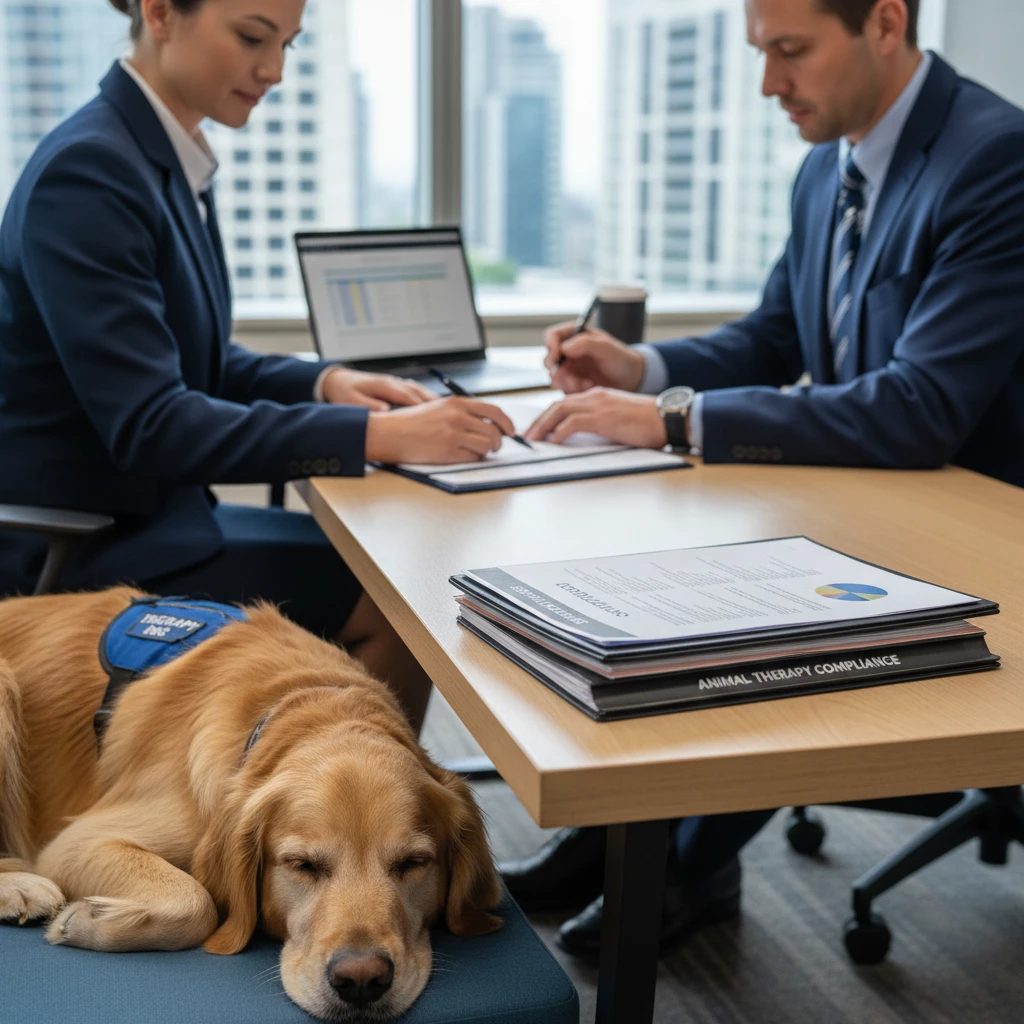
Primary Duty of Care
The PCBU must ensure, so far as is reasonably practicable, the health and safety of:
- Workers who carry out work for the business (including the handler).
- Workers whose activities are influenced or directed by the PCBU.
- Other persons (clients, patients, visitors) who could be put at risk by the work carried out.
Worker Engagement and Participation
Compliance requires engagement. Before a therapy dog program launches, the PCBU must consult with workers. This is critical for identifying hidden risks, such as an employee with a severe phobia who has not previously disclosed it. Failure to consult can lead to psychosocial hazards, creating a stressful environment rather than the calming one a therapy dog is intended to provide.
Contractor Management
If the therapy dog handler is an external provider, the PCBU must vet their credentials. This includes verifying:
- Public Liability Insurance (specifically covering animal acts).
- Therapy Dog Certification from a reputable body (e.g., Therapy Dogs New Zealand).
- Vaccination and health records of the animal.
Identifying Hazards: The Risk Matrix
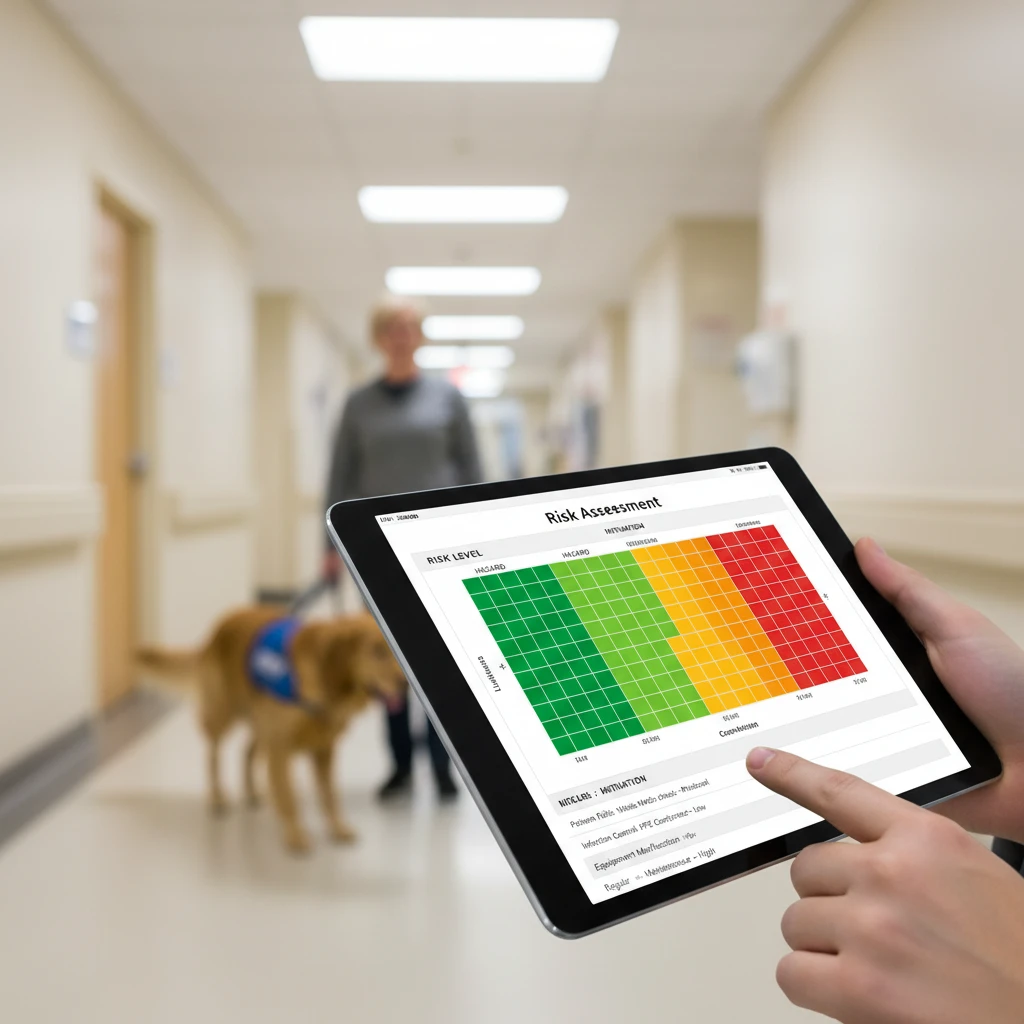
To achieve workplace health and safety compliance with therapy dogs, a comprehensive risk assessment is mandatory. Hazards generally fall into three categories: Biological, Physical, and Psychosocial.
Biological Hazards
Zoonotic diseases (diseases transferable from animals to humans) pose a genuine risk, particularly in clinical or immunocompromised settings.
- Risk: Ringworm, fleas, parasites, or bacterial infections (Campylobacter, Salmonella).
- Control Measure: Strict veterinary clearance protocols, mandatory hand-washing stations, and exclusion of dogs from food preparation areas or sterile zones.
Physical Hazards
Even the most docile dog presents physical risks inherent to its presence.
- Risk: Slips, trips, and falls caused by the dog lying in walkways or by leads trailing across floors.
- Control Measure: Designated “stationing” areas for the dog (e.g., a mat in a corner), short leads, and keeping thoroughfares clear.
- Risk: Bites or scratches (provoked or unprovoked).
- Control Measure: Zero-tolerance policy for aggression, mandatory behavioral testing, and supervision protocols.
Psychosocial Hazards
Not everyone finds dogs therapeutic. For some, they are a source of anxiety.
- Risk: Stress or panic attacks in staff/clients with cynophobia; cultural or religious objections to dogs.
- Control Measure: Clear signage indicating a dog is on premises, opt-out policies for staff, and designated animal-free meeting rooms.
Incident Reporting and Hazard Registers
Under the HSWA, maintaining a hazard register is not optional—it is a critical component of your safety management system (SMS). When live animals are involved, this register must be dynamic, updated regularly to reflect changes in the environment or the animal’s behavior.
Structuring the Hazard Register
A compliant hazard register for therapy dogs should include:
- Hazard Description: (e.g., “Dog jumping on frail patient”).
- Risk Rating: (Likelihood x Consequence).
- Control Measures: (e.g., “Dog must remain in a ‘down-stay’ when interacting with seated patients”).
- Monitoring: (Who checks this and how often?).
Notifiable Events to WorkSafe NZ
It is crucial to understand what constitutes a “notifiable event” under the Act. If a therapy dog causes an injury that requires immediate hospital admission (e.g., a severe bite or a fall resulting in a fracture), the PCBU must:
- Preserve the site (do not disturb the scene).
- Notify WorkSafe New Zealand as soon as possible.
- Keep a record of the notification.
Even “near misses”—incidents that did not cause harm but could have—must be recorded internally to prevent future occurrences.
Audit Checklists for Clinical Environments
Clinical environments (hospitals, physiotherapy clinics, mental health practices) require a higher tier of compliance due to vulnerable populations and infection control standards. An audit checklist ensures that the therapy dog program integrates seamlessly with clinical governance.
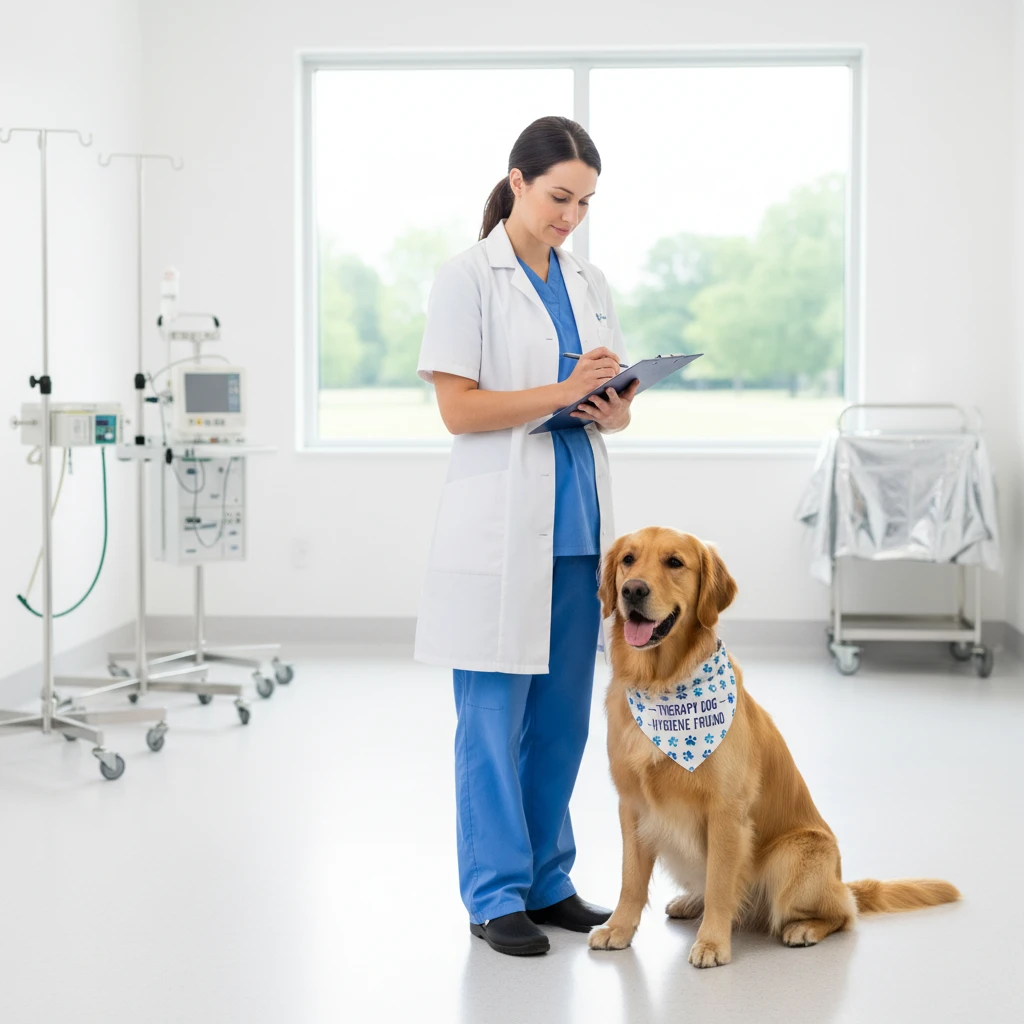
Pre-Visit Checklist
- Health Check: Has the dog been groomed within 24 hours? Are nails trimmed? Is the dog free of open wounds or skin conditions?
- Handler Health: Is the handler free of communicable illness (flu, cold)?
- Equipment: Is the lead and collar clean and in good repair? Is the “Therapy Dog” vest visible?
Environmental Audit
- Access Routes: Is there a direct route to the therapy room that minimizes contact with general waiting areas?
- Hygiene Stations: Are hand sanitizers available at the entry and exit of the interaction zone?
- Waste Management: Is there a protocol for immediate disposal of animal waste (if an accident occurs) using biohazard-appropriate cleaners?
Post-Interaction Protocol
- Sanitization: Have surfaces touched by the dog or handler been wiped down with hospital-grade disinfectant?
- De-brief: Was any stress signal observed in the dog? Did any patient express discomfort?
Animal Welfare as a Safety Component
Workplace health and safety compliance is inextricably linked to animal welfare. A stressed, fatigued, or unwell dog is significantly more likely to react unpredictably, thereby becoming a safety hazard. Therefore, adhering to the Animal Welfare Act 1999 is also a component of workplace safety strategy.
Recognizing Stress Signals
Handlers and staff should be trained to recognize early signs of canine stress, known as the “Ladder of Aggression.” These signs include:
- Lip licking and yawning.
- Turning the head away.
- Whale eye (showing the whites of the eyes).
- Stiffening of the body.
If these signs are ignored, a dog may escalate to growling or biting. Compliance protocols must mandate that the dog has the “right of refusal”—if the dog does not want to work, it must be allowed to rest immediately.
Work-Rest Cycles
To prevent fatigue-induced incidents, strict limits on working hours should be enforced. A common standard is 20 minutes of active therapy followed by a 10-20 minute break, with a maximum of 2 hours of work per day. These limits should be written into the safety policy and strictly adhered to by the PCBU.
People Also Ask (PAA)
What are the legal requirements for therapy dogs in NZ workplaces?
In New Zealand, therapy dogs in workplaces fall under the Health and Safety at Work Act 2015. PCBUs must identify risks (allergies, bites, trips), implement control measures, and ensure the dog does not compromise the safety of workers or visitors. While there is no single “government license” for the dog itself, due diligence requires certification from a reputable organization, public liability insurance, and robust hygiene/safety policies.
Do I need specific insurance for a therapy dog in my business?
Yes. Standard business liability insurance often excludes animal acts. You must secure Public Liability Insurance that specifically covers the activities of a therapy dog. If you are hiring an external handler, you must verify they hold their own insurance (typically up to $5 million or $10 million coverage) to protect your business against claims of injury or property damage.
How do you handle employees with dog allergies or phobias?
Compliance requires consulting with workers. For allergies, implement high-efficiency particulate air (HEPA) filters, frequent vacuuming with HEPA cleaners, and designate “dog-free zones.” For phobias, ensure the dog is always leashed and never approaches staff without consent. Clear signage and communication are essential to ensure these staff members feel safe in their workplace.
What is the difference between a therapy dog and a service dog in NZ law?
Service dogs (like Guide Dogs) have full public access rights under the Human Rights Act 1993 and the Dog Control Act 1996 because they assist a specific person with a disability. Therapy dogs do not have automatic legal access rights to public places or businesses. Their access is granted by the business owner (PCBU) and is subject to workplace health and safety conditions.
What should be included in a therapy dog risk assessment?
A risk assessment should cover biological hazards (zoonoses, parasites), physical hazards (trips, bites, scratches), and psychosocial hazards (fear, cultural objections). It must outline control measures for each, such as hygiene protocols, leash rules, exclusion zones, and emergency procedures for incidents. This document should be reviewed regularly.
Can a therapy dog be banned from a workplace if a hazard arises?
Yes. If a therapy dog presents a risk that cannot be “reasonably practicably” managed—for example, if the dog shows aggression or if a staff member has a life-threatening allergy that cannot be mitigated by separation—the PCBU has the duty to remove the hazard (the dog) to comply with the Health and Safety at Work Act 2015.