Managing dog allergies in rest homes requires a comprehensive strategy integrating informed consent protocols, rigorous environmental controls, and specific grooming standards. Facilities must establish clear dog-free zones, utilize low-shedding therapy breeds, and maintain robust documentation for health and safety audits to ensure the wellbeing of all residents and staff in New Zealand aged care settings.
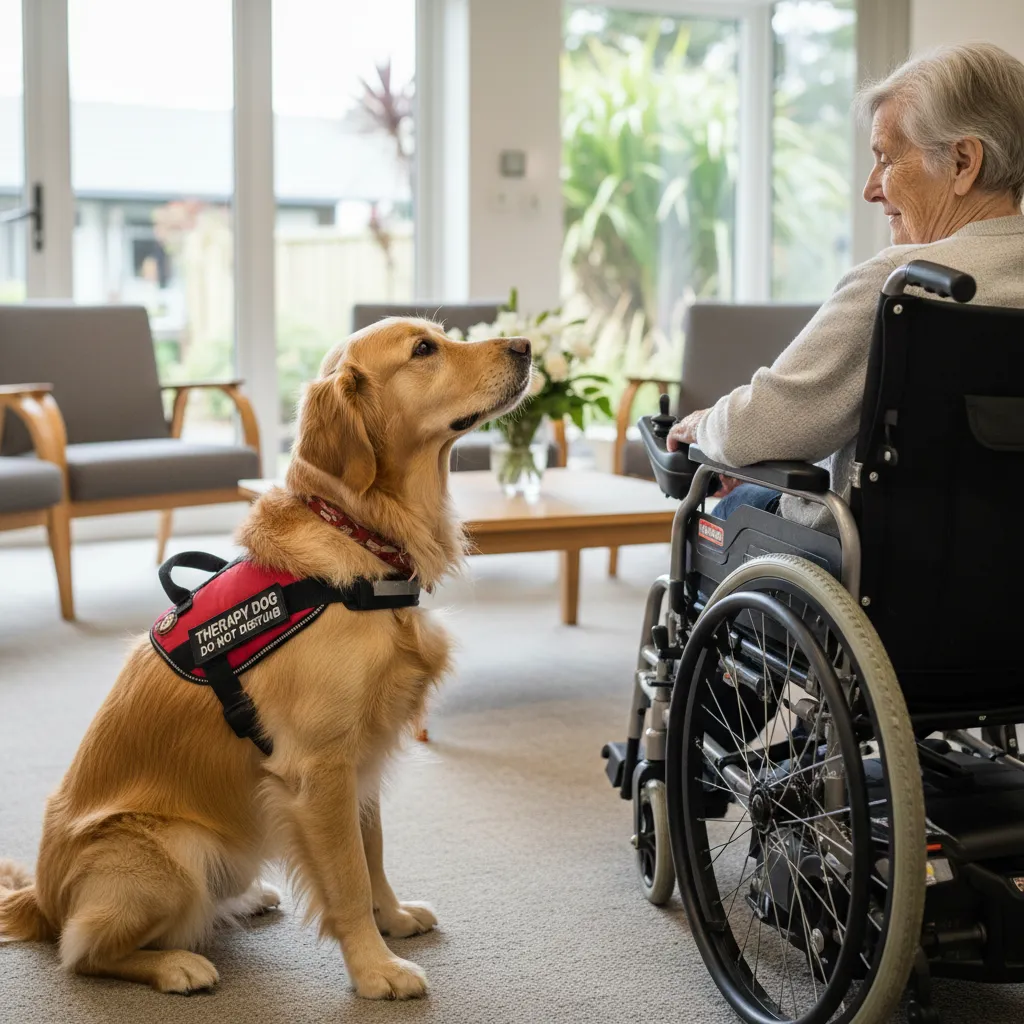
Integrating therapy dogs into aged care facilities offers profound psychological and physiological benefits for residents. However, the introduction of animals into a clinical or residential environment brings specific challenges, primarily concerning allergies and respiratory sensitivities. For facility managers and therapy dog coordinators in New Zealand, balancing the therapeutic value of canine interaction with the health and safety obligations under the Health and Safety at Work Act 2015 is paramount.
Effective allergy management is not merely about excluding dogs; it is about logistical precision, spatial planning, and transparent communication. This guide outlines the operational frameworks necessary to run a safe, inclusive therapy dog program while mitigating allergy risks.
Obtaining Informed Consent from Residents and Families
The foundation of any animal-assisted intervention program is informed consent. Under the Code of Health and Disability Services Consumers’ Rights in New Zealand, residents have the right to be fully informed about services and to make choices about their care environment. This extends to the presence of animals in their living space.
The Admission Process and Consent Forms
Allergy management begins before a therapy dog ever enters the building. It starts during the resident admission process. Facilities should integrate specific questions regarding animal contact into their standard admission questionnaires.
- Allergy Screening: Explicitly ask about history of asthma, hay fever, or specific animal protein allergies.
- Phobia Assessment: Distinguish between a medical allergy and a psychological fear, as management strategies differ.
- Preference Profiling: Determine if the resident wishes to opt-in for visits, remain neutral (dogs in common areas only), or opt-out entirely (strict avoidance).

Consulting with Families and EPOAs
In cases where residents have cognitive impairments, such as dementia, obtaining consent requires consultation with Enduring Powers of Attorney (EPOA) or family members. It is crucial to document that the family has been informed of the therapy dog program. Transparency prevents liability issues should a resident develop a skin rash or respiratory issue following a visit.
Furthermore, consent is not static. It should be reviewed annually or whenever a resident’s health status changes significantly. A resident who previously enjoyed dogs but has developed severe COPD may need to have their interaction level reassessed to prevent respiratory distress.
Creating Effective ‘Dog-Free’ Zones
Even with the most rigorous grooming standards, allergens such as dander, saliva, and urine proteins can linger in the environment. To respect the rights of residents who are allergic or fearful, facility managers must delineate clear spatial boundaries.
Architectural and HVAC Considerations
Defining a dog-free zone goes beyond simply closing a door. Dander is microscopic and can travel through HVAC systems. When designating dog-free wings or lounges, facilities should consider air handling units. Ideally, dog-free zones should be on separate ventilation loops or utilize positive pressure to prevent allergen ingress from common areas.
Signage and Wayfinding
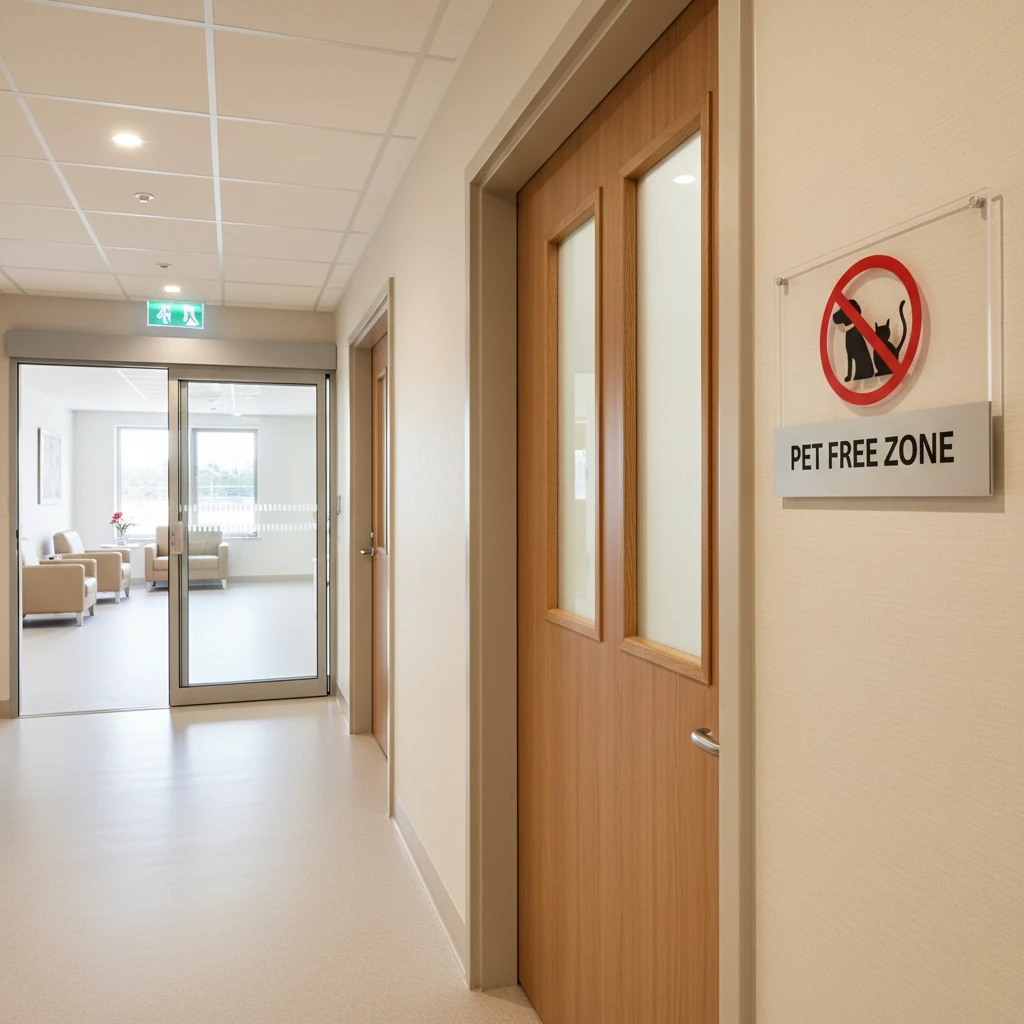
Visual communication is essential for visiting therapy dog handlers who may not be familiar with the specific sensitivities of every resident. Clear, professional signage should be utilized:
- Green Zones: Dogs welcome (e.g., main activity lounge, garden).
- Amber Zones: Transit only (e.g., corridors leading to specific rooms).
- Red Zones: Strictly no dogs allowed (e.g., dining halls during meals, specific resident wings, high-dependency units with respiratory patients).
Hypoallergenic Breed Considerations for NZ Facilities
While no dog is 100% hypoallergenic—since allergens are found in skin cells and saliva, not just fur—certain breeds produce significantly less dander and shed less, making them safer choices for institutional settings.
Preferred Breeds for Therapy Work
In the New Zealand context, specific breeds are favored for therapy work due to their temperament and coat characteristics. Handlers and program coordinators should prioritize:
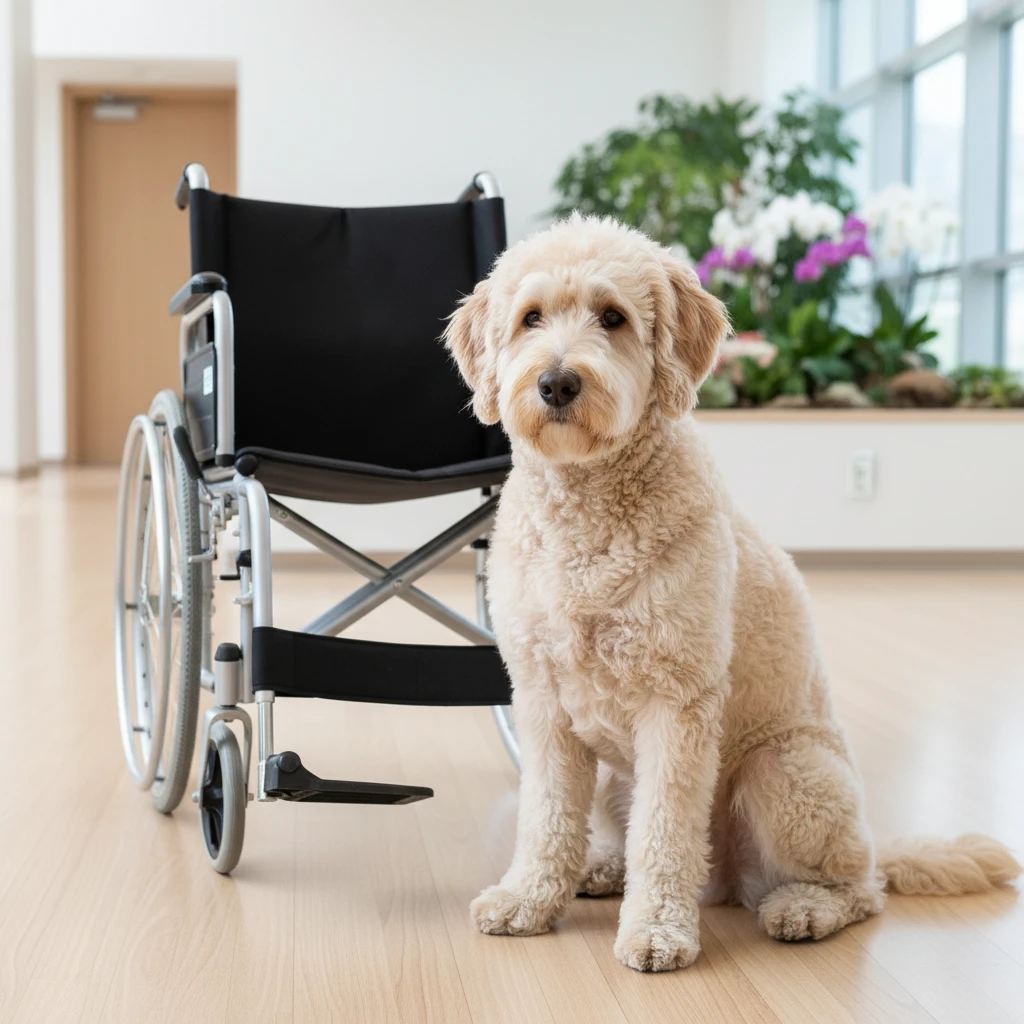
- Poodle Crosses (Labradoodles/Goldendoodles): These are popular in NZ therapy circles. However, they must be F1b generation or higher (backcrossed with a Poodle) to ensure the low-shedding coat trait is dominant.
- Bichon Frise: Excellent temperament and minimal shedding, though their small size requires different handling protocols.
- Greyhounds: While not “hypoallergenic” in the traditional sense, they have short coats, produce less oil than some double-coated breeds, and are generally calm, though they are not suitable for residents with severe dander allergies.
Grooming Standards for Entry
The breed is secondary to the grooming standard. A “hypoallergenic” dog that has not been washed recently carries more allergens than a double-coated dog that was washed that morning. New Zealand therapy dog organizations typically enforce strict protocols:
- 24-Hour Wash Rule: Dogs should be bathed within 24 hours prior to a facility visit to remove loose dander and saliva.
- Nail Maintenance: Nails must be clipped short to prevent scratching, which can introduce allergens into the bloodstream via broken skin.
- Coat brushing: Thorough brushing outside the facility immediately before entry to remove loose hair.
Environmental Hygiene and Cleaning Protocols
Managing the aftermath of a visit is as critical as managing the visit itself. Housekeeping staff must be briefed on the schedule of therapy dog visits to ensure targeted cleaning occurs immediately afterward.
HEPA Filtration and Vacuuming
Standard vacuums can recirculate microscopic dander particles into the air. Facilities hosting therapy dogs must use vacuum cleaners equipped with High-Efficiency Particulate Air (HEPA) filters. These trap 99.97% of particles, preventing allergens from becoming airborne.
Surface Sanitation
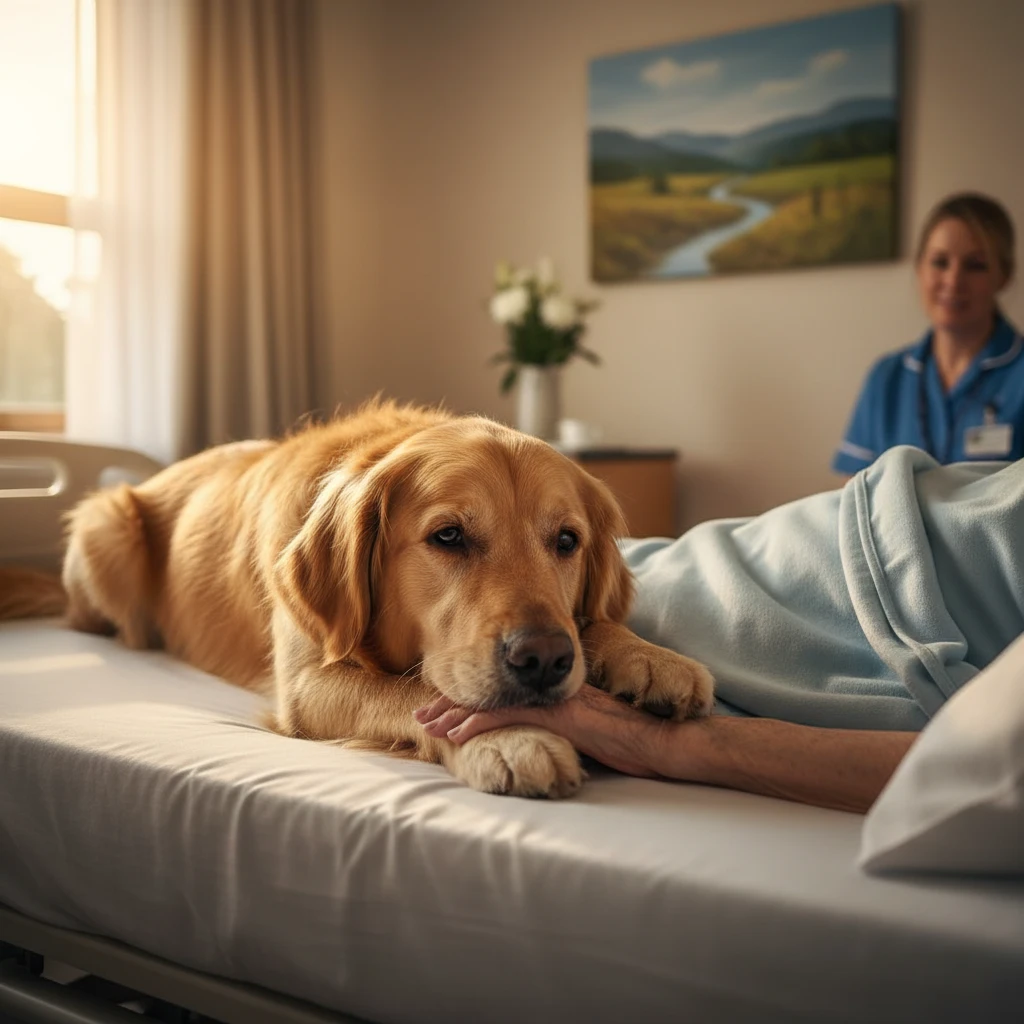
Therapy dogs often rest their chins on beds or knees. Staff should have ready access to hypoallergenic wipes to clean vinyl chair coverings or bed rails immediately after a dog has interacted with them. Hand hygiene stations (sanitizer dispensers) must be available at the entrance and exit of every room visited to ensure handlers and residents do not cross-contaminate other areas.
Documentation for Health and Safety Audits
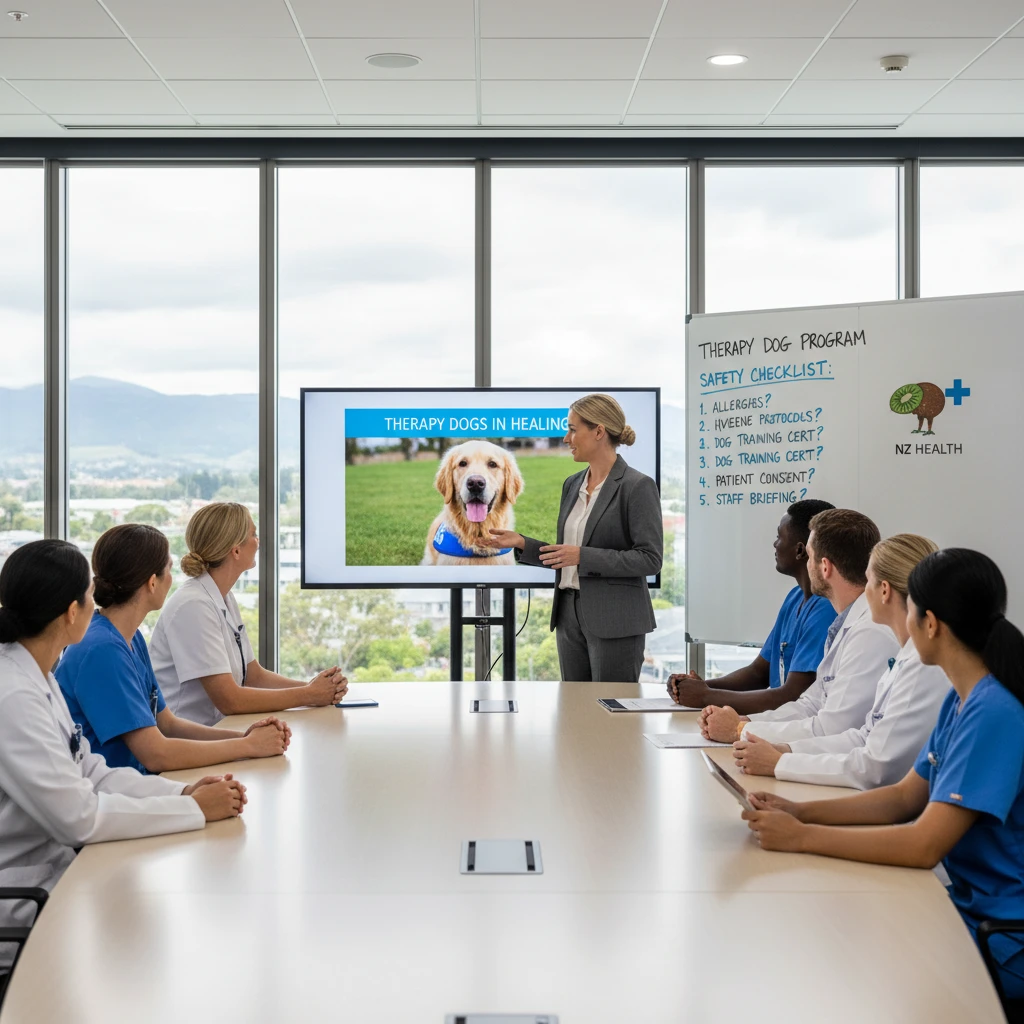
In the highly regulated NZ aged care sector, if it isn’t documented, it didn’t happen. Preparing for Ministry of Health audits or WorkSafe checks requires meticulous record-keeping regarding animal visitors.
The Visiting Dog Register
Every facility should maintain a central register of all visiting dogs. This document is a critical component of your Risk Assessment and Management Strategy (RAMS). The register must include:
- Vaccination Evidence: Current records of core vaccinations (Distemper, Hepatitis, Parvovirus, and Kennel Cough).
- Parasite Control: Proof of regular flea and worm treatment. Fleas are vectors for disease and their saliva is a common allergen.
- Insurance: Copy of the handler’s or organization’s public liability insurance.
- Temperament Assessment: Certification from a recognized body (e.g., St John, Canine Friends Pet Therapy, or independent assessors).

Incident Reporting
Should a resident experience an allergic reaction, it must be logged as an adverse event. The report should detail the proximity of the dog, the duration of exposure, and the specific symptoms. This data helps in reviewing and refining the allergy management policy. Frequent minor reactions may indicate a need to upgrade air filtration or change the designated visiting areas.
People Also Ask
Can rest homes ban therapy dogs due to allergies?
Yes, private facilities can ban animals. However, most seek to balance risks rather than ban them entirely due to the proven wellbeing benefits. A total ban is usually a last resort if safety cannot be managed.
What are the best therapy dog breeds for allergy sufferers?
Poodles, Bichon Frises, Portuguese Water Dogs, and Schnauzers are excellent choices as they have hair rather than fur and shed very little dander.
How often should therapy dogs be bathed before visiting?
Best practice dictates bathing within 24 hours of a visit to a high-care facility. This minimizes dander and removes outdoor allergens like pollen that may be trapped in the coat.
Do New Zealand rest homes require specific insurance for visiting dogs?
Yes. Handlers or the organization they represent must hold Public Liability Insurance to cover incidents involving injury or property damage.
How do you clean a room after a therapy dog visit?
Rooms should be vacuumed with a HEPA-filter vacuum, and all hard surfaces (bed rails, tables) touched by the dog must be sanitized with hospital-grade disinfectant.
Who is liable if a resident has an allergic reaction?
Liability can be complex. If the facility failed to follow its own safety protocols or ignored a known allergy, the facility may be liable. If a handler was negligent (e.g., bringing a flea-infested dog), they could be liable.