
Therapy dogs for dementia in NZ are specially trained animals introduced into residential aged care facilities to reduce anxiety, mitigate behavioral symptoms of cognitive decline, and improve social interaction among residents. These Animal-Assisted Therapy (AAT) programs operate under strict New Zealand health and safety guidelines to ensure infection control and resident safety while delivering measurable therapeutic outcomes.
The integration of therapy dogs for dementia NZ wide is shifting from a novelty activity to a core component of person-centered care strategies. As New Zealand’s population ages, with the number of people with dementia expected to triple by 2050, the demand for non-pharmacological interventions is at an all-time high. Facility managers and healthcare providers are increasingly turning to Animal-Assisted Therapy (AAT) not merely for recreation, but as a clinically recognized method to manage the complex behavioral and psychological symptoms of dementia (BPSD).
For business operators in the aged care sector, understanding the logistics, liability, and legislative requirements of bringing animals into clinical environments is as critical as understanding the therapeutic benefits. This guide explores the intersection of therapeutic care and operational management within the New Zealand context.
The Role of AAT in NZ Residential Aged Care
Animal-Assisted Therapy involves structured interactions between residents and trained animals, facilitated by qualified handlers. In the context of New Zealand residential care, this moves beyond casual “pet therapy” to goal-oriented sessions designed to improve physical, social, emotional, and cognitive functioning.
What distinguishes AAT from casual pet visitation?
While casual visitation involves volunteers bringing pets to provide comfort, AAT is a formal intervention. In New Zealand, professional therapy dog providers often document interactions to track specific outcomes, such as increased verbalization in non-communicative residents or decreased agitation during specific times of the day. This data is increasingly valuable for facility managers reporting on quality of care standards to District Health Boards (DHBs) and auditing bodies.

The Shift to Person-Centered Care
New Zealand’s aged care sector is heavily focused on the “person-centered” model. Therapy dogs align perfectly with this by offering individualized engagement. For a resident who was a farmer in rural Canterbury, a visit from a working breed dog can trigger deep-seated memories and a sense of identity that human staff may struggle to access. This aligns with the Te Whare Tapa Whā model of health frequently cited in NZ healthcare, specifically addressing Taha Wairua (spiritual health) and Taha Whānau (family/social health) by creating a sense of connection and unconditional acceptance.
Addressing the Specific Needs of Dementia Patients
Dementia affects every individual differently, but common symptoms include apathy, agitation, aggression, and social withdrawal. Therapy dogs for dementia in NZ facilities are utilized as a strategic tool to mitigate these specific symptoms without immediate reliance on antipsychotic medication.
How do therapy dogs help with Sundowning?
Therapy dogs help with Sundowning by providing a calming, rhythmic focal point during the late afternoon when confusion and agitation typically peak. The tactile stimulation of stroking a dog releases oxytocin and reduces cortisol levels, physically lowering the resident’s stress response and anchoring them in the present moment, which can prevent the escalation of wandering or aggressive behaviors.
Bridging the Communication Gap
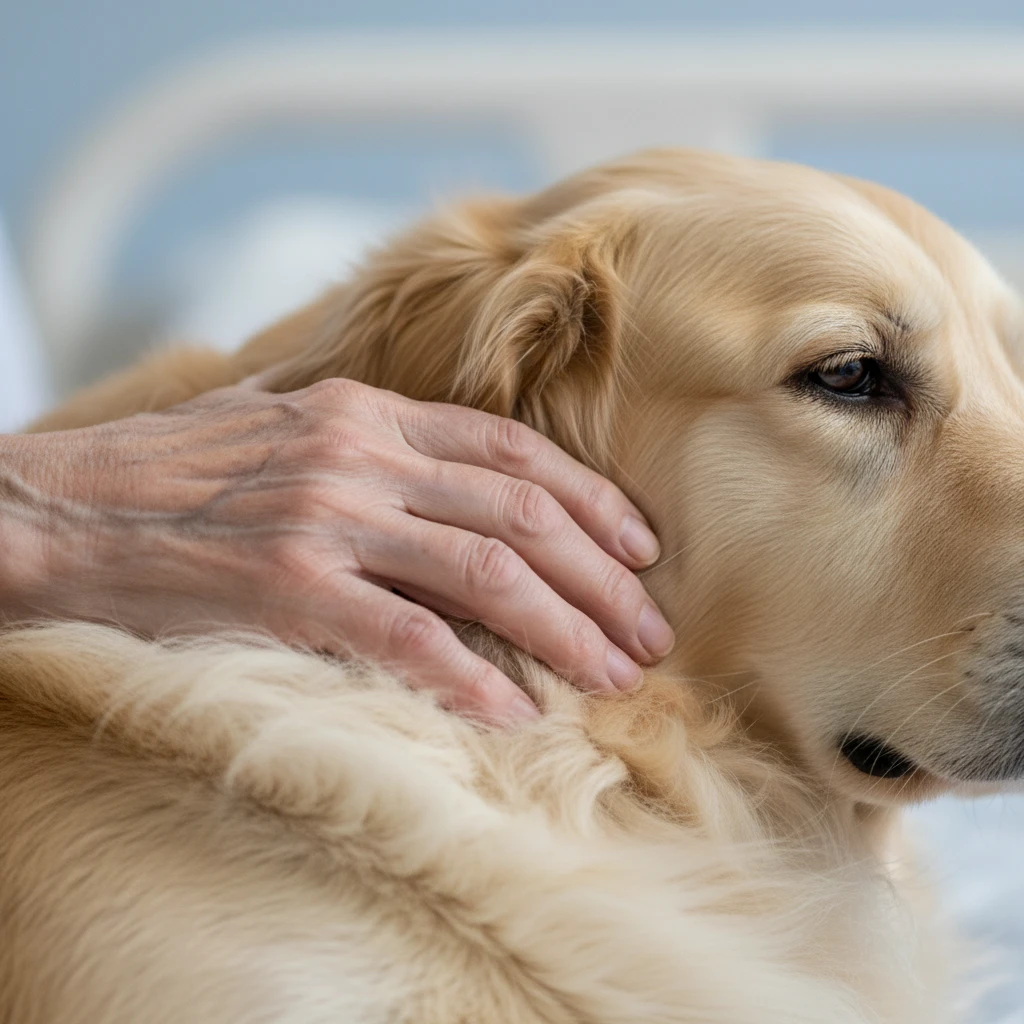
As dementia progresses, verbal communication often deteriorates. Therapy dogs rely on non-verbal communication—touch, eye contact, and body language. This bypasses the damaged cognitive pathways required for speech. For a resident who has lost the ability to form sentences, the ability to successfully communicate love and receive affection from a dog restores a sense of agency and competence.
Memory Recall and Reminiscence Therapy
Dogs are powerful triggers for reminiscence therapy. The presence of an animal often acts as a “social lubricant,” prompting residents to share stories about their own pets from decades past. In NZ, where pet ownership rates are historically high, animals are often deeply woven into a resident’s life story. Handlers are trained to use the dog as a conversation starter, asking open-ended questions that encourage memory recall, which exercises neural pathways and improves cognitive resilience.
Operational Challenges for Facility Managers
While the benefits are clear, the logistics of integrating therapy dogs for dementia in NZ facilities present distinct challenges for management. A robust policy framework is required to mitigate risk and ensure the program is sustainable.
Risk Management and Liability
The primary concern for any facility manager is safety. This includes the risk of bites, scratches, falls caused by tripping over animals, and zoonotic diseases. In New Zealand, liability falls under the Health and Safety at Work Act 2015. Facilities must treat visiting animals as a potential hazard that requires control measures.
- Behavioral Assessment: Dogs must pass rigorous temperament tests. In NZ, organizations like Canine Friends Pet Therapy or St John Therapy Pets have their own assessment criteria, but private contractors must be vetted thoroughly.
- Insurance: Does the therapy dog provider carry their own public liability insurance, or does the facility’s policy cover visiting animals? This is a critical contractual detail.
- Resident Screening: Not all residents like dogs. Some may have phobias or allergies. Management must maintain a clear register of which residents opt-in and which zones are “dog-free” to respect the rights of all inhabitants.

Scheduling and Consistency
Dementia patients thrive on routine. A sporadic visit from a therapy dog can be confusing. Operational success depends on scheduling regular, predictable visits. Managers must coordinate with handlers to ensure visits do not clash with meal times, medication rounds, or shift changes, which are already high-stress periods for staff.
Regulatory Landscape for Visiting Animals in Healthcare
There is no single “Therapy Dog Act” in New Zealand; however, several standards and regulations intersect to govern their presence in aged care.
Infection Control Standards
Strict adherence to infection control is non-negotiable. The presence of animals must not compromise the hygiene standards required by the Health and Disability Services Standards (NZS 8134:2021).
- Hand Hygiene: Hand sanitizers must be available and utilized before and after resident contact with the animal.
- Vaccinations and Health Checks: Visiting dogs must be fully vaccinated (Distemper, Hepatitis, Parvovirus, and Kennel Cough) and regularly treated for fleas and worms. Managers should request to keep a copy of the animal’s veterinary records on file.
- Exclusion Zones: Animals are generally prohibited from food preparation areas, sterile clinical rooms, and laundry facilities.
Accreditation and Training
In New Zealand, there is a distinction between a “Service Dog” (protected under the Human Rights Act for disability access) and a “Therapy Dog” (invited into a facility). Therapy dogs do not have automatic access rights to public places. Therefore, the facility manager holds the ultimate authority on access.
Reputable providers in NZ will have certification proving the dog has passed the Canine Good Citizen test (or equivalent) and specific therapy dog training modules focusing on desensitization to medical equipment like walkers, wheelchairs, and hoists.

Implementing a Successful Program
For facility managers looking to introduce therapy dogs for dementia in NZ, a phased approach is recommended to ensure staff buy-in and operational smoothness.
Step 1: Stakeholder Consultation
Before the first dog enters the building, consult with staff, residents, and families. Staff may have concerns about increased workload (e.g., cleaning up after the dog). Address these by clarifying that the handler is solely responsible for the dog’s needs.
Step 2: Policy Development
Draft a comprehensive “Visiting Animal Policy.” This document should outline:
- Criteria for acceptable animals.
- Protocols for accidents (waste or aggression).
- Insurance requirements.
- The process for reporting incidents.
Step 3: Trial and Feedback
Begin with a pilot program involving a small group of residents who have expressed high interest. Monitor the impact on their mood and behavior. Collect feedback from nursing staff regarding any disruptions. Use this data to refine the schedule and protocols before rolling out the program facility-wide.
By treating the integration of therapy dogs as a professional logistic operation rather than a casual event, NZ aged care facilities can unlock profound benefits for their dementia residents while maintaining the highest standards of safety and care.
People Also Ask
How much does a therapy dog cost in NZ?
Costs vary significantly. Volunteer organizations like St John or Canine Friends Pet Therapy may offer services for a small donation or free of charge. Private professional therapy dog services, which offer more structured clinical interventions, can charge hourly rates ranging from $80 to $150+ NZD depending on the handler’s qualifications.
What is the best dog breed for dementia patients?
There is no single “best” breed, but temperament is key. Golden Retrievers, Labradors, and Cavalier King Charles Spaniels are popular in NZ due to their calm, gentle nature. However, the individual dog’s training and ability to tolerate erratic movements or loud noises are more important than breed.
Are therapy dogs allowed in NZ hospitals?
Yes, therapy dogs are allowed in many NZ hospitals, but only with prior approval and usually through established programs like St John Therapy Pets. They are restricted from high-risk areas like ICU, burns units, and food preparation areas.
How do I certify my dog as a therapy dog in NZ?
To certify a dog, you typically need to pass a temperament assessment through organizations like St John, Canine Friends Pet Therapy, or private training institutions. The dog must have basic obedience, be fully vaccinated, and pass a test simulating a clinical environment.
Can a resident bring their own pet to a care home in NZ?
This depends on the specific facility’s policy. Some “pet-friendly” retirement villages allow it if the resident can care for the animal. In high-level dementia care, it is rare for residents to keep personal pets due to safety and care concerns, making visiting therapy dogs a vital alternative.
What are the risks of therapy dogs in aged care?
The main risks include tripping hazards (falls), allergic reactions, zoonotic diseases, and potential scratches or bites if a dog is startled. These risks are managed through strict hygiene protocols, insurance, temperament testing, and constant supervision by handlers.